Hi, what do you want to do?






Grammarly
Grammarly Blog: Verb Forms
This page explains the five forms of verbs: root, third-person singular,present participle, past, and past participle and provides examples of each.

Languages Online
Languages Online: El Imperfecto
A great explanation of the imperfect tense introduces thirteen multiple choice, matching, and gap-fill exercises that provide plenty of practice with regular and irregular conjugations. The "vosotros" form is also used. A great way for...
Languages Online
Languages Online: El Condicional
A great explanation of the conditional tense introduces one matching, and five gap-fill exercises that provide plenty of practice with regular and irregular conjugations. The "vosotros" form is also used. A great way for students to...
Colby College
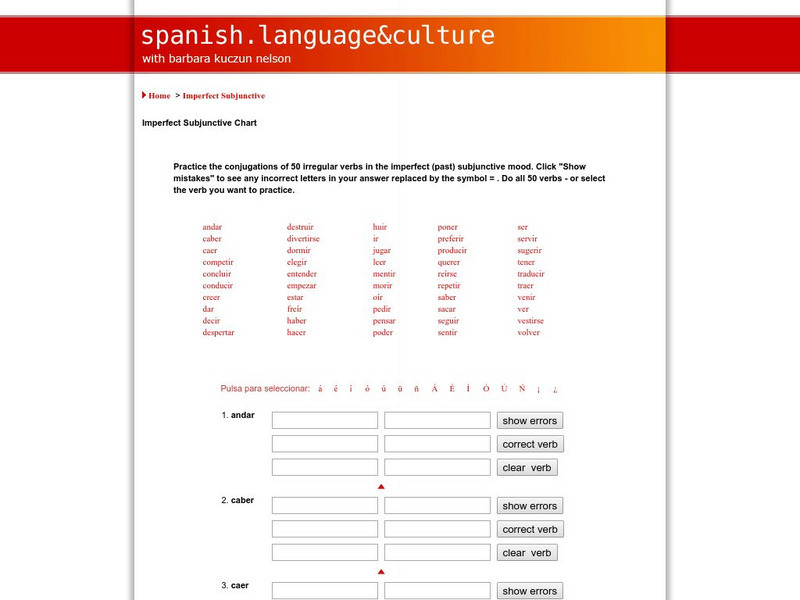
Spanish Language & Culture: Imperfect Subjunctive
This Spanish grammar exercise provides excellent practice conjugating verbs in the past subjunctive tense in verb charts. Fifty different infinitives give the student plenty of practice with conjugations of the imperfect subjunctive....
Colby College
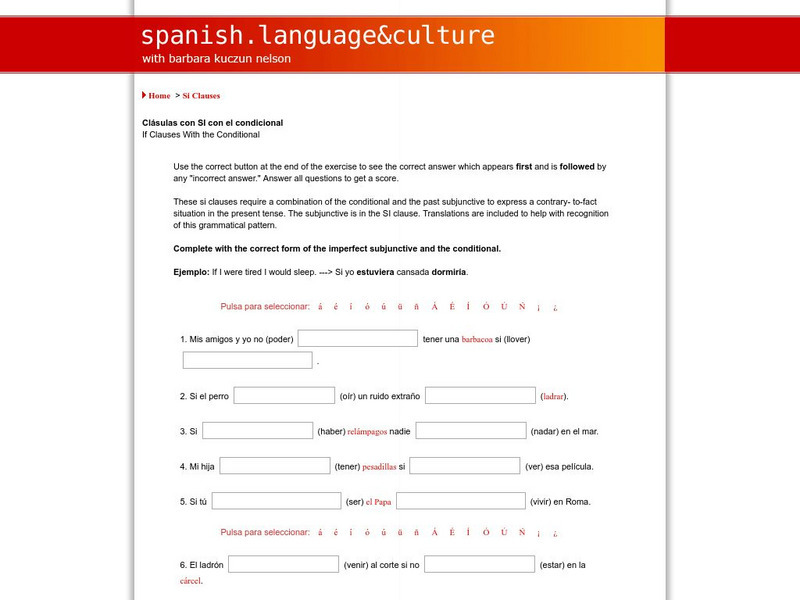
Spanish Language & Culture: Past Subjunctive Si Clauses
This Spanish grammar exercise provides adequate practice conjugating verbs in the conditional tense and in the past subjunctive in sentences that contain "if" clauses. Answers may be checked and corrected.
Colby College
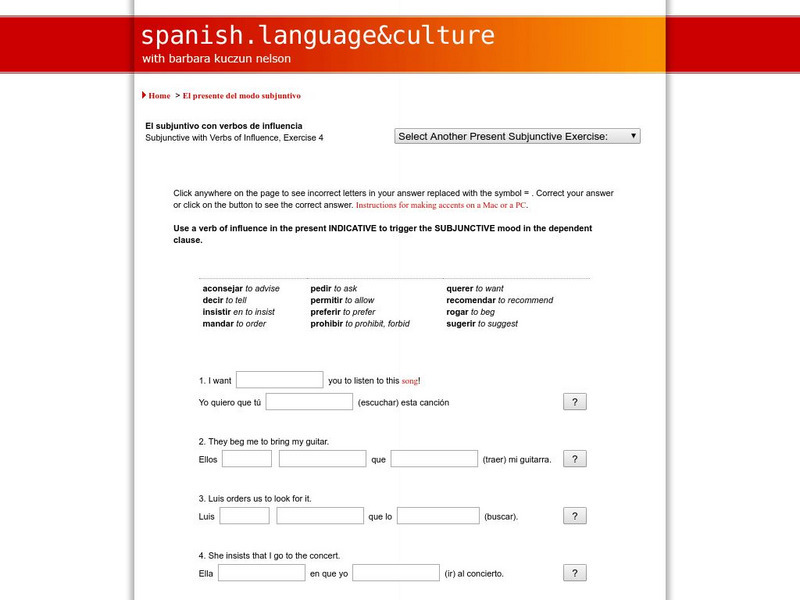
Spanish Language & Culture: Subjunctive Noun Clauses #4
This exercise practices the present subjunctive with verbs of influence: aconsejar, decir, insistir, mandar, necesitar, pedir, preferir, prohibir, querer, recomendar, rogar, and sugerir. An English translation is provided as a foundation...
Colby College
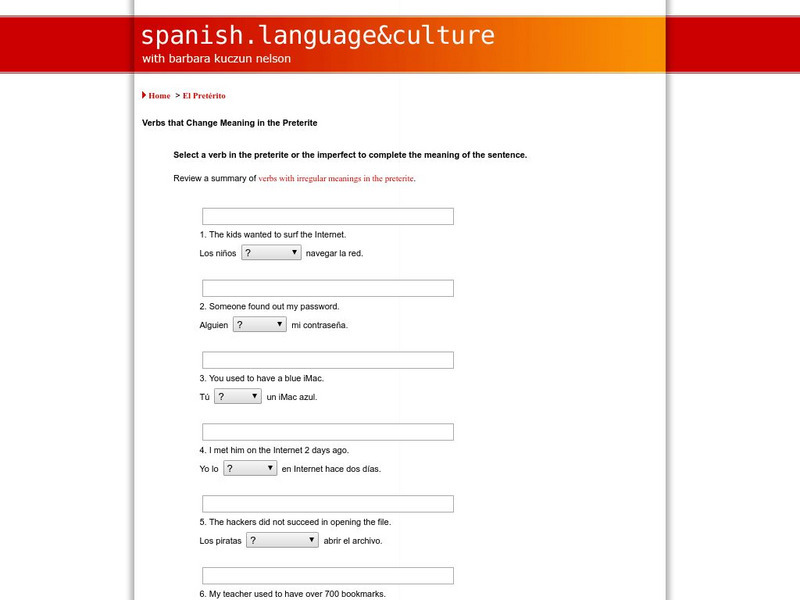
Spanish Language & Culture: Preterites Irregular Meanings
Practice using verbs that change their meaning in the preterite tense: conocer, saber, querer, tener, and poder. Complete translations from English to Spanish by choosing the correct form of a verb in the preterite or imperfect. Answers...
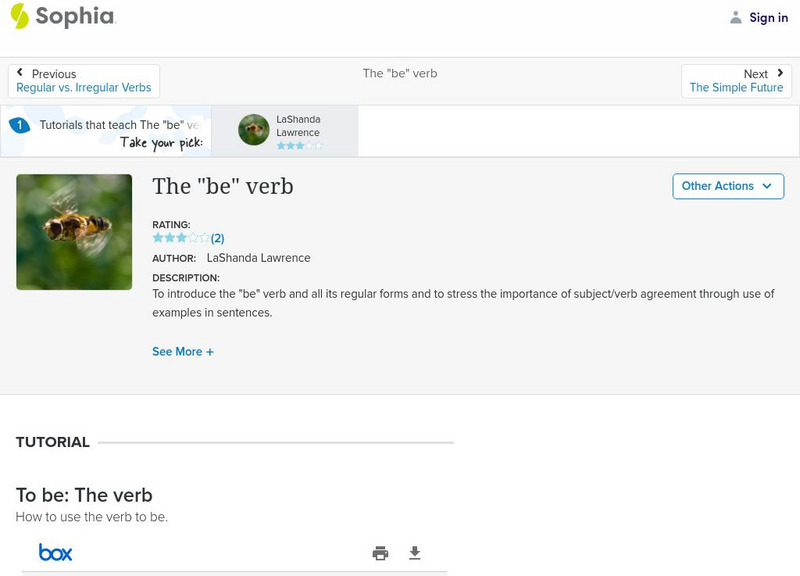
Sophia Learning
Sophia: The "Be" Verb
To introduce the "be" verb and all its regular forms and to stress the importance of subject/verb agreement through use of examples in sentences. This tutorial lesson shares a short slideshow with the lesson's content.
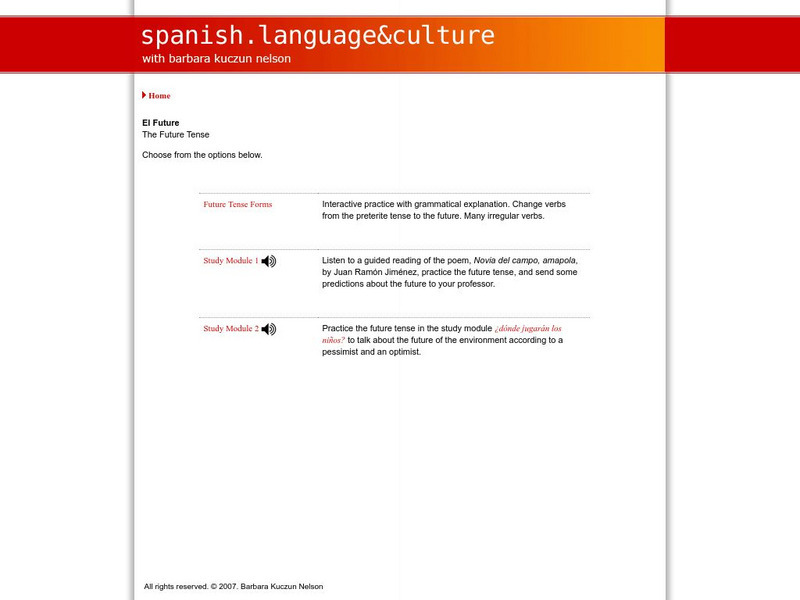
Colby College
Spanish Language & Culture: The Future Tense
Colby College provides a great explanation of how to conjugate verbs in the future tense, with English translations of the examples. Twenty sentences provide fantastic practice in changing verbs from preterite tense to future tense...
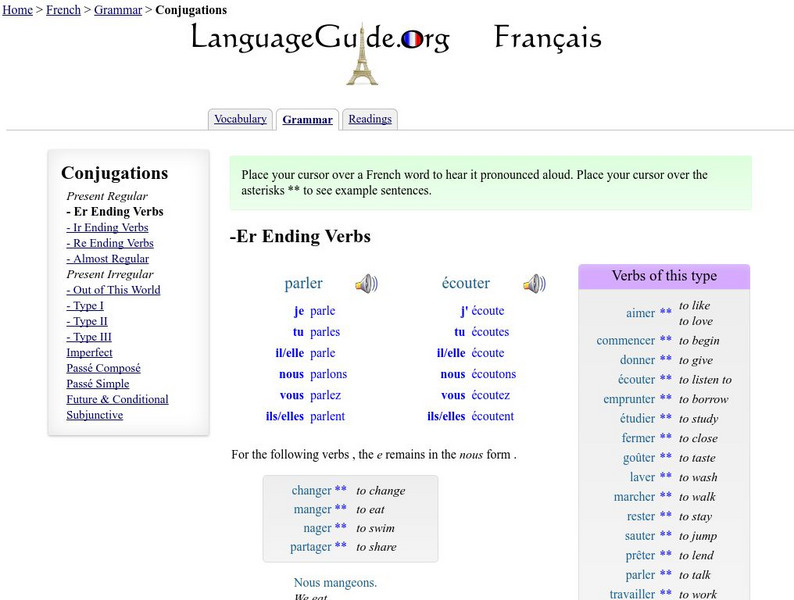
Language Guide
Language Guide: Regular Er Verbs(conjugation)
Learn French verb endings for regular "er" verbs in this tutorial that includes an audio pronunciation aid.
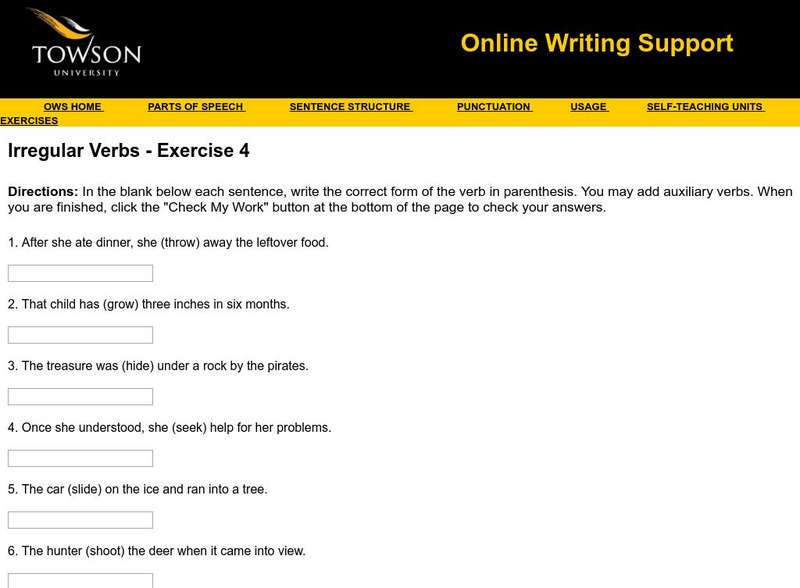
Towson University
Towson University: Ows: Irregular Verbs Exercise 4
This is a 10-question, self-grading exercise/quiz on the using the correct forms of Irregular Verbs. It is suitable for ESL and regular English classes.

Towson University
Towson University: Ows: Irregular Verbs Exercise 5
This is a 10-question, self-grading exercise/quiz on the using the correct forms of Irregular Verbs. It is suitable for ESL and regular English classes.
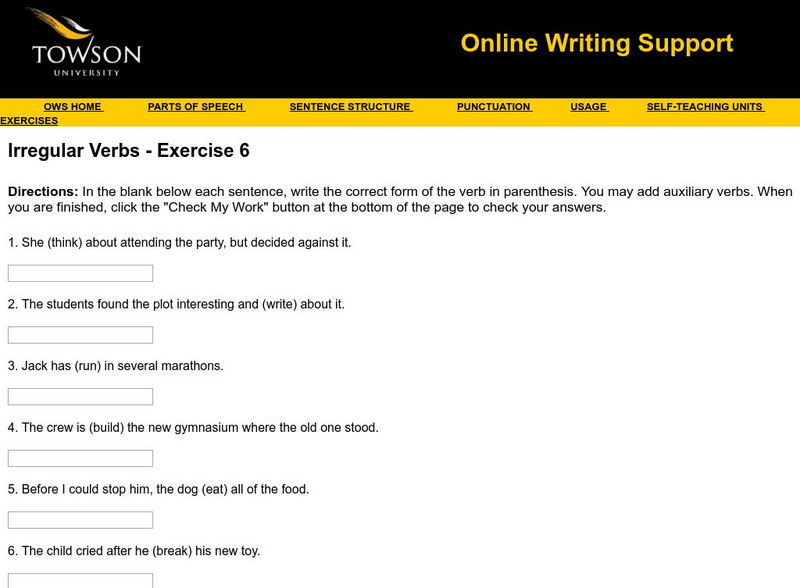
Towson University
Towson University: Ows: Irregular Verbs Exercise 6
This is a 10-question, self-grading exercise/quiz on the using the correct forms of Irregular Verbs. It is suitable for ESL and regular English classes.
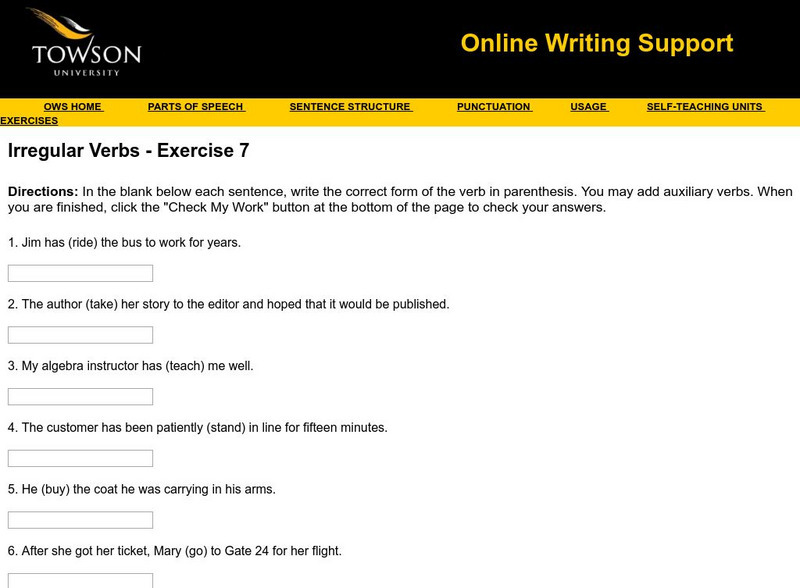
Towson University
Towson University: Ows: Irregular Verbs Exercise 7
This is a 10-question, self-grading exercise/quiz on the using the correct forms of Irregular Verbs. It is suitable for ESL and regular English classes.
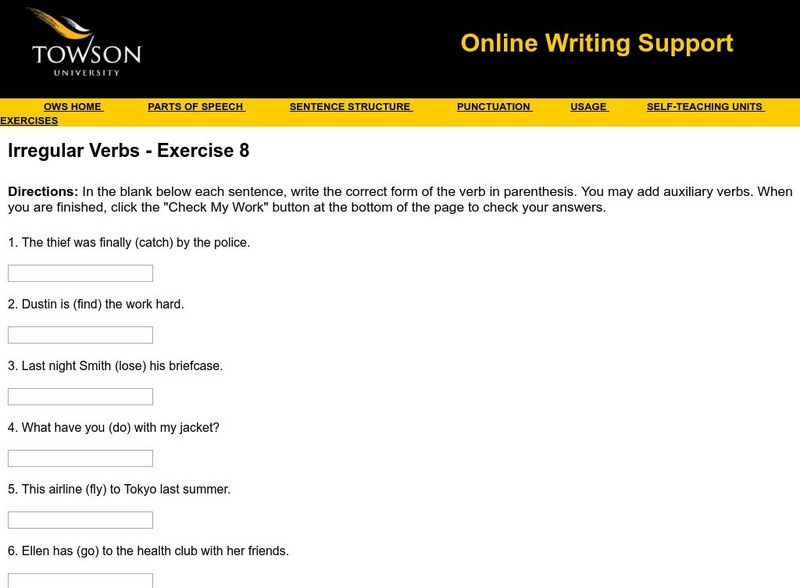
Towson University
Towson University: Ows: Irregular Verbs Exercise 8
This is a 10-question, self-grading exercise/quiz on the using the correct forms of Irregular Verbs. It is suitable for ESL and regular English classes.
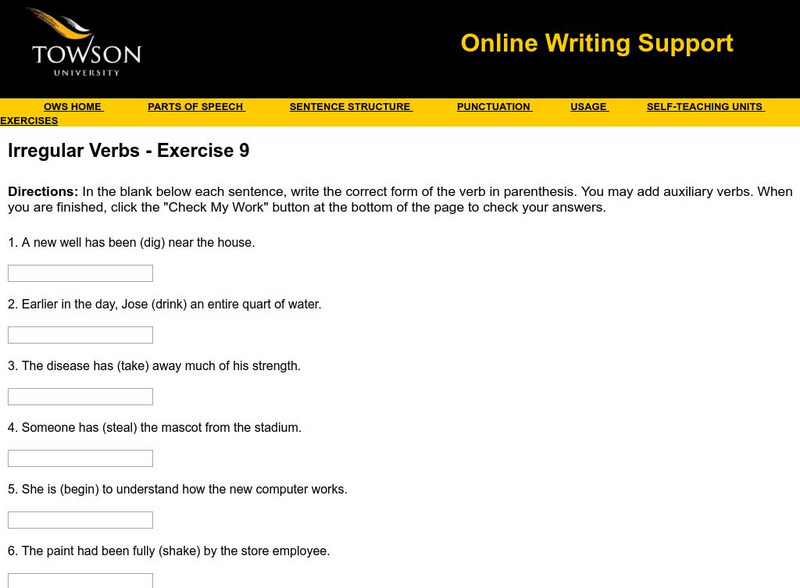
Towson University
Towson University: Ows: Irregular Verbs Exercise 9
This is a 10-question, self-grading exercise/quiz on the using the correct forms of Irregular Verbs. It is suitable for ESL and regular English classes.
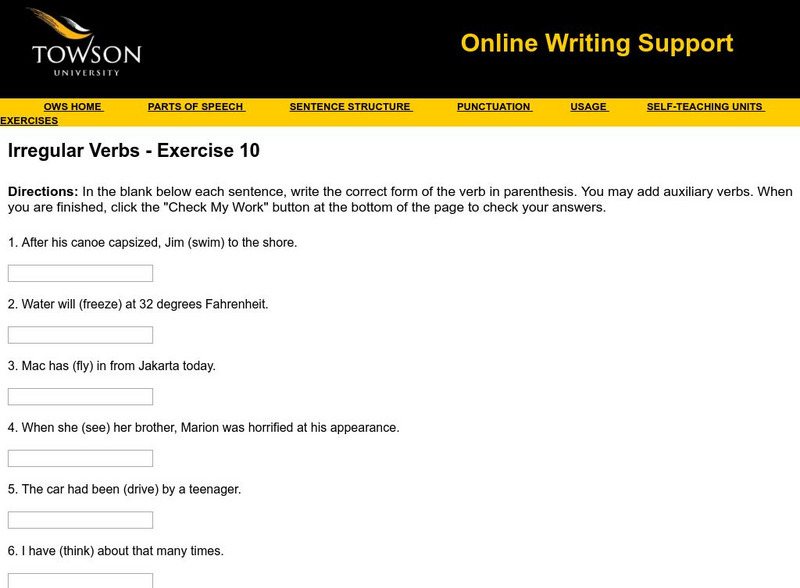
Towson University
Towson University: Ows: Irregular Verbs Exercise 10
This is a 10-question, self-grading exercise/quiz on the using the correct forms of Irregular Verbs. It is suitable for ESL and regular English classes.
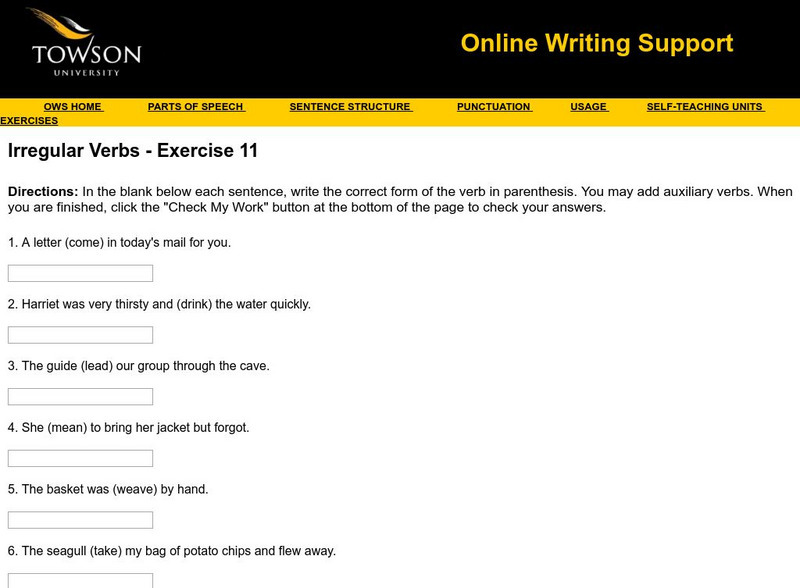
Towson University
Towson University: Ows: Irregular Verbs Exercise 11
This is a 10-question, self-grading exercise/quiz on the using the correct forms of Irregular Verbs. It is suitable for ESL and regular English classes.
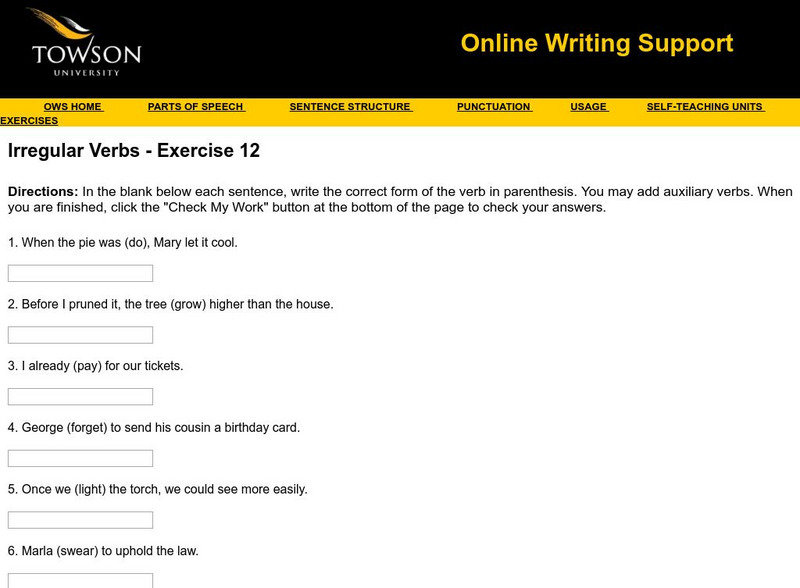
Towson University
Towson University: Ows: Irregular Verbs Exercise 12
This is a 10-question, self-grading exercise/quiz on the using the correct forms of Irregular Verbs. It is suitable for ESL and regular English classes.
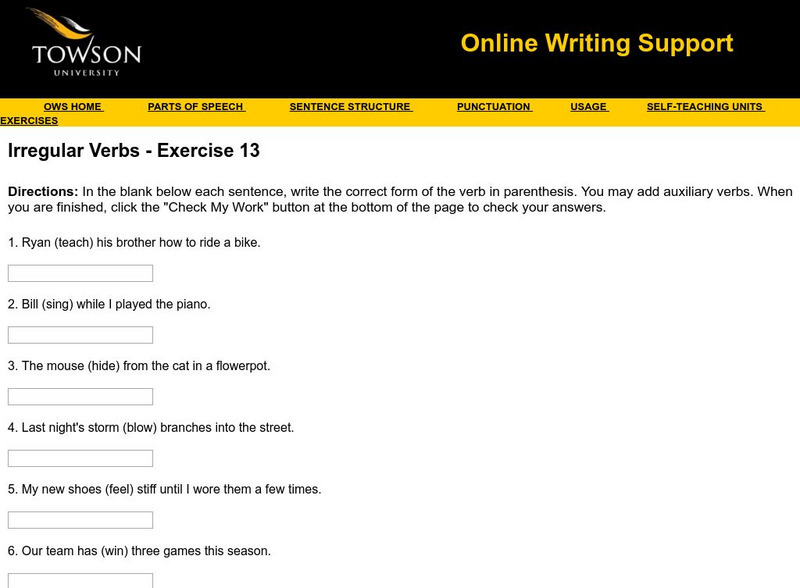
Towson University
Towson University: Ows: Irregular Verbs Exercise 13
This is a 10-question, self-grading exercise/quiz on the using the correct forms of Irregular Verbs. It is suitable for ESL and regular English classes.
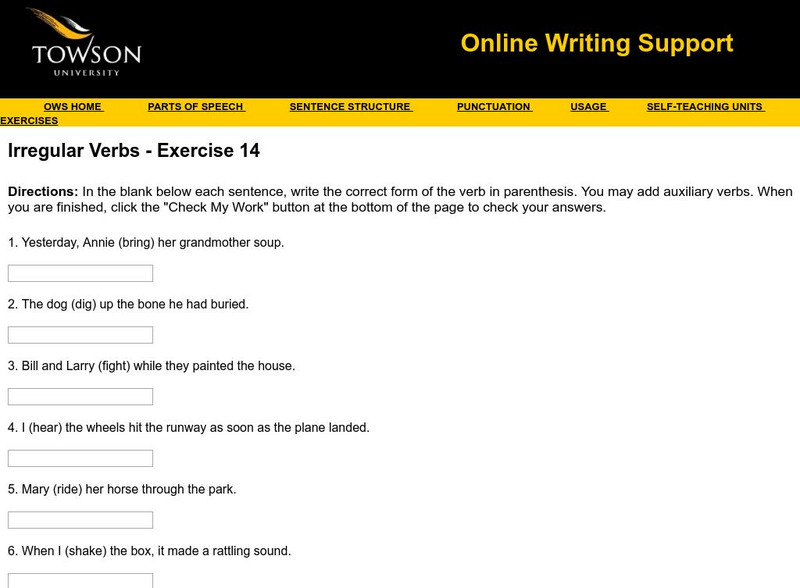
Towson University
Towson University: Ows: Irregular Verbs Exercise 14
This is a 10-question, self-grading exercise/quiz on the using the correct forms of Irregular Verbs. It is suitable for ESL and regular English classes.
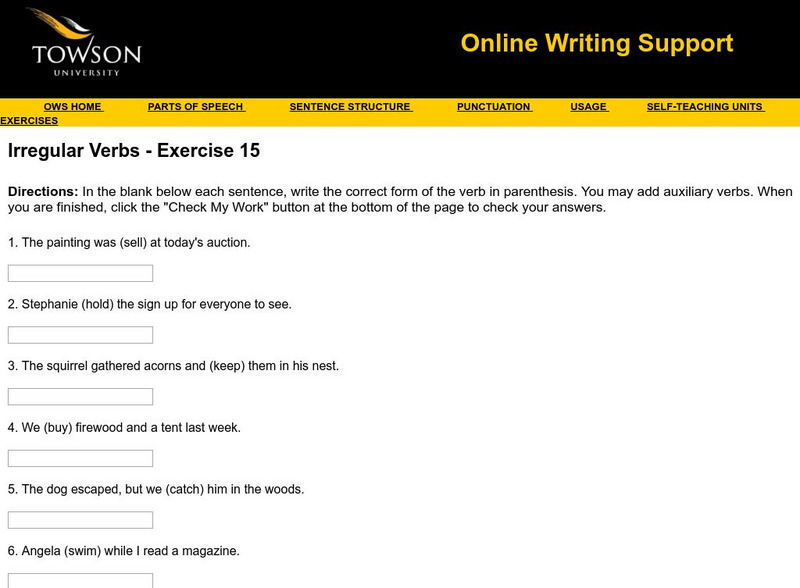
Towson University
Towson University: Ows: Irregular Verbs Exercise 15
This is a 10-question, self-grading exercise/quiz on the using the correct forms of Irregular Verbs. It is suitable for ESL and regular English classes.
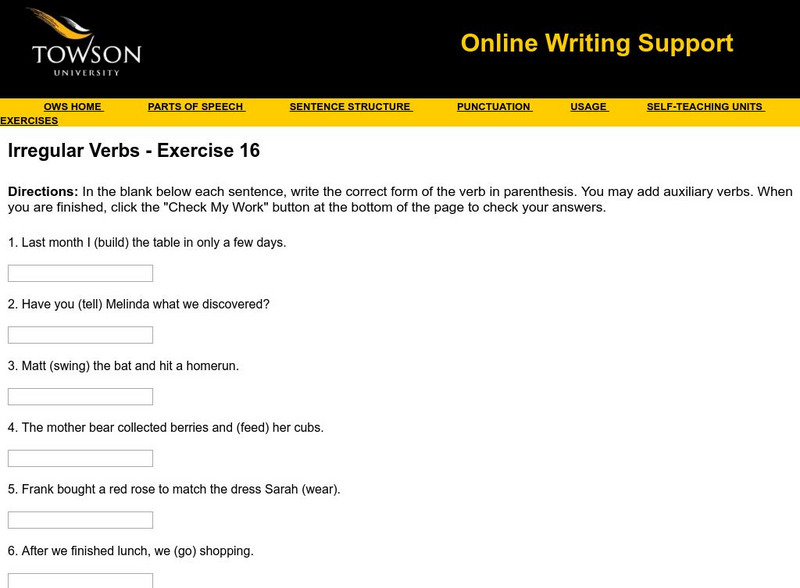
Towson University
Towson University: Ows: Irregular Verbs Exercise 16
This is a 10-question, self-grading exercise/quiz on the using the correct forms of Irregular Verbs. It is suitable for ESL and regular English classes.
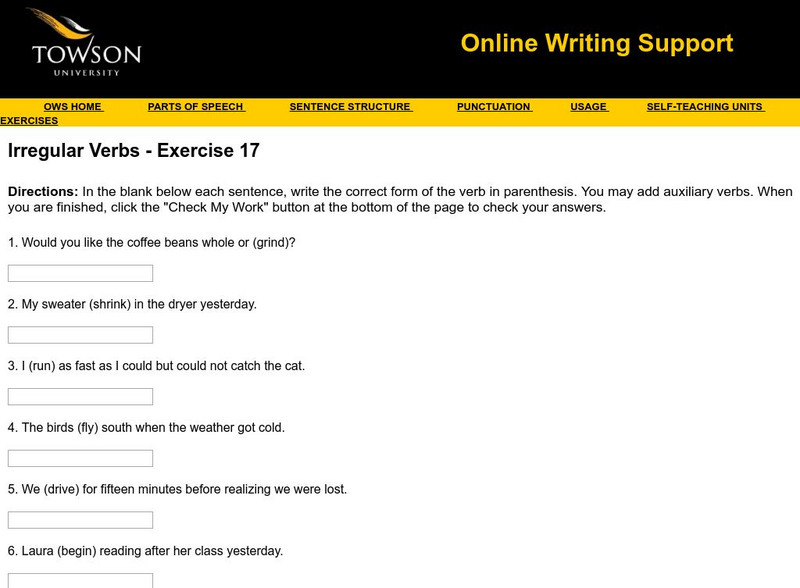
Towson University
Towson University: Ows: Irregular Verbs Exercise 17
This is a 10-question, self-grading exercise/quiz on the using the correct forms of Irregular Verbs. It is suitable for ESL and regular English classes.
Other popular searches
- Regular Past Tense Verbs
- Regular and Irregular Verbs
- Regular Verbs
- Regular/irregular Verbs
- Spanish Regular Verbs
- Ed Regular Verbs
- Regular Verbs Pronunciation
- Conjugating Regular Verbs
- Conjugations of Regular Verbs
- Tenses of Regular Verbs
- Past Tense of Regular Verbs
- Irregular vs. Regular Verbs