Hi, what do you want to do?





CK-12 Foundation
Ck 12: Life Science: Viruses
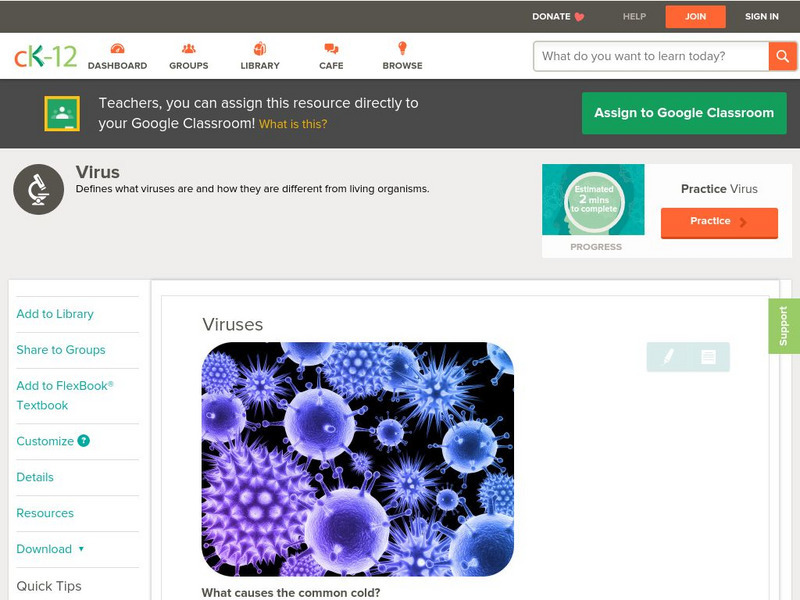
[Free Registration/Login may be required to access all resource tools.] We have all heard of viruses. The flu, the common cold, and many other diseases are caused by viruses. But what is a virus? Do you think viruses are living? Which...

BiologyWise
Biology Wise: Bacteria vs. Virus
Discusses what bacteria and viruses are and the differences between them.
Cold Spring Harbor Laboratory
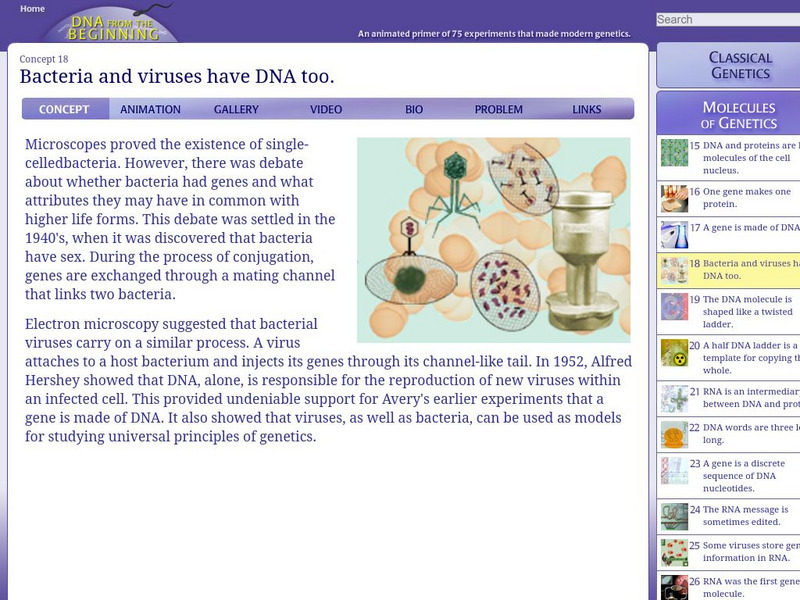
Dna From the Beginning: Bacteria and Viruses Have Dna Too.
Bacterial conjugation and experiments with viruses indicated that they must also contain DNA. This multimedia article includes animations, pictures, video, biographical information, and quiz questions that are accessed by clicking on...
Nobel Media AB
The Nobel Prize: The Immune System: Defending Our Bodies
Great game through which students learn about the immune system. Students read about cells that specialize in "finding and 'eating' bacteria, viruses, and dead or injured cells" and about the Nobel Prize in Physiology.
McGraw Hill
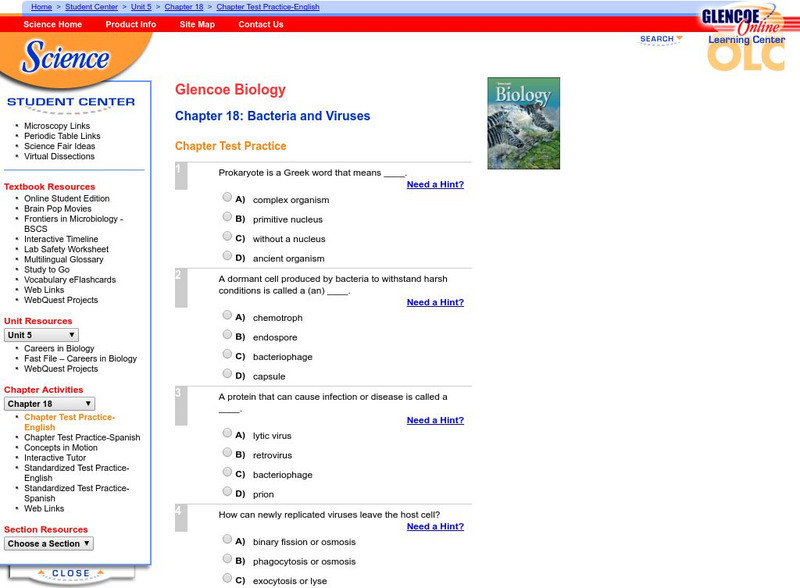
Glencoe Biology: Bacteria and Viruses: Chapter Test Practice
Ten multiple-choice test practice questions covering bacteria and viruses. Students have the opportunity to check their answers after submitting their results.
The Association of the British Pharmaceutical Industry
Abpi: Medicines to Treat Disease
A series of slide show presentations about the treatment of infectious disease. Each focuses on one aspect of fighting bacteria. Also included are interactive animations illustrating body functions and how medicines work.
The Association of the British Pharmaceutical Industry
Abpi: Infectious Diseases: Pathogens
An interactive, self-guided lesson on pathogens and microorganisms. This lesson has many descriptive animations as well as diagrams to help with understanding. There is a self-checking quiz at the end of the lesson.

Tree of Life Project
The Tree of Life Web Project
The Tree of Life is a multi-authored, Internet distributed project containing information about phylogeny and biodiversity. The Tree of Life can be used to locate information about a particular group of organisms through their taxonomy.

Alabama Learning Exchange
Alex: Invasion of the Body Snatchers
For this WebQuest, sudents will be working in cooperative learning groups to research bacteria, viruses, and the immune system via the Internet. Students will be taking notes and answering questions to show the teacher for approval....
Read Works
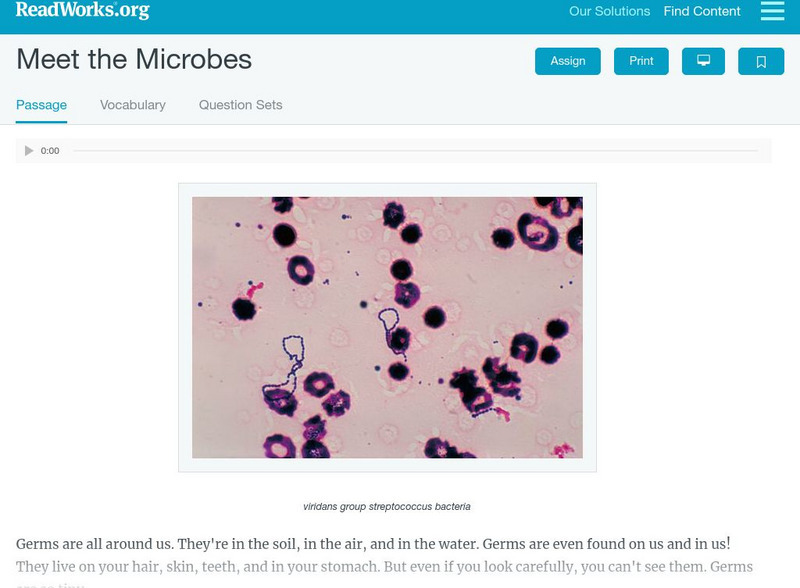
Read Works: Meet the Microbes
[Free Registration/Login Required] An informational text about different types of microbes including: viruses, bacteria, fungi, and protozoa. A question sheet is available to help students build skills in reading comprehension.
Cells Alive
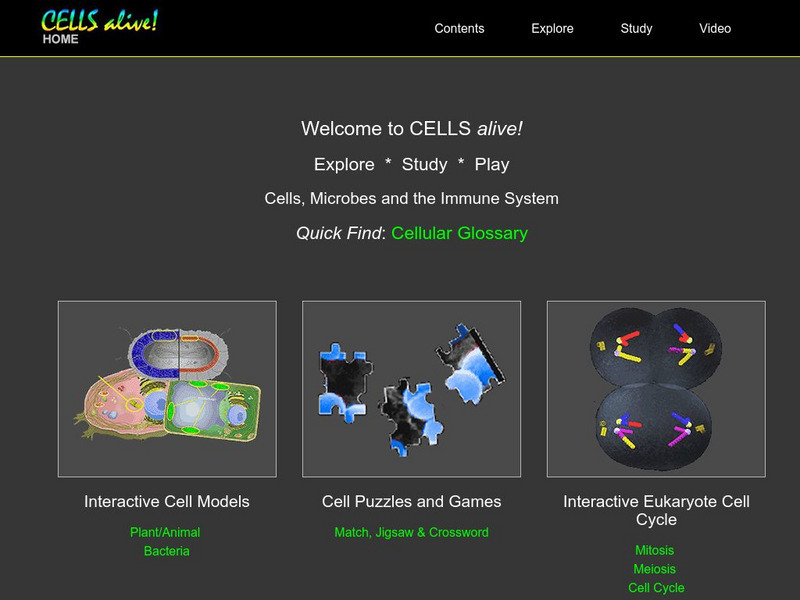
Cells Alive!
Animation studio that specializes in medical illustration lets you explore the structure and function of plant cells and animal cells, using videos and interactive graphics with clickable parts that lead to more detail.
The Association of the British Pharmaceutical Industry
Abpi: Infectious Diseases
A self-paced lesson on infectious diseases including bacterial, fungal, viral, and parasitic infections. Each disease featured discusses symptoms and treatment.

Discovery Education
Discovery Education: Curriculum Center: Science
The Discovery Channel provides numerous topics that are the most popular science topics taught in upper elementary and middle school. Content is organized by topics (Bacteria, Oceans, Solar System, etc.); all topics include quick facts,...
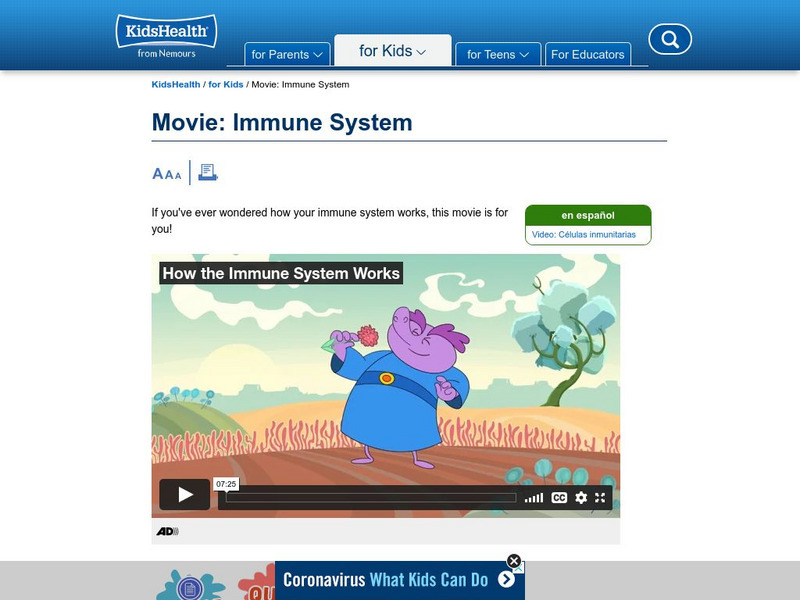
Curated OER
Kids Health: Immune System
If you've ever wondered how your immune system works, this movie and activity guide is for you! [7:26]
Soft Schools
Soft Schools: Microscopic World Quiz
Take this interactive, multiple-choice quiz over microorganisms, then review your score and any missed questions at the end.
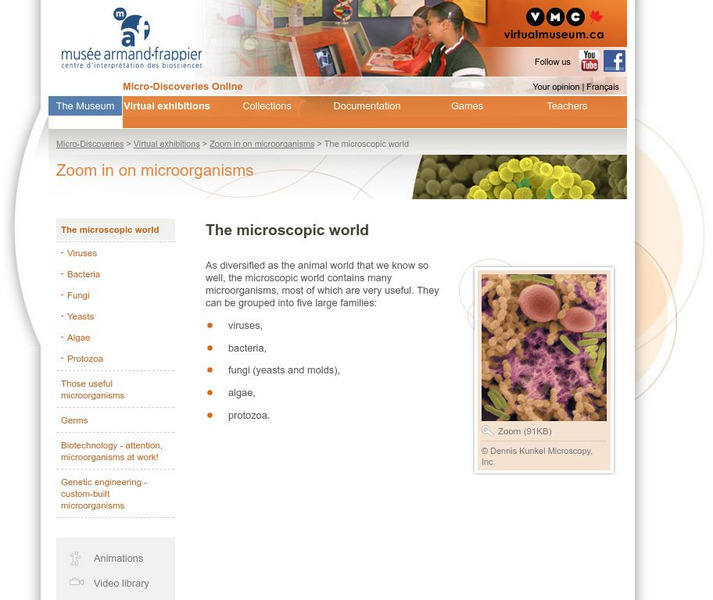
Other
Armand Frappier Museum: Micro Discoveries Online: The Microscopic World
This comprehensive exhibit focuses on the wonders of microorganisms, what they are, how they can affect our daily lives, and how they can be manipulated. Videos, games, and animations are included. Teacher resource link explains each...

TED Talks
Ted: Ted Ed: How Pandemics Spread
A discussion about the globalization of disease, and the implications of a pandemic. Mark Honigsbaum describes the history of pandemics and how scientists can help prevent future outbreaks. [8:00]

TeachEngineering
Teach Engineering: Biosensors for Food Safety
How can you tell if harmful bacteria are in your food or water that might make you sick? What you eat or drink can be contaminated with bacteria, viruses, parasites and toxins pathogens that can be harmful or even fatal. Learners learn...
American Academy of Family Physicians
Family doctor.org: Antibiotics
This article provides answers to several commonly asked questions about antibiotics. Several of the subjects that are covered include: what are antibiotics, how do they work, what is bacterial resistance, and how do I know when I need...
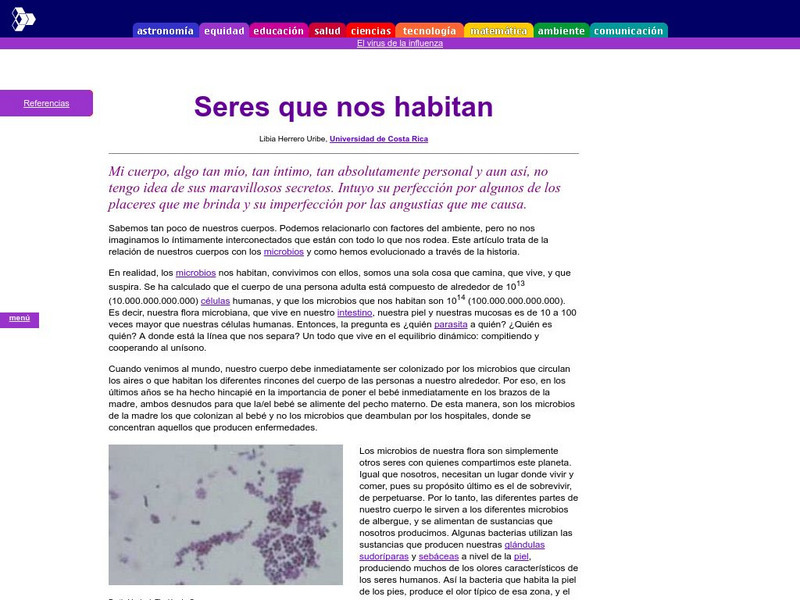
Fundación Cientec
Cientec: Seres Que Nos Habitan
This article is the relationship of our bodies with microbes and how we have evolved throughout history.
CK-12 Foundation
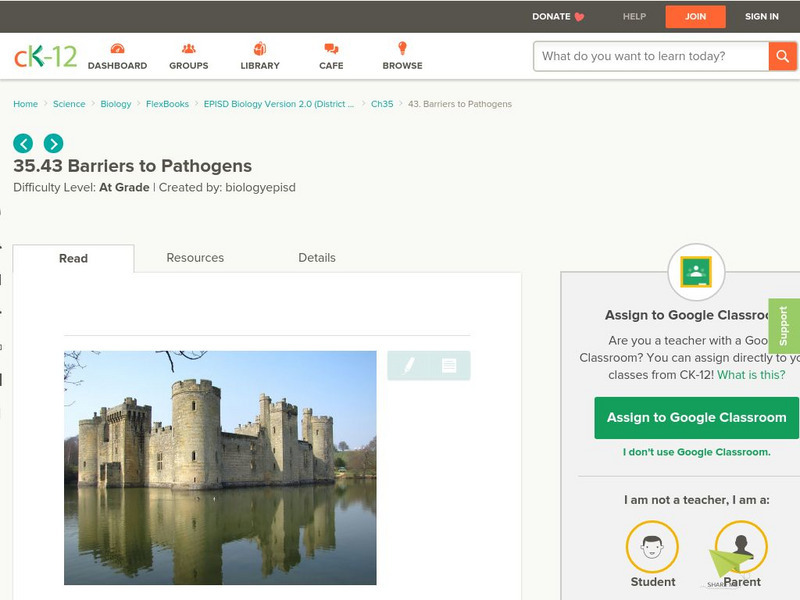
Ck 12: Barriers to Pathogens
[Free Registration/Login may be required to access all resource tools.] In the following tutorial you will learn about the barriers that keep most pathogens out of the human body.
United Nations
United Nations Cyberschoolbus: Fighting Disease
The United Nations has distributed this list to make school age children aware of the communicable diseases that have most recently had an effect on society. Good descriptions are provided for each of the 11 diseases.

ClassFlow
Class Flow: Germ Theory Jeopardy
[Free Registration/Login Required] This flipchart is a Jeopardy game where students will review and discuss the development of the Germ Theory, as well as cell organelles and bacterial and viral diseases.

Khan Academy
Khan Academy: The Columbian Exchange
The rapid pace of globalization today is a continuation and acceleration of processes that began 500 years ago. This article discusses that not only humans started to travel the world, but also plants, species, bacteria, and viruses....