Hi, what do you want to do?





Other
Tennessee State University: The Study Skills Help Page
The Study Skills Help Page provides learning strategies for success. Explore the learning tools and tips that you can use to become a more skilled learner.
TeachEngineering
Teach Engineering: Light Properties
Learners learn about the basic properties of light and how light interacts with objects. They are introduced to the additive and subtractive color systems, and the phenomena of refraction. Students further explore the differences between...
Merck Sharp & Dohme Corp.
Merck Manual: Optic Nerve Disorders
Use this resource to find out the origin of the optic nerve and some of the strange effects a damaged optic nerve can produce. There is a diagram for further understanding.
Other
Clear Vision Hawaii: Fa Qs About Pinhole Glasses
Using a question and answer format, this page discusses the technical aspect of pinhole glasses. Defines, illustrates and discusses pinhole glasses.

Exploratorium
Exploratorium: Shimmer
Student will see this design shimmer! Use this site to learn about this optical illusion and what makes it happen.

Georgia State University
Georgia State University: Hyper Physics: Mirrors in Imaging
A discussion from Georgia State University of different types of mirrors and the images which they create. Discusses different instruments which use mirrors to produce images.
Exploratorium
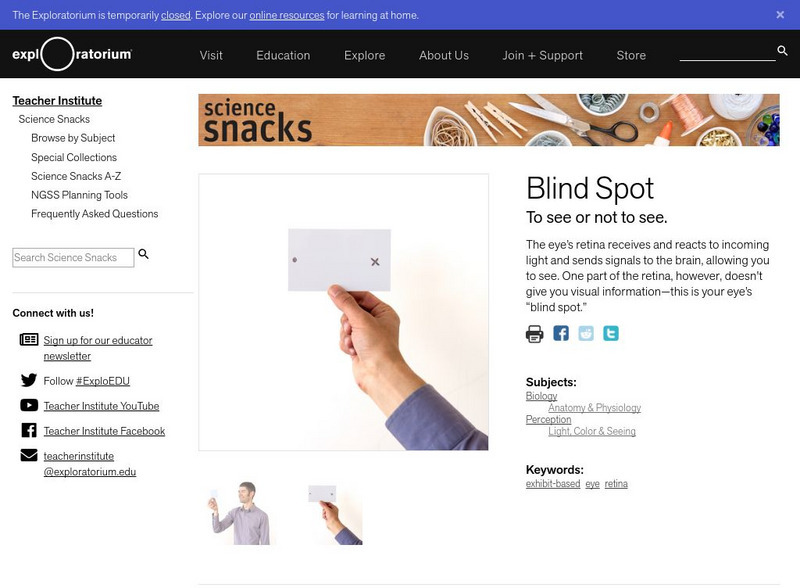
Exploratorium: Science Snacks: Blind Spot: To See, or Not to See
The blind spot in human vision is described and illustrated.

Exploratorium
Exploratorium: Science Snacks: Circles or Ovals?
Did you ever wonder why you have two eyes but only see one image? This activity will explore how your brain combines the images from your eyes in surprising ways. Learn about the dominant eye and how some people do not have one!

CK-12 Foundation
Ck 12: Life Science: 11.48 Eyes
Learn about the structure and function of the human eye.
University of Washington
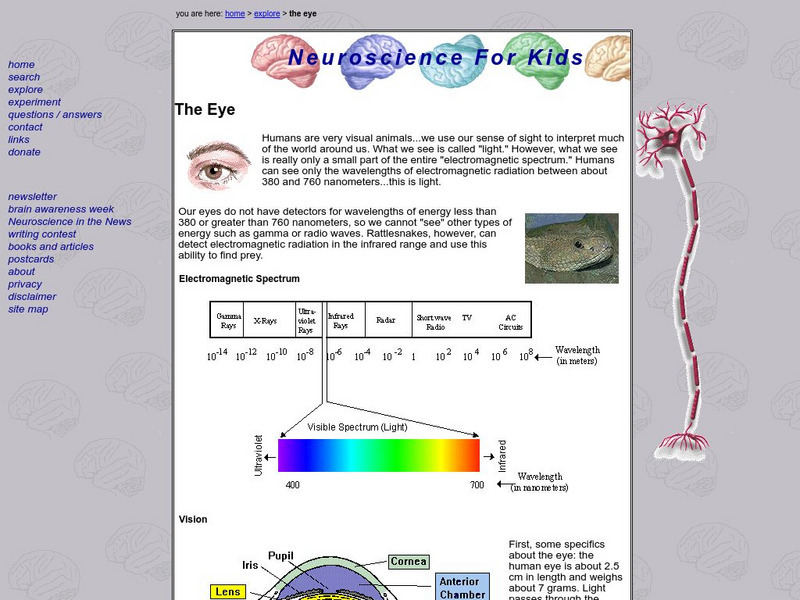
Neuroscience for Kids: The Eye
Easy to understand description of the parts of the eye and their functions. Lots of labeled illustrations. At the bottom of the page additional content includes games, quizzes, lesson plans and activities about vision.
Other
Community Resources for Science: Seeing Is Believing?
This lesson plan focuses on the parts of our bodies that we use to see and how the brain actually causes changes in what we see. Specific instructions and talking points are provided along with multiple activities for the learners to...
PBS
Pbs Teachers: Mystery of the Senses Vision
Understand how our brain identifies an object, view six optical illusions and explain why the visual system might interpret them the way it does.
National Institutes of Health
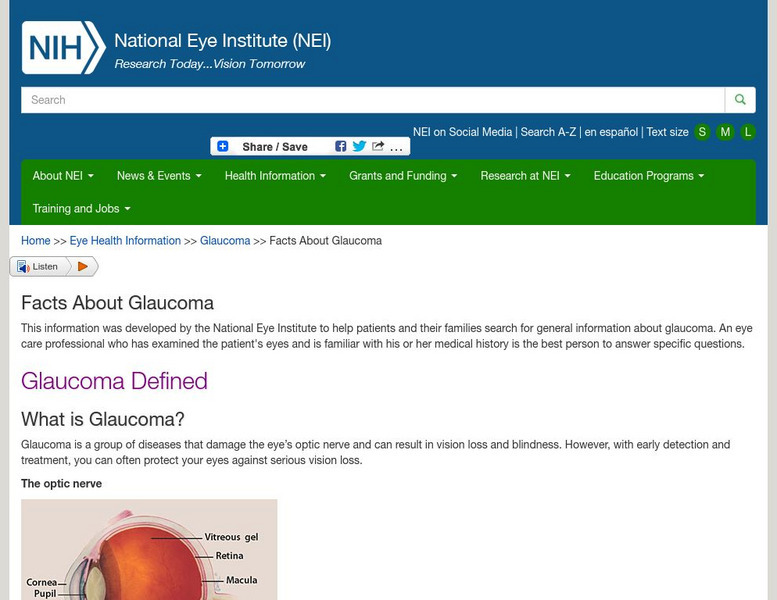
National Eye Institute: Glaucoma What You Should Know
This site from the National Eye Institute offers a detailed fact sheet on glaucoma. Content addresses what glaucoma is, how the eye is damaged, how the disease develops, the various treatments available, and much more. Additional...
Other
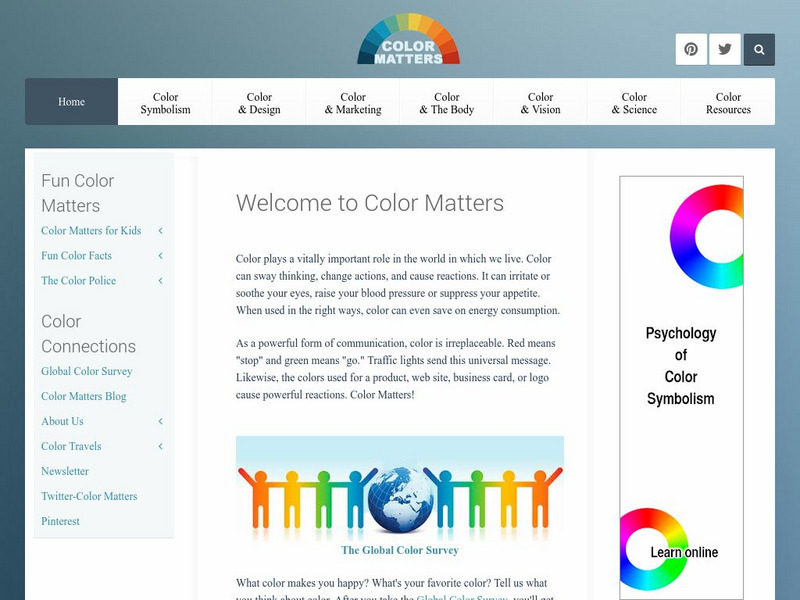
Color Matters
Students learn to understand color from a variety of perspectives: physiology, psychology, philosophy, and art.
Physics Classroom
The Physics Classroom: Image Formation for Plane Mirrors
Scroll down to Lesson 2 for a tutorial on image formation in plane mirrors. The tutorial from Glenbrook South High School provides lessons on why and how an image is formed, image characteristics for plane mirrors, ray diagrams, plus more.
DOGO Media
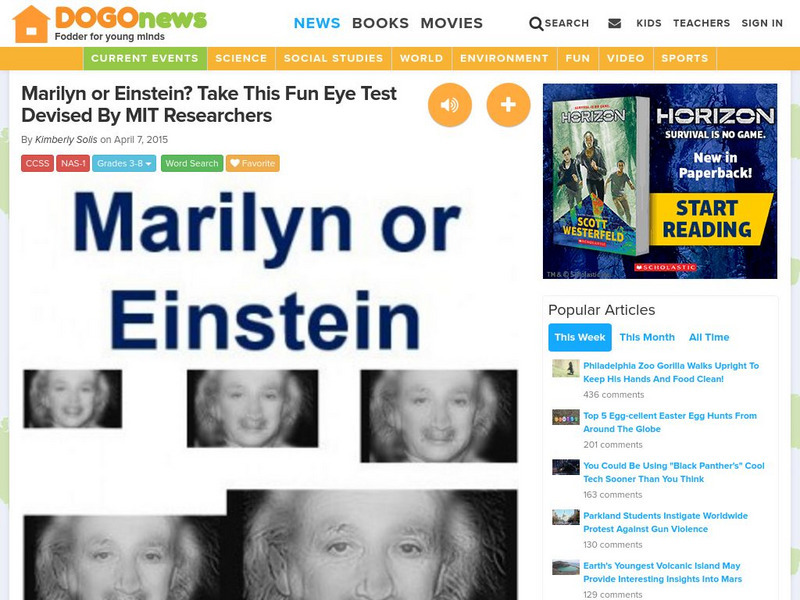
Dogo News: Marilyn or Einstein?
Learn about and try out a fun optical illustion created by MIT in 2007 that also serves as a vision test. Includes video.
![Sandlotscience.com: Plans for Missing Corner 3 D Cube [Pdf] Activity](http://lessonplanet.com/content/resources/thumbnails/411248/large/bwluav9tywdpy2symdiwmduymc01njg0lwltaxmzzy5qcgc.jpg?1589993095 "Sandlotscience.com: Plans for Missing Corner 3 D Cube [Pdf] Activity")
Other
Sandlotscience.com: Plans for Missing Corner 3 D Cube [Pdf]
A set of plans from Sandlotscience.com for building a cubic optical illusion in 3-D. Useful for demonstrations and projects.
![Sandlot Science: The Ambiguous Cube Illusion [Pdf] Activity](http://lessonplanet.com/content/resources/thumbnails/411251/large/bwluav9tywdpy2symdiwmduymc02mdkylte3n2libi5qcgc.jpg?1589993104 "Sandlot Science: The Ambiguous Cube Illusion [Pdf] Activity")
Other
Sandlot Science: The Ambiguous Cube Illusion [Pdf]
Plans for building a 3-D cube illusion. Useful for projects on perception and vision.
![Color Reversing Flag [Pdf] Activity](http://lessonplanet.com/content/resources/thumbnails/411250/large/bwluav9tywdpy2symdiwmduymc01njk3ltvrbwdycc5qcgc.jpg?1589993095 "Color Reversing Flag [Pdf] Activity")
Other
Color Reversing Flag [Pdf]
Use this picture to create a color reversing illusion. Great for projects and presentations.

PBS
Pbs Teachers: Phenakistascope
Explore how the eye and brain interpret a series of pictures as motion by building a spinning motion picture show from a paper plate.
![Sandlot Science: The Impossible Triangle [Pdf] Activity](http://lessonplanet.com/content/resources/thumbnails/411256/large/bwluav9tywdpy2symdiwmduymc04otiwltflnzhom3uuanbn.jpg?1589993168 "Sandlot Science: The Impossible Triangle [Pdf] Activity")
Other
Sandlot Science: The Impossible Triangle [Pdf]
Plans for building a 3-D triangle with seemingly impossible structure. Good for projects and presentations.
Exploratorium
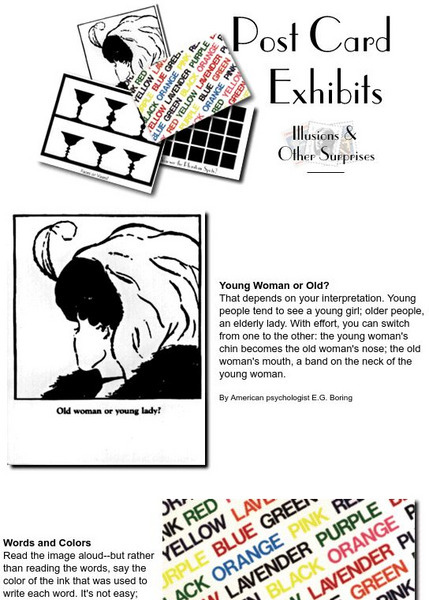
Exploratorium: Post Card Exhibits: Illusions & Other Surprises
At this site students can experiment with different illusions and even print them out to try on their friends.
Treehut
Suzy's World: Eye
Find out how your eyes work and try an experiment involving a cartoon flip book.
Other
Lens Shopper: Anatomy of the Eye
Learn about the human body's own "camera" as you explore the inner workings of the human eye. This resource is displayed as a three-dimensional, interactive animation.