Hi, what do you want to do?






National Library of Medicine
Your Environment, Your Health: Water Quality
How important is water quality where you live? The first module in a six-unit series includes four lessons on water quality. By applying the concept directly to the lives of pupils, they engage in meaningful learning. They read about...

Columbus City Schools
ABC: Acid Base Chemistry
Bubble, bubble, boil and trouble! What causes common substances like baking soda and vinegar to react the way they do? Welcome your junior chemists to the wonders of acid-base chemistry using a comprehensive and fun...

National Library of Medicine
Your Environment, Your Health: The Great Debate—Bottled Water vs. Tap Water in Our School
Should bottled water be sold in schools, or should they only provide tap water? The summative unit in the six-part series encourages scholars debating this topic. The lessons teach how to build an argument, how to gain background...

Calvin Crest Outdoor School
Survival
Equip young campers with important survival knowledge with a set of engaging lessons. Teammates work together to complete three outdoor activities, which include building a shelter, starting a campfire, and finding directions in the...
NOAA
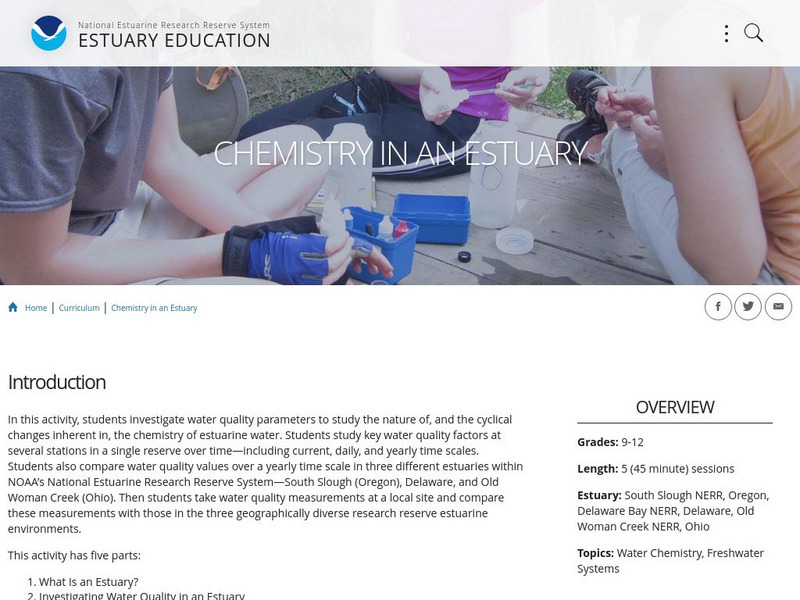
Noaa: Estuaries 101 Curriculum: Chemistry in an Estuary
This activity introduces students to the complex chemistry of estuarine water. Students investigate how chemical and physical water quality factors-pH, temperature, dissolved oxygen, and salinity-change and interact over varying time...

Other
Derm: Water Cycles and Catchments
Students develop an understanding of the water cycle and water catchments. This learning module is divided into introductory, developmental, and culminating activities, and also has several assessment strategies. Resource sheets...