Hi, what do you want to do?





Vision Learning
Vision Learning: Physics: Waves and Wave Motion
Instructional module focusing on waves and wave motion. Discussion includes wave theories, wave basics, and wave speed. The site also includes an interactive practice quiz and links relating to the topic.
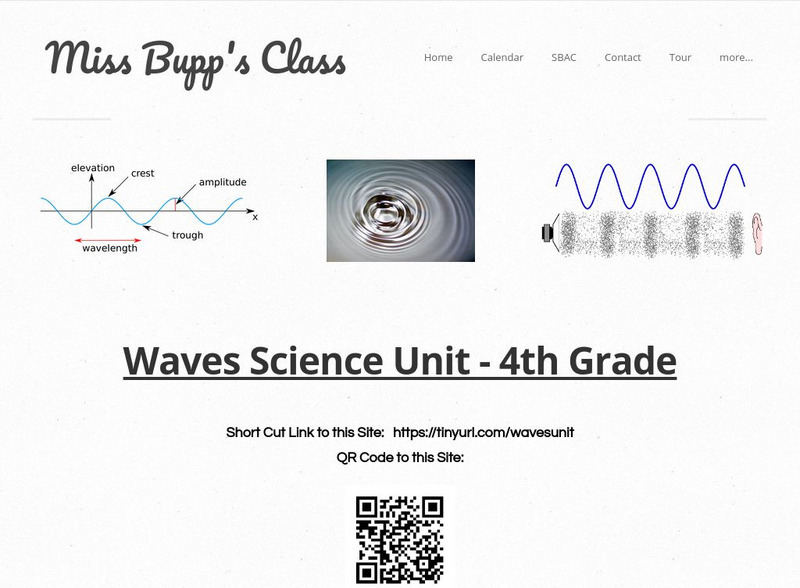
Miss Bupp's Class
Miss Bupp's Class: Waves Science Unit
Enter Miss Bupp's class as she teaches a unit on waves. This extensive unit includes lesson plans, videos, assessments, and hands-on activities to make learning about waves and their characteristics fun and engaging.

Physics Classroom
The Physics Classroom: Behavior of Waves
Boundary behavior, incident pulse, reflected pulse,and transmitted pulse are explained in this thorough tutorial. Animation and drawings are used to clarify the concepts.
Discovery Education
Discovery Education: The Em Spectrum: Waves of Energy
Students are introduced to the electromagnetic spectrum through this group research activity. Each group investigates a different wavelength range within the em spectrum and reports back to class. Discussion ideas also included.
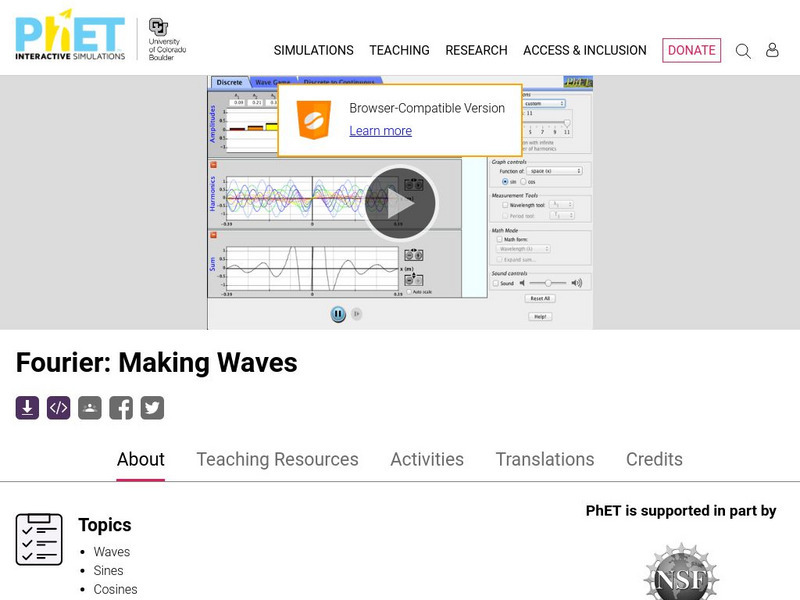
University of Colorado
University of Colorado: Ph Et Interactive Simulations: Fourier Making Waves
Learn how to make waves of all different shapes by adding up sines or cosines. Make waves in space and time and measure their wavelengths and periods. See how changing the amplitudes of different harmonics changes the waves. Compare...

Pennsylvania State University
Kettering University: Doppler Effect and Sonic Boom
Incredible set of animations demonstrating the Doppler effect and shockwaves resulting from supersonic aircraft.
NASA
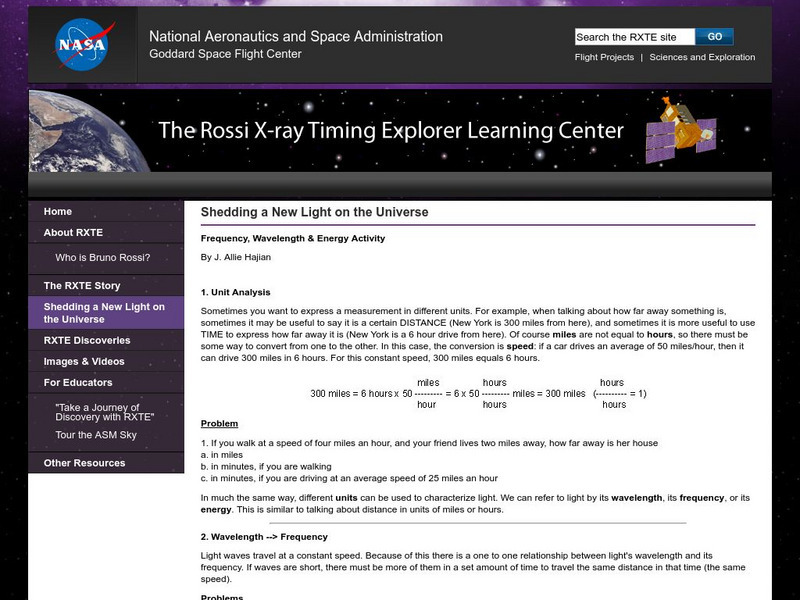
Rxte Learning Center: Frequency, Wave Length, and Energy Activity
Resource focuses on the relationship between the frequency, wavelength and speed of light. Has a link to an interactive activity relating frequency, wavelength, and energy.
Physics Classroom
The Physics Classroom: The Wave Equation
A thorough explanation of the wave equation (Speed = Wavelength * Frequency). A data table and questions to check one's understanding are also part of this lesson.
Physics Classroom
The Physics Classroom: Waves: The Anatomy of a Wave
Students explore the characteristics of both transverse and longitudinal waves.
Physics Classroom
The Physics Classroom: Light Waves/color: Electromagnetic and Visible Spectra
This illustrated physics tutorial explains the electromagnetic and visible spectra of light using illustrated examples and interactive practice problems.
NASA
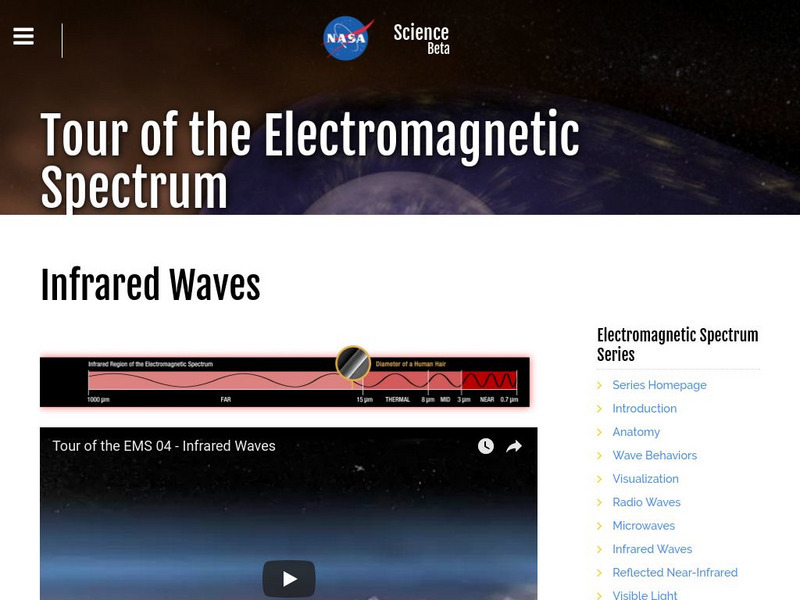
Nasa: Mission: Science: Electromagnetic Spectrum: Infrared Waves
Infrared light lies between the visible and microwave portions of the electromagnetic spectrum. Infrared light has a range of wavelengths, just like visible light has wavelengths that range from red light to violet.
Space Telescope Science Institute
Amazing Space: Star Light, Star Bright
This online exploration provides an opportunity to identify the different properties of waves and the relationship that exists between energy, wavelength, and frequency. Correlate images from the Hubble Telescope to the wavelength,...
Simon Fraser University
Chem1 Virtual Textbook: What Is a Wave?
Acting as part of an overview on quantum theory, this section of the site answers the question, what is a wave? In addition to a definition, several examples and formulas are provided.
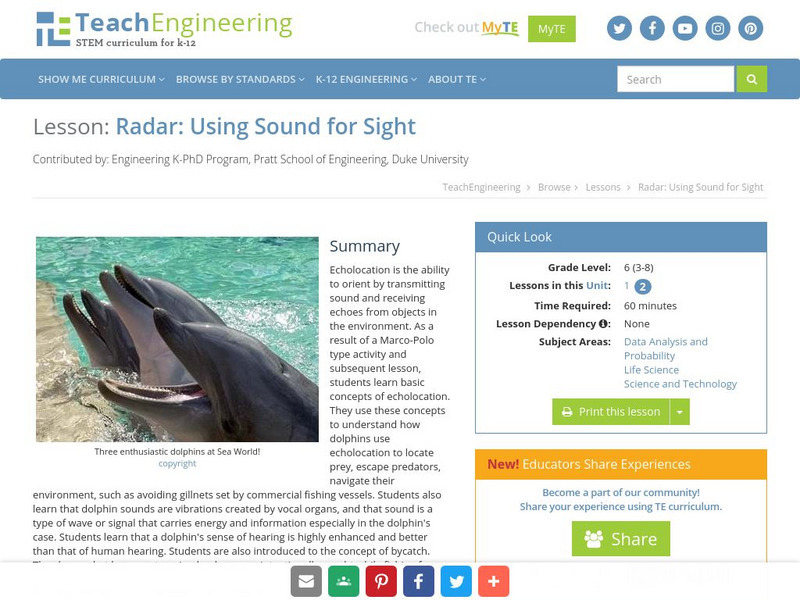
TeachEngineering
Teach Engineering: Sound for Sight
Echolocation is the ability to orient by transmitting sound and receiving echoes from objects in the environment. As a result of a Marco-Polo type activity and subsequent lesson, students learn basic concepts of echolocation. They use...
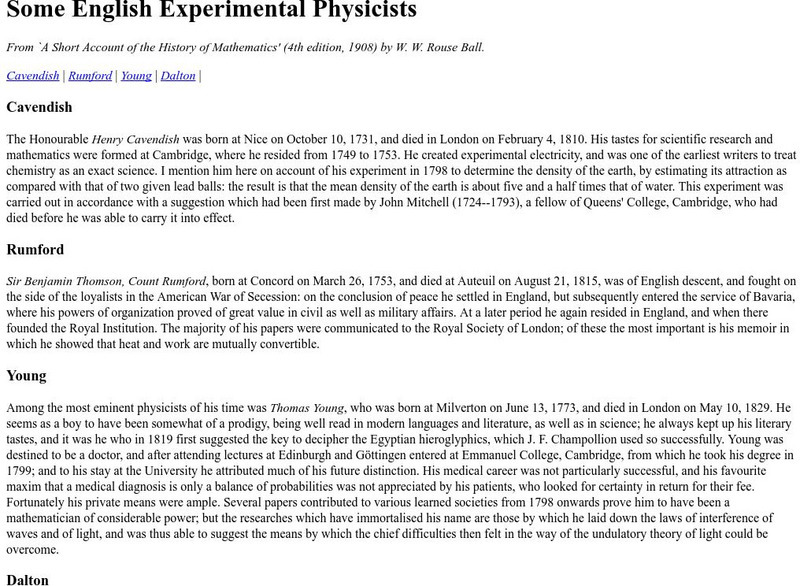
Trinity College Dublin
The History of Mathematics: Young
A short sketch of the life and work of Thomas Young (1773-1829 CE). Traces early upbringing and education and his scientific discoveries and contributions.
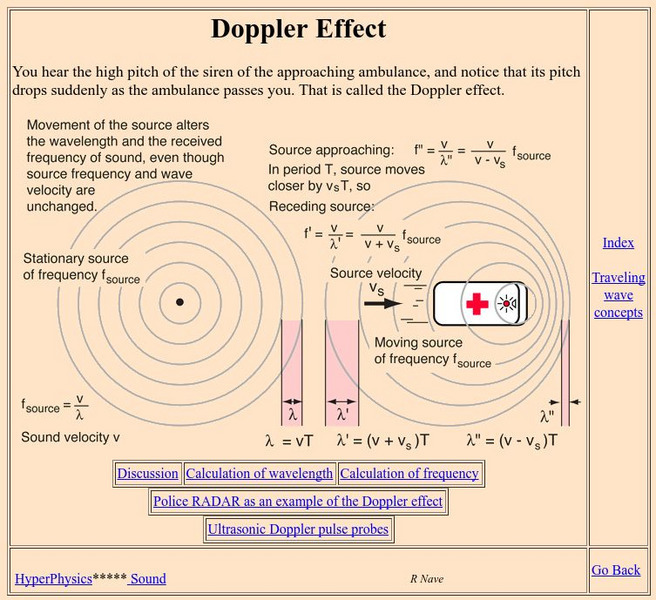
Georgia State University
Georgia State University: Hyper Physics: Doppler Effect
This hypertext physics course page illustrates and explains the Doppler effect. Users perform practice calculations for frequency shifts using the Doppler equation.
NASA
Nasa: Tour of the Electromagnetic Spectrum: Visible Light
Visible light waves are the only electromagnetic waves we can see. We see these waves as the colors of the rainbow. Each color has a different wavelength. Red has the longest wavelength and violet has the shortest wavelength. When all...
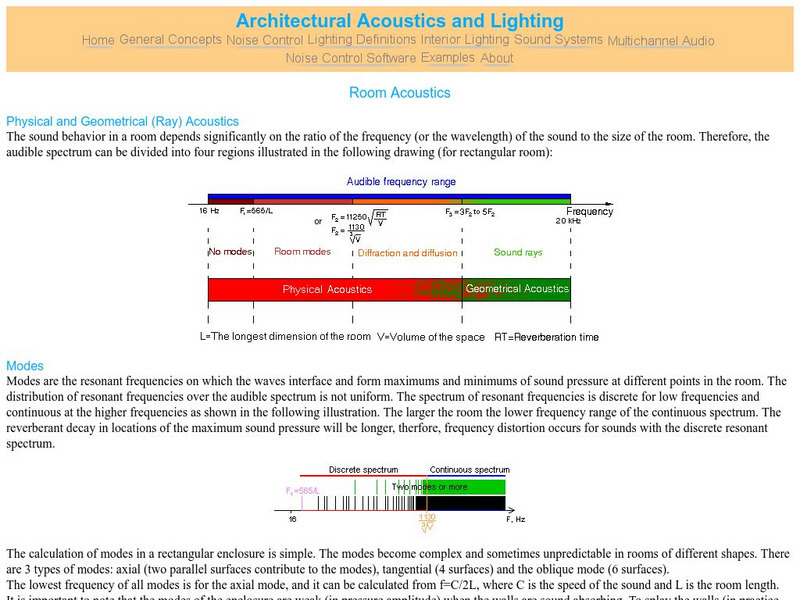
Other
Architectural Acoustics and Lighting: Room Acoustics
This site from Architectural Acoustics and Lighting provides a discussion of various factors affecting the acoustics of a given room. Room dimensions, the wavelength of the sound wave, the physical characteristics of the walls, the...
Physics Classroom
The Physics Classroom: Forced Vibration
This physics tutorial explores forced vibration. Includes links to natural frequency, standing wave patterns and fundamental frequency and harmonics.
University of California
Uc Berkeley: Radio Spectrum
From a course titled "Structure and Interpretation of Signals and Systems." A discussion of the entire radio spectrum, listing wavelength and frequency values for its various parts. The uses of each region of the radio spectrum is...