Hi, what do you want to do?






Columbus City Schools
It’s Electric!
Shocking! Who knew so many great ideas existed for teaching middle schoolers about electricity? Find them all within this energetic framework. You'll light up at the variety of printable and web-based resources within! After building...

Calvin Crest Outdoor School
Survival
Equip young campers with important survival knowledge with a set of engaging lessons. Teammates work together to complete three outdoor activities, which include building a shelter, starting a campfire, and finding directions in the...

Houghton Mifflin Harcourt
That’s Amazing!: English Language Development Lessons (Theme 3)
That's Amazing! is the theme of an English language development unit created by Houghton Mifflin. Following a speak, look, move, and listen routine, scholars delve into topics; seasons, weather, animals, landforms, telling...

Curated OER
Meteorology Madness
Students probe the dynamic weather changes through several hands-0n activities in this seven lessons unit. The hydrologic cycle, clouds, atmosphere, air movement, fronts, and forecasting form the components presented in this unit.

CK-12 Foundation
Ck 12: Fourth Grade: Physical Science: Moving Air and Water as Energy Sources
[Free Registration/Login may be required to access all resource tools.] Discusses wind energy and hydroelectric energy.

TeachEngineering
Teach Engineering: Energy
Through nine lessons, students are introduced to a range of energy types--electrical, light, sound and thermal-as well as the renewable energy sources of wind, hydro (water) and solar power. Subjects range from understanding that the...
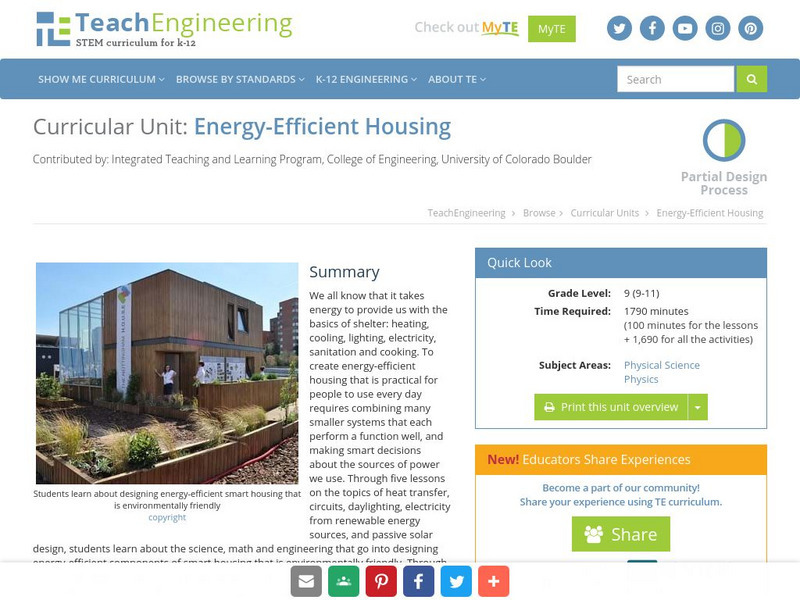
TeachEngineering
Teach Engineering: Energy Efficient Housing
We all know that it takes energy to provide us with the basics of shelter: heating, cooling, lighting, electricity, sanitation and cooking. To create energy-efficient housing that is practical for people to use every day requires...

TED Talks
Ted: Ted Ed: Dark Matter: The Matter We Can't See
The Greeks had a simple and elegant formula for the universe: just earth, fire, wind, and water, but this visible matter comprises only 4% of the universe. CERN scientist James Gillies tells us what accounts for the remaining 96% (dark...

TeachEngineering
Teach Engineering: Environment
Through 10 lessons and more than 20 hands-on activities, students are introduced to the concept of an environment and the many interactions within it. As they learn about natural and human-made environments, as well as renewable and...
Ministry of Education, Sports & Culture (Samoa) Government
Mesc: Samoa School Net: Forces to Make Weather: Weather & Water Cycle
Explains three forces of nature and how they impact the weather. These include infrared rays from the sun, differences in air pressure, and wind flow when hot and cold air masses meet. Supported by lots of visuals.
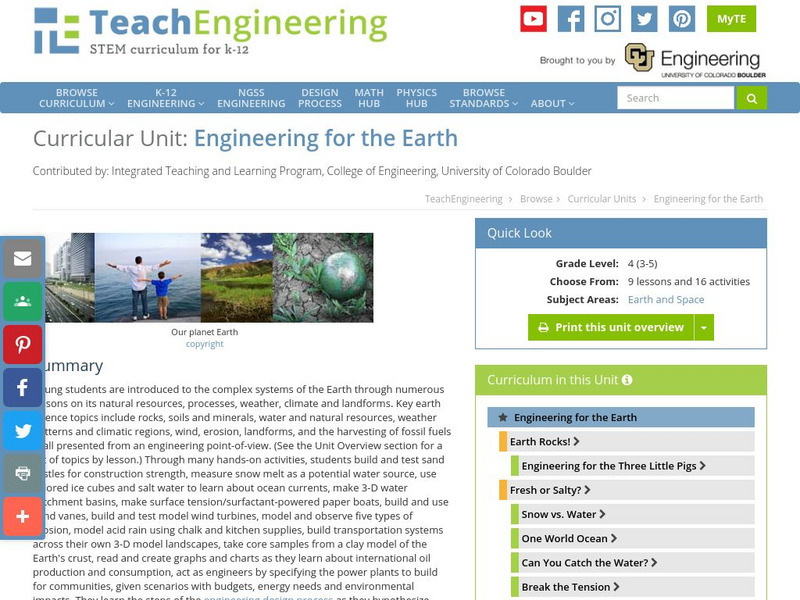
TeachEngineering
Teach Engineering: Engineering for the Earth
Young students are introduced to the complex systems of the Earth through numerous lessons on its natural resources, processes, weather, climate and landforms. Key earth science topics include rocks, soils and minerals, water and natural...
Other
Digital Library for Earth System Education: Teaching Box: Essentials of Weather
A suite of lessons focusing on the basic elements of climate and weather. Inquiry-based exploration of extreme weather events and the factors of weather including clouds, wind, air pressure, temperature, and the water cycle.
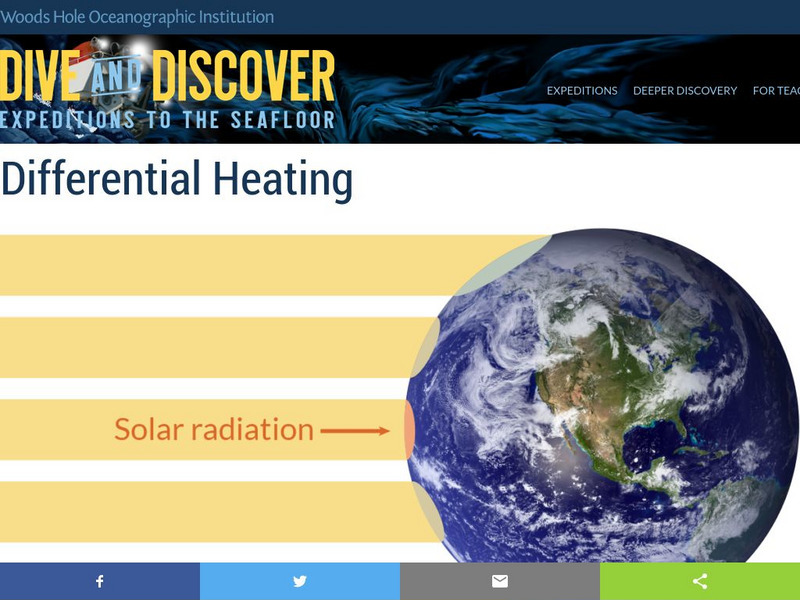
Woods Hole Oceanographic Institution
Woods Hole Oceanography Institute: Deep Ocean Circulation
What causes the circulation of ocean waters that are too deep to be affected by wind? Find out how salinity and temperature drive the deep sea currents. This resource has several videos and an online quiz.