Hi, what do you want to do?





PBS
Wnet: Thirteen: Classroom Interactives: Supreme Court Landmark Case Timeline
Educational interactive activity where users create a timeline of landmark Supreme Court cases. Provides information, facts, and related resources for each case.
PBS
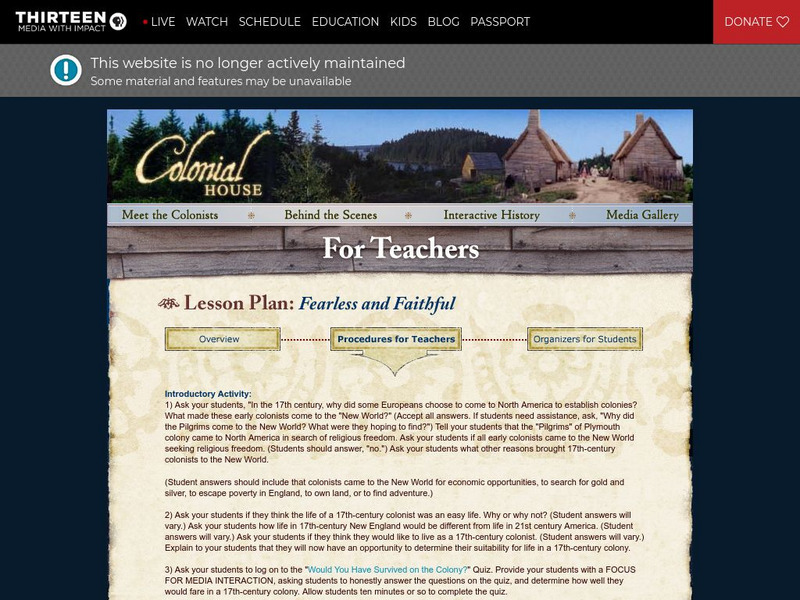
Wnet: Thirteen: Colonial House: Fearless and Faithful
A lesson plan based on the PBS program, Colonial House, which aired in 2004. The program is available on DVD and the link to the activity is still available. This lesson plan explores why ordinary people left their homes in Europe to...
PBS
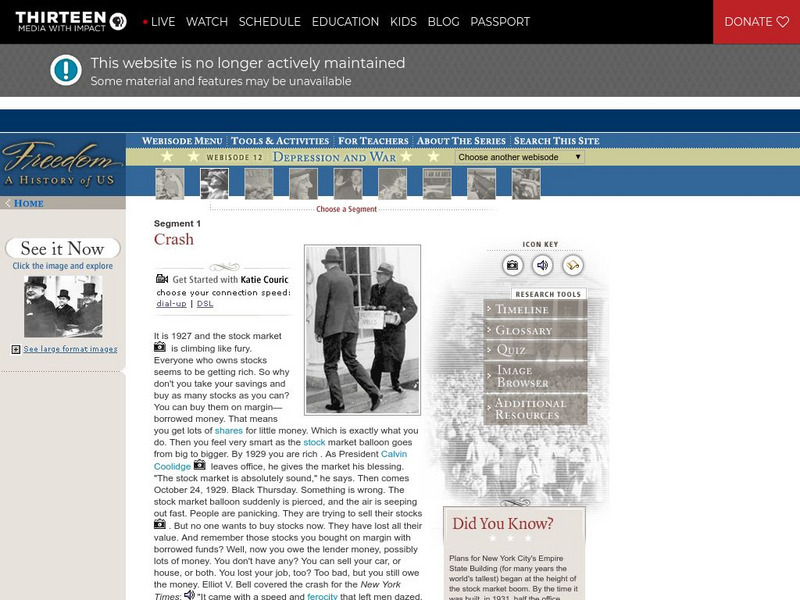
Wnet: Thirteen: Freedom: A History of Us: Crash
From the extensive and very approachable series, Freedom: A History of US, based on the books by Joy Hakim, read about the stock market crash in 1929 and its ramifications.
PBS
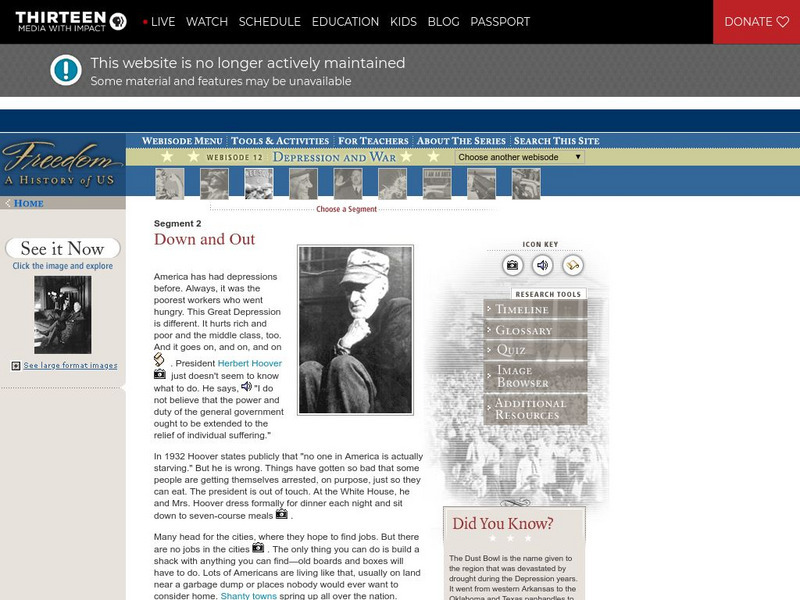
Wnet: Thirteen: Freedom: A History of Us: Down and Out
Read about the response of Herbert Hoover to the suffering of those who were hurting during the Great Depression. From the PBS series, Freedom: A History of US, based on the books by Joy Hakim.
PBS
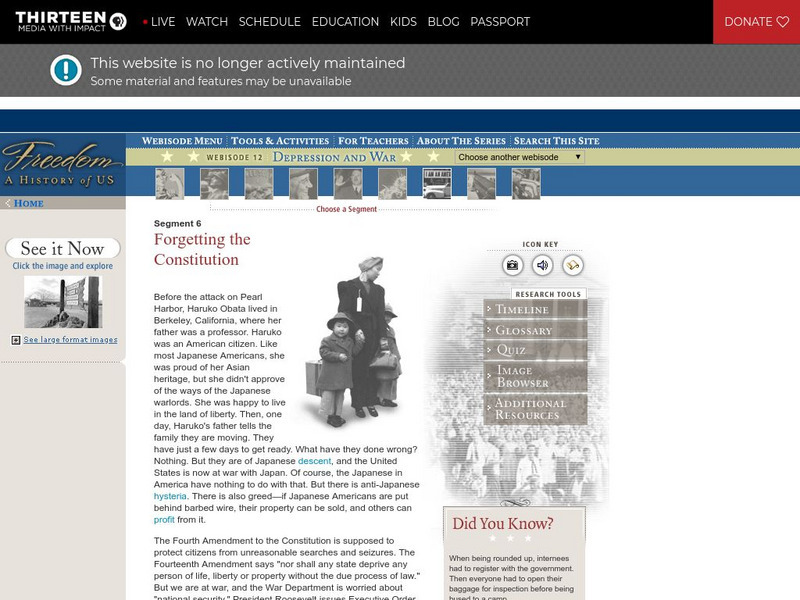
Wnet: Thirteen: Freedom: A History of Us: Forgetting the Constitution
Read the story of a young Japanese-American girl whose family was sent to an internment camp after Pearl Harbor.
PBS
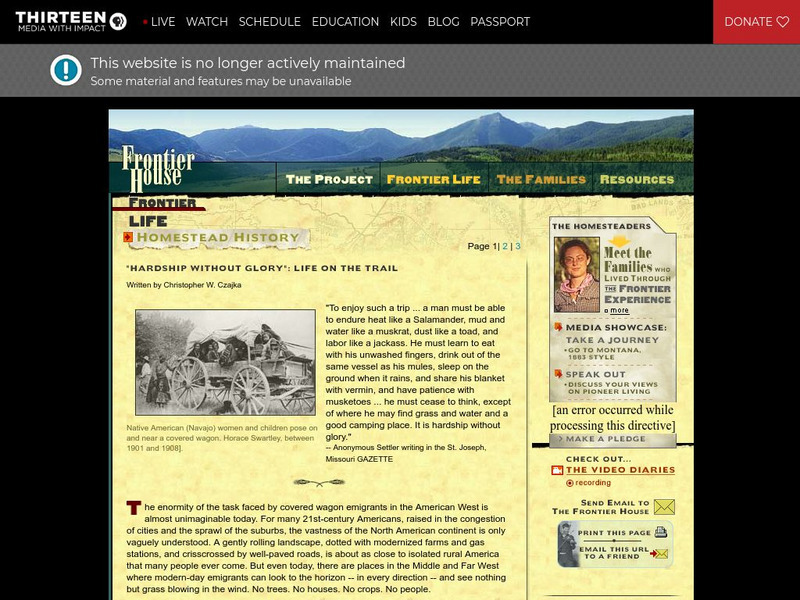
Wnet: Thirteen: Frontier Life: "Hardship Without Glory": Life on the Trail
From the PBS series, "Frontier House," read about the struggles that pioneers experienced as they made their ways west to new lands via wagon trains.
PBS
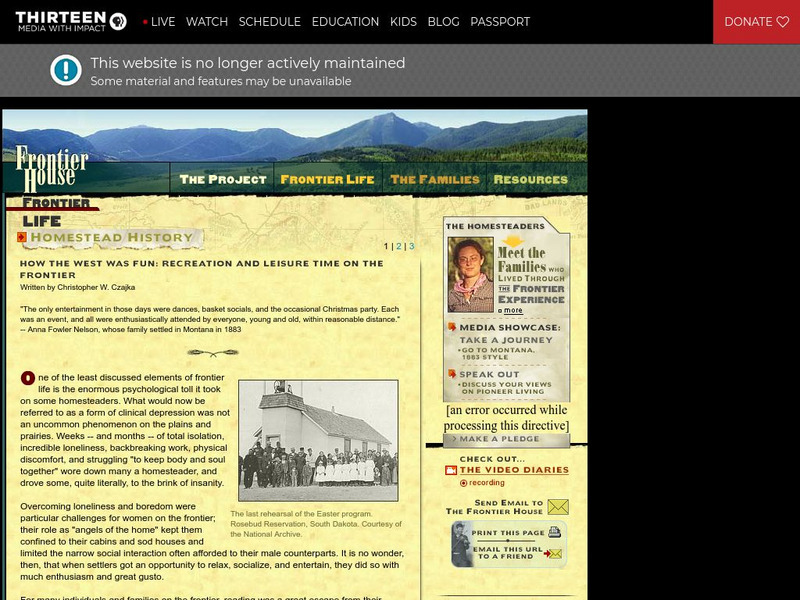
Wnet: Thirteen: Frontier Life: Recreation and Leisure Time on the Frontier
Read about how the homesteaders on the American frontier added a little levity to their otherwise harsh frontier life, and in particular how women, how spent much time at home, worked to add variety to their lives. From a companion essay...
PBS
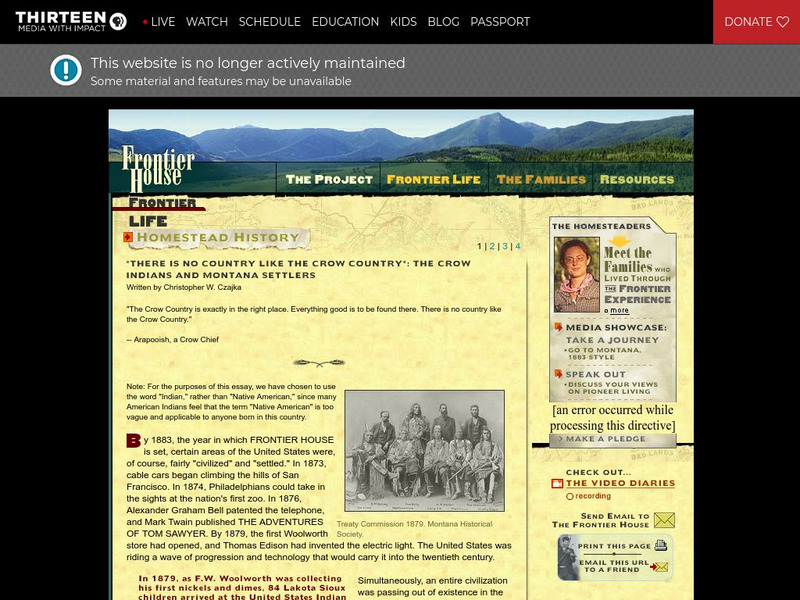
Wnet: Thirteen: Frontier Life: The Crow Indians and Montana Settlers
Find out how the Crow Indians were affected by the opening of the Montana Territory to white settlement. From a companion essay to the PBS series, Frontier House.
PBS
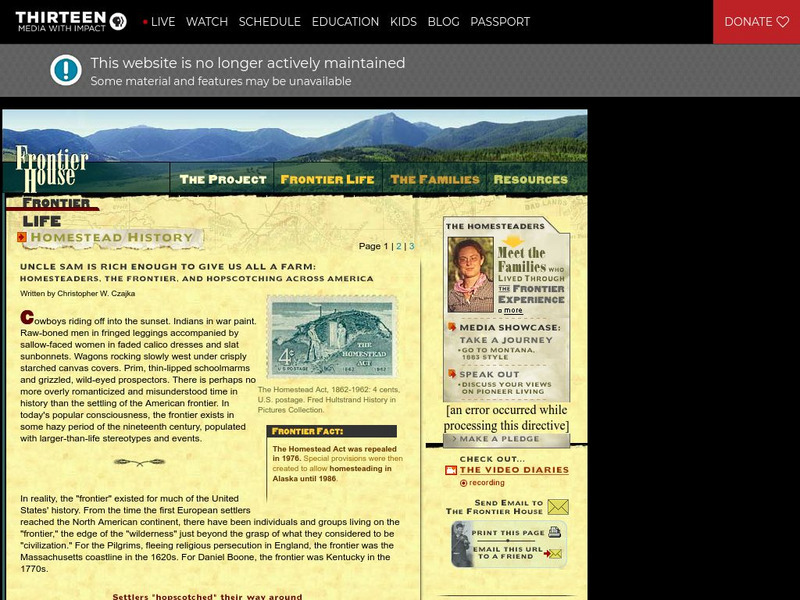
Wnet: Thirteen: Frontier Life: Uncle Sam Is Rich Enough to Give Us All a Farm
In this companion essay to the PBS series, Frontier House, you can see how the Homestead Act opened up the frontier to ordinary citizens, eager for a chance to own their own property.
PBS
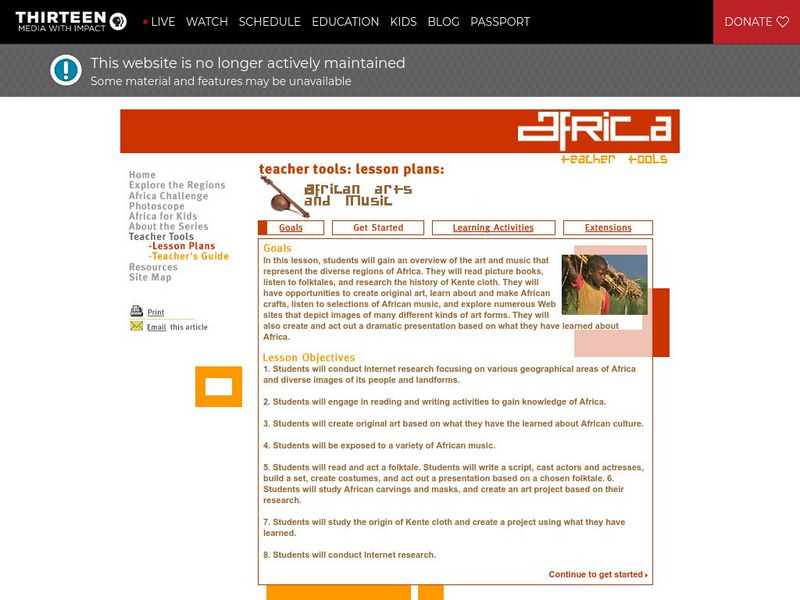
Wnet: Thirteen: Teacher Tools: African Arts and Music Lesson Plans
Explore the world of African Art and Music when you check out this lesson plan. This site features learning objectives, activities and more.
PBS
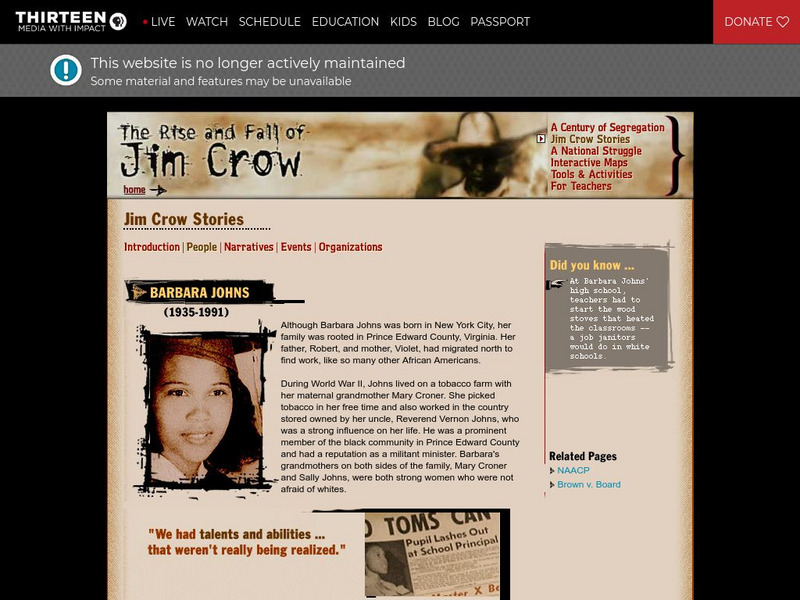
Wnet: Thirteen: The Rise and Fall of Jim Crow: Barbara Johns
The amazing story of Barbara Johns, the 16-year-old who called a strike and walk out to protest the overcrowding of Robert Russa Moton High School.
PBS
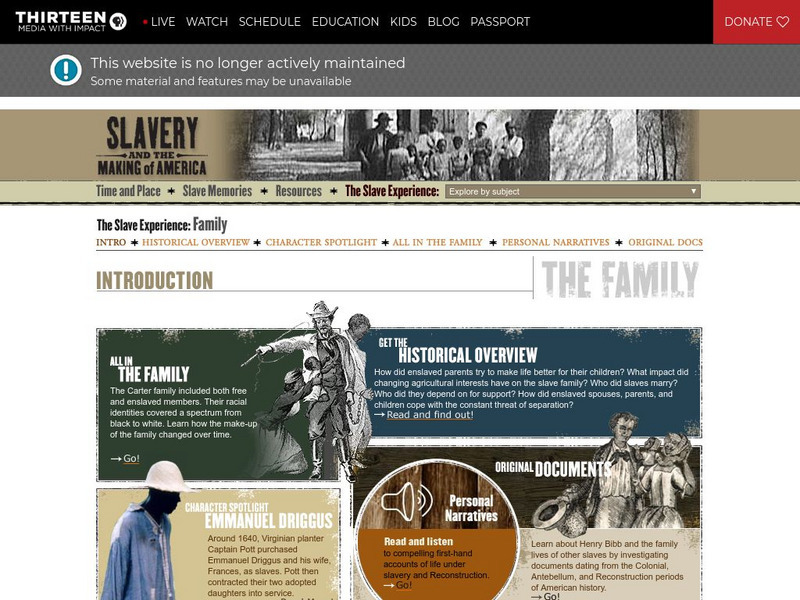
Wnet: Thirteen: The Slave Experience: Family
Using oral histories and primary sources, the story of slave family life is told.
PBS
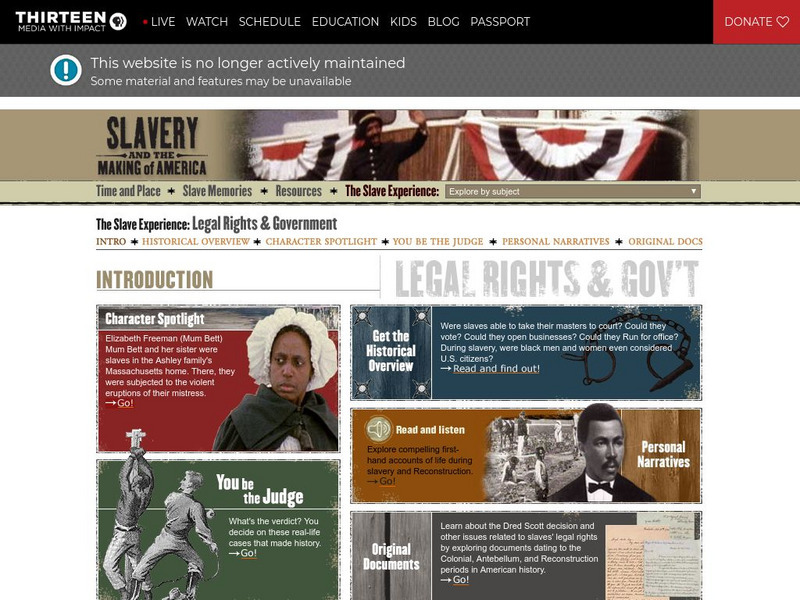
Wnet: Thirteen: The Slave Experience: Legal Rights and Government
Using primary materials and oral histories, PBS tells the story of the slaves' legal rights and their position with the US Government.
PBS
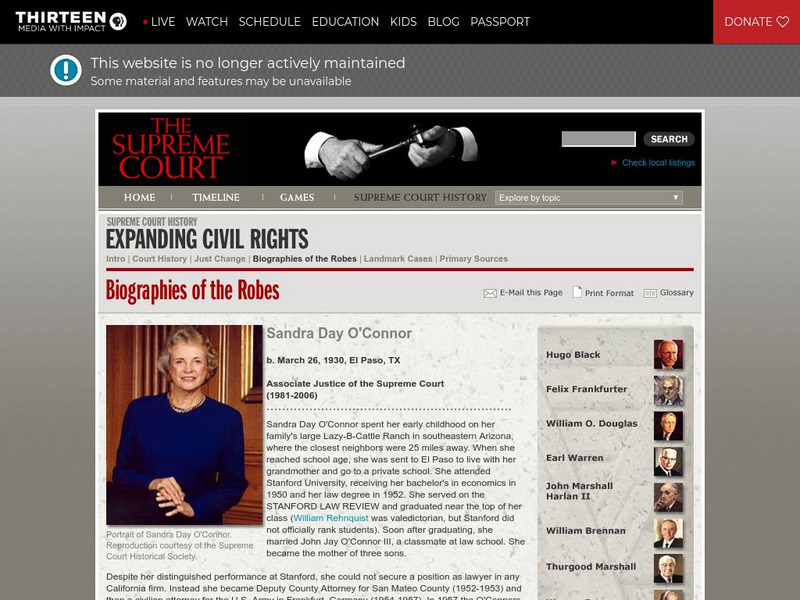
Wnet: Thirteen: The Supreme Court: Biographies of the Robes: Sandra Day O'connor
Biographical account of Supreme Court Justice Sandra Day O'Connor, appointed by Ronald Reagan in 1981. She was the first woman to ever serve as a justice on the Supreme Court.
PBS
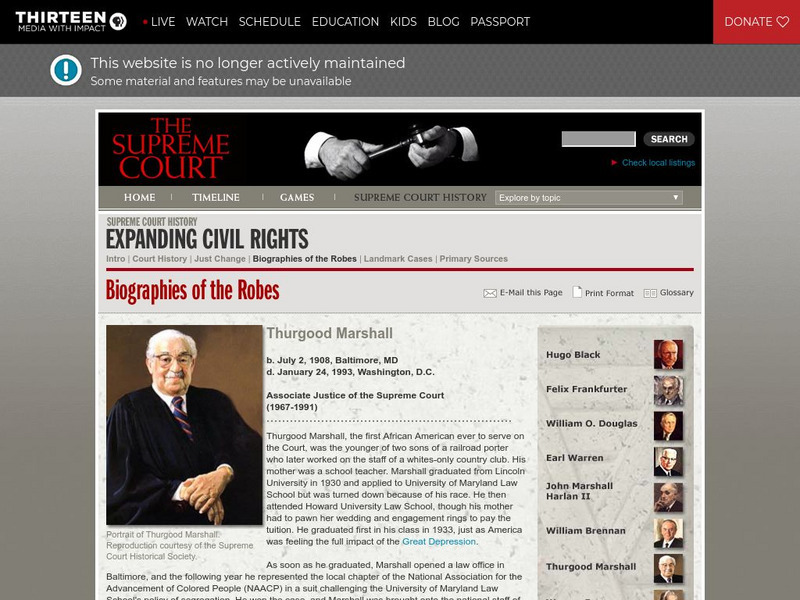
Wnet: Thirteen: The Supreme Court: Biographies of the Robes: Thurgood Marshall
PBS presents a biographical account of the life of Supreme Court Justice Thurgood Marshall, the first African American to serve in the court. Details his commitment to civil rights and liberties.
PBS
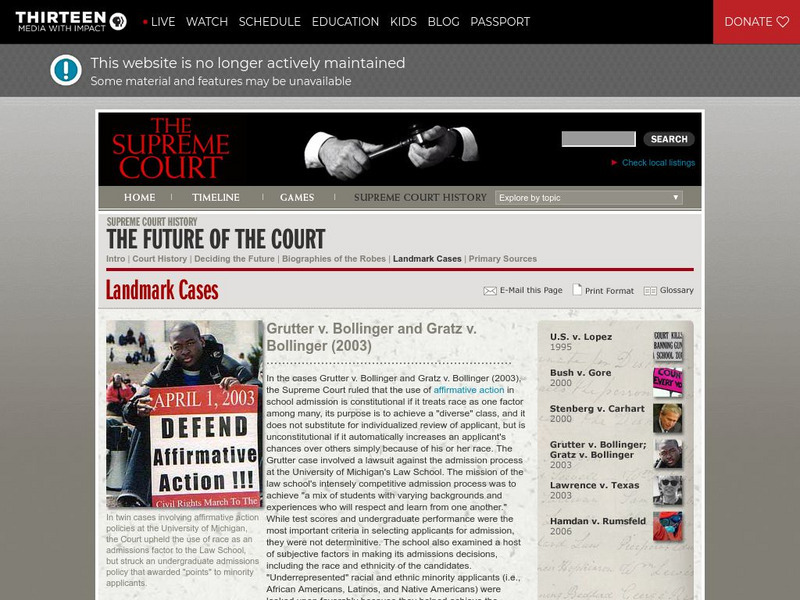
Wnet: Thirteen: The Supreme Court: Grutter v. Bollinger and Gratz v. Bollinger (2003)
PBS offers a synopsis of the landmark Supreme Court cases of Grutter v. Bollinger and Gratz v. Bollinger which "affirmed and refined its position on affirmative action".

PBS
Wnet: Thirteen: The Supreme Court: Landmark Cases: Griswold v. Connecticut (1965)
PBS provides a detailed overview of the landmark Supreme Court case of Griswold v. Connecticut which dealt with the right to marital privacy. The opinion was written by Justice William Douglas.
PBS
Wnet: Thirteen: The Supreme Court: Landmark Cases: Mc Culloch v. Maryland (1819)
PBS gives an explanation of the Supreme Court case of McCulloch v. Maryland that established a broad interpretation of the powers of the federal government. Opinion delivered by Chief Justice John Marshall.
PBS
Wnet: Thirteen: The Supreme Court: Landmark Cases: Reynolds v. Sims (1964)
PBS provides a synopsis of the landmark Supreme Court case of Reynolds v. Sims, the Alabama reapportionment case in which the Court reaffirmed the principle of one person, one vote. Decision was written by Chief Justice Earl Warren.
PBS
Wnet: Thirteen: The Supreme Court: Landmark Cases: Schechter v. u.s. (1935)
PBS provides details on the landmark Supreme Court case of Schechter v. U.S. which dealt with congressional powers under the Commerce Clause.
PBS
Wnet: Thirteen: The Supreme Court: Landmark Cases: Schenck v. u.s. (1919)
PBS offers a summary of the landmark Supreme Court case of Schenck v. U.S. which dealt with when an individual's free speech rights under the First Amendment presented a "clear and present danger." This case has since been overturned.
PBS
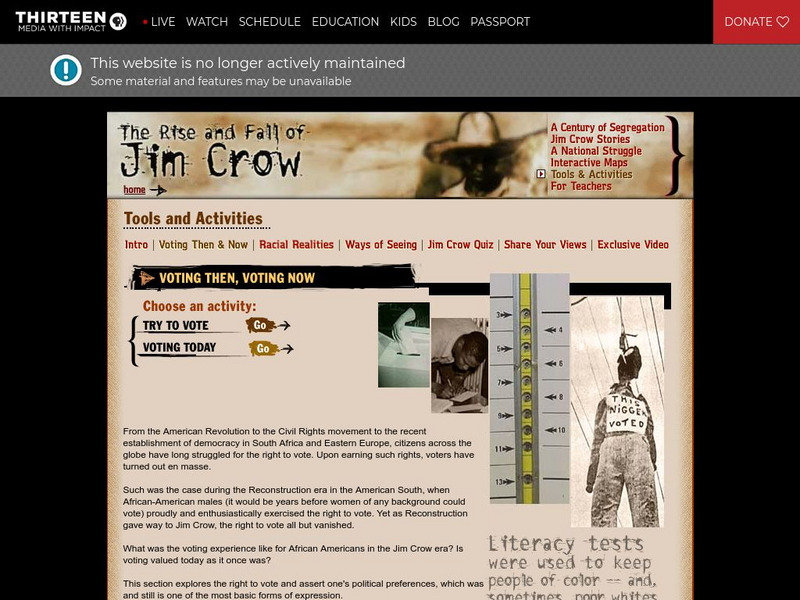
Wnet: Thirteen: The Rise and Fall of Jim Crow: Voting Then, Voting Now
This site explores the voting experiences for African Americans beginning in the Jim Crow era. It shares literacy tests African Americans had to take and other challenges they were given for the right to vote. This denial of the right to...
PBS
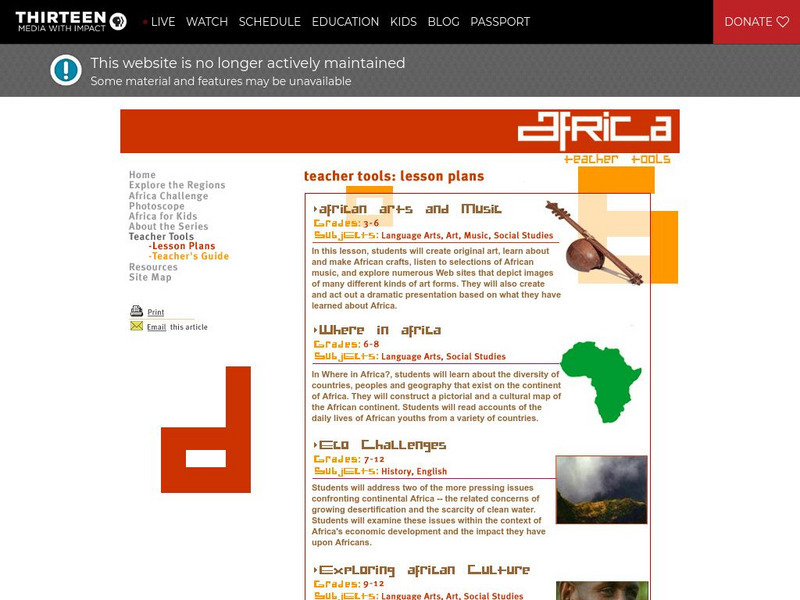
Wnet: Thirteen: Africa Teacher Tools: Lesson Plans
Explore this comprehensive site featuring links to lesson plans for Africa. These teacher tools range in content and grade level. Use this site to discover more about the culture and history of Africa.

PBS
Wnet: Thirteen: The Supreme Court: Landmark Cases: United States v. Lopez (1995)
PBS features details on the landmark Supreme Court case of United States v. Lopez which set limits to Congress's power under the Commerce Clause of the United States Constitution.