Hi, what do you want to do?






Oxford Online English
How to Link Words - Speak English Fluently - Pronunciation Lesson
In this lesson, you can see some common examples of linking in English pronunciation. You can also see how learning about linking can help your English listening and improve your spoken English....
Curated Video
Hamlet 4.7 Word Nerd: Trick
This video analyzes Laertes' struggle with his emotions and the word "trick" in Act 4, Scene 7 of Shakespeare's Hamlet. It explains how Laertes' crying is depicted as a habitual response to tragic news and explores the various meanings...
Curated Video
The Taming of the Shrew 1.2 Word Nerd: “ass”
This video explains the etymology and usage of the word "ass" in English, which refers to donkeys and other beasts of burden. It highlights how the term evolved to describe someone as foolish or silly, much like its use in Shakespeare's...
Curated Video
Julius Caesar 2.1 Word Nerd: Whet
This video explores the etymology of the word "whet" and its application in Shakespeare's "Julius Caesar." The video highlights how this term has evolved to include figurative meanings such as enhancing one’s appetite or interest. It...
Curated Video
A Midsummer Night's Dream 2.1.245 Word Nerd: Nymph
Tthe word nymph derives from the latin verb "nubrey," to mary in ancient latin. The word, "nymph" referred to a woman who was ready to marry because she had reached sexual maturity. In medieval English, however, nymph was used to refer...
Curated Video
A Midsummer Night's Dream 1.1.71 Word Nerd: Mew
The word "mew" originates from the Latin word "mutate," which means to change, and is the root of the English word "mutate." However, "mew" is specifically used to describe the molting process of a bird. This term has been extended...
Curated Video
A Midsummer Night's Dream 1.1.033 Word Nerd: Gaud
This video explores the etymology and historical context of the use of the word "gaud," relating it to a Latin word "gaudere," meaning to rejoice, and its association with a special kind of bead on a Catholic Rosary. It also touches on...
Curated Video
A Midsummer Night's Dream 3.2.158 Word Nerd: Conjure
The word "conjure" comes from the Latin words for "with" and "oath," initially meaning to accomplish something through a sacred oath. By Shakespeare's era, it evolved to refer specifically to summoning devils or spirits by using a sacred...
Curated Video
A Midsummer Night's Dream 2.1.195 Word Nerd: Adamant
The word "adamant" originates from the Latin word "aramas," meaning a hard stone, and has evolved to denote anything unbreakable. In Shakespeare's era, "adamant" specifically referred to a lodestone or naturally occurring magnet,...
Curated Video
A Midsummer Night's Dream 2.1.121a Word Nerd: Henchman
The term "henchman" originates from the German word "hangst," meaning a male horse, and initially described a servant who walked beside the king or noblemen while they rode their horses. By Shakespeare's time, it referred to boys and...
Curated Video
A Midsummer Night's Dream 5.1.202 Word Nerd: Ninny
The word "innocent" originates from the Latin prefix "in-" (not) and the verb "nocere" (to do harm), initially meaning someone who does no harm. By the time of Shakespeare, "innocent" had evolved to describe someone naive due to youth....
Crash Course
Taking Notes: Crash Course Study Skills
The first step in honing your new study skills is to take better notes. This week Thomas will tell you everything you need to know to come to class prepared and find a note-taking system that will help you retain and review like a champ.

Curated Video
Word Study: Khata - "Sin"
The word “sin” is one of the most common bad words in the Bible, but what does it really mean? In this video, we’ll explore the concept of “moral failure” that underlies this important biblical word. Get ready to discover a profound and...

Curated Video
Word Study: Nephesh - "Soul"
We explore the Hebrew word "nephesh" that often gets translated as "soul." The English word usually refers to a non-material essence of a human that survives after death, but nephesh means something different. It is referring to humans...

Curated Video
Word Study: Lev - "Heart"
Different cultures have different conceptions of the human heart, what it is and what it does, and the biblical authors are no exception. In this video, we'll explore the ancient Hebrew words for "heart" as well as the different ideas of...

Curated Video
Word Study: Pesha - "Transgression"
"Transgression" is one of those Bible words that seems clear until you have to explain it to somebody. In this video, we'll explore the fascinating and sophisticated meaning of this biblical "bad word." Get ready for a sobering...
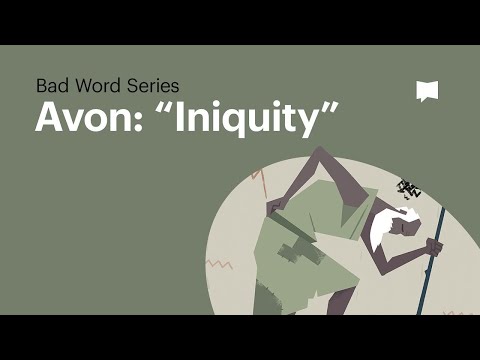
Curated Video
Word Study: Avon - "Iniquity"
Iniquity is a biblical word that very few people use anymore, and even fewer people know what it means! In this video, we’ll explore the significance of this word in ancient Hebrew, and discover a whole new way to think about our selfish...

Curated Video
Word Study: Shalom - "Peace"
"Peace" is a very common word in English, that means different things to different people. It's also a very important word in the Bible that refers not only to the absence of conflict but also to the presence of something else. In this...
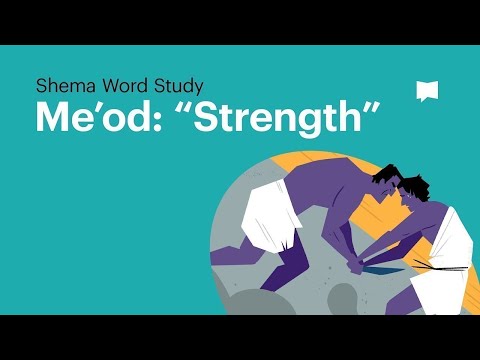
Curated Video
Word Study: Me'od - "Strength"
What does it mean to love God "with all of your strength"? In this final installment of our videos on the Shema, we explore the Hebrew word underneath this phrase. And spoiler alert: "strength" is only one of many ways this rich word...

Curated Video
Word Study: Agape - "Love"
The word “love” is one of the sloppiest words in our language, as it primarily refers to a feeling that happens to a person. In the New Testament, “love” refers to a way of treating people that was defined by Jesus himself: seeking the...

Curated Video
Word Study: Ahavah - "Love"
Let's talk about love, Old Testament style! In this video, we'll explore the various ways the Hebrew authors used the word "love," and how they depicted God as the ultimate source and goal of all human love. #Shema #TheBibleProject #Love
Be Smart
How Some Words Get Forgetted
English is a confusing language for many reasons. But the irregular verbs might be the most confusing part. Why is "told" the past tense of "tell" but "smold" isn't the past tense of "smell"? It turns out that the study of irregular...
TED-Ed
TED-ED: Where do new words come from? - Marcel Danesi
There are over 170,000 words currently in use in the English language. Yet every year, about a thousand new words are added to the Oxford English Dictionary. Where do they come from, and how do they make it into our everyday lives?...
TED Talks
TED: An honest history of an ancient and "nasty" word | Kate Lister
With candor and cunning, sex historian Kate Lister chronicles the curious journey of an ancient, honest word with innocent origins and a now-scandalous connotation in this uproarious love letter to etymology, queens, cows and all...
Other popular searches
- Word Study Activities
- Word Study and Fluency
- Word Study Games
- Word Study Lesson Plans
- Word Study Lessons
- Solar System Word Study
- Esl Word Study
- Word Study Second Grade
- Word Study For
- Vocabulary Word Study
- Phonics/word Study
- Old Word Study