Hi, what do you want to do?






University of Florida
Florida Museum of Natural History: Most Commonly Asked Fish Questions
How many fish species are there? What is the world's largest and smallest fish? How long do fish live? How is the age of fish determined? You will find answers to these and other questions in this interesting site.

Smithsonian Institution
National Museum of Natural History: Paleobiology: The Burgess Shale
This terrific site from the National Museum of Natural History gives general information about the Burgess Shale and the fossils found within. Use the links to go the Burgess Shale specimens page where there are drawings of many of the...

TES Global
Tes: Insights Into Shakespeare Image Bank and Notes
[Free Registration/Login Required] This is a slide show of artifacts from Shakespeare's world and notes for teachers which include information about Shakespeare's world that impacted his plays including the following: Information about...

Khan Academy
Khan Academy: Introduction to Buddhism
Buddhism is one of the world's great religions, and has deeply influenced the character and evolution of Asian civilization over the past 2,500 years. It is based on the teachings of a historical figure, Siddhartha Gautama, who lived...
Smithsonian Institution
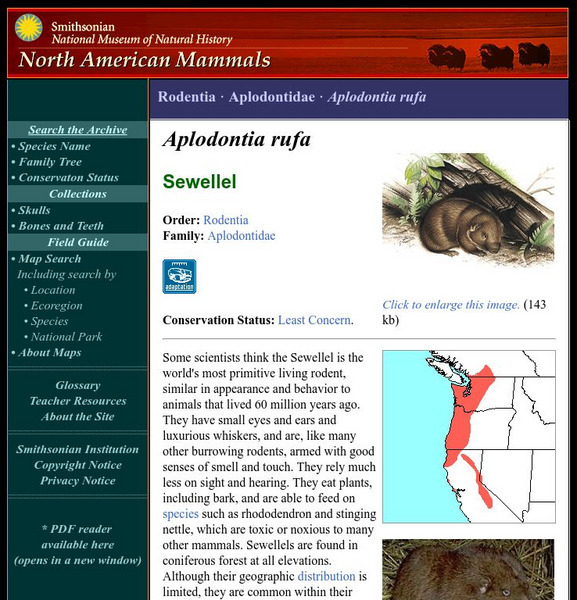
National Museum of Natural History: American Mammals: Mountain Beaver
Some scientists think the Mountain Beaver is the world's most primitive living rodent, similar in appearance and behavior to animals that lived 60 million years ago. They have small eyes and ears and luxurious whiskers, and are, like...
Smithsonian Institution
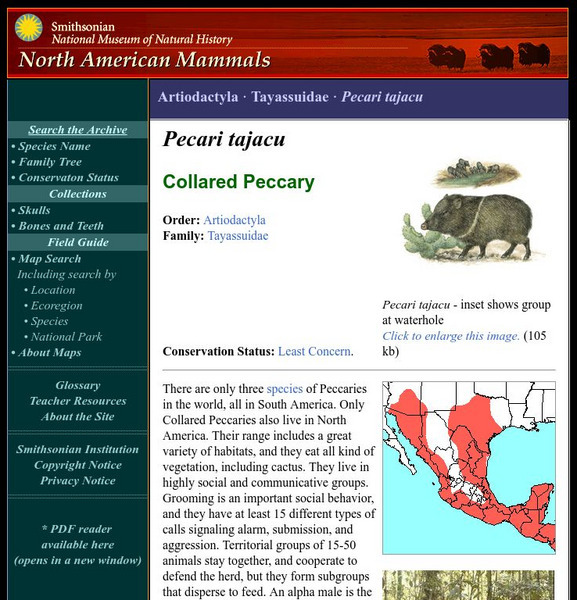
National Museum of Natural History: American Mammals: Collared Peccary
There are only three species of Peccaries in the world, all in South America. Only Collared Peccaries also live in North America. Learn more about the Pecari tajacu, more commonly known as a Collared Peccary, in this easy-to-read species...
Smithsonian Institution
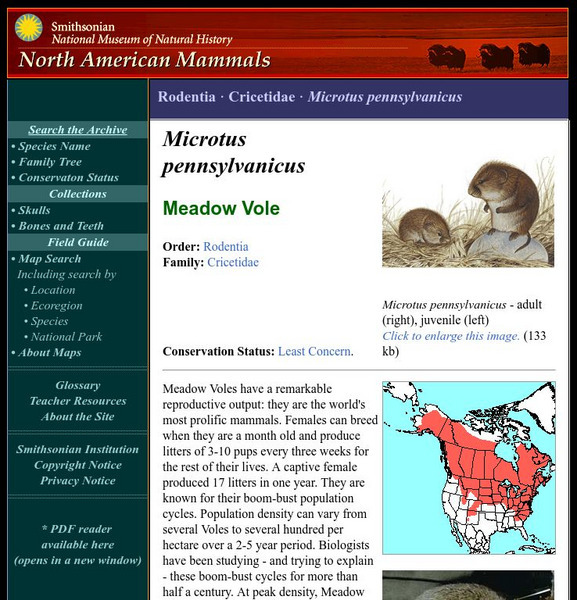
National Museum of Natural History: American Mammals: Meadow Vole
Meadow Voles have a remarkable reproductive output: they are the world's most prolific mammals. Females can breed when they are a month old and produce litters of 3-10 pups every three weeks for the rest of their lives. Learn more about...
Smithsonian Institution
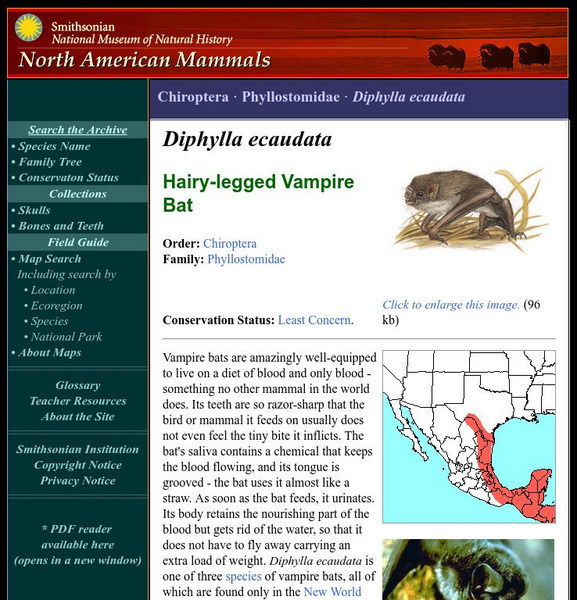
National Museum of Natural History: American Mammals: Hairy Legged Vampire Bat
Vampire bats are amazingly well-equipped to live on a diet of blood and only blood - something no other mammal in the world does. Its teeth are so razor-sharp that the bird or mammal it feeds on usually does not even feel the tiny bite...
State Library of North Carolina
N Cpedia: Transportation Improvements in the 1920s
When World War I ended in 1918 and the troops came home, folks felt optimistic about the future and eager to get on with their lives. This optimism led to an extraordinary decade that brought major changes in the way citizens traveled by...
Art Institute of Chicago
Art Institute of Chicago: Art Access: Renaissance and Baroque Art
Art of the Baroque period of the 17th century embodied a dynamic energy that mirrored the restless spirit of its age. In painting, dramatic images of faith driven by the Catholic Church's Counter-Reformation contrast with lively...
Curated OER
Smithsonian: Magic Lanterns, Magic Mirrors
Like fun house mirrors, motion pictures over the past one hundred years have reflected, challenged, influenced, and altered our visions of ourselves and the world in which we live. This virtual Exhibition was produced by the Photographic...
Curated OER
Smithsonian: Magic Lanterns, Magic Mirrors
Like fun house mirrors, motion pictures over the past one hundred years have reflected, challenged, influenced, and altered our visions of ourselves and the world in which we live. This virtual Exhibition was produced by the Photographic...