Hi, what do you want to do?






Crash Course
The Roads to World War I: Crash Course European History
Much has been written about what exactly caused World War I. As befits a true global war, the reality is that there isn't a single cause. There aren't even three causes. There are a vast array of causes. Today we'll get into just a few...
History Hit
10 Steps to World War Two: The great depression and Hitler seizes control
How did Britain feel after World War I? What was one of the reasons Hitler was elected in Germany? After being elected, what were his aims?<br/>
10 Steps to World War Two, Part 1
10 Steps to World War Two, Part 1
Independent Producers
Life in the Trenches During World War I
American soldiers who fought in the trenches of World War I were told they were going into a great adventure to fight for democracy. But new technology, from machine guns to poison gas, made this war more terrible than any previous war....
PBS
Concentration Camps Are Older Than World War II
We're all familiar with the haunting images of the concentration camps of World War II. But the history of those concentration camps extends back to the late 19th. century and the invention of barbed wire and repeating rifle [see...
History Hit
10 Steps to World War Two: Re-occupation of the Rhineland and Anschluss with Austria
Where is Rhineland and was it of military interest? Why did Hitler want Austria and how did Britain feel about this?<br/>
10 Steps to World War Two, Part 3
10 Steps to World War Two, Part 3
Crash Course
Russian Revolution and Civil War: Crash Course European History
World War I was very hard on the Russian Empire. So hard, in fact, that it led to the end of the Russian Empire. As the global conflict ground on, Tsar Nicholas II faced increasing unrest at home. Today we'll learn about the Revolutions...
History Hit
10 Steps to World War Two: Suchetenland Crisis and the occupation of Czechoslovakia
What was the most iconic moment during the appeasement? What was the watershed moment when it came to the occupation of Czechoslovakia?<br/>
10 Steps to World War Two, Part 4
10 Steps to World War Two, Part 4
History Hit
10 Steps to World War Two: The Nazi-Soviet pact and invasion of Poland
What did this pact mean for the two countries and how did this affect Poland? What did Hitler think of Britain and France? 10 Steps to World War Two, Part 5
History Hit
10 Steps to World War Two: Hitler takes the Saarland and rearmament
Where is Saarland located and why was it important? As Germany started rearmament, why wasn't Hitler challenged for this?<br/>
10 Steps to World War Two, Part 2
10 Steps to World War Two, Part 2
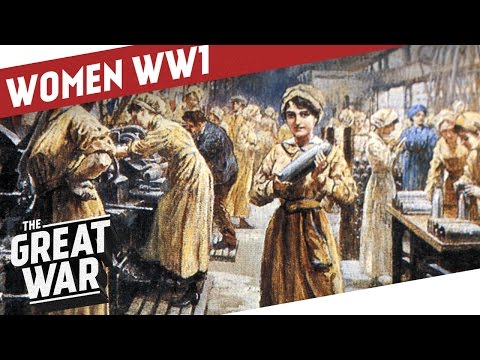
The Great War
Sustaining Total War - Women in World War One I THE GREAT WAR
When you think about World War One, you think of men fighting to death in the mud. All too often the immense contribution of women as nurses, medics, ammunition workers and so many more has been forgotten. This special episode salutes...

The Great War
The Sky Was The Limit - Aviation in World War 1 I THE GREAT WAR
World War 1 saw several completely new technologies develop rapidly. The airplane itself was only a few years old but pioneering engineers soon saw its potential for military use. For recognisance and later as fighter or bomber, World...
Weird History
Life As A G.I. In WWII
France fell to Germany in June of 1940. The United States hadn’t yet entered World War 2, and while isolationism remained politically popular, the country was growing wary. The prospect of being drawn into the European conflict was...
One Minute History
198 - Code Talkers - One Minute History
In the heat of battle, knowledge is power. Messages must be sent and received quickly, accurately and if you plan on winning, they need to be encoded. October 1918 (World War I) France - Native American men from Oklahoma...
Brainwaves Video Anthology
Omer Bartov - Genocide, the Holocaust and Israel and Palestine
Omer Bartov is a professor of history at Brown University, where he holds the chair in Holocaust and Genocide Studies. A historian for more than four decades, he began his career by challenging the postwar German myth of a “clean”...
The Art Assignment
What This Photo Doesn't Show
This photograph of young farmers on their way to a dance was taken in Germany in 1914 by August Sander. Except they weren't farmers. And the dance they were on their way to was World War I.
The Art Assignment
The Case for Surrealism | The Art Assignment | PBS Digital Studios
"Surrealism" has become shorthand for the bizarre, the irrational, the hallucinatory. But what IS it? Or what WAS it? Today we delve into the history of Surrealism, as it formed in post-World War I Europe and as it has infiltrated our...
TED-Ed
TED-Ed: Is life meaningless? And other absurd questions | Nina Medvinskaya
Albert Camus grew up surrounded by violence. His homeland of Algeria was mired in conflict. He lost his father in World War I. Seeing World War II's devastation, Camus grew despondent. What was the meaning behind all this endless...
Crash Course
USA vs USSR Fight! The Cold War Crash Course World History
In which John Green teaches you about the Cold War, which was occasionally hot, but on average, it was just cool. In the sense of its temperature. It was by no means cool, man. After World War II, there were basically two big...
Curated Video
USA vs USSR Fight! The Cold War: Crash Course World History
In which John Green teaches you about the Cold War, which was occasionally hot, but on average, it was just cool. In the sense of its temperature. It was by no means cool, man. After World War II, there were basically two big...
Crash Course
Aliens, Time Travel, and Dresden -Slaughterhouse-Five Part I: Crash Course Literature 212
In which John Green teaches you about Kurt Vonnegut's most famous novel, Slaughterhouse-Five. Vonnegut wrote the book in the Vietnam era, and it closely mirrors his personal experiences in World War II, as long as you throw out the time...
TED Talks
George Takei: Why I love a country that once betrayed me
When he was a child, George Takei and his family were forced into an internment camp for Japanese-Americans, as a "security" measure during World War II. 70 years later, Takei looks back at how the camp shaped his surprising, personal...
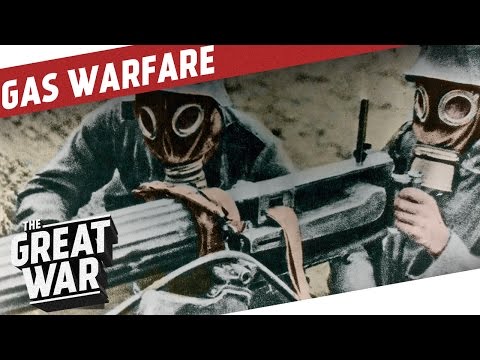
The Great War
Poison Gas Warfare In WW1 I THE GREAT WAR Special
All soldiers feared poison gas but all sides developed deadlier and more perfidious kinds of chemical agents. Indy tells you everything about gas warfare in World War 1 in this special episode. » HOW CAN I SUPPORT YOUR CHANNEL? You can...

Big Think
When America polices the world, everybody loses | Jeffrey Sachs
America treats the world like a board game. That's a problem. - Make no mistake, says Jeffrey Sachs, America is an empire. The end of World War I and the Treaty of Versailles put the United States on a trajectory to exercise political...
PBS
Werewolves of War: From Nazi Propaganda to Post-War Pop Culture
After World War I, some German soldiers who refused to disband formed a group called "Werewolf," which later became an elite recruiting source for the Nazi regime during World War II. Werewolves were integrated into Nazi propaganda,...