Hi, what do you want to do?





Tom Richey
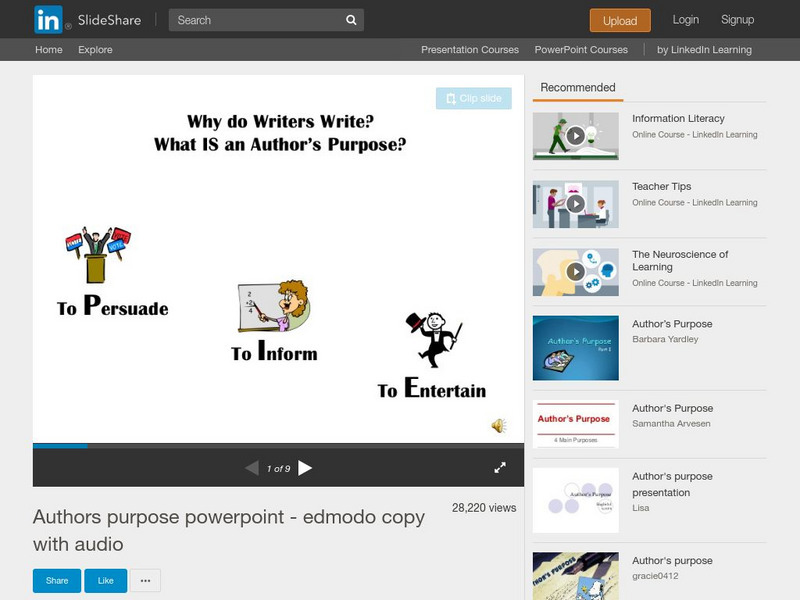
Slide Share: Why Do Writers Write?
A slide show with nine slides explaining the author's purpose to persuade, inform, or entertain.
Sophia Learning
Sophia: Incorporating Questions in Writing
This lesson goes over how to incorporate questions in a composition.
Sophia Learning
Sophia: Purpose
This slideshow lesson focuses on purpose; it defines purpose and lists the two main purposes of all writing: to educate (didactic text meaning to inform and instruct) or to entertain (imaginative text). The purpose could also be art for...
Wisc-Online
Wisc Online: Lewis Dot Structures of Covalent Compounds
Short slide show provides basic information about drawing Lewis dot structures for covalent compounds. Starts with anatomy of the atom, and then shows the relationship between atomic particles and the Periodic Table of Elements. Offers...
Sophia Learning
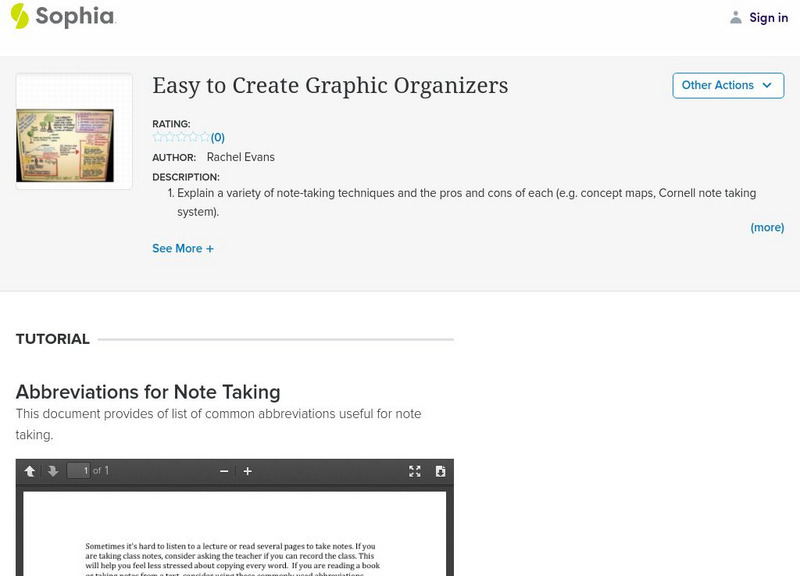
Sophia: Easy to Create Graphic Organizers
Two PDF's that can be viewed online or downloaded and printed. The first is one page showing students several examples of abbreviations that can be used when taking notes. The second is a four pages and shows how different types of...
Wisc-Online
Wisc Online: Introducing Your Speech
Follow these do's and don'ts of writing an effective introduction to a speech that will grab your audience's attention and state your central idea. Use the arrows to move through the information.
Other
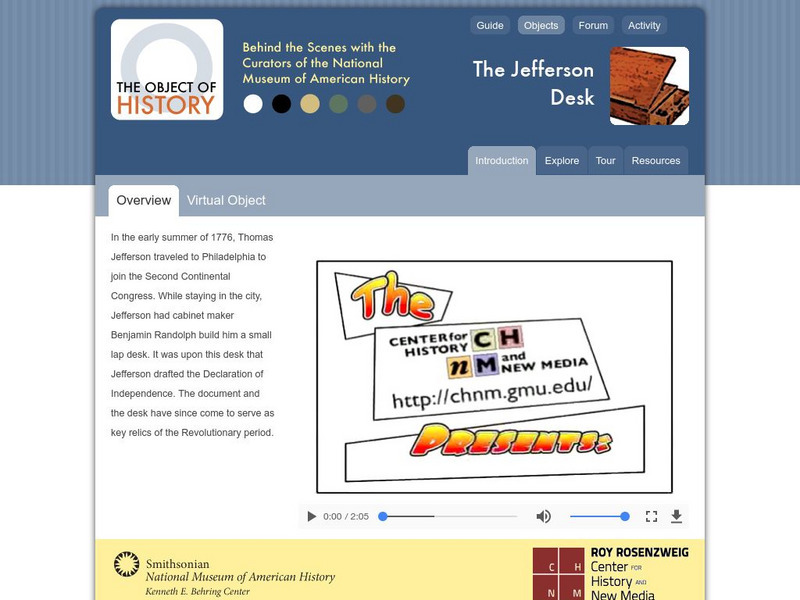
Object of History: Jefferson Desk (Desk on Which the Declaration Was Drafted)
Provides information on the desk that Thomas Jefferson used to draft the Declaration of Independence.
Sophia Learning
Sophia: Correcting Double Negatives
This slideshow lesson focuses on fixing double negatives. It starts by showing what a double negative really says and how to make it say what they mean. It discusses why they are not used, when they can be used in writing, a list of...
Sophia Learning
Sophia: Correcting Double Negatives
This slideshow lesson focuses on double negatives. It includes defining the term, explaining why they aren't used, providing a list of "no" words, offering ways to correct them with examples, and listing steps to eliminate them in writing.
Sophia Learning
Sophia: Concise Language: Stating the Obvious: Lesson 3
This lesson goes over removing obvious information. It is 3 of 3 in the series titled "Concise Language: Stating the Obvious."
Tom Richey
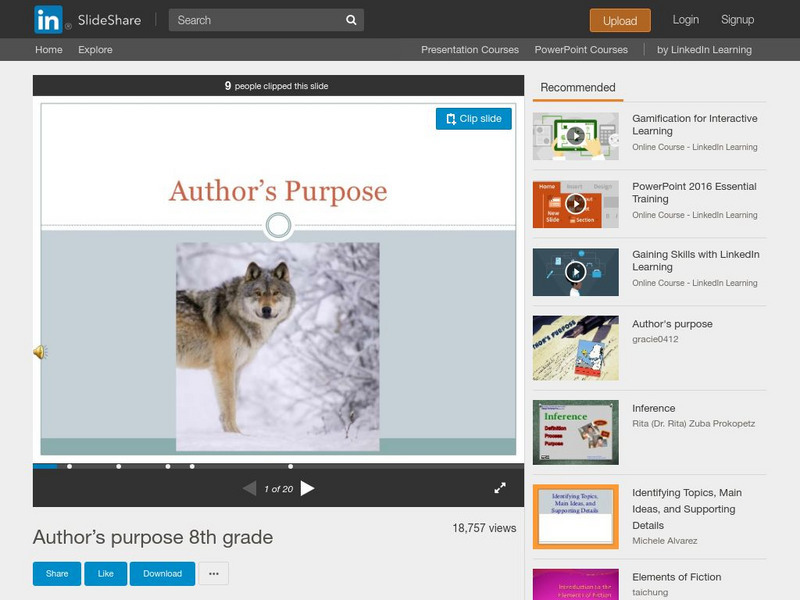
Slide Share: Author's Purpose 8th Grade
A slideshow with twenty slides with information and examples of four different purposes an author can have for writing a text: to entertain, to persuade, to express, or to inform/explain.
Other
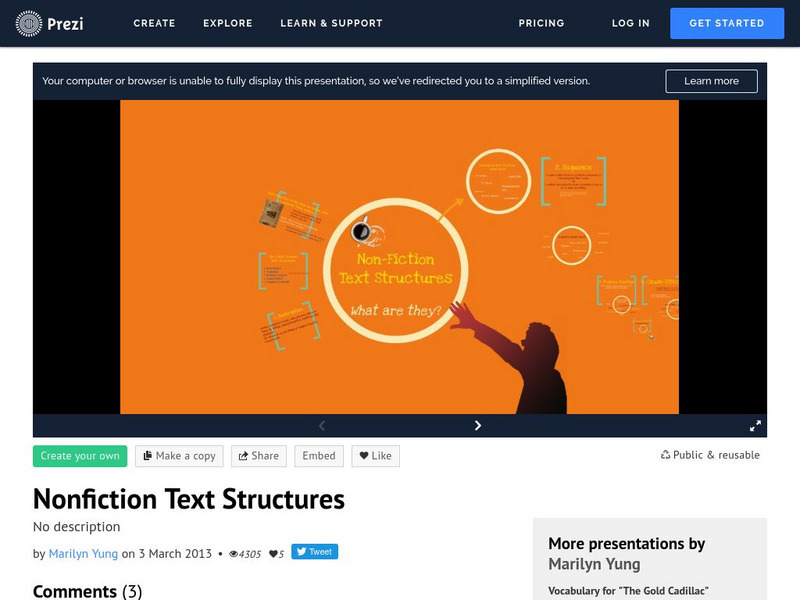
Prezi: Nonfiction Text Structures
Slideshow examines the five most common text structures used by authors to organize nonfiction writing.
National Library of France
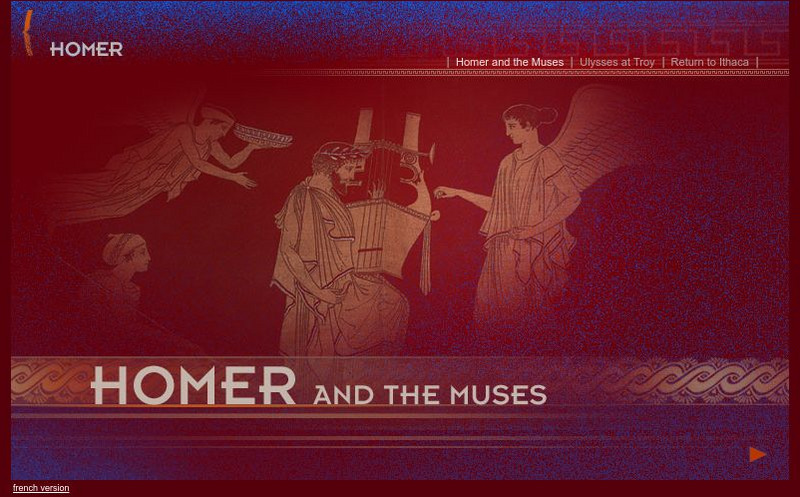
National Library of France: Homer and the Muses
Slideshow presents information on Homer and his famous works The Iliad and The Odyssey. Offers photos of texts, artifacts, and art from ancient through Medieval and modern times inspired by Homer's writing.
Sophia Learning
Sophia: Analytical Paper: Organization: Lesson 2
This lesson discusses structuring an outline for an analytical paper. It is 2 of 2 in the series titled "Analytical Paper: Organization."
Sophia Learning
Sophia: Analytical Paper: Thesis: Lesson 2
This lesson discusses selecting a thesis for an analytical paper. It is 2 of 2 in the series titled "Analytical Paper: Thesis."
Other popular searches
- Informational Writing
- Informal Letter Writing
- Informative Writing
- Informative Writing Prompts
- Information Report Writing
- Writing Informational Text
- Informational Writing Snakes
- Esl Informal Letter Writing
- Informal Writing
- Informal Writing Assessments
- Writing to Inform
- Informational Writing Topics