Hi, what do you want to do?






University of Missouri
Microbes in Action: Classroom Activities: Transfer of Diseases
A science experiment to observe how microbes are transferred by hand contact. This lab creates a model to show students how microbes transfer disease. One student will rub their hand with candy soaked in a yeast solution, then students...
University of Missouri
Microbes in Action: Classroom Activities: Simple Staining of Microbes [Pdf]
With this simple stain, students can observe the shape of yeast and bacteria under the microscope. Lesson plan gives a lab procedure, teacher instructions, points for discussion, and additional activities. Lab does require the purchase...
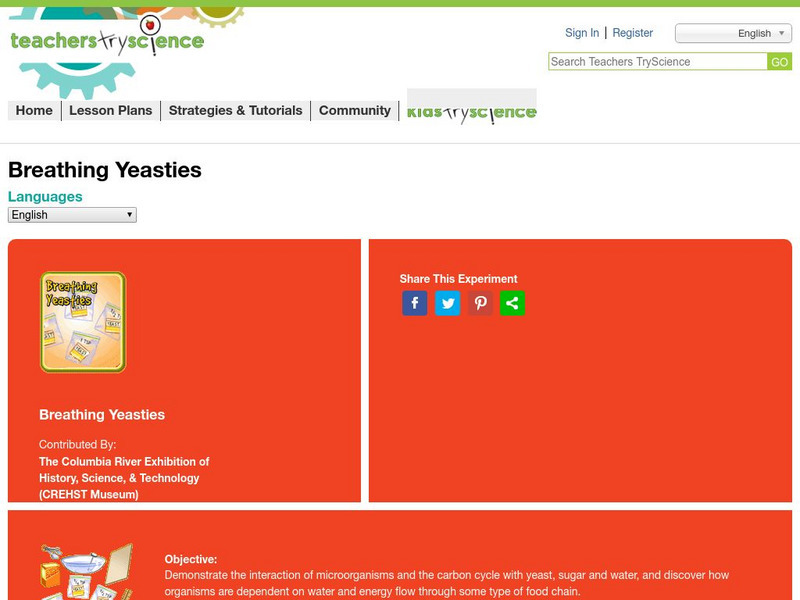
Teachers TryScience
Teachers Try Science: Breathing Yeasties
See how combining yeast, sugar, and water can demonstrate the carbon cycle and show how microorganisms work in the food chain.
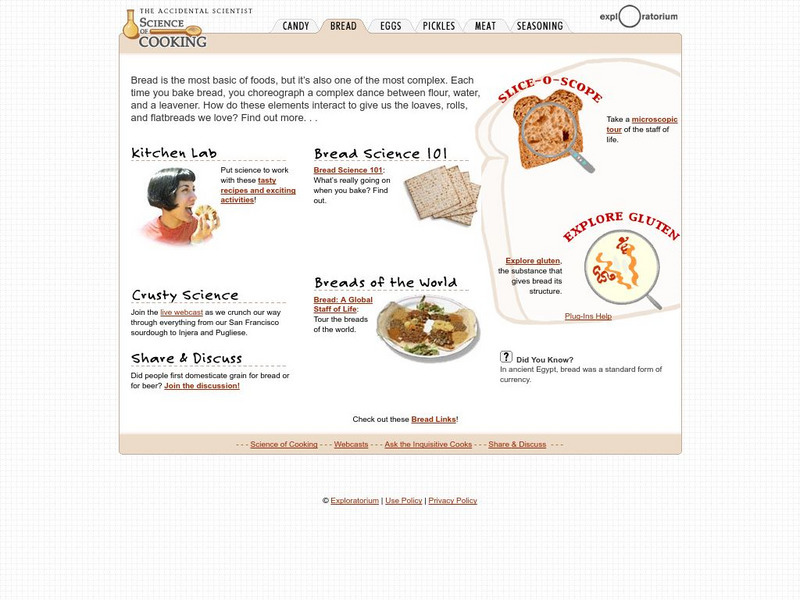
Exploratorium
Exploratorium: Science of Cooking: Bread Science and Facts
Find out the science behind making bread. This site from Exploratorium turns your kitchen into a lab and you can do much more than bake bread. Do experiments with yeast, and find out what is so exciting about gluten.
University of Missouri
Umsl: Microbes in Action: Classroom Activities: Fungus I [Pdf]
A science experiment to observe the rate of carbon dioxide gas produced by yeast. Students will get a visual of the process of fermentation. Lesson plan gives a lab procedure, teacher instructions, points for discussion, and additional...
University of Missouri
Microbes in Action: Classroom Activities: Growth of Fungi on Plates [Pdf]
A science experiment to observe the growth of a colony of yeast cells. Students should also be able to observe the hyphae and mycelia structures. Lesson plan gives a background, lab procedure, teacher instructions, points for discussion,...
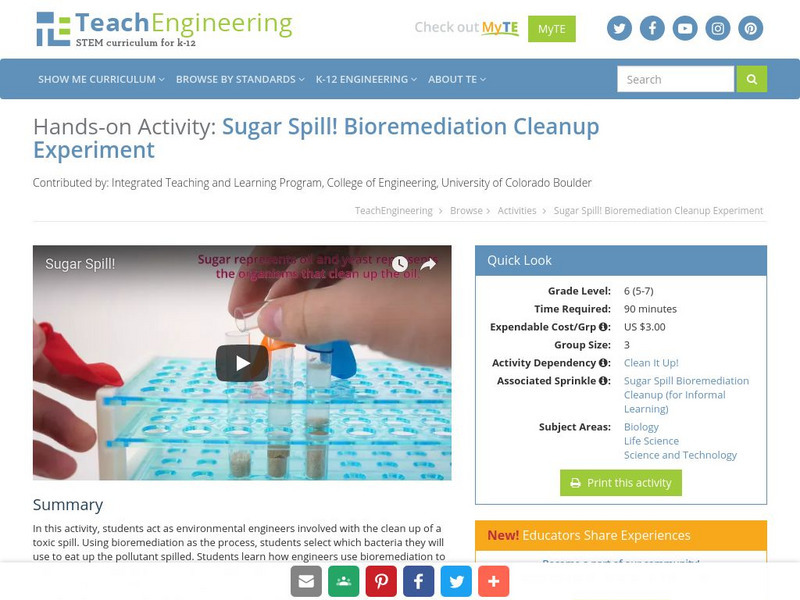
TeachEngineering
Teach Engineering: Sugar Spill!
In this activity, students act as environmental engineers involved with the clean up of a toxic spill. Using bioremediation as the process, students select which bacteria they will use to eat up the pollutant spilled. Students learn how...

University of California
Ucmp: Introduction to the Fungi
A wonderful place to learn all about the fungi. click on the buttons at the bottom of the page to go to sections on their life history, systematics and morphology.

BioEd Online
Bio Ed Online: The Science of Microbes: Observing Different Microbes
Students prepare slides of and examine three types of common microbes using a light microscope, recording what they observe. The instructional activity and a set of PowerPoint slides can be downloaded. An accompanying instructional video...
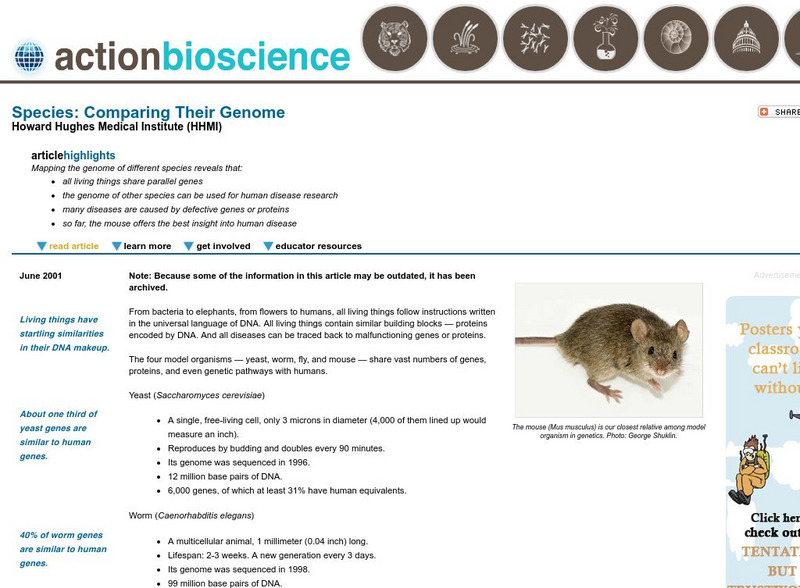
American Institute of Biological Sciences
Action Bioscience: Species: Comparing Their Genome
Identify the significance of studying the genome of different species. Yeast, mouse, fly, and worm all contain several common genes or proteins to humans that allow for disease research.

TED Talks
Ted: Ted Ed: What Is a Fungus?
From toadstools to yeast, delve deeper into the diverse kingdom of fungi, and find out just how different (and similar) they are to animals and plants. [5:34]
NASA
Nasa: Planets in a Bottle
In this simple lesson, students grow yeast to learn how the climates on each of the nine planets would affect life.
Better Lesson
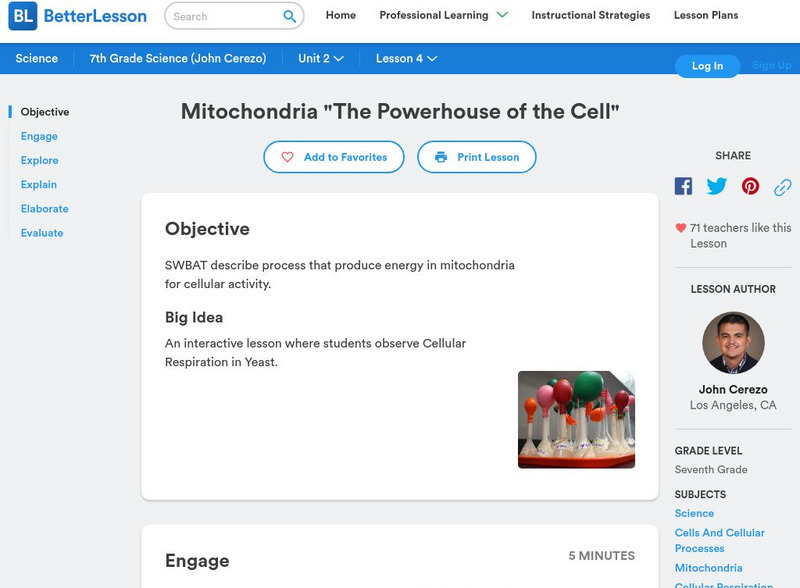
Better Lesson: Mitochondria "The Powerhouse of the Cell"
In this instructional activity and lab activity, learners learn about digestion and fermentation, and watch a demonstration of cellular respiration in yeast. Includes numerous real-world connections, e.g., how fermentation is used by...
Science Bob Pflugfelder
Science Bob: Fantastic Foamy Fountain
Science experiment shows how yeast mixed with hydrogen peroxide creates not only foam but an Exothermic Reaction.
TeachEngineering
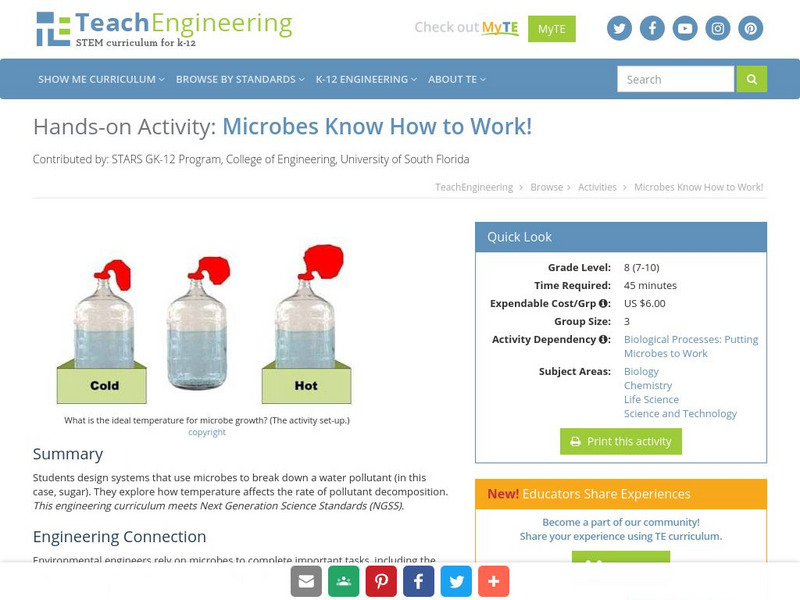
Teach Engineering: Microbes Know How to Work!
Students design systems that use microbes to break down a water pollutant (in this case, sugar). They explore how temperature affects the rate of pollutant decomposition.
Science Museum of Minnesota
Thinking Fountain: Making Mold
Thinking Fountain, from the Science Museum of Minnesota, offers a project in word and picture. With everyday items, you can grow your own mold, both bread mold and penicillin!
CK-12 Foundation
Ck 12: Life Science: 6.10 Fungi Classification
Understand the behaviors, characteristics, and classification of fungi.
BioEd Online
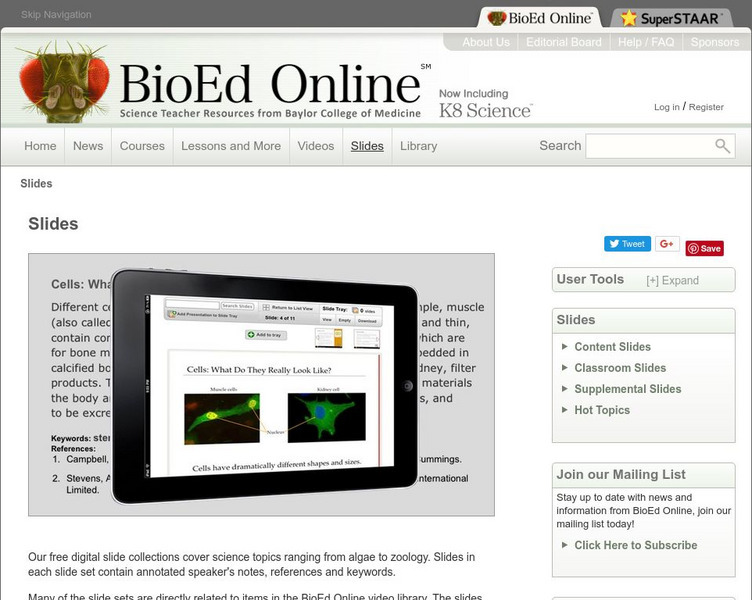
Bio Ed Online: Virtual Workshop: Food and Fitness Energy for Life
A slide presentation that gives students an appreciation for what happens when living organisms use food for energy. Actual hands-on yeast lab exercise is part of the presentation.
Exploratorium
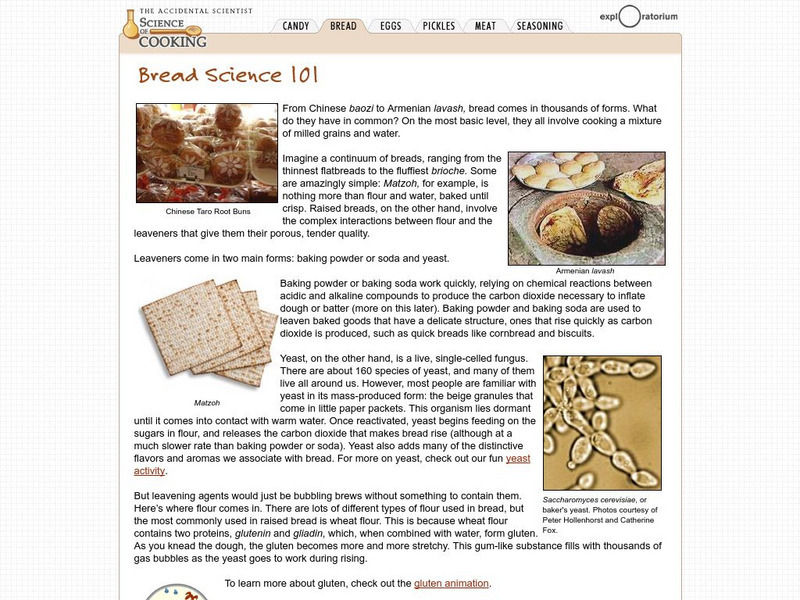
Exploratorium: Bread Science
From Chinese baozi to Armenian lavash, bread comes in thousands of forms. Find out, on the most basic level, what chemistry ties them all together.
National Institute of Educational Technologies and Teacher Training (Spain)
Ministerio De Educacion: Microbiologia 2 Bachillerato
This unit will allow you to have a broader idea about microorganism, people and the ecosystem. It contains 16 interactive activities.
Other
Armand Frappier Museum: Micro Discoveries Online: The Microscopic World
This comprehensive exhibit focuses on the wonders of microorganisms, what they are, how they can affect our daily lives, and how they can be manipulated. Videos, games, and animations are included. Teacher resource link explains each...
Andre Dollinger
Reshafim: Bread, the Staff of Life
A look at the preparation of flour and the baking of bread in ancient Egyptian kitchens. Bread, the staff of life, was vital to all classes of Egyptians.
CK-12 Foundation
Ck 12: Life Science: 6.7 Fungi
Explore the characteristics and classification of fungi.
Other
American Academy of Allergy, Asthma and Immunology
This resource describes an organization that is involved in studies and treatments of allergies. Research and education are also important parts of this organization.