Hi, what do you want to do?






Bozeman Science
Bozeman Science: Vector Sum of Forces
Paul Andersen explains how the vector sum of forces can be used to identify the net force on an object. The net force can be used to determine the overall acceleration of the object using Newton's Second Law. [6:54]
Bozeman Science
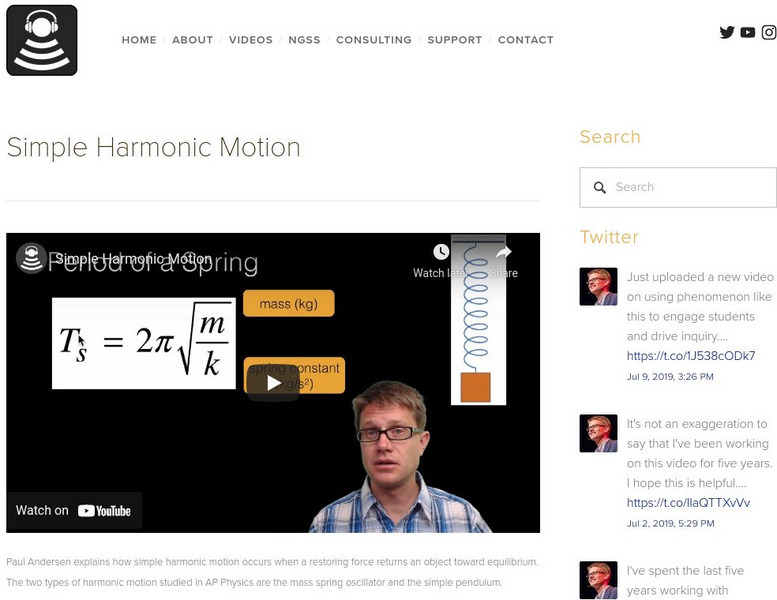
Bozeman Science: Simple Harmonic Motion
In the following video Paul Andersen explains how simple harmonic motion occurs when a restoring force returns an object toward equilibrium. The two types of harmonic motion studied in AP Physics are the mass spring oscillator and the...

Bozeman Science
Bozeman Science: Contact Forces
In the following video Paul Andersen explains how contact forces result from interatomic forces. [5:29]

Bozeman Science
Bozeman Science: Momentum
In the following video Paul Andersen will first define momentum as the product of an object's mass and velocity. 3.56]

Bozeman Science
Bozeman Science: Impulse
In the following video Paul Andersen defines impulse as the product of the force applied and the time over which the force is applied. The impulse of an object is equivalent to the change in momentum of the object. [9:11]
Bozeman Science
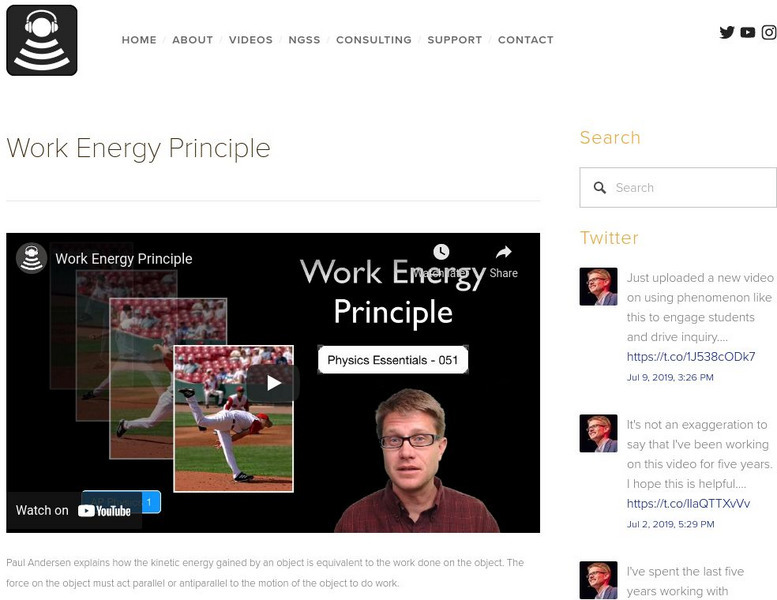
Bozeman Science: Work Energy Principle
In the following video Paul Andersen explains how the kinetic energy gained by an object is equivalent to the work done on the object. The force on the object must act parallel or antiparallel to the motion of the object to do work. [8:12]
Bozeman Science
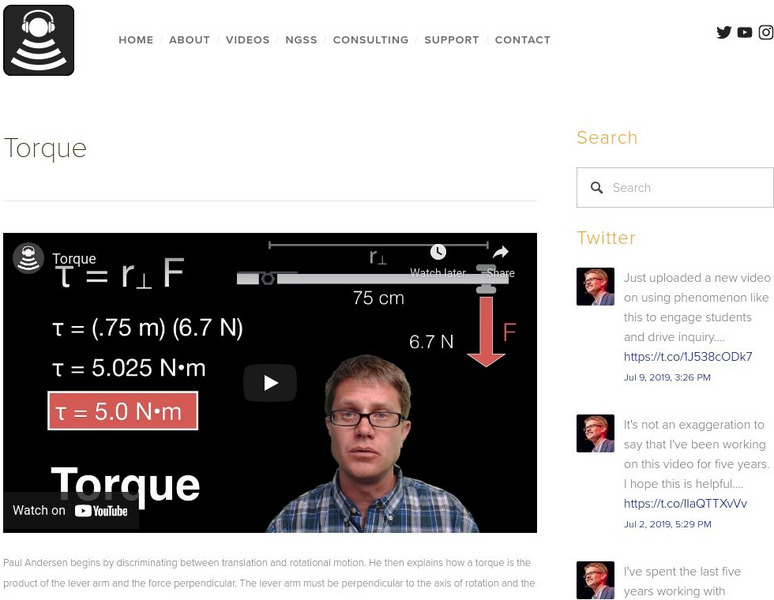
Bozeman Science: Torque
In the following video Paul Andersen begins by discriminating between translation and rotational motion. He then explains how a torque is the product of the lever arm and the force perpendicular. [7:03]
Bozeman Science
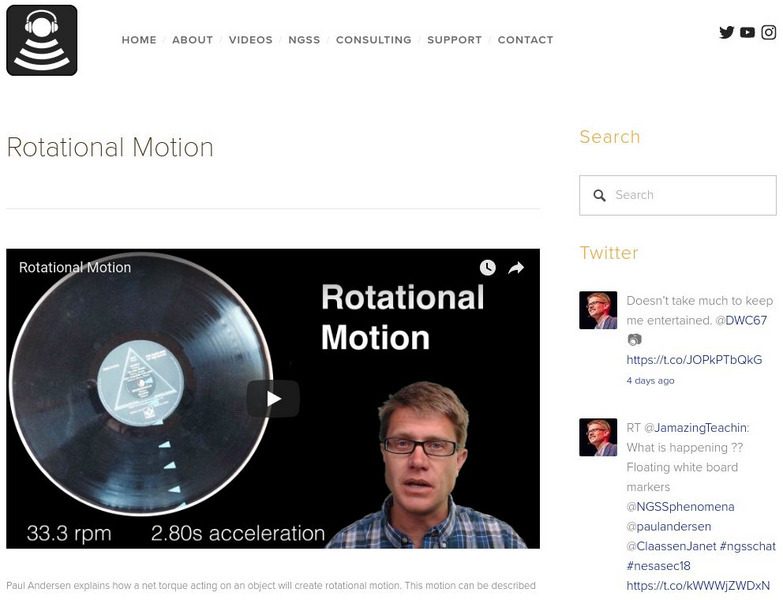
Bozeman Science: Rotational Motion
Physics video [10:40] from science teacher, Paul Andersen, in which he teaches us the concept of rotational force through images and formulas using clear and understandable explanations.
Bozeman Science
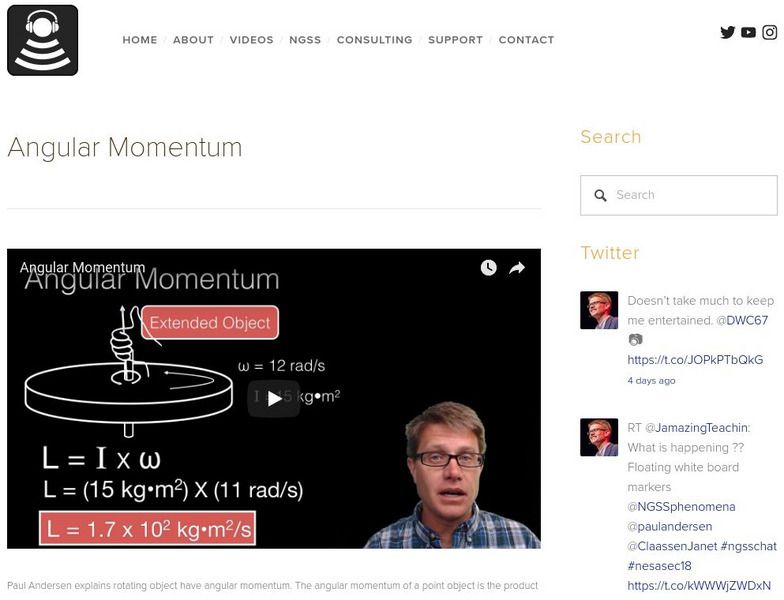
Bozeman Science: Angular Momentum
Video [7:28] in which Paul Andersen explains in a clear and understandable way, that rotating objects have angular momentum.
Bozeman Science
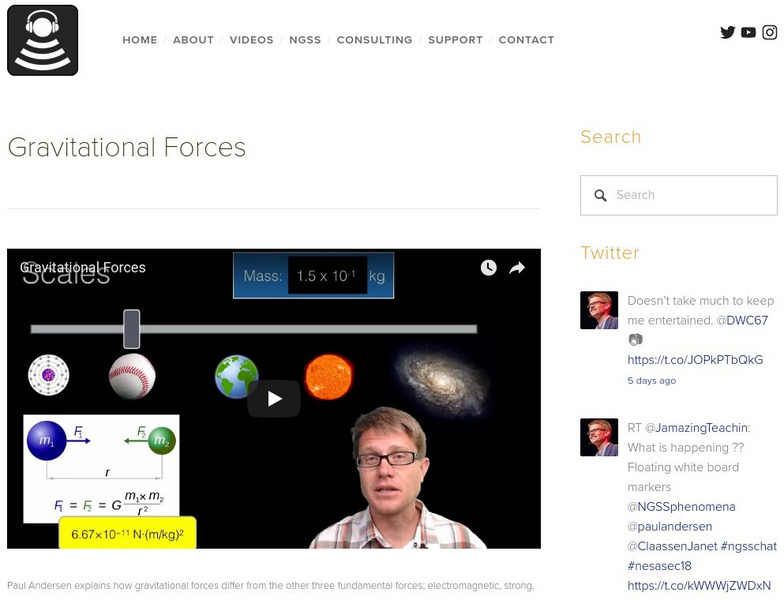
Bozeman Science: Gravitational Forces
Award-winning science teacher Paul Andersen helps make physics understandable as he explains how gravitational forces differ from the other three fundamental forces: electromagnetic, and strong and weak nuclear forces. [5:05]

Bozeman Science
Bozeman Science: Physics Essentials 58: Motion of the Center of Mass
Award winning science teacher, Paul Andersen, explains how linear motion of an object can be measured using the center of mass in this interesting and informative video [4:46]
Bozeman Science
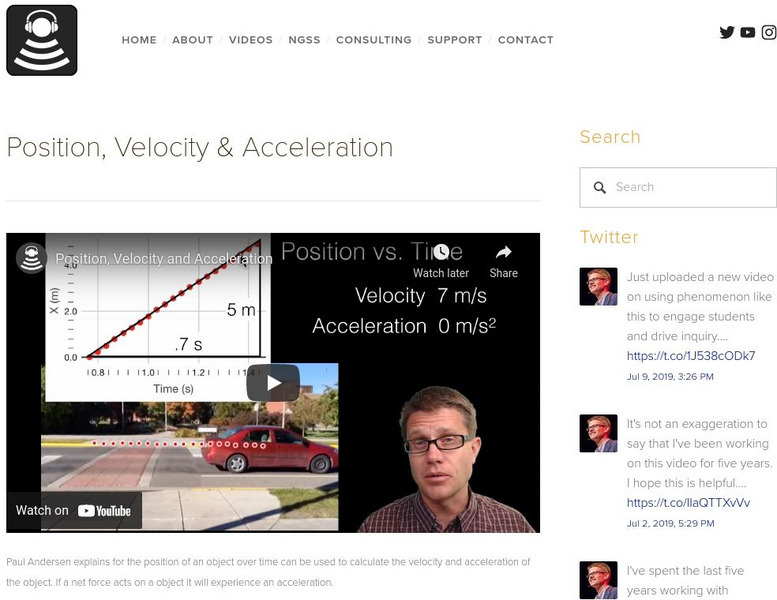
Bozeman Science: Position, Velocity & Acceleration
In the following video Paul Andersen explains for the position of an object over time can be used to calculate the velocity and acceleration of the object. If a net force acts on a object it will experience an acceleration. [7:55]

Bozeman Science
Bozeman Science: Linear Momentum
In the following video Paul Andersen explains how the linear momentum is equal to the product of the mass of an object and the velocity of the center of mass. He uses video analysis software to calculate the velocity of an object and...

Bozeman Science
Bozeman Science: Force Time Graph
In the following video Paul Andersen explains hot the force-time graph can be used to determine the impulse of an object. Since the impulse and the change in momentum are equivalent the graph can also be used to determine the change in...
Bozeman Science
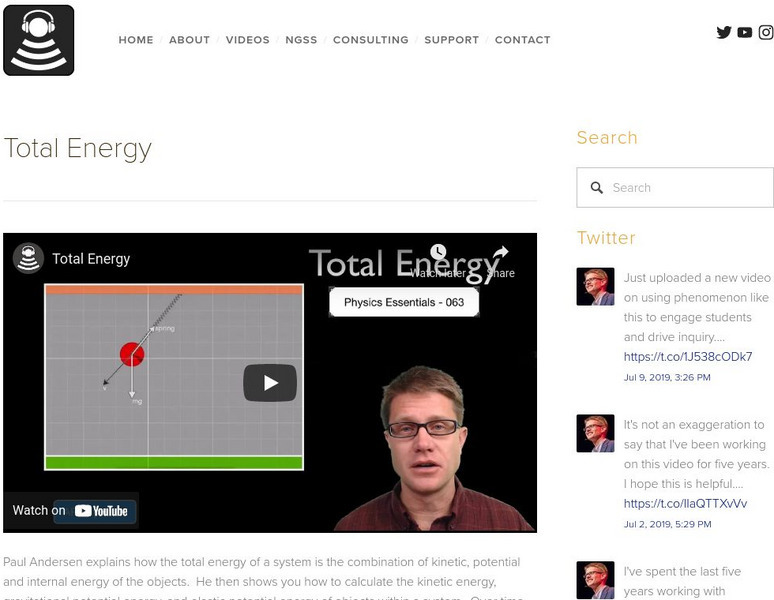
Bozeman Science: Total Energy
In the following video Paul Andersen explains how the total energy of a system is the combination of kinetic, potential and internal energy of the objects. He then shows you how to calculate the kinetic energy, gravitational potential...
Bozeman Science
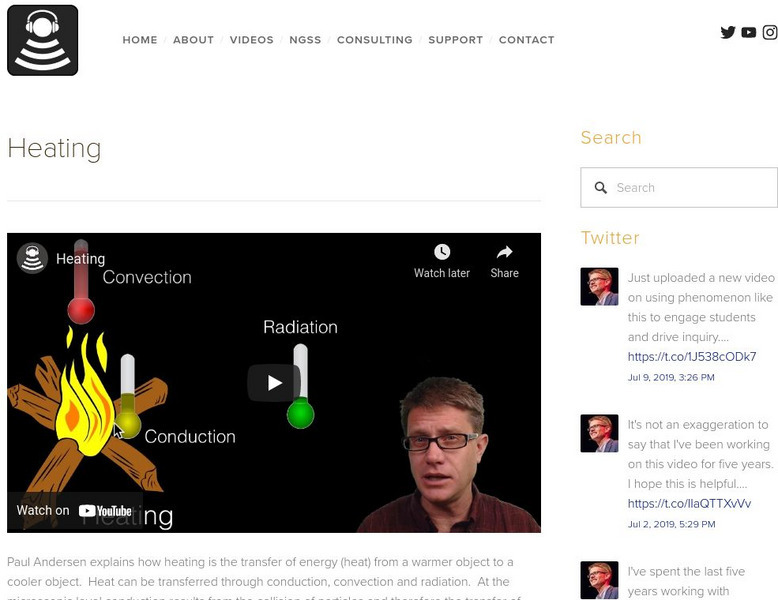
Bozeman Science: Heating
In the following video Paul Andersen explains how heating is the transfer of energy (heat) from a warmer object to a cooler object. Heat can be transferred through conduction, convection and radiation. At the microscopic level conduction...
Bozeman Science
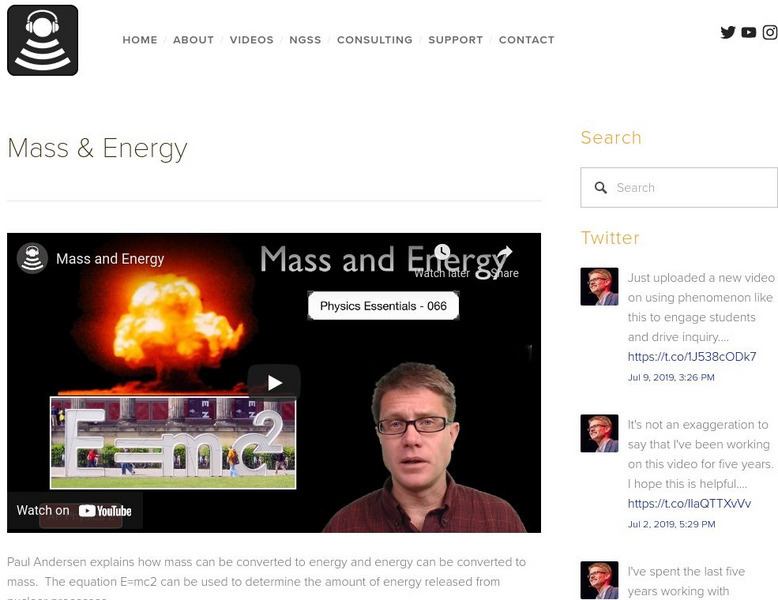
Bozeman Science: Mass and Energy
In the following video Paul Andersen explains how mass can be converted to energy and energy can be converted to mass. [3:30]
Bozeman Science
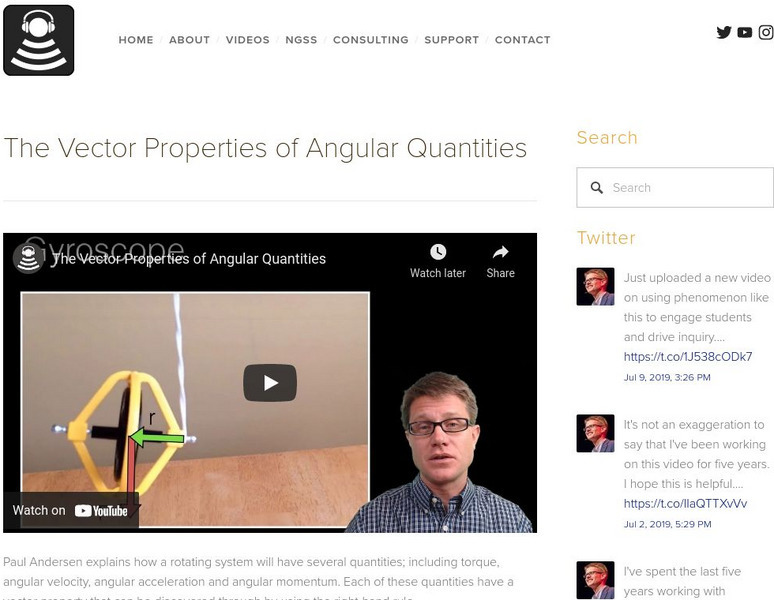
Bozeman Science: The Vector Properties of Angular Quantities
In the following video Paul Andersen explains how a rotating system will have several quantities; including torque, angular velocity, angular acceleration and angular momentum. [7:15]
Bozeman Science
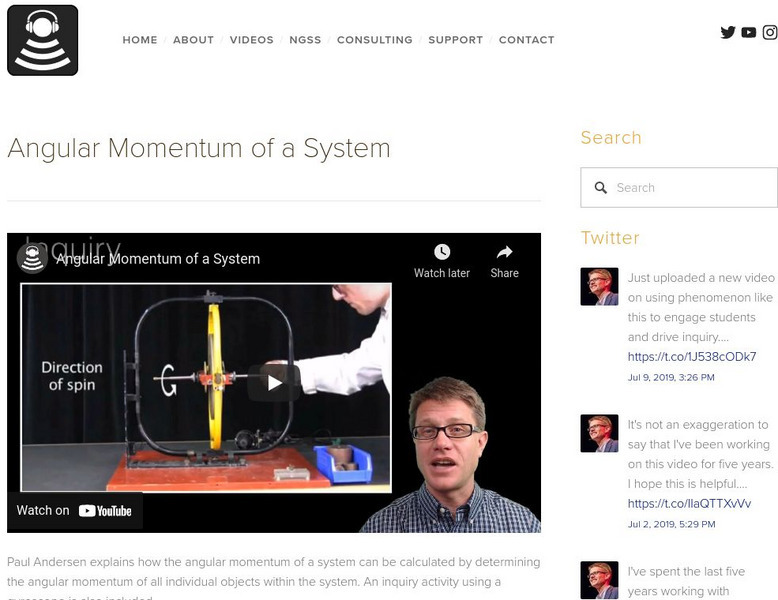
Bozeman Science: Angular Momentum of a System
In the following video Paul Andersen explains how the angular momentum of a system can be calculated by determining the angular momentum of all individual objects within the system. [6:34]
Bozeman Science
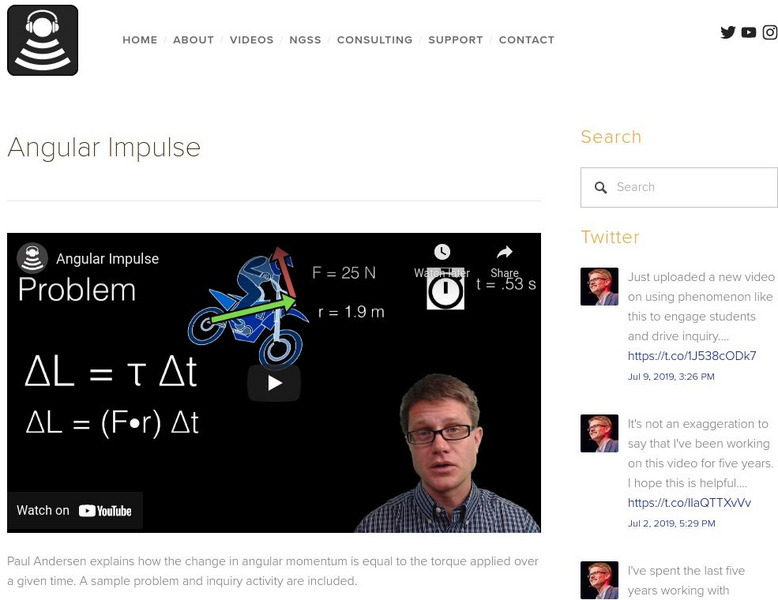
Bozeman Science: Angular Impulse
In the following video Paul Andersen explains how the change in angular momentum is equal to the torque applied over a given time. [4:54]
Bozeman Science
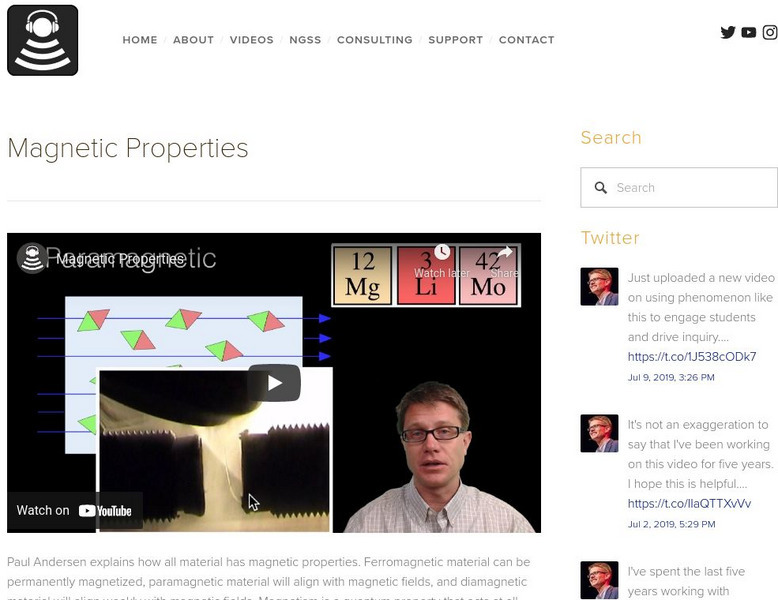
Bozeman Science: Magnetic Properties
The following video explains how all material has magnetic properties. Ferromagnetic material can be permanently magnetized, paramagnetic material will align with magnetic fields, and diamagnetic material will align weakly with magnetic...
Bozeman Science
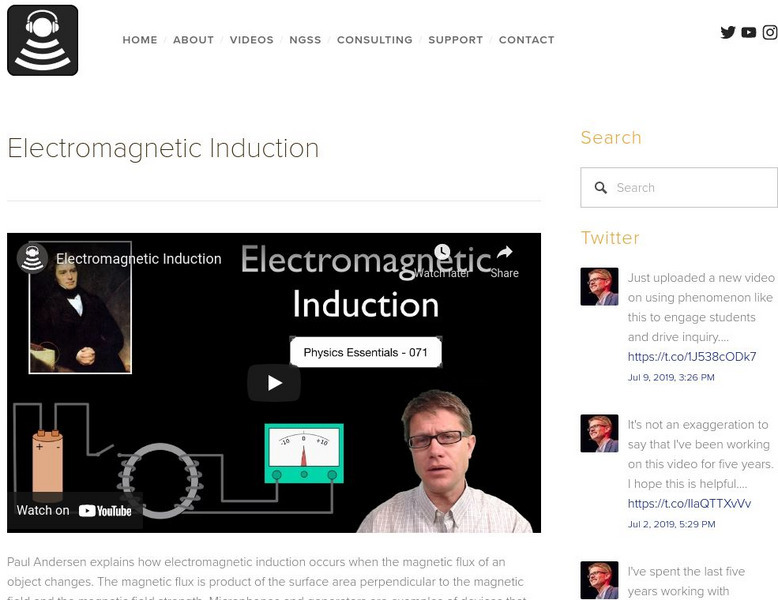
Bozeman Science: Electromagnetic Induction
The following video narrated by Paul Anderson explains how electromagnetic induction occurs when the magnetic flux of an object changes. The magnetic flux is product of the surface area perpendicular to the magnetic field and the...
Bozeman Science
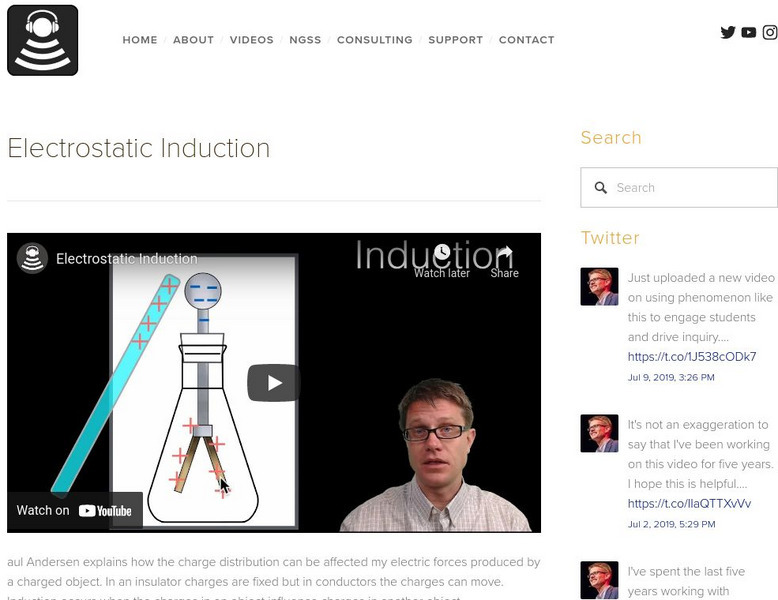
Bozeman Science: Electrostatic Induction
This video narrated by Paul Andersen explains how the charge distribution can be affected my electric forces produced by a charged object. In an insulator charges are fixed but in conductors the charges can move. Induction occurs when...
Bozeman Science
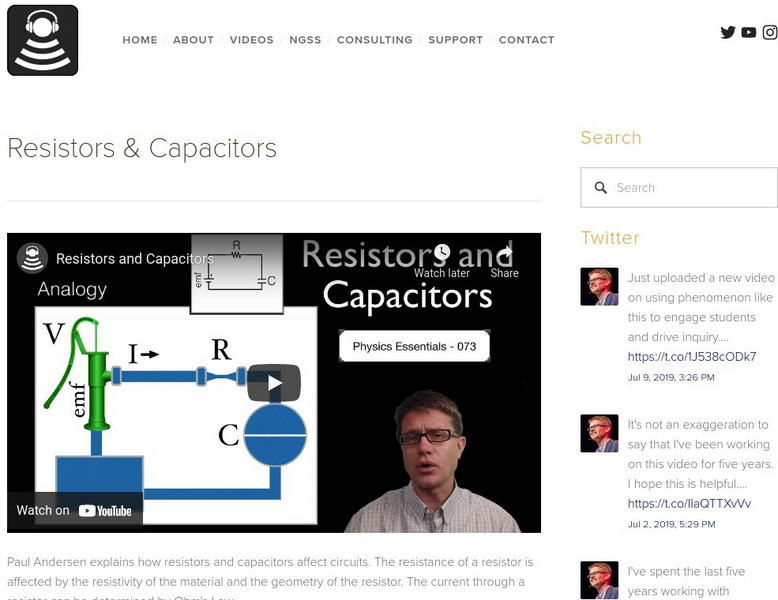
Bozeman Science: Resistors and Capacitors
The following video narrated by Paul Andersen explains how resistors and capacitors affect circuits. The resistance of a resistor is affected by the resistivity of the material and the geometry of the resistor. The current through a...