Hi, what do you want to do?






EngageNY
TASC Transition Curriculum: Workshop 12
How can opinions slant facts? Workshop participants learn how to examine primary and secondary sources and identify the author's point of view. They also examine how visual art impacts the meaning and rhetoric of sources. Full of...

New York State Education Department
TASC Transition Curriculum: Workshop 4
Why is it important to use precise language? Participants explore this question in the fourth activity in a series of 15 on effective instruction. Perfect for all content areas, the activity promotes appropriate language choice through...

New York State Education Department
TASC Transition Curriculum: Workshop 11
You'll C-E-R a difference in classroom achievement after using a helpful lesson. Designed for economics, civics, government, and US history classes, participants practice using the CER model to craft arguments about primary and secondary...

New York State Education Department
TASC Transition Curriculum: Workshop 5
Are video games sports? Pupils investigate this question as well as various nonfiction selections to learn more about claims and the support that defines them. All of the selections mimic the rigor on state tests and encourage close...

EngageNY
TASC Transition Curriculum: Workshop 6
Is a college education necessary for success in today's world? The class investigates the question, along with others at the end of the sixth workshop in a 15-part series. The lesson has four parts with multiple activities and...

EngageNY
TASC Transition Curriculum: Workshop 15
What do a cheetah, Audi commercial, and air have in common? They're all topics of an engaging inquiry-based, hands-on workshop for educators about background knowledge, reading strategies, the CER model, and argumentative writing. The...
![Ga Virtual Learning: Significance of Audience Analysis: Target Populace [Pdf] Article](https://statictemp.lp.lexp.cloud/images/attachment_defaults/resource/large/FPO-knovation.png "Ga Virtual Learning: Significance of Audience Analysis: Target Populace [Pdf] Article")
Georgia Department of Education
Ga Virtual Learning: Significance of Audience Analysis: Target Populace [Pdf]
This is a 14-page PDF article concerning audience analysis for a persuasive speech. It includes the importance of understanding your audience, methods used to analyze a specific audience, and the five layer of any given audience alalysis.
Lumen Learning
Lumen: Writing Skills: Audience Analysis
This lesson focuses on audience analysis and recognizing rhetorical approaches to building common ground. A practice activity is provided.
Lumen Learning
Lumen: Boundless Communications: The Importance of Audience Analysis
This lesson focuses on analyzing your audience including the benefits of understanding your audience, what to look for, how to identify with your audience, and tips for the speaker.
Lumen Learning
Lumen: Boundless Communications: The Importance of Audience Analysis
The first question you should ask yourself, before you begin crafting your speech, is this: "Who is my audience?" As you begin to answer this question for yourself, here are some key elements to consider as you begin to outline and...
University of Washington
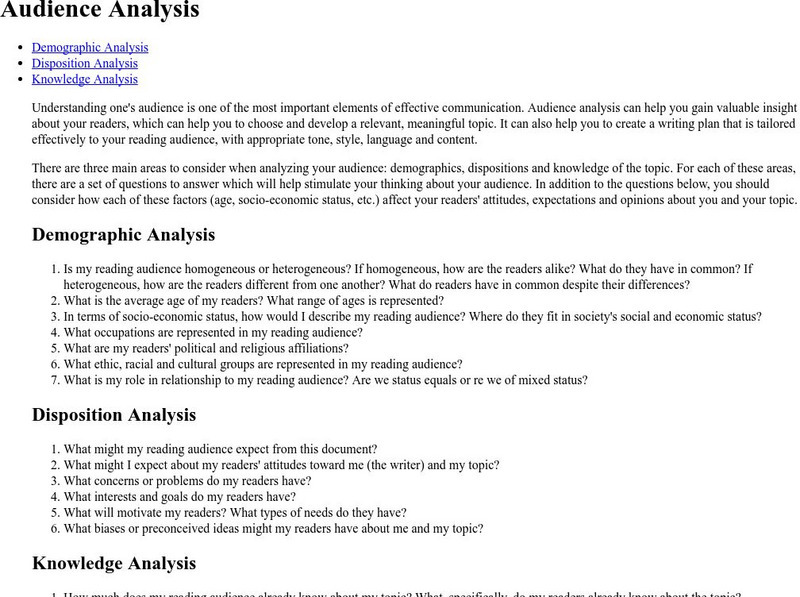
University of Washington: Audience Analysis
A discussion of audience analysis that examines demographics, disposition, and level of knowledge.
Georgia Department of Education
Ga Virtual Learning: "How to Write a Literary Analysis Essay" [Pdf]
This is a nine-page PDF entitled "How to Write a Literary Analysis Essay" which explains in detail the parts of a literary analysis and how to write them.
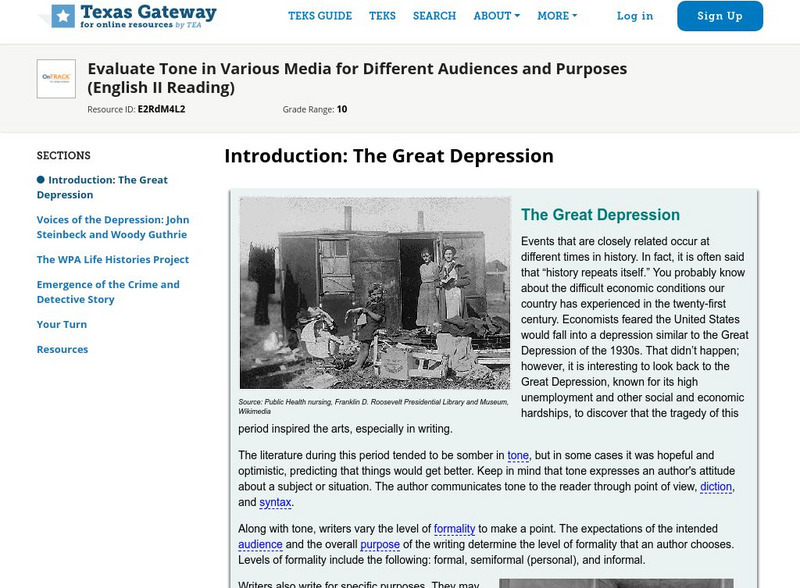
Texas Education Agency
Texas Gateway: Evaluate Tone in Various Media for Different Audiences & Purposes
This lesson will help you evaluate changes in formality and tone within printed texts written for specific audiences and purposes. It focuses on writing produced during the Great Depression.
Arizona State University
Arts Work: Visual Arts Criticism
If you're looking for a complete list of art critique questions, this is the site for you! You'll find ideas for description, analysis, elements, technique, judgement, and audience.
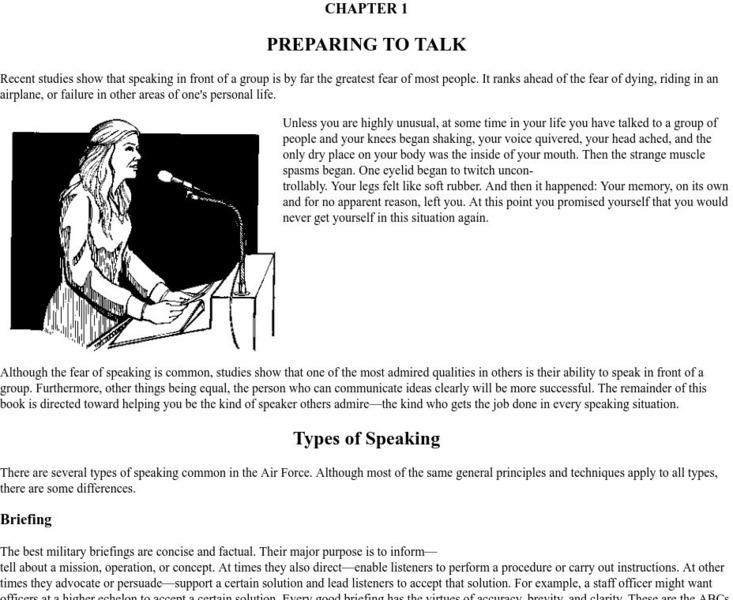
Other
Air War College: Speaking Effectively: Preparing to Talk
Use tips from this experienced speaker to help you get through the jitters of public speaking. Explains how to assess your audience and adapt your presentation, how to choose a focus, and how to establish your purpose.
Other
Brookfield High School: Lesnansky's Control Center: Would You Rather? (Part 2)
In this activity, students will create a customized Google Form that will showcase the four dilemmas defined by the game cards from Would You Rather...? and then share the form with others to collect data for analysis. Lots of Would You...
Cengage Learning
Houghton Mifflin: Rudolfo Anaya, Analysis of His Work
Great research site! Includes his themes, perspectives, form, style, audience, comparison and contrast in writing.
Other
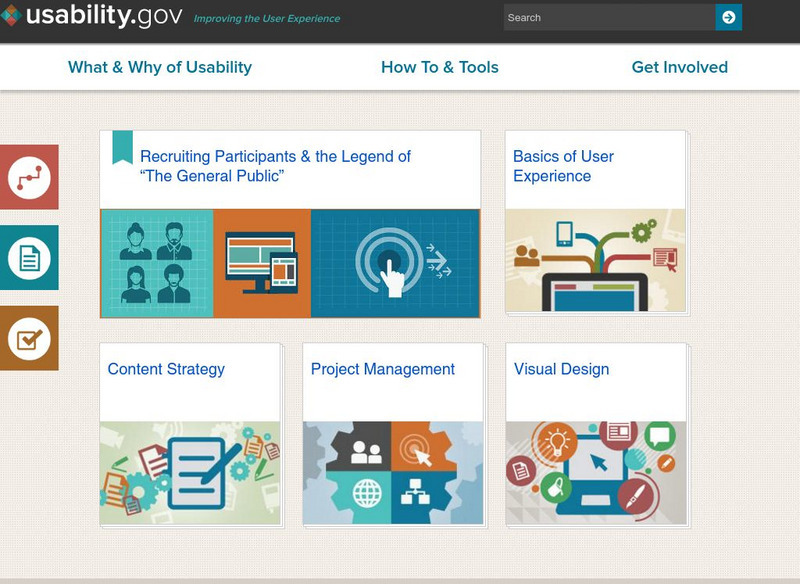
U.s. Department of Health and Human Services: usability.gov
A one-stop resource for government-compiled information on how to develop websites that boost their usability and accessibility based on proven methods of design and audience analysis. With many, many how-tos, such as how to write for...
Online Writing Lab at Purdue University
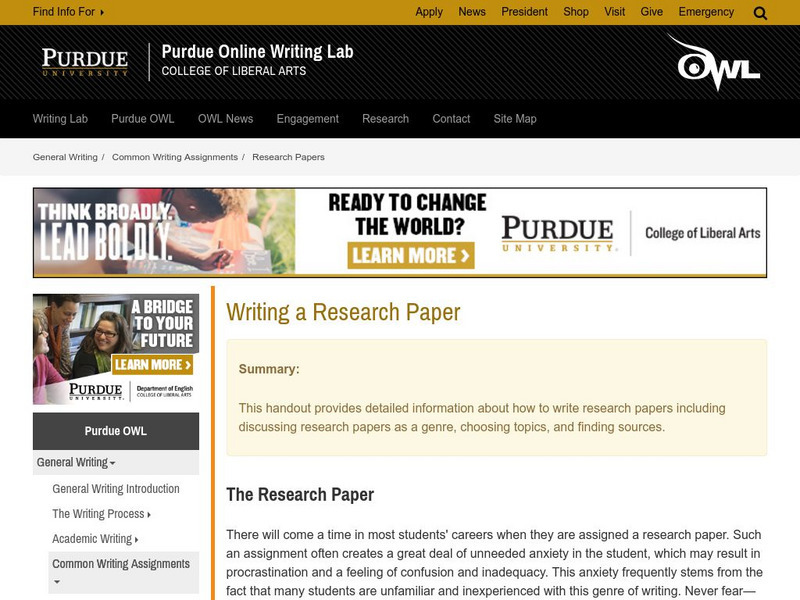
Purdue University Owl: Writing a Research Paper
Provides a comprehensive guide to writing a professional/technical research report. Includes information on purpose, pre-writing, audience analysis, and general technical writing guidelines. For more specific information, click on the...
Other
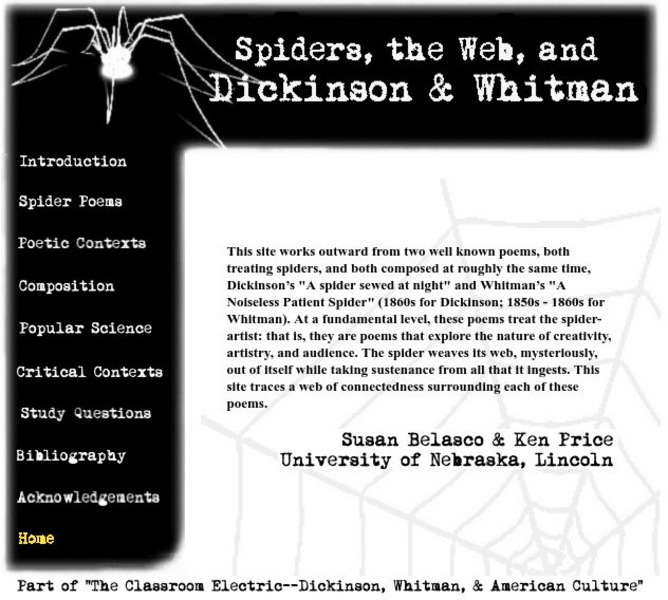
The Classroom Electric: Spiders, the Web, and Dickinson & Whitman
Based on Emily Dickinson's poem "A Spider sewed at Night" and Walt Whitman's poem "A Noiseless Patient Spider," the authors of this site seek to "explore the nature of creativity, artistry, and audience." They bring together existing...
PBS
Pbs: Learning Media: Why Should Women Vote? The Suffrage Question
In this activity, students view eleven different documents arguing both for and against women's right to vote. They must click and drag them in the order that they were created. As they work, they need to make a list of the arguments...
British Library
British Library: Austen's Emma: Social Realism & the Novel
In the course of the novel's development, Jane Austen was a significant contributor to the emergence of the modern novel as we know it today. The review of Emma in the Quarterly Review (October 1815) makes clear to a modern audience how...
University of North Carolina
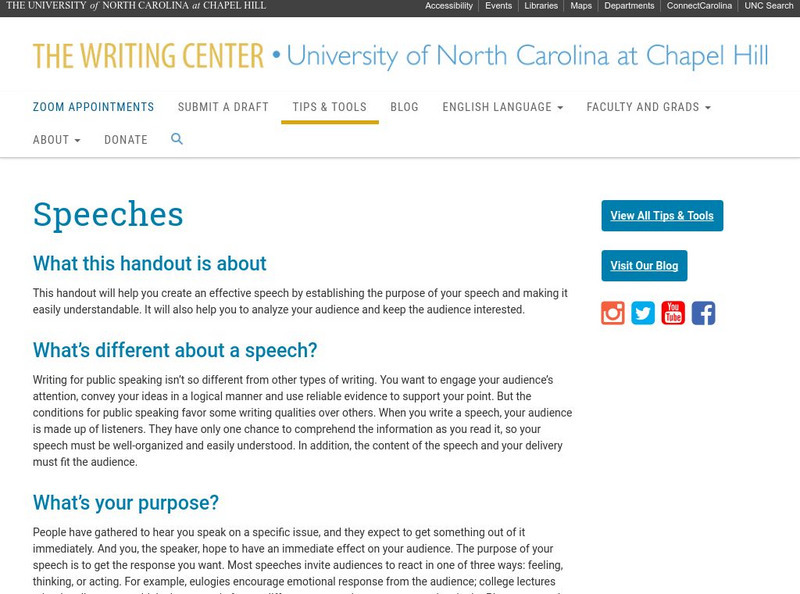
The University of North Carolina at Chapel Hill: The Writing Center: Speeches
Tips and information about giving effective speeches including: What's different about a speech?, What's your purpose?, audience analysis, creating an effective introduction, making your speech easy to understand, helping your audience...
Sophia Learning
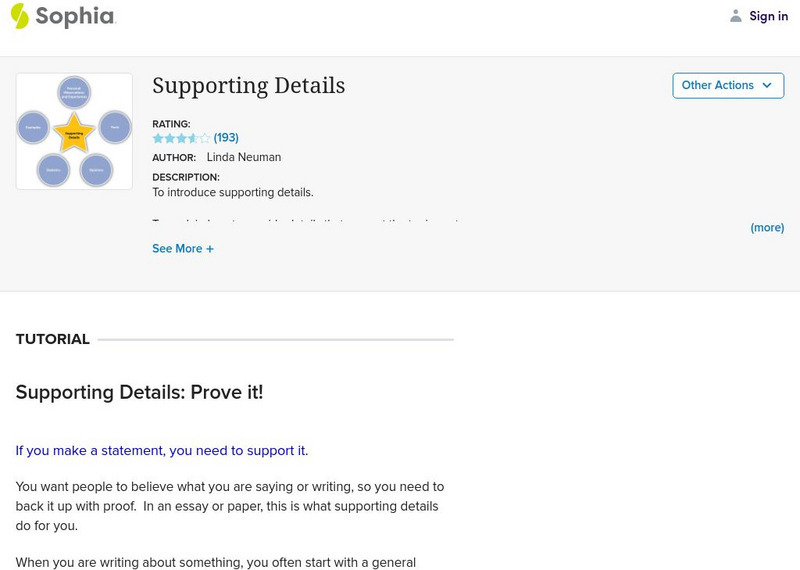
Sophia: Supporting Details
This tutorial focuses on supporting details using a video of a paragraph from a book showing the topic sentence and two strong, reliable, supporting details. This is followed by a slideshow that stresses the need for variety in the types...