Hi, what do you want to do?





E-learning for Kids
E Learning for Kids: Science: Scotland: How Can We Group Living Things Based on Characteristics?
Lilly is from Peru, and she's traveling the world. Right now, she's in Scotland. Join her while she studies living and non-living things.

CK-12 Foundation
Ck 12: Life Science: Organization of Living Things
[Free Registration/Login may be required to access all resource tools.] When you see an organism that you have never seen before, you probably put it into a group without even thinking. If it is green and leafy, you probably call it a...
E-learning for Kids
E Learning for Kids: Science: Scotland: How Can We Group Non Living Things Based on Characteristics/purposes?
Montgomery is a true Scot, and even wears a kilt. He works in his dad's store and needs help learning about materials.
E-learning for Kids
E Learning for Kids: Science: Caribbean Sea: Mexico: What Is Classifying?
Christina wants to classify all kinds of different things. Help her sort things into main groups.
Science Education Resource Center at Carleton College
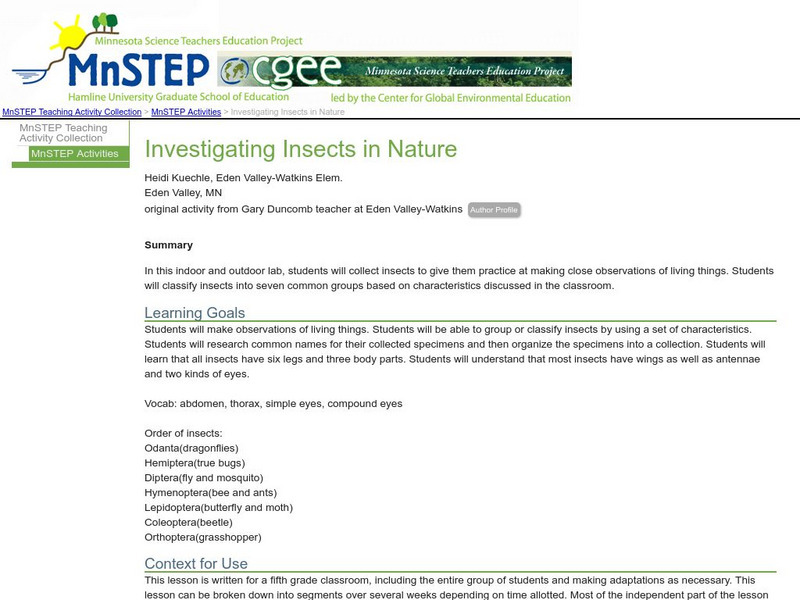
Serc: Investigating Insects in Nature
In this lab, students will collect insects while making close observations of living things. They will then classify insects into seven common groups based on characteristics discussed in the classroom.
City University of New York
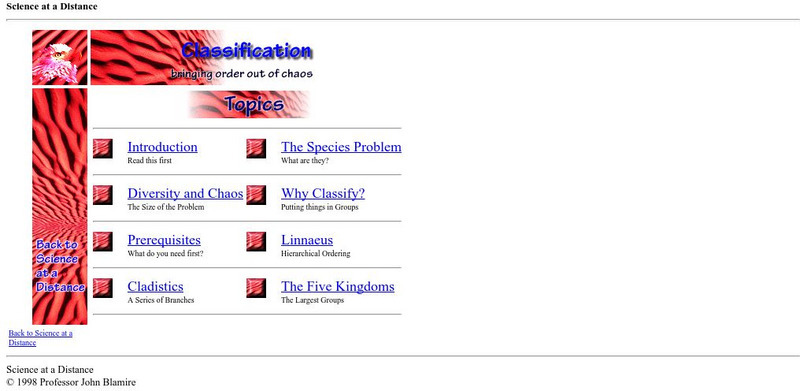
Classification: Bringing Order Out of Chaos
A self-directed module on all aspects of biological classifications that covers the species problem, diversity and chaos, cladistics, putting things in groups, and so on.

Other
Gapminder: Dollar Street
In this collection of 30,000 photos from 46 countries, students will be assess "how people really live" around the world. Students can compare bathrooms, toys, and more. Students will explore different cultures, economics, geography,...

Alabama Learning Exchange
Alex: Classification
This instructional activity will explain the reasons that society groups and classifies. The instructional activity has a hands-on component that helps students connect everyday grouping with the way that scientists group and classify...
Georgia Department of Education
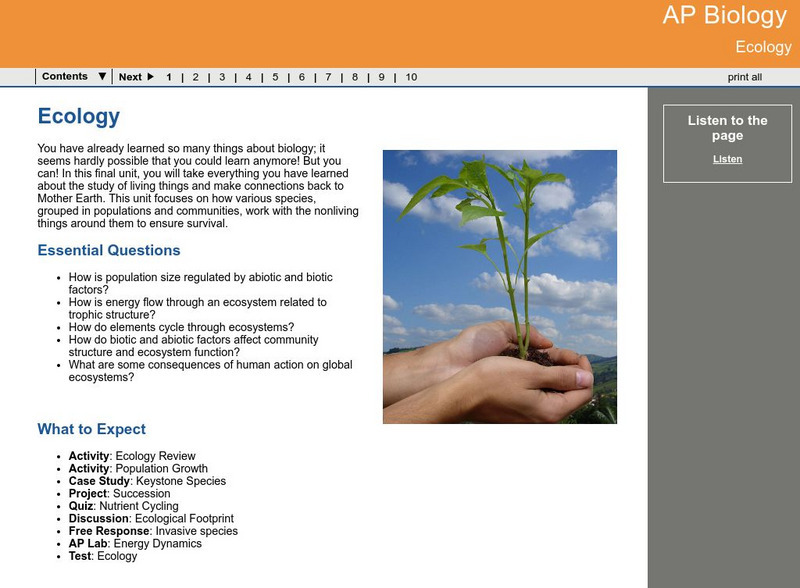
Ga Virtual Learning: Ap Biology: Ecology
Students review the study of living things and make connections back to Earth's systems. This unit focuses on how various species, grouped in populations and communities, work with the nonliving things around them to ensure survival.
TeachEngineering
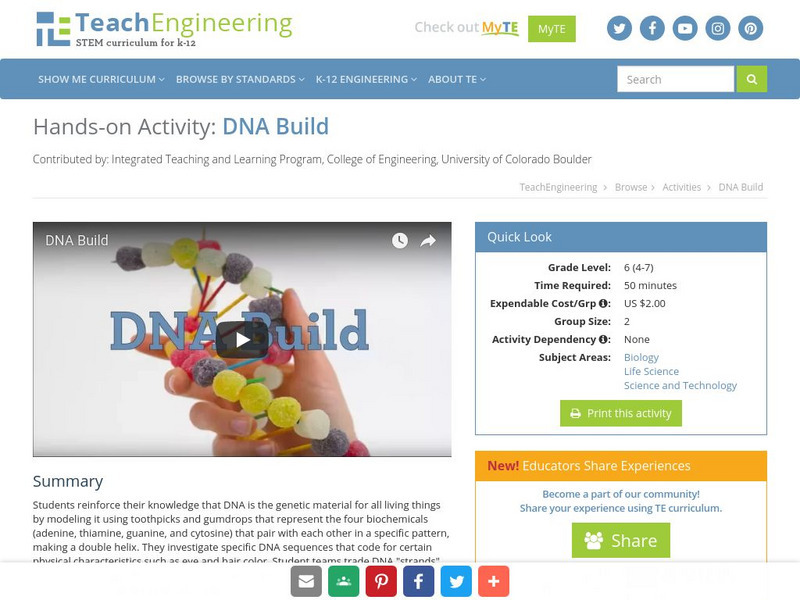
Teach Engineering: Dna Build
Students reinforce their knowledge that DNA is the genetic material for all living things by modeling it using toothpicks and gumdrops that represent the four biochemicals (adenine, thiamine, guanine, and cytosine) that pair with each...
Soft Schools
Soft Schools: Classification Quiz
Take this interactive, multiple-choice quiz over classification of organisms, then review your score and any missed questions at the end.

Alabama Learning Exchange
Alex: It's a Small, Small World
As an introduction to the study of diversity of life, science students will use hands-on inquiry experiments to discover the microscopic world through a microscope. Students will use computers to create a brochure or slideshow...
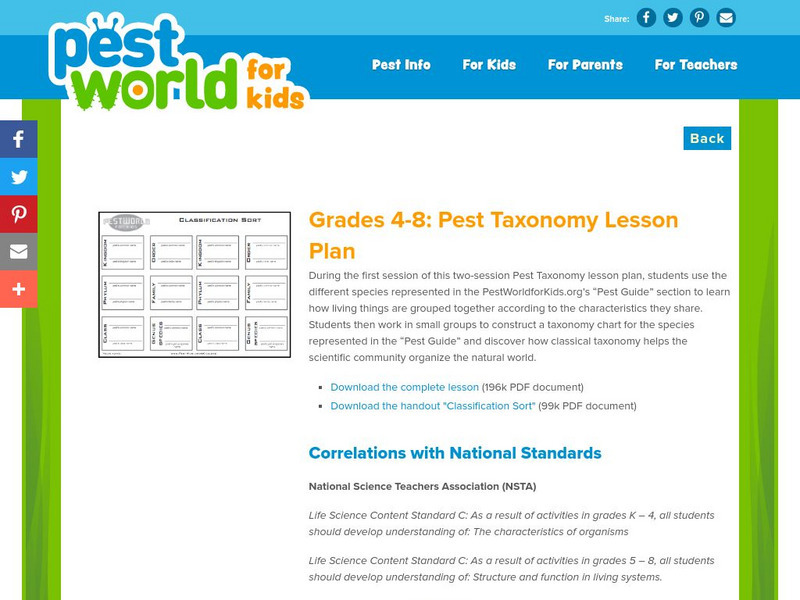
National Pest Managment Association
Pest World for Kids: Pest Taxonomy
During the first session of this two-session lesson, young scholars use the different species represented in the PestWorldforKids.org's "Pest Guide" section to learn how living things are grouped together according to the characteristics...

Blackdog Media
Classic Reader: The Emancipated by George Gissing
This is the full text of the novel The Emancipated by George Gissing, in which a group of British expatriates goes to tour the country and do things they might live to either bless or regret.