Hi, what do you want to do?






PBS
When the Synapsids Struck Back
As environments change so must their inhabitants, or extinction will prevail. An in-depth look at the evolution of the synapsids shows how one group overcame environmental changes and survived. The video lesson from the PBS Eon series...

Nature League
Adaptations at Animal Wonders - Field Trip
The word camouflage was first found use in English in the 1917 edition of Popular Science magazine. Camouflage, along with many other variations, star in the second video in a four-part series about adaptations. Join the virtual...

PBS
FAQs From Our First Year
After a year of PBS Eons videos, viewers raised some excellent points and questions. The hosts highlight the most common including classification of animals, when a new eon starts, how to pronounce scientific terms, and many other...

The Brain Scoop
Crocodiles vs. Alligators
Crocodile or alligator? The answer is in the bite! There are many characteristics that distinguish a crocodile from an alligator including the overbite of an alligator that contrasts with the underbite of the crocodile. Part of a larger...

Be Smart
Tuatara All the Way Down: Face to Face with a Living Fossil!
Change is good ... unless you're a tuatara! Meet Earth's oldest surviving reptile species in a fun video from an extensive science playlist. Content includes why the tuatara did not evolve and its unique anatomy.

Be Smart
How Evolution Turned a Possum into a Wolf
Do bats really have thumbs? Explore this, and many other intriguing topics using a short video from a great science series. Viewers learn to differentiate between analogous and homologous structures, why natural selection favors traits...

PBS
The Biggest Thing That Ever Flew
Imagine a reptile the size of a giraffe that flies across oceans. This reptile, quetzalcoatlus, existed, and scientists continue to learn more about this fascinating creature. The video, part of the Eons series, explains where the...

The Brain Scoop
Dimetrodon Is Not A Dinosaur
Dimetrodon—the dinosaur that wasn't really a dinosaur! Explore the facts about an animal that lived before the Jurassic era with a fact-filled video from Brain Scoop. The narrator shows dimetrodon's characteristics, its common...

The Brain Scoop
The Origin of Mammal Movement: Harvard Adventures, Part I
It may be difficult for some humans to walk and chew gum at the same time ... but reptiles can't breathe while running at all! Compare the skeletal systems of reptiles and mammals in the first installment of Brain Scoop's fossils and...

FuseSchool
Animal Classification
So many animals, so many characteristics—how do we classify them all? A short tour of taxonomy awaits within a helpful Fuse School video on Evolution. Science scholars see how scientists sort animals into the main classes and what traits...

Crash Course
Chordates
Did you know that coelacanths, a living chordate fossil, can live at an ocean depth of 2,300 feet, grow to be 6.5 feet long, and weigh almost 200 pounds? The narrator of a video series on evolution continues his way up the evolutionary...

Curated OER
Lizards, Snakes, and Poisonous Animals in the Deserts of Australia
Australia has more lizards than any other country. Learners have an opportunity to get up close to one type, the goanna lizard, with a short video about how this speedy reptile survives under the harsh conditions of the outback. Viewers...

Curated OER
Dinosaur Supremacy
With very little water, watch how a particular type of dinosaur has learned to adapt to the dry environment. This video displays other impressive reptiles from our past. Watch to observe these ancient creatures!

Bill Nye
Bill Nye The Science Guy on Reptiles
A two-minute mini lesson on reptiles entertains and educates your elementary life science learners. The facts that reptiles are cold-blooded, they conserve their energy, and have protective scales, are all divulged by Bill in a way that...
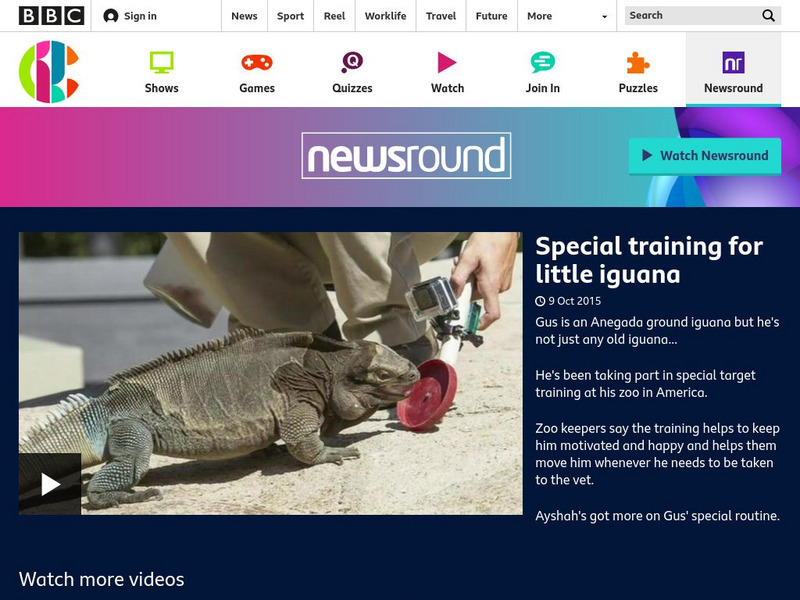
BBC
Bbc Newsround: The Little Iguana in Special Training
Brief video reports on the value of special training for an iguana living in the San Diego zoo.
University of Michigan
Bio Kids: Critter Catalog: Turtles, Snakes, Lizards, and Relatives
Listen to the sounds of turtles, snakes, lizards, and other related reptiles.
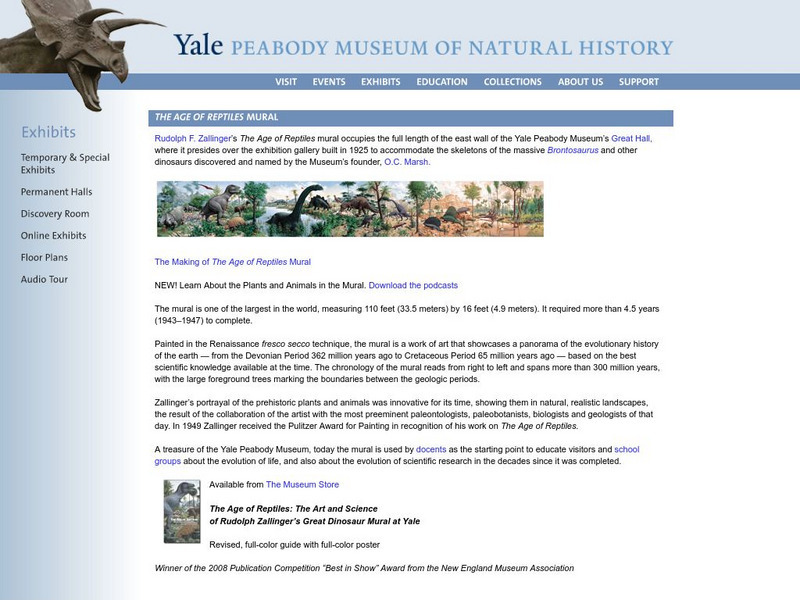
Yale University
Yale Peabody Museum: Age of Reptiles Mural
View the Age of Reptiles murals and learn more about the Cretaceous, Jurassic, Triassic, Permian, Carboniferous and Devonian periods. [6:45]

California Academy of Sciences
California Academy of Sciences: Reptile Decline
Two recent studies are finding that lizard and snake populations are in decline. One of the causes? Climate change. [2:18]
Next Vista for Learning
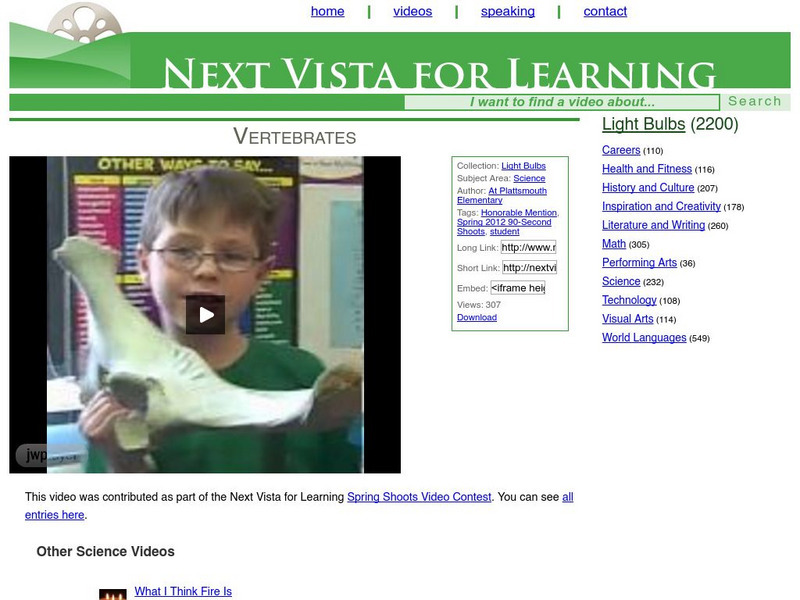
Next Vista for Learning: Vertebrates
A video exploring the characteristic of vertebrates as an animal with backbone. Video investigates what backbones look like and their function. Animals with backbones include fish, amphibians, reptiles, birds, and mammals. [1:33]

Mocomi & Anibrain Digital Technologies
Mocomi: 10 Facts About Alligators
Provides 10 amazing alligators facts.