Hi, what do you want to do?






College Board
2018 AP® United States History Free-Response Questions
Learners explore the the Age of Imperialism using primary sources and an authentic College Board documents-based question. Other prompts explore the economic changes brought about by the American Civil War, technology, mercantilism, and...

Student Handouts
Examining Primary Sources: Rudyard Kipling, “The White Man’s Burden” (1899)
Combine literature and history with the poem "The White Man's Burden" by Rudyard Kipling. Pupils read the poem and answer four questions about the text.

Center for History and New Media
The Daily Experience of the Laurel Grove School, 1925
What was daily life like for those attending segregated schools in 1925? Modern learners fill out a KWHL chart as they explore historical background and primary source documents about the Laurel Grove School in Fairfax County, Virginia....

Roy Rosenzweig Center for History and New Media
Westward Expansion: Image and Reality
As your young historians study Westward Expansion, practice in-depth primary source analysis with the documents and guidelines presented in this resource. They will examine a lithograph and excerpts from two letters written by a Nebraska...

Newseum
Today's Front Pages
Take a close look at a number of newspapers with collection of lessons and activities. Using a poster (which can be found under the materials tab), learners examine the hard copy of a local newspaper. This leads into an exploration of...

Society of Petroleum Engineers
Renewable and Nonrenewable Energy
Energize an environmental science unit on natural resources with this collection of instructional materials. From simple coloring sheets for primary grade children, to guiding questions for a high school research...

Novelinks
Words By Heart: K-W-H-L Strategy
How can we heal our hearts through forgiveness? The third activity in a series of six prompts readers to answer questions about Words by Heart by Ouida Sebestyen. Not only does it activate background knowledge on the...

C3 Teachers
Uncle Tom’s Cabin: Can Words Lead to War?
"Words, words, words." Despite Hamlet's opinion, words can be significant. In this inquiry lesson, middle schoolers learn how the words in Harriet Beecher Stowe's Uncle Tom's Cabin, in the view of many, lead to the American Civil War. To...

National Park Service
A Tale of Two Men
Theodore Roosevelt and the Marquis de Mores were both born in 1858, and both came to the Dakota territory in 1883, but they influenced the developing country of America in different ways. Elementary and middle schoolers apply written and...

US Environmental Protection Agency
Thirstin's Wacky Water Adventure
Make a splash with young scientists as you teach them all about water using this activity packet. Thirstin, a cartoon glass of water, walks children through the water treatment process, teaches them about different sources of water, and...

Roy Rosenzweig Center for History and New Media
What Brought Settlers to the Midwest?
Drawn by promises of fertile land, thousands of settlers poured West because of the Homestead Act of 1862. By examining images of the ads that drew them westward, learners consider the motivations for movement. They also consider how the...

C3 Teachers
Black Genius: How Did Black Genius Help Build American Democracy?
"How did the slavery system undermine the United States' democratic principles?" This question launches a study of how the Preamble to the Declaration of Independence, Article I, Section 2 of the U.S. Constitution, and Article IV,...

Curated OER
Practice Book O
Whether you need resources for reading comprehension, literary analysis, phonics, vocabulary, or text features, an extensive packet of worksheets is sure to fit your needs. Based on a fifth-grade curriculum but applicable to any level of...

Reading Through History
The Battle of Yorktown
The Battle of Yorktown was an important battle of the American Revolutionary War for all sides. Learners read everything from the point of view of the British, the Americans, and finally, the French. After reading, they answer...

Reading Through History
Ain't I a Woman?
Sojourner Truth’s “Ain’t I a Woman?” speech has reverberated through American history, giving voice to women of color who had not previously been heard. Learners analyze the tone, audience, purpose, occasion, and speaker of the speech’s...

A to Z Teacher Stuff
Word Search Match
Go beyond a traditional word search with a clue matching, word search combo. Scholars read clues, write the word that matches, then search for the word in a puzzle. Clues and words offer insight into the life of polar bears.
Other
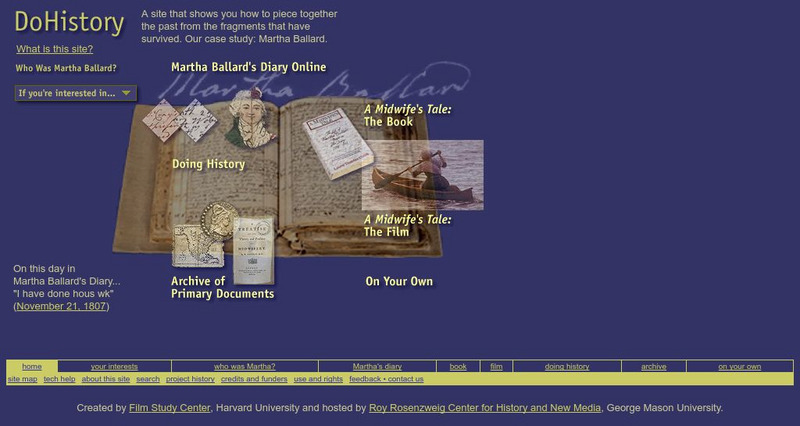
Do History: Using Primary Sources
This site explains the difference between a primary and secondary source. It also provides students with questions to ask when gathering evidence about a primary source document.
Texas Education Agency
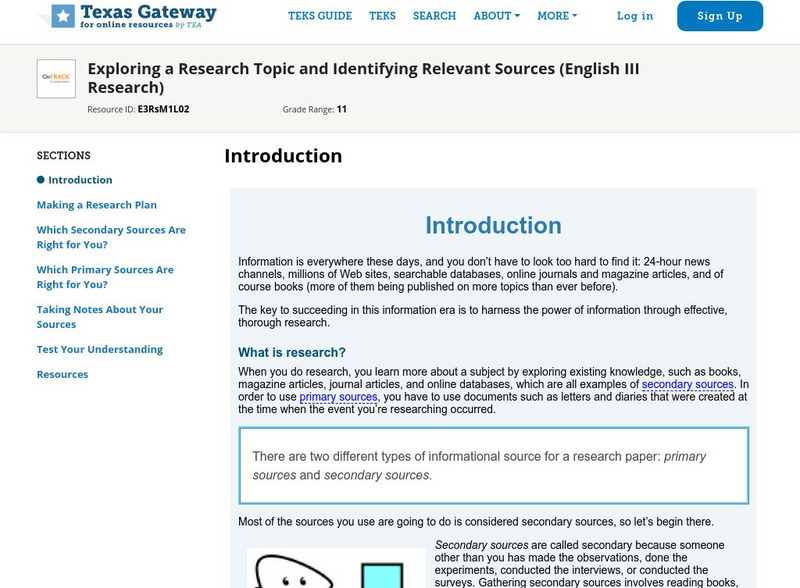
Texas Gateway: Exploring a Research Topic and Identifying Relevant Sources
In this lesson, students learn how to plan their research, find relevant primary and secondary sources, and use those sources in your research papers. W.11-12.8 Sources/Integrate/Cite
Florida State University
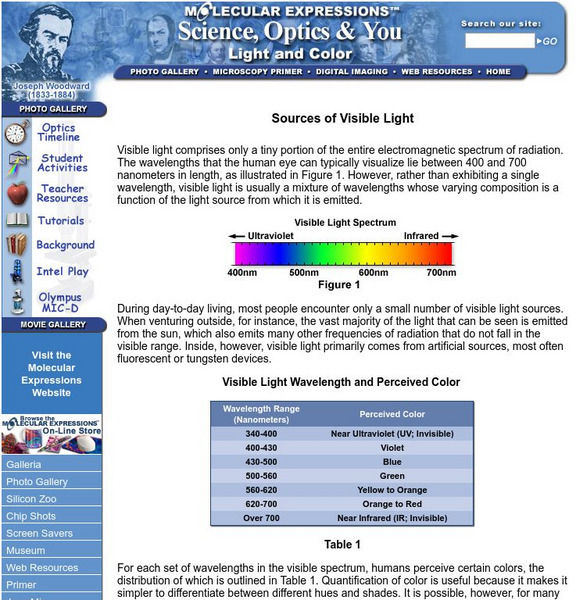
Florida State University: Light and Color: Sources of Visible Light
This site discusses primary lighting sources and gives information on the different properties and spectral characteristics of each. Also includes links to some interactive Java applets.
Texas Education Agency
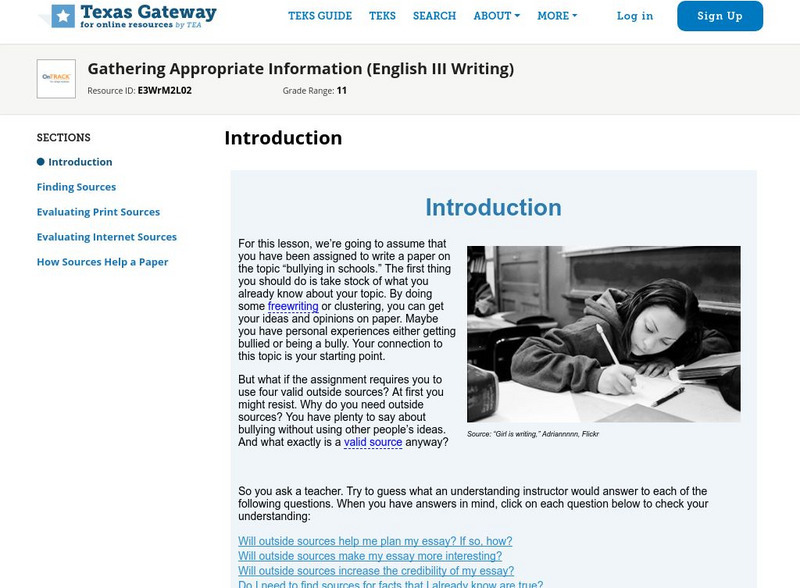
Texas Gateway: Gathering Appropriate Information (English Iii Writing)
[Accessible by TX Educators. Free Registration/Login Required] This lesson focuses on finding and evaluating relevant sources for a research project. It includes primary and secondary sources and print and internet sources. W.11-12.2...
Stanford University
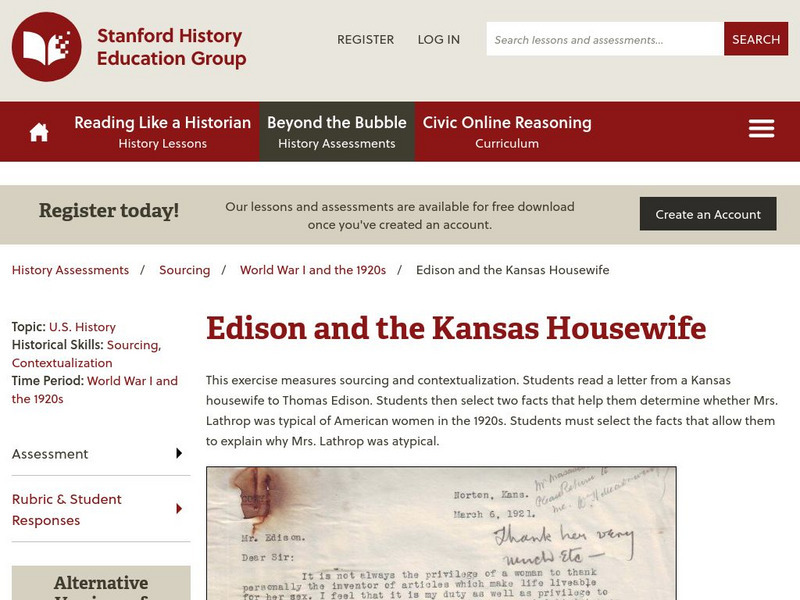
Beyond the Bubble: Edison and the Kansas Housewife
[Free Registration/Login Required] Students read a letter from a Mrs. W.C. Lathrop to Thomas Edison thanking him for inventing her electric appliances and making her life easier. They are then presented with some contextual facts, and...