Hi, what do you want to do?






Poetry4kids
How to Write a Traditional “Mother Goose” Nursery Rhyme
There may be some little lambs, itsy bitsy spiders, and pumpkin eaters in your language arts class! An online poetry lesson takes learners through the steps of writing a nursery rhyme with easy-to-follow steps and explanatory examples.

Florida Center for Reading Research
Phonological Awareness: Sentence Segmentation, Nursery Rhymes
What makes a complete sentence? Words, of course! As your budding readers understand this relationship, guide them through this nursery rhyme activity. Scholars examine pictures of 10 familiar rhymes, mentally counting the words in the...

Poetry4kids
How to Write a Fractured Nursery Rhyme
Scholars take a popular song or nursery rhyme and make it their own as they write a fractured nursery rhyme. Writers seek out a nursery rhyme's rhyming words and change them to create an original poem.

PreKinders
Nursery Rhyme Posters
Ideal for coloring, class decoration, or a language arts center, these nursery rhyme posters are a great addition to your kindergarten class. Each poster provides the text of the nursery rhymes as well as a cute illustration.

Core Knowledge Foundation
Nursery Rhymes and Fables Tell It Again!™ Read-Aloud Anthology
A 206-page kindergarten anthology offers various nursery rhymes and fables. Each lesson covers a different reading and examines a concept that best relates to the rhyme or fable. Lessons begin with an introduction to the reading, go into...

ReadWriteThink
Word Recognition Strategies Using Nursery Rhymes
As a class, scholars read the poems, Humpty Dumpty, Peter, Peter, Pumpkin Eater, and Jack and Jill, in order to identify words with the same ending sound. Using their rhyming skills, learners brainstorm additional words...

Soft Schools
Practice Reading Poetry
Identify the rhyme scheme in a worksheet that features "Mary Had a Little Lamb." Readers use the nursery rhyme to reinforce poetic elements in four comprehension questions.

K12 Reader
Simplify with Pronouns Worksheet Two
Use nursery rhymes to help teach pronouns. Learners read the familiar sentences and replace the repeated words with the proper pronouns. Prior knowledge of these phrases helps to scaffold the exercise.

Missouri Department of Elementary
Express Yourself!
Encourage scholars to express themselves with help from an engaging song. Sung to the tune of "London Bridge is Falling Down," participants sing phrases that offer tips for dealing with emotions—sad, happy, worried, proud, mad, and...

Curated OER
See, Say, Write and Read!
Support children with developing their reading, writing, and spelling skills. Children start by reading and writing the words the, can, and jump before reading three sentences describing animals that can jump.

Agriculture in the Classroom
Roll of the Genes
Animal reproduction in sheep and cattle is explored with the help of Punnet squares. Scholars employ tools using probability to conclude the color of wool a sheep's offspring will have. Acting as animal geneticists, pupils then take...

Houghton Mifflin Harcourt
Look at Us!: Extra Support Lessons (Theme 1)
Support struggling learners and focus on the alphabet with the three weeks of activities and materials provided here. Each day, learners review some letters and practice others in depth. They work on rhyming, practice new words, and...

Really Good Stuff
Sequencing Pocket Chart
Cut it out! Beginning readers practice sequencing skills at home or at school with a variety of activities that require cutting out multiple sets of picture cards and putting them in the correct order.

Curated OER
Day and Night
Good Night, Moon is a classic little ones absolutely love. It's a sweet book that can be used, as in this lesson, to start a conversation about the difference between night and day. After reading the story, the class brainstorms...
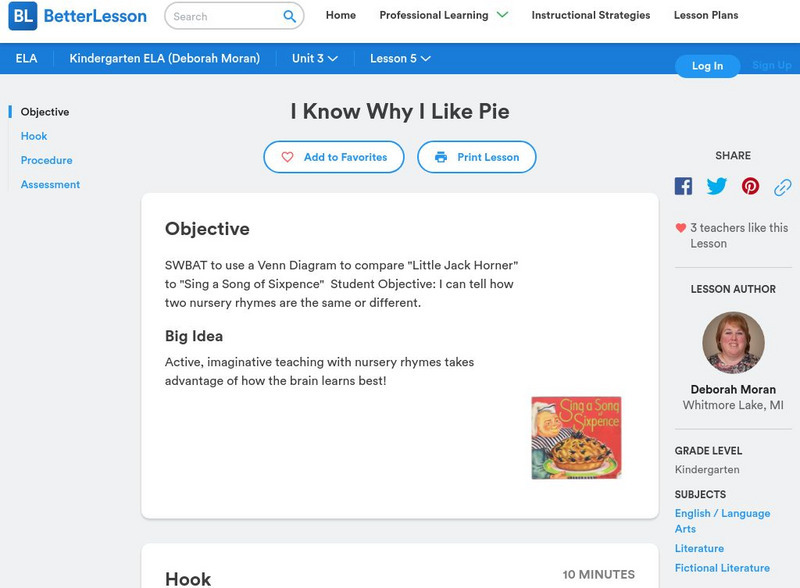
Better Lesson
Better Lesson: I Know Why I Like Pie
Active, imaginative teaching with nursery rhymes takes advantage of how the brain learns best! In this lesson, students will use a Venn Diagram to compare "Little Jack Horner" to "Sing a Song of Sixpence"

Teachnology
Teachnology: English Language Arts Lesson Plans
Great lesson plans spanning a wide-range of language arts-related subjects.
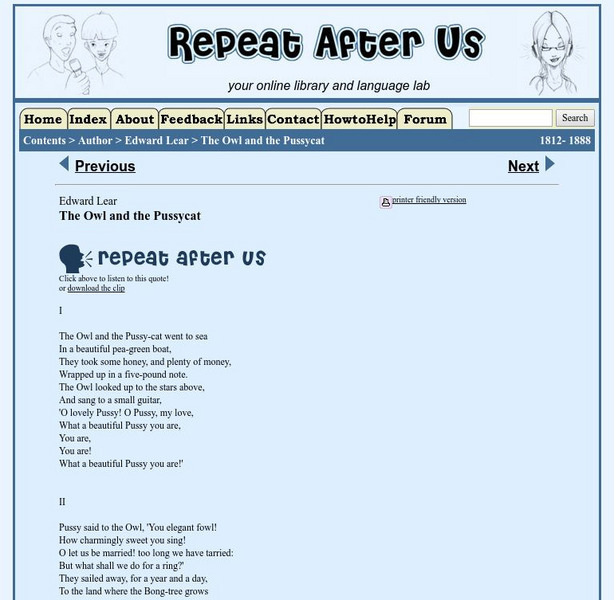
Repeat After Us
Repeat After Us: "The Owl and the Pussycat" by Edward Lear
This site offers the text and audio of the poem "The Owl and the Pussycat" by Edward Lear. Great for students to practice reading poetry aloud at an appropriate rate and with expression.
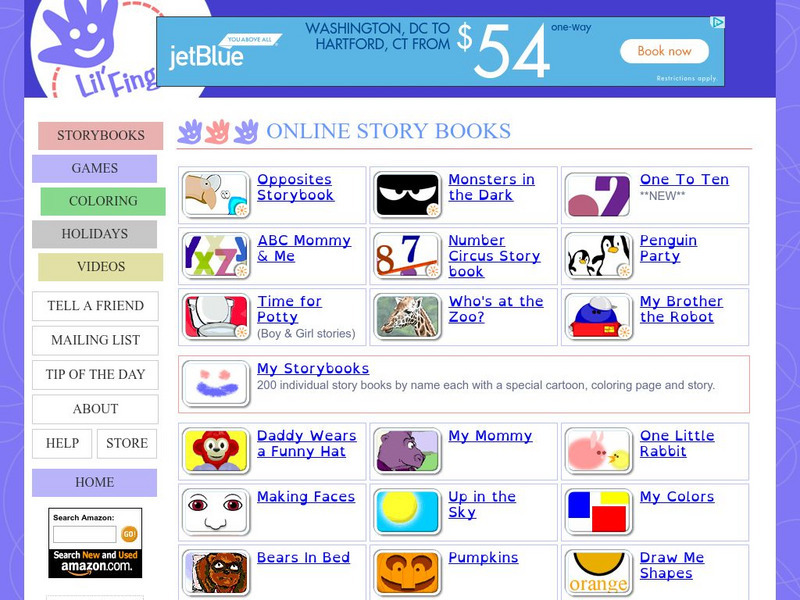
Other
Lil' Fingers Storybooks
An interactive resource for children which features several online storybooks. Toddlers and children can read along, listen and learn as each story develops.
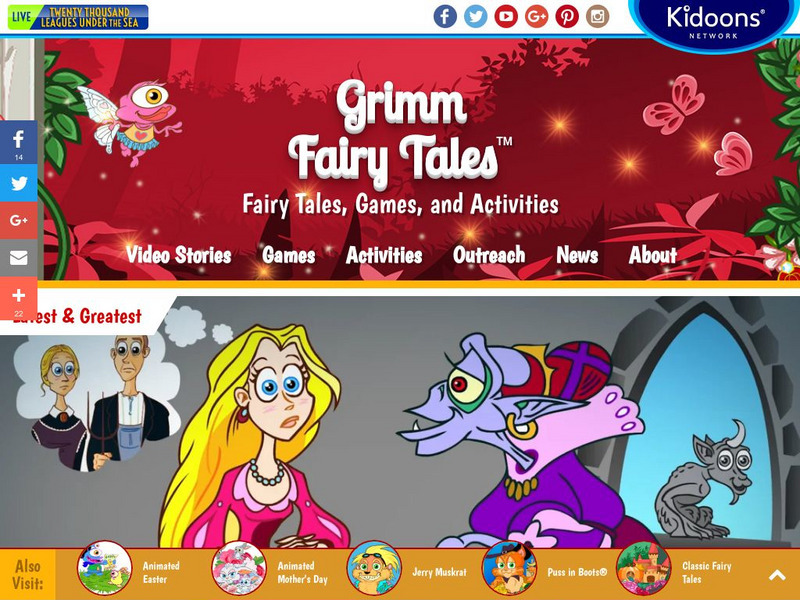
Other
Grimm Fairy tales.com
You can read and hear animated stories from the Brothers Grimm on this site. There are also links to games, fun stuff, and a featured story.
Other popular searches
- Writing Nursery Rhymes
- Acting Out Nursery Rhymes
- Favorite Nursery Rhymes
- Onomatopoeia Nursery Rhymes
- Nursery Rhymes Worksheets
- Nursery Rhymes Word Families
- Nursery Rhyme Activities
- Science Nursery Rhyme
- Rhyming With Nursery Rhymes
- Phonics and Nursery Rhymes
- Nursery Rhymes Math
- Words for Nursery Rhyme