TeachEngineering
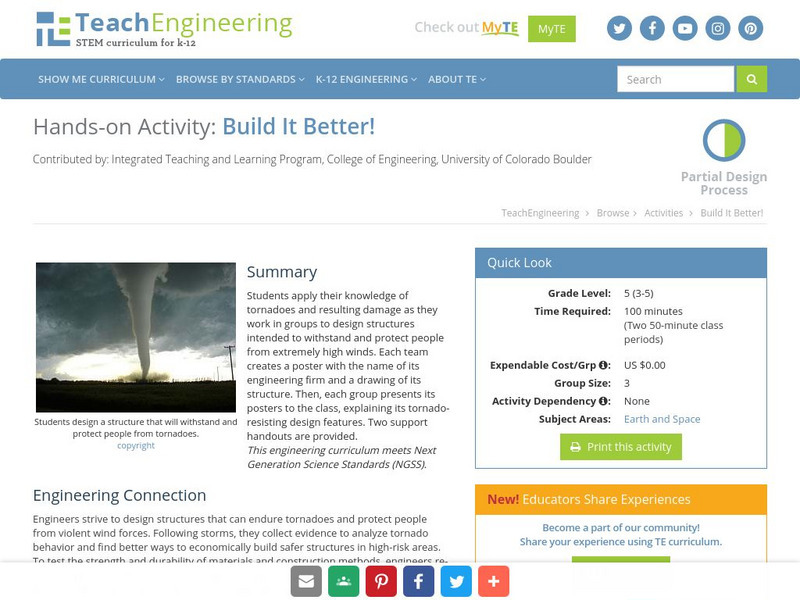
Teach Engineering: Build It Better!
Students learn about tornados and how engineers design structures to better withstand them. Students then design and draw a house that will better withstand a tornado. Students also learn about the Fujita Tornado Damage Score.
TeachEngineering
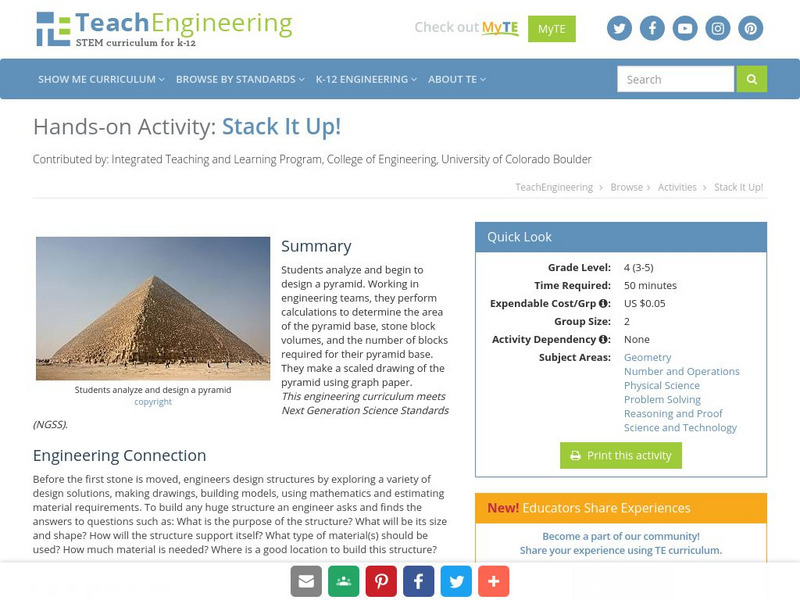
Teach Engineering: Stack It Up!
Students analyze and begin to design a pyramid. Working in engineering teams, they perform calculations to determine the area of the pyramid base, stone block volumes, and the number of blocks required for their pyramid base. They make a...
TeachEngineering
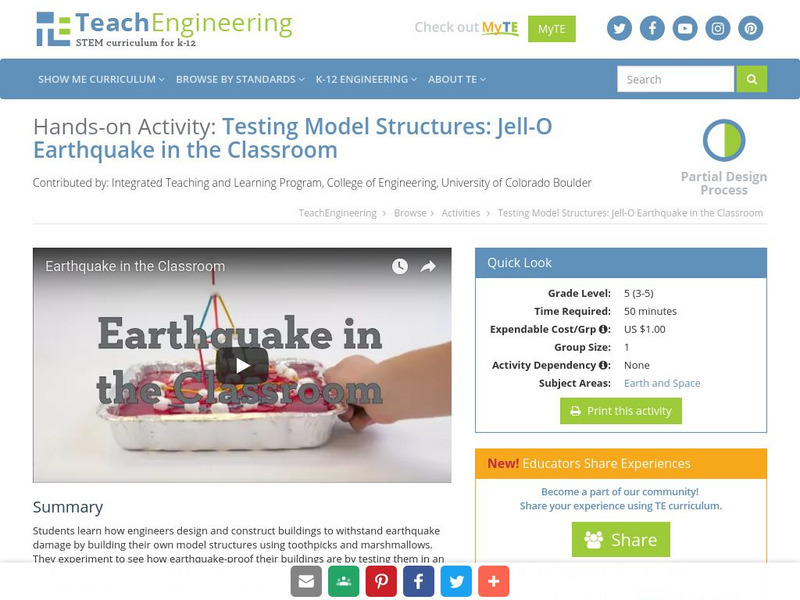
Teach Engineering: Earthquake in the Classroom
Students will learn how engineers construct buildings to withstand damage from earthquakes by building their own structure with toothpicks and marshmallows. Students will test how earthquake-proof their buildings are by testing them on...
TeachEngineering
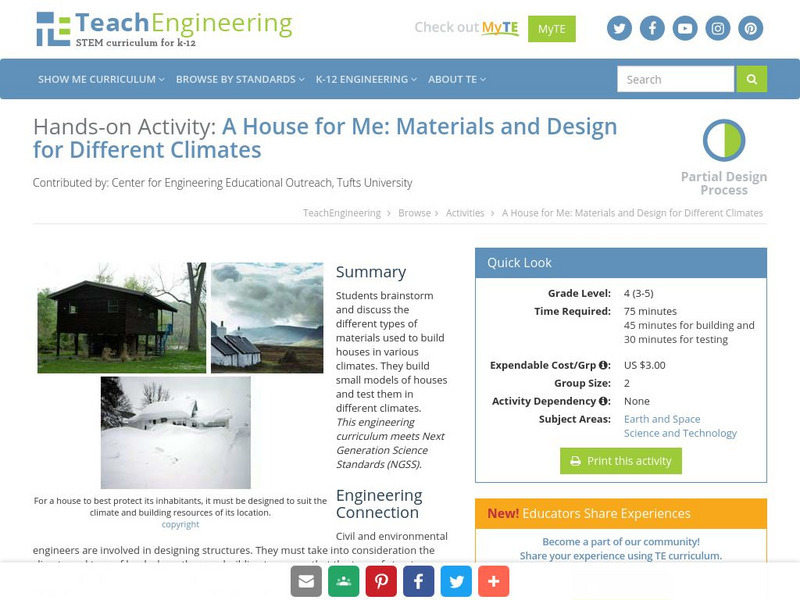
Teach Engineering: A House Is a House for Me
Students brainstorm and discuss the different types of materials used to build houses in various climates. Small models of houses are built and tested against different climates.
TeachEngineering
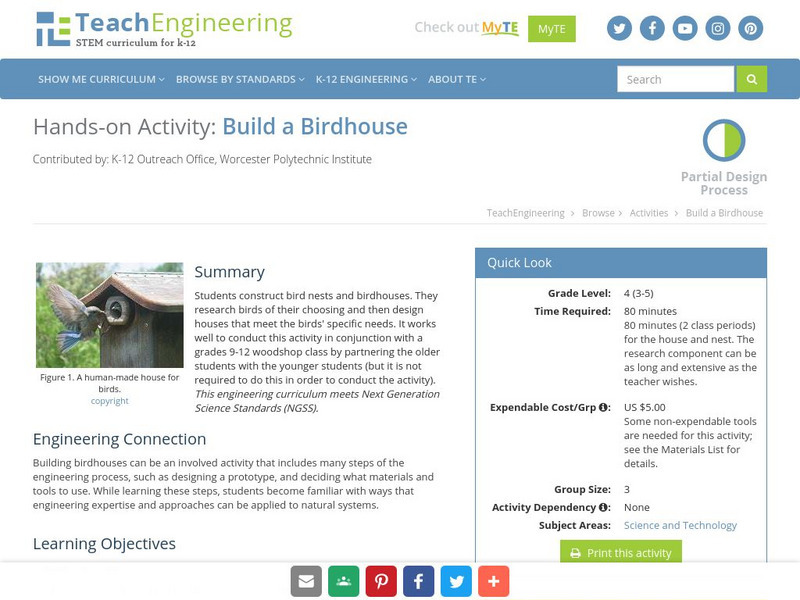
Teach Engineering: Build a Birdhouse
Students learn about different types of birds and their differing needs for nests and bird houses. Students then build a bird house.
TeachEngineering
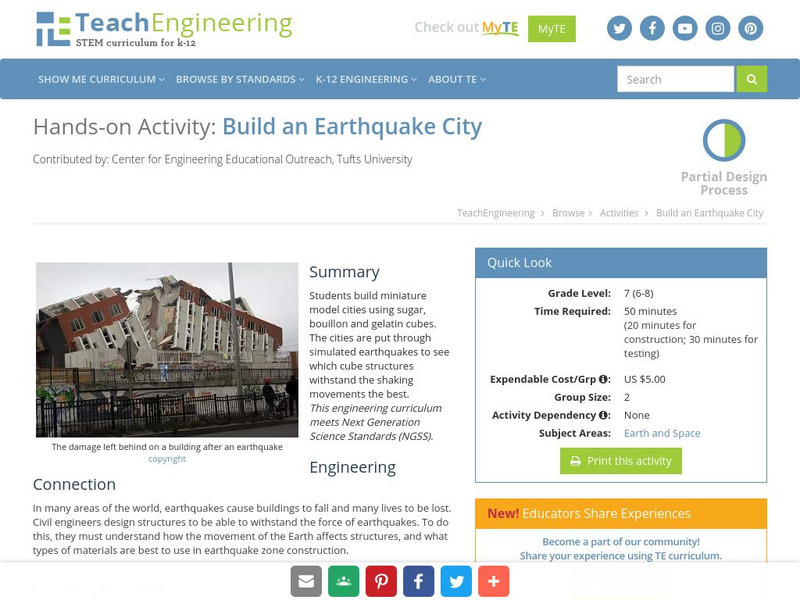
Teach Engineering: Build an Earthquake City
Students learn about earthquakes and how they effect structures. Student then apply their knowledge by trying to build an earthquake resistant city.
TeachEngineering
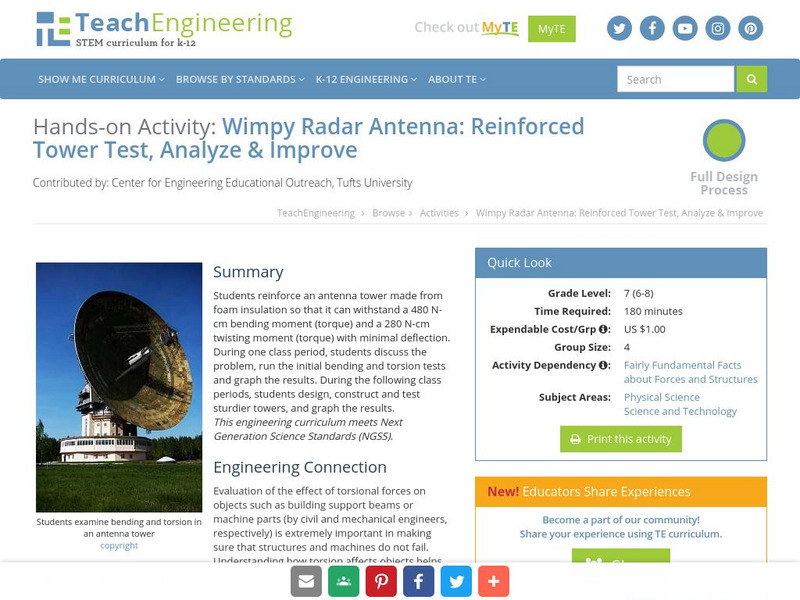
Teach Engineering: Wimpy Radar Antenna
Students will reinforce an antenna tower made from foam insulation, so that it will withstand a 480 N-cm bending moment (torque) and a 280 N-cm twisting moment (torque) with minimal deflection. One class will be used to discuss the...
TeachEngineering
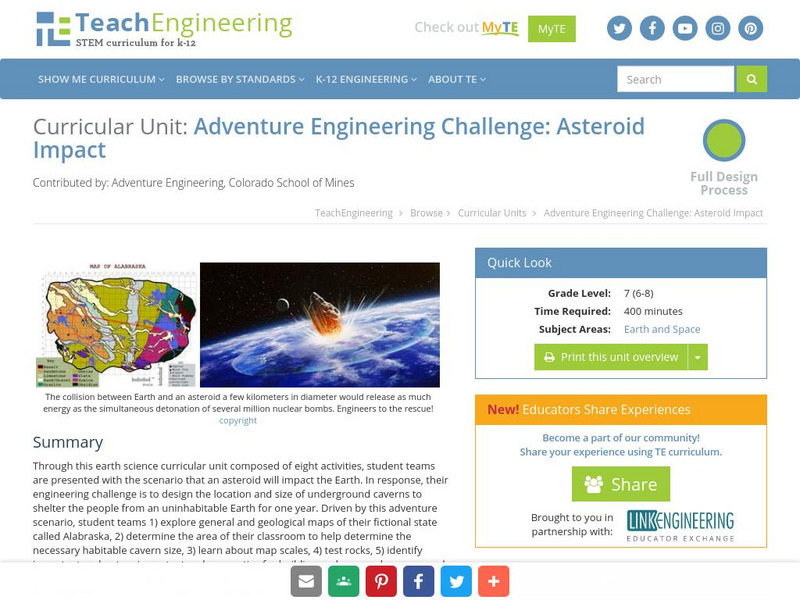
Teach Engineering: Asteroid Impact
Asteroid Impact is an 8-10 class long (350-450 min) earth science curricular unit where student teams are posed with the scenario that an asteroid will impact earth. They must design the location and size of underground caverns to save...
TeachEngineering
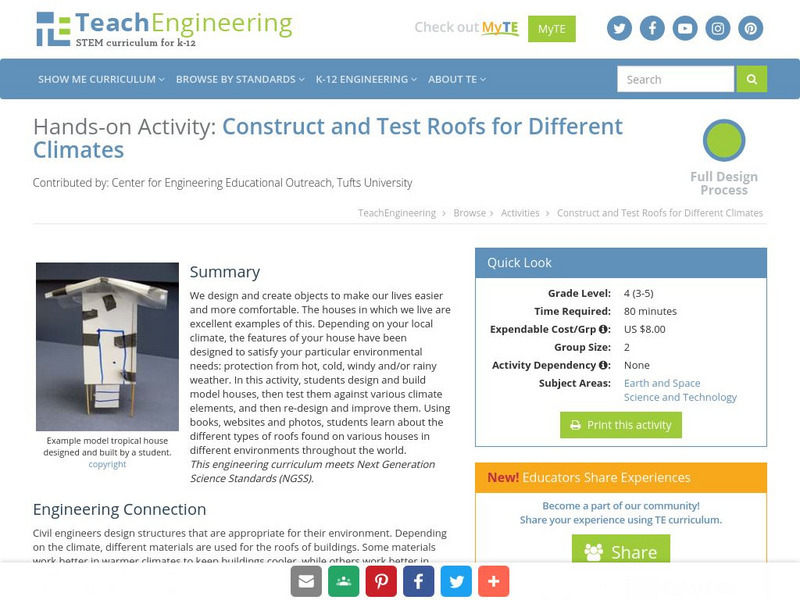
Teach Engineering: Construct and Test Roofs for Different Climates
We design and create objects to make our lives easier and more comfortable. The houses in which we live are an excellent example of this. Depending on your local climate, the features of your house will be different to satisfy your...
TeachEngineering
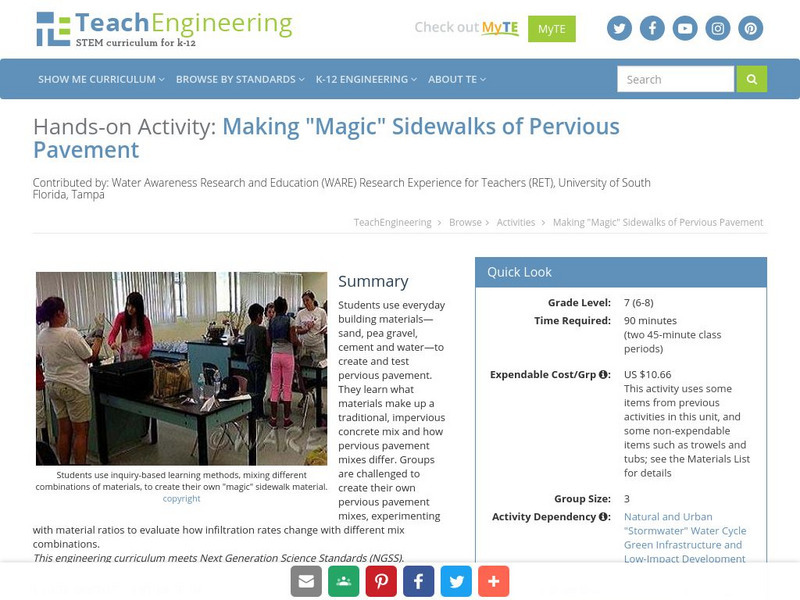
Teach Engineering: Making "Magic" Sidewalks of Pervious Pavement
Students use everyday building materials- sand, pea gravel, cement and water- to create and test pervious pavement. Groups are challenged to create their own pervious pavement mixes, experimenting with material ratios to evaluate how...
TeachEngineering
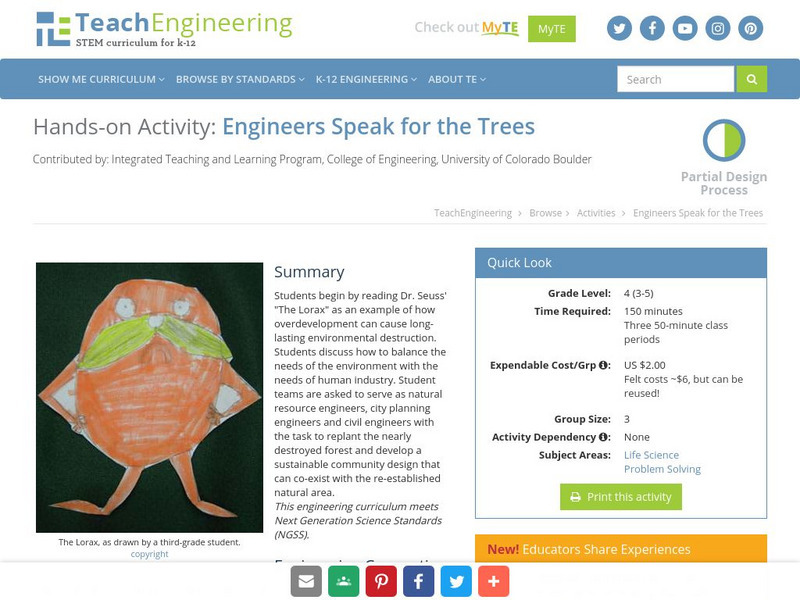
Teach Engineering: Engineers Speak for the Trees
Students begin by reading Dr. Seuss' "The Lorax" as an example of how overdevelopment can cause long-lasting environmental destruction. Students discuss how to balance the needs of the environment with the needs of human industry....

Alabama Learning Exchange
Alex: Land Surveying Project
This project resulted from of the collaboration of a computer aided drafting teacher, Chris Bond, and a math teacher, Lee Cable, (Hewitt-Trussville High School) to provide higher math expectations in CT and real life application in...
TeachEngineering
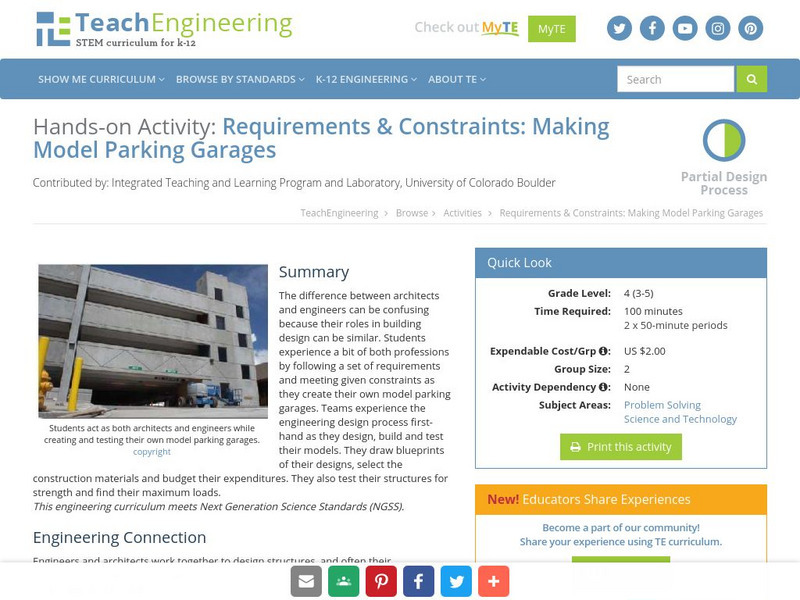
Teach Engineering: Requirements & Constraints: Making Model Parking Garages
The difference between an architect and an engineer is sometimes confusing because their roles in building design can be similar. Students experience a bit of both professions by following a set of requirements and meeting given...
Other
Engineer Girl: Careers
Doesn't an engineer drive a train? Yes, but the career of engineering is so much more! Explore this comprehensive list of all types of engineering careers. Learn what each entails, find out how to plan for them, learn how to set up job...
TeachEngineering
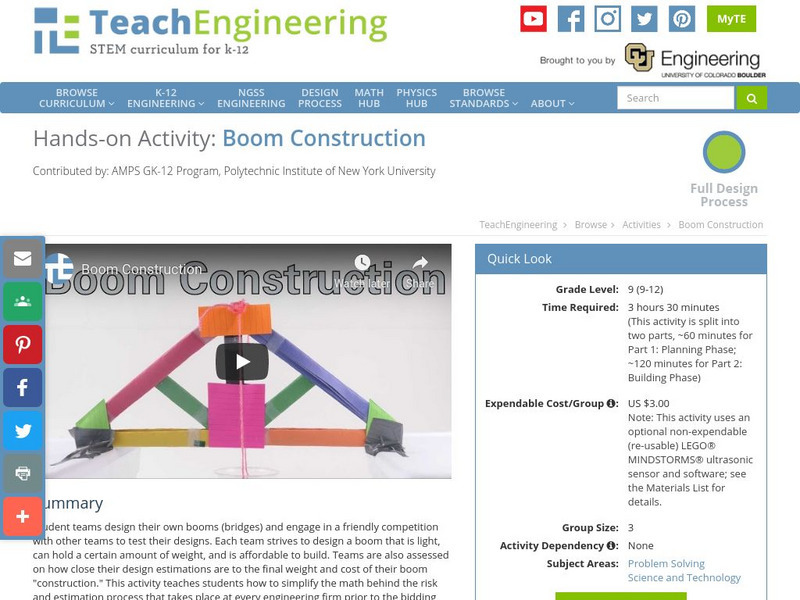
Teach Engineering: Boom Construction
Student teams design their own booms (bridges) and engage in a friendly competition with other teams to test their designs. Each team strives to design a boom that is light, can hold a certain amount of weight, and is affordable to...
TeachEngineering
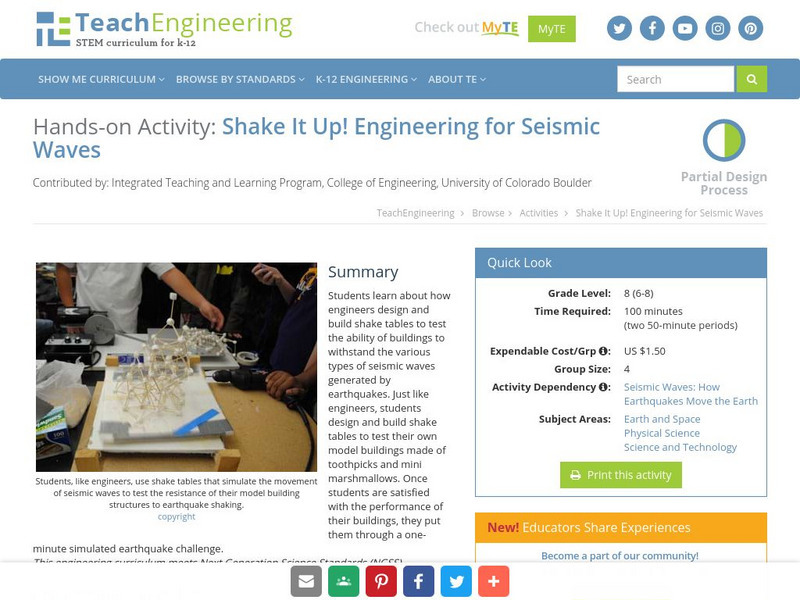
Teach Engineering: Shake It Up! Engineering for Seismic Waves
Students learn about how engineers design and build shake tables to test the ability of buildings to withstand the various types of seismic waves generated by earthquakes. Just like engineers, students design and build shake tables to...
TeachEngineering
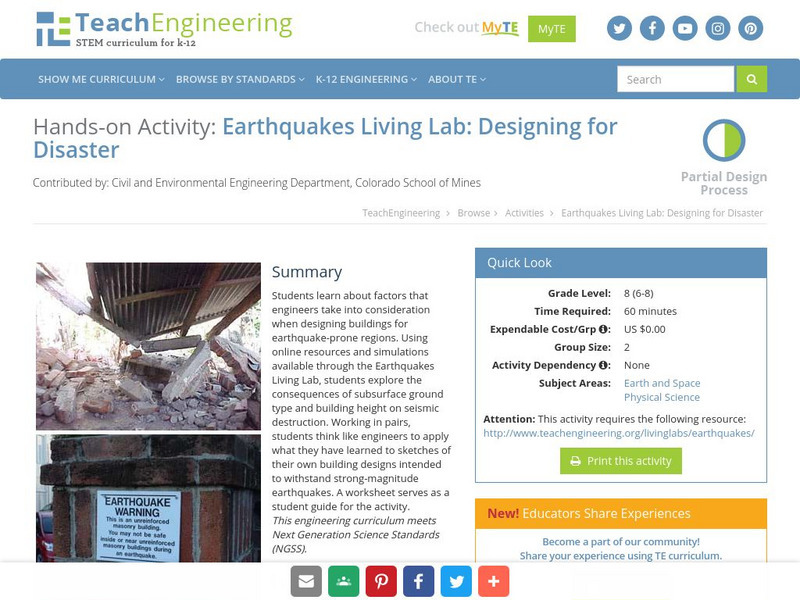
Teach Engineering: Earthquakes Living Lab: Designing for Disaster
Students learn about factors that engineers take into consideration when designing buildings for earthquake-prone regions.
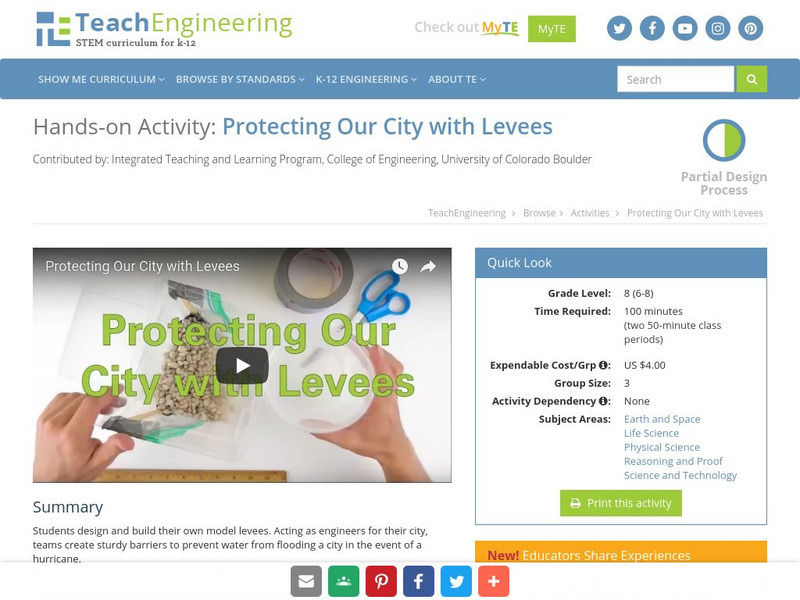
TeachEngineering
Teach Engineering: Protecting Our City With Levees
Students design and build their own model levees. Acting as engineers for their city, teams create sturdy barriers to prevent water from flooding a city in the event of a hurricane.
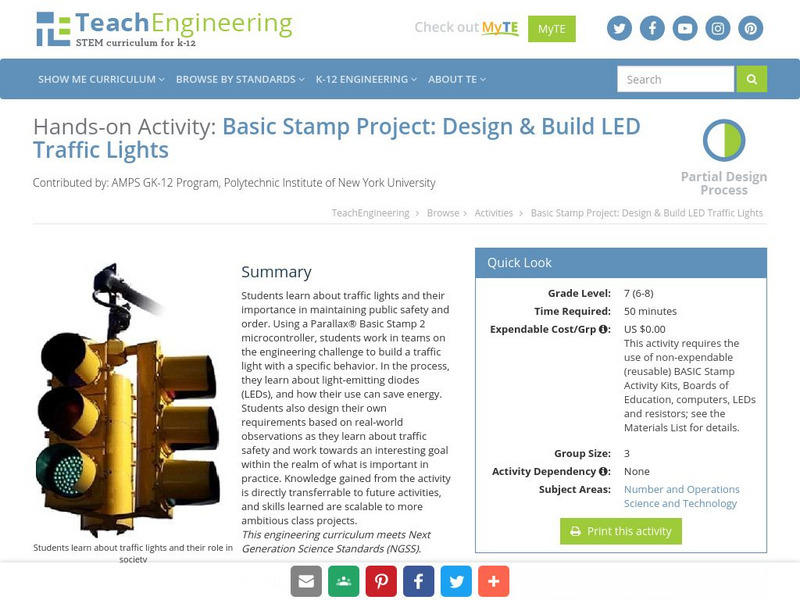
TeachEngineering
Teach Engineering: Traffic Lights
Students learn about traffic lights and their importance in maintaining public safety and order. Using a Parallax Basic Stamp 2 microcontroller, students work in teams on the engineering challenge to build a traffic light with a specific...
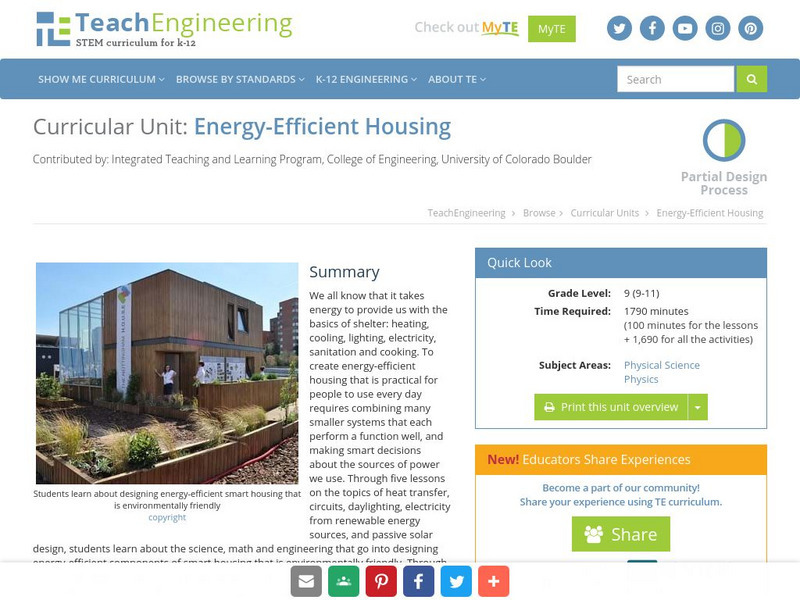
TeachEngineering
Teach Engineering: Energy Efficient Housing
We all know that it takes energy to provide us with the basics of shelter: heating, cooling, lighting, electricity, sanitation and cooking. To create energy-efficient housing that is practical for people to use every day requires...
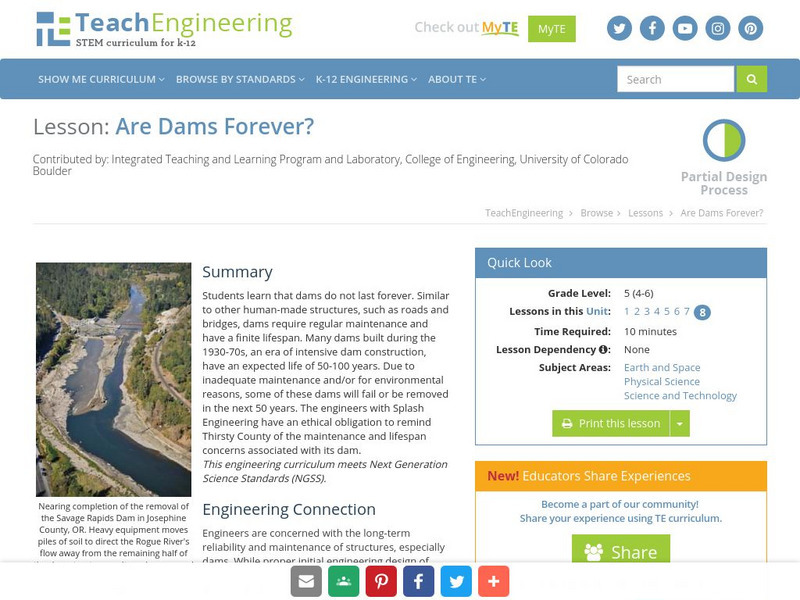
TeachEngineering
Teach Engineering: Are Dams Forever?
Students learn that dams do not last forever. Similar to other human-made structures, such as roads and bridges, dams require regular maintenance and have a finite lifespan. Many dams built during the 1930-70s, an era of intensive dam...
TeachEngineering
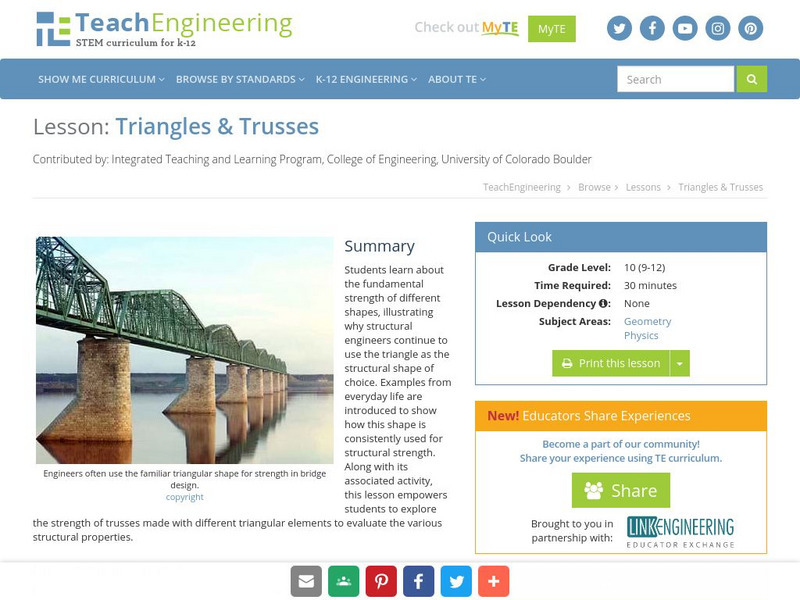
Teach Engineering: Triangles & Trusses
Learners learn about the fundamental strength of different shapes, illustrating why structural engineers continue to use the triangle as the structural shape of choice. Examples from everyday life are introduced to show how this shape is...
TeachEngineering
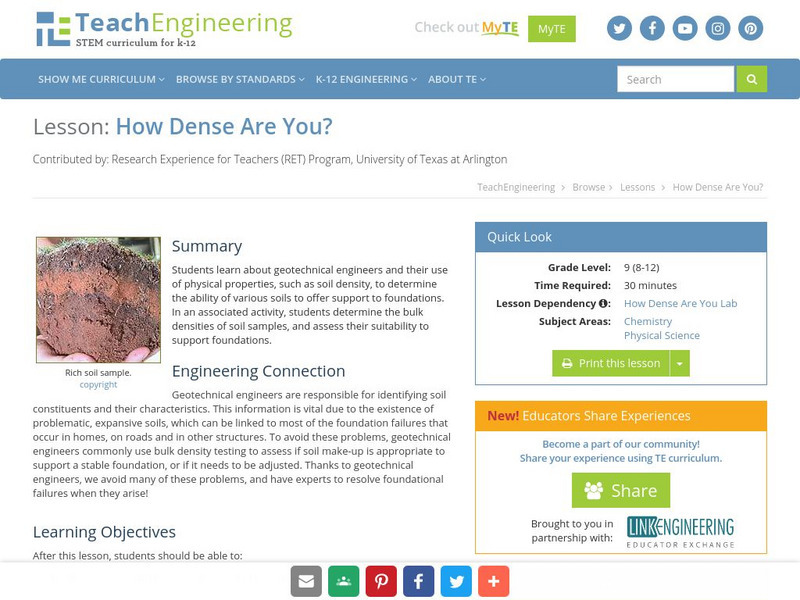
Teach Engineering: How Dense Are You?
Students learn about geotechnical engineers and their use of physical properties, such as soil density, to determine the ability of various soils to offer support to foundations. In an associated activity, students determine the bulk...
TeachEngineering
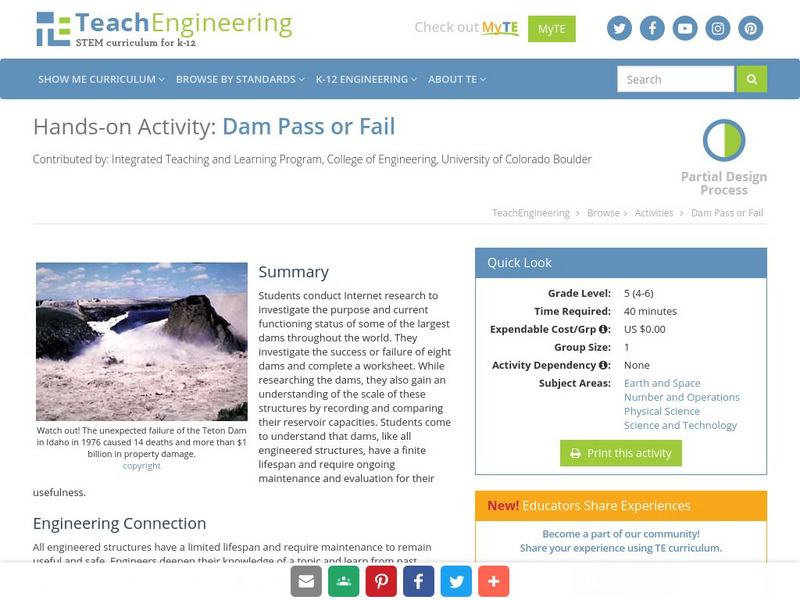
Teach Engineering: Dam Pass or Fail
Students conduct Internet research to investigate the purpose and current functioning status of some of the largest dams throughout the world. They investigate the success or failure of eight dams and complete a worksheet. While...
Other popular searches
- Civil Engineering Books
- Civil Engineering Jobs
- Career in Civil Engineering
- Civil Engineering Worksheet
- Civil Engineering Debate
- Diploma in Civil Engineering
- Civil Engineering Bill