Hi, what do you want to do?





Science Buddies
Science Buddies: Programming Nanor Gs in a Virtual World
Imagine yourself as a software engineer, a decade and a half from now. You are called upon to help solve the world energy crisis by programming nano-organisms (NANORGs) to extract energy from industrial sludge. Your program must be small...

Other
Graduating Engineer and Computer Careers Magazine: Biomedical Engineering
A career in biomedical engineering is profiled. What exactly is it? Education? Job opportunities? Learn more about this in demand career.

TryEngineering
Try Engineering: Program Your Own Game
Teams of students learn about the work of software engineers as they design a simple computer game using free software available in multiple languages.
Other
The Educated Audio Engineer: A Life Long Learner
Basic information about education and other requirements for an audio engineering career is offered here.
Computer History Museum
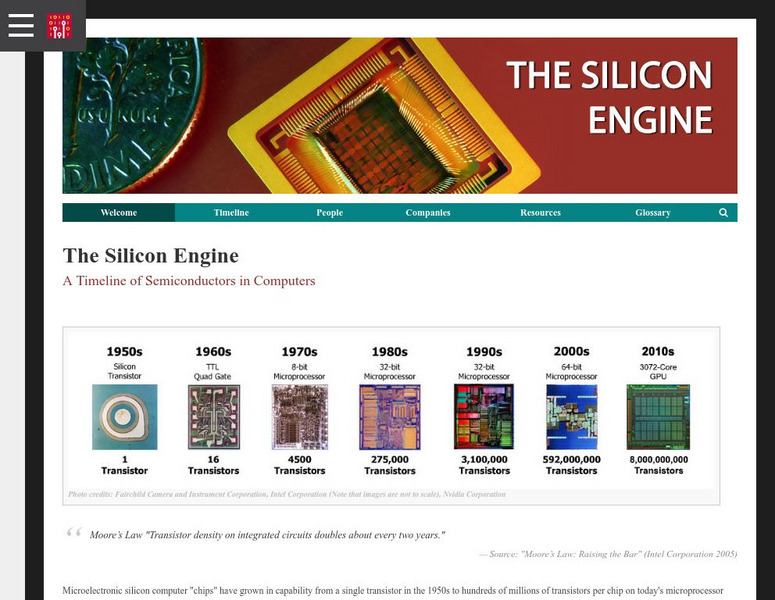
Computer History Museum: The Silicon Engine
Microelectronic silicon computer chips have provided the growth engine for the technology revolution. This site provides a wealth of information about the development of semiconductors. Included is a timeline of major events, a list of...
TryEngineering
Try Engineering: Cracking the Code
Lesson focuses on how computerized barcodes have improved efficiency in product distribution; explores the barcoding process and engineering design.
TryEngineering
Try Engineering: Eeeek a Mouse!
Learners investigate how a mouse works by dissembling and evaluating its design. They are also challenged to improve the design by eliminating or changing components of the mouse they dissembled.
TeachEngineering
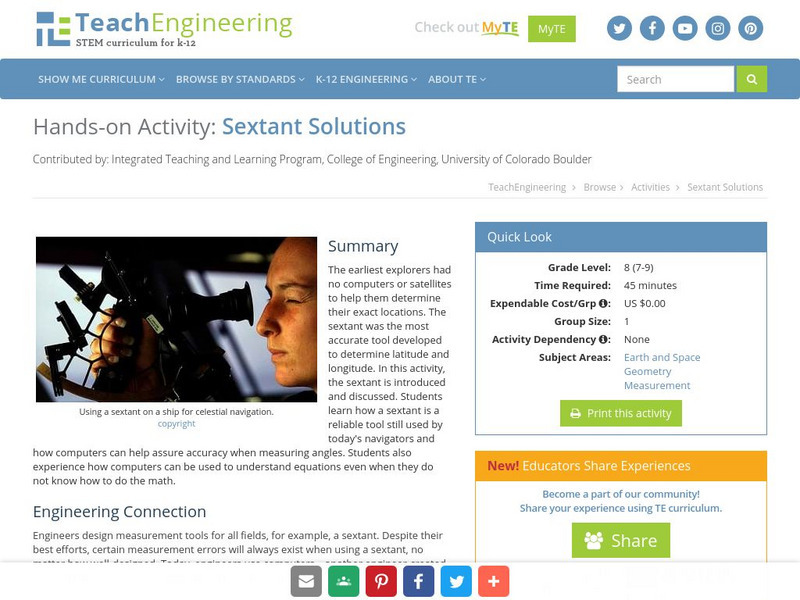
Teach Engineering: Sextant Solutions
The earliest explorers did not have computers or satellites to help them know their exact location. The most accurate tool developed was the sextant to determine latitude and longitude. In this activity, the sextant is introduced and...
TeachEngineering
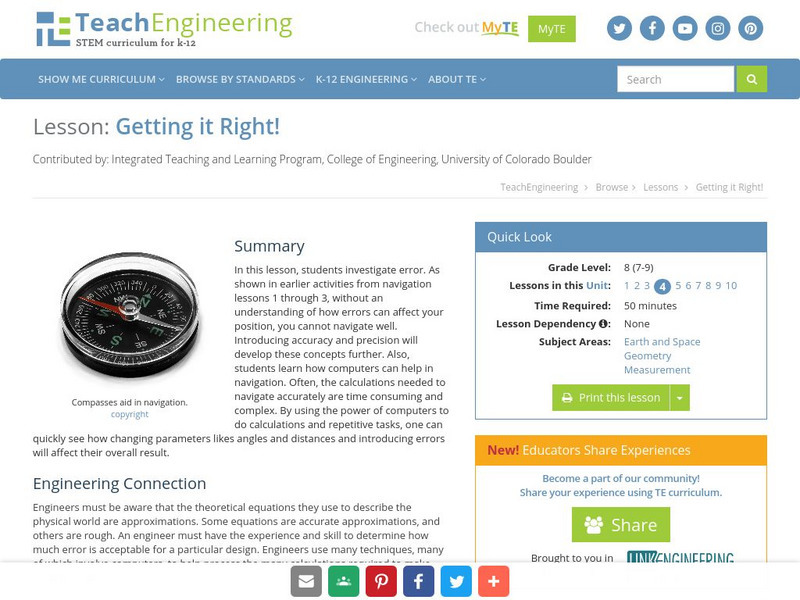
Teach Engineering: Getting It Right!
In this instructional activity, students will investigate error. As shown in earlier activities from navigation lessons 1 through 3, without an understanding of how errors can affect your position, you cannot navigate well. Introducing...
TeachEngineering
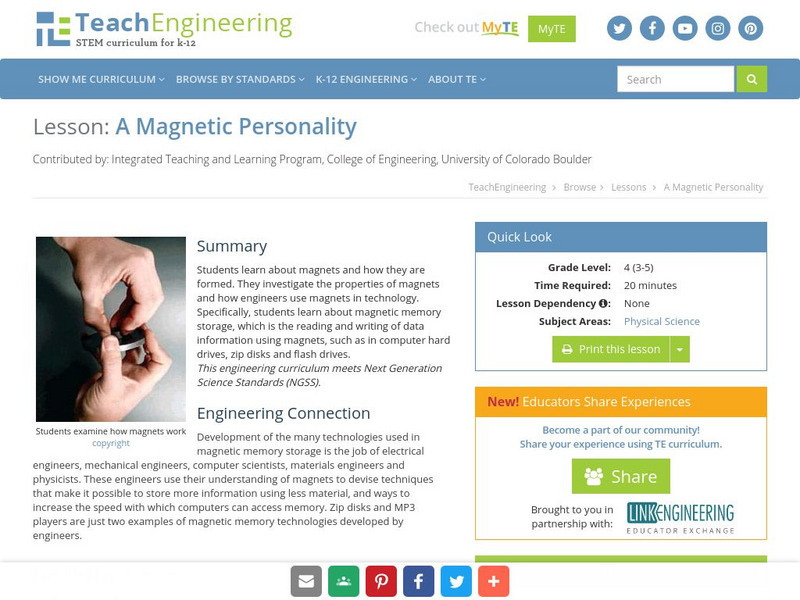
Teach Engineering: A Magnetic Personality
Students learn about magnets and how they are formed. They investigate the properties of magnets and how engineers use magnets in technology. Specifically, students learn about magnetic memory storage, which is the reading and writing of...
TeachEngineering
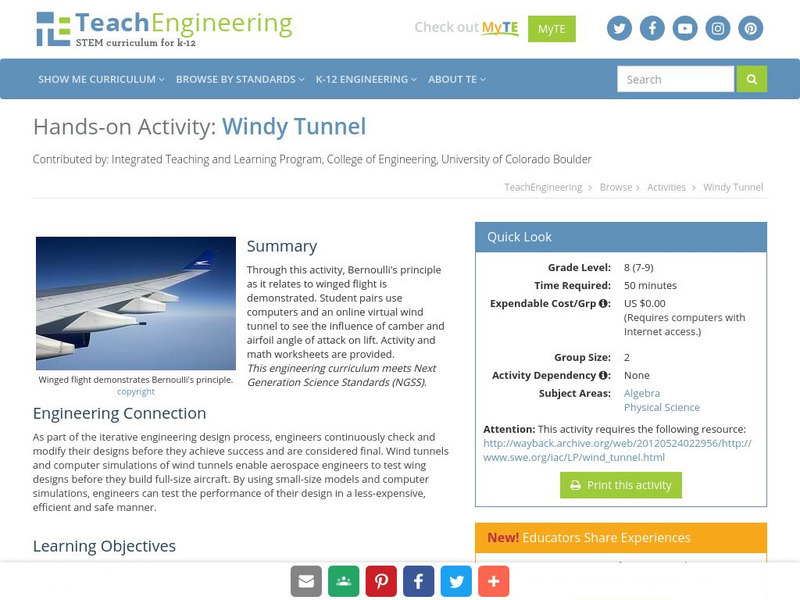
Teach Engineering: Windy Tunnel
The purpose of this activity is to demonstrate Bernoulli's Principle as it relates to winged flight. The students will use computers to see the influence of camber and airfoil angle of attack on the lift.
Science Museum, London
Science Museum: Online Stuff: Babbage
Charles Babbage is regarded as the first computer pioneer and originated the concept of a programmable computer. This biography details his accomplishments as a mathematician, philosopher, inventor and mechanical engineer
Massachusetts Institute of Technology
Mit: Open Course Ware: Software Engineering for Web Applications
This course gives students some experience in dealing with the challenges that are unique to web applications, such as concurrency and security risks.
National Science Foundation
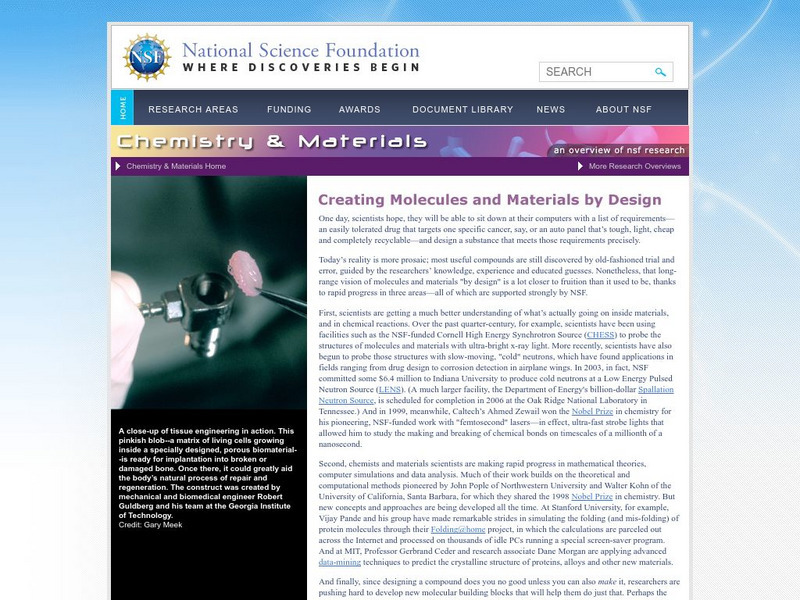
National Science Foundation: Chemistry & Materials: Creating Molecules and Materials by Design
Describes the progress being made in materials engineering, so that one day in the not too distant future scientists will easily be able to use a computer to design materials that meet any required properties.
Other
Ontario Council for Technology Education: Designing a Bus Shelter [Pdf]
By the end of this project, the student will be able to understand and work through the stages of the design process, assess and develop design criteria when creating concept and scaled sketches, and use computer design software...
TeachEngineering
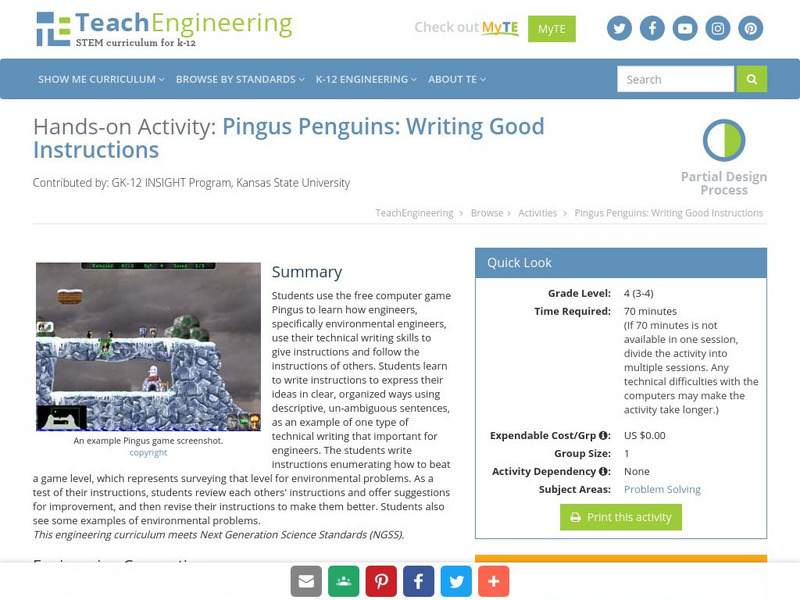
Teach Engineering: Pingus Penguins: Writing Good Instructions
Students use the free computer game Pingus to learn how engineers, specifically environmental engineers, use their technical writing skills to give instructions and follow the instructions of others. Students learn to write instructions...
TeachEngineering
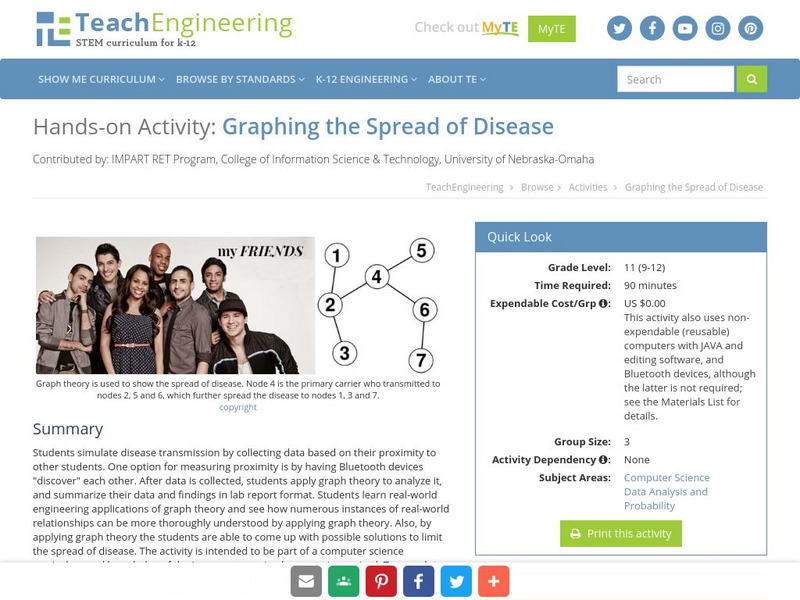
Teach Engineering: Graphing the Spread of Disease
Students simulate disease transmission by collecting data based on their proximity to other students. One option for measuring proximity is by having Bluetooth devices "discover" each other. After data is collected, students apply graph...
TeachEngineering
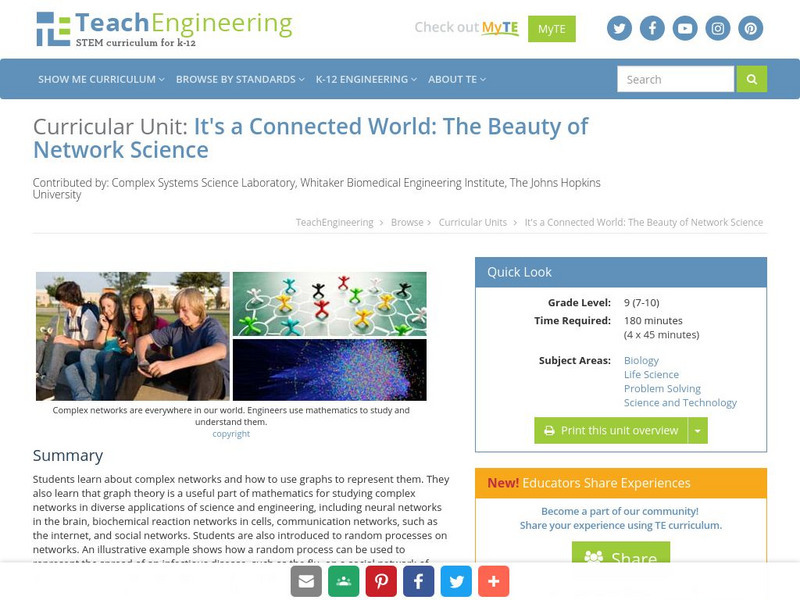
Teach Engineering: It's a Connected World: The Beauty of Network Science
Students learn about complex networks and how to use graphs to represent them. They also learn that graph theory is a useful part of mathematics for studying complex networks in diverse applications of science and engineering, including...
TeachEngineering
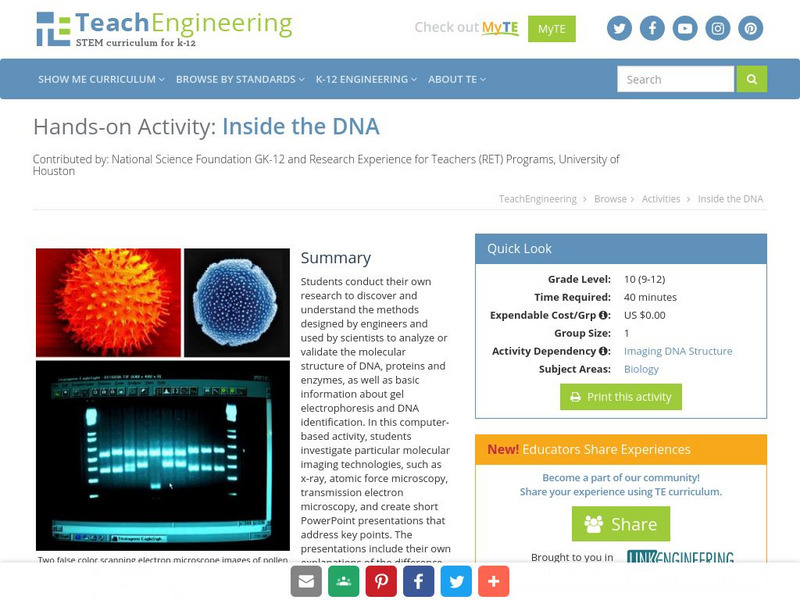
Teach Engineering: Inside the Dna
Students conduct their own research to discover and understand the methods designed by engineers and used by scientists to analyze or validate the molecular structure of DNA, proteins and enzymes, as well as basic information about gel...
TeachEngineering
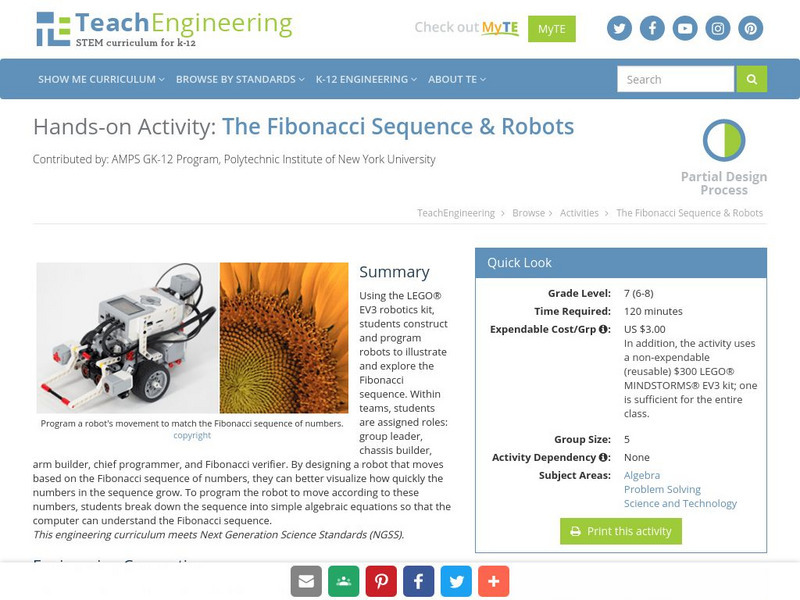
Teach Engineering: The Fibonacci Sequence & Robots
Using the LEGO NXT robotics kit, students construct and program robots to illustrate and explore the Fibonacci sequence. Within teams, students are assigned roles: group leader, chassis builder, arm builder, chief programmer, and...
TeachEngineering
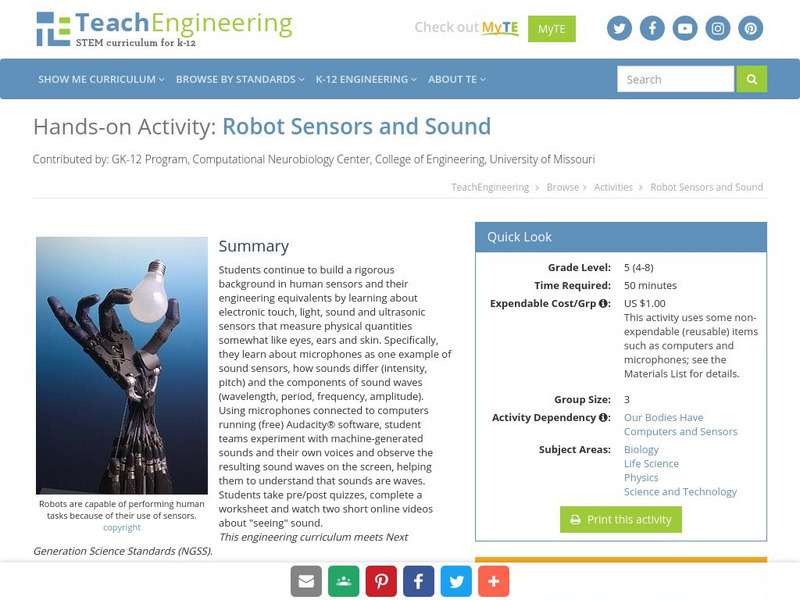
Teach Engineering: Robot Sensors and Sound
Using microphones connected to computers running Audacity software, student teams experiment with machine-generated sounds and their own voices and observe the resulting sound waves on the screen, helping them to understand that sounds...
TeachEngineering
Teach Engineering: Using J Unit
Students focus on the testing phase of the design process by considering how they have tested computer programs in the past and learning about a new method called JUnit to test programs in the future. JUnit is a testing method that is...
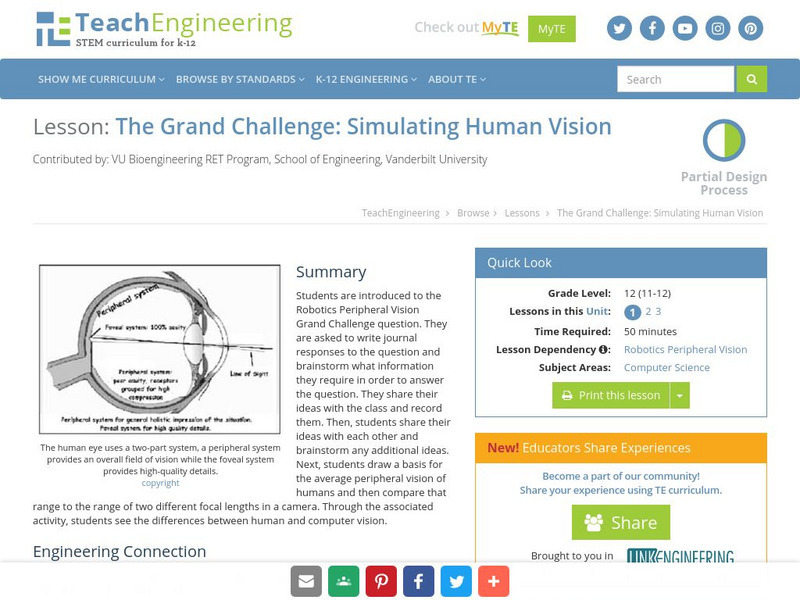
TeachEngineering
Teach Engineering: The Grand Challenge: Simulating Human Vision
Students are introduced to the Robotics Peripheral Vision Grand Challenge question. They are asked to write journal responses to the question and brainstorm what information they require to answer the question. Their ideas are shared...
TeachEngineering
Teach Engineering: Digital Mapping and Geographic Information Systems (Gis)
Geographic information systems (GIS), once used predominantly by experts in cartography and computer programming, have become pervasive in everyday business and consumer use. This unit explores GIS in general as a technology about which...