Hi, what do you want to do?






Curated OER
The U. S. Constitution (3)
In this online interactive American history worksheet, students answer 10 multiple choice questions regarding the early U. S. Constitution. Students may submit their answers to be scored.

Curated OER
The U. S. Constitution (5)
In this online interactive American history worksheet, students answer 17 fill in the blank questions regarding the U. S. Constitution. Students may submit their answers to be scored.

DocsTeach
The Amendment Process: Ratifying the 19th Amendment
The process for adding an amendment to the U.S. Constitution is long and arduous, by design. High School historians study a series of documents about the Nineteenth Amendment and, using an interactive program, drag the documents onto a...

Judicial Learning Center
Your 1st Amendment Rights
Why should classes care about the First Amendment? An engaging lesson serves as a powerful tool for answering just that. As all four cases in the lesson relate directly to freedom of expression in schools, young scholars explore the...

DocsTeach
Comparing the Magna Carta and English Bill of Rights with the U.S. Bill of Rights
Just how alike are some historical documents? Discover the similarities between the Magna Carta and the United States Bill of Rights in a fast-paced activity. Historians learn the importance of both documents and the lasting impact they...

iCivics
Sortify: U.S. Citizenship
What is the difference between a right and a responsibility? Scholars consider the question while sorting characteristics of citizenship into buckets using a video game. After playing, class members see how effectively they sorted the...

Judicial Learning Center
Your 4th Amendment Rights
Americans love to learn about their rights, especially those that protect them from the government's power to invade their privacy. Young people are especially engaged by this topic. An informative lesson explores four Supreme Court...

Judicial Learning Center
Civil Rights and Equal Protection
Almost every American is familiar with the Supreme Court case of Brown vs. Board of Education. Far fewer understand the constitutional reasoning or the wide-ranging consequences of the ruling in the field of criminology. The interesting...

DocsTeach
How Effective were the Efforts of the Freedmen’s Bureau?
Effective or ineffective? As part of a study of post Civil War America, young historians analyze a series of primary sources to evaluate the effectiveness of the Freedmen's Bureau in addressing the challenges faced by the slaves freed by...

Judicial Learning Center
Types of Court Cases
How can one court acquit someone of a crime, while another convicts the person of the same one? It's all because of the differences between civil and criminal trials. An informative resource provides scholars in the field of criminology...

Judicial Learning Center
Why Study Landmark Cases?
Why study landmark Supreme court cases? A helpful lesson offers a brief but valuable argument for the importance of these cases in the field of criminology. It introduces scholars to some key terms necessary for studying court cases and...

Curated OER
Reconstruction (1865–1877)
In this online interactive history worksheet, learners respond to 7 short answer and essay questions about the causes and effects of Reconstruction following the American Civil War.

Curated OER
Progressivism (6)
In this online interactive American history worksheet, students answer 15 fill in the blank questions regarding the Progressive Movement. Students may submit their answers to be scored.
Scholastic
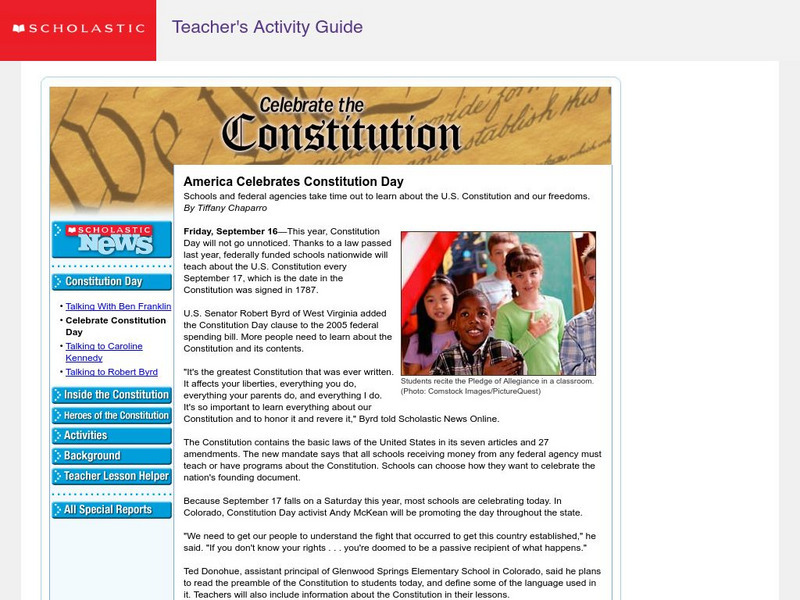
Scholastic: Constitution Game
This game is all about the U.S. Constitution. Click start and drag the item where it belongs in the Constitution. The resource contains links to learn more about the Constitution.
New York Times
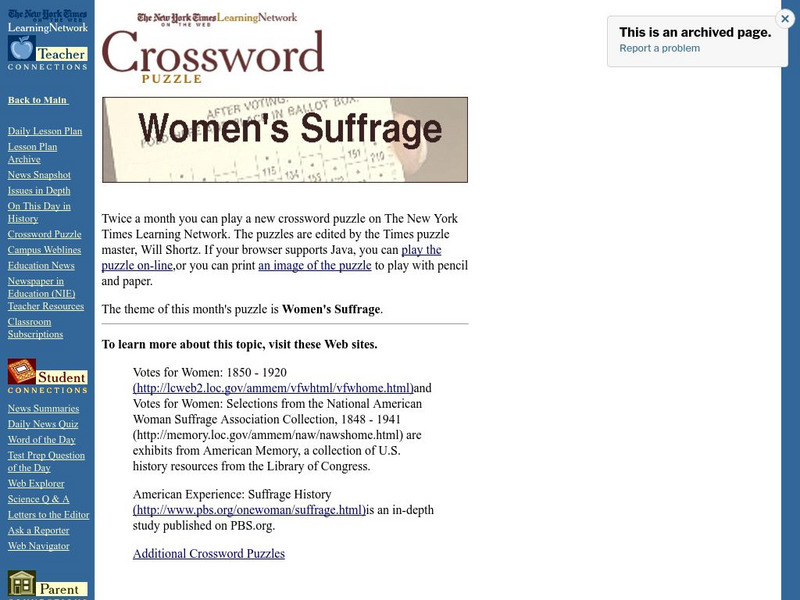
New York Times: Crossword Puzzle: Women's Suffrage
The New York Times presents an interactive, online crossword puzzle on women's suffrage. Upper elementary students can participate with some guidance.