Hi, what do you want to do?






Curated OER
Lesson plan: Archaeology - Its Methods and Use
Students study the field of archeology. In this archeology lesson, students participate in 12 activities that require them to examine archeology, garbology, artifacts, ethical issues, and field specific vocabulary.

Curated OER
Digging up the Past
Students explore history through archaeology. For this critical analysis lesson, students work in teams to recreate a model of the archaeological discoveries made in the excavations at Monticello. This lesson is designed to help students...

Curated OER
Be a Paleontologist
Students search for fossils in a simulated archeology site and explore how paleontologists mark out a dig site.

Curated OER
Protecting the Past: Give a Hoot, Don't Loot
Young scholars discuss the looting and vandalism of various archeological sites. In pairs, they read and complete a worksheet and review their answers as a class. In groups, they role play a artifact preservation skit and perform it to...

Curated OER
Stratigraphy -- Layers of Time in the Earth
Students are introduced to the process of stratification. Using the internet, they read about the Richard Beene archeological site near San Antonio. Using a map, they color code the different layers present at this site and answer...

Curated OER
Layers of Time in the Earth
Students are introduced to the concept of stratification as a historical and geological process. Students will read about the Richard Beene archaeological site, which lies near San Antonio, Texas on the Medina River, and watch a short...

Curated OER
Scaffolded Reading of "Drawing of an African Burial Ground Grave in Situ"
The class reads the description of the "Drawing of an African Burial Ground Grave In Situ" then completes a work sheet. They act like archaeologists and answer a series of critical thinking questions to better understand the historical...

Curated OER
Protecting the Past: Give a Hoot, Don't Loot!
Students, in small groups, simulate an ancient civilization and the art they created, another group represents vandals, and the final group represents archaeologists who try to figure out what life was like for the "ancient peoples". ...

Curated OER
Unearthing the Past
Students analyze artifacts from an early society to determine information relating to daily life in that society. They consider which artifacts from our society would be most valuable to future archeologists.

Curated OER
Jamestown Fort: Finding History
Students identify artifacts discovered from the exploration of the Jamestown fort in order to help them create a short fictional account about the lives of Jamestown's first inhabitants. In this history lesson, students research the...

Curated OER
Black Hawk Island Hike
Learners explore Wisconsin's natural and cultural history through hands-on exploration of Upham Woods. They are shown the basic paddling skills and they work in teams to paddle across the river on barge. Students describe cultural...

Curated OER
Classifying Artifacts
Middle schoolers examine pictures of pottery and classify them. They work together to create a list of characteristics for each piece. They share their findings with the class.

National Council of Teachers of Mathematics
Nctm: Figure This: Archeology
Site A! Site B! How alike are we? Using the information from the chart, which two dig sites seem to be most alike?
BBC
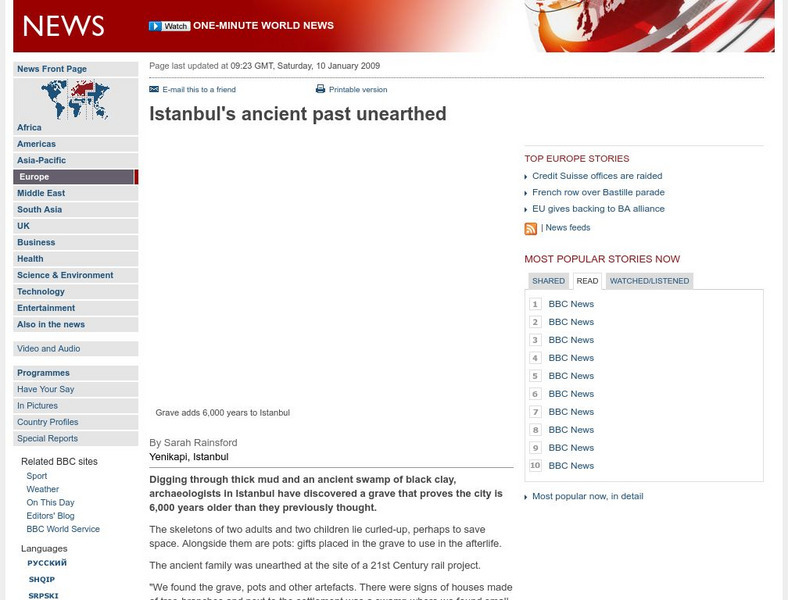
Bbc: Istanbul's Ancient Past Unearthed
BBC correspondent Sarah Rainsford discusses the numerous artifacts found in Instanbul at the Marmaray Project digging site and their implications for the fields of archeology and history today. (January 10, 2009)
Curated OER
Cbc News: Archaeological Dig Set for New Human Rights Museum Location
Archaeologists will be digging through the history at The Forks in Winnipeg during the summer of 2008. This is the largest site to be examined as yet.

PBS
Pbs: Scientific American Frontiers: Unearthing Secret America
The fun part of history is finding the clues that unlock the secrets of the past. This is the companion site to the TV show with Alan Alda that features archeological discoveries. Students will find interesting lessons from the past on...
BBC
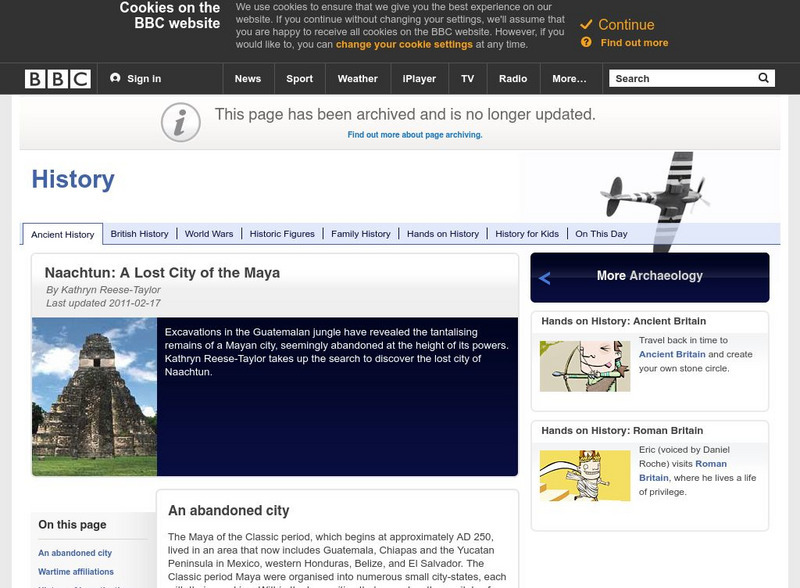
Bbc: Excavations and Techniques: Naachtun: A Lost City of the Maya
An Indiana Jones type of adventure. Imagine a lost city deep in the jungles! Site provides information on the Mayan city of Naachtun and the culture of the Mayan.

PBS
Pbs Teachers: Scientific American: Science Safari: City of Gold
Investigate the challenges facing archeologists when dealing with local cultures near dig sites, and consider the difficulty of remaining sensitive to the past yet still being able to learn from it.

ClassFlow
Class Flow: Graphing Coordinates: Can You Dig It?
[Free Registration/Login Required] Students will practice solving algebraic equations and plotting X and Y coordinates on a graph to better understand the techniques archeologists use to record their discoveries at excavation sites...
New York Times
New York Times: Crossword Puzzle: Archeology
The New York Times Learning Network has developed interactive and printable crossword puzzles. The theme of this one is Archaeology.
Curated OER
National Park Service: Log on and Learn: Discover Presidental Log Cabins
Designed specifically for the middle school student. This site is full of activities that introduce you to the log cabins of several American presidents. Follow teams on archaeological digs as they discover treasures from the past.

PBS
Pbs Teachers: Scientific American: Dead Men's Tales: Undisturbed Find
Emulate the work of archeologists by creating and excavating an archeological find. Record the exact location and position of every dig artifact to maintain the coherency of the find.
Curated OER
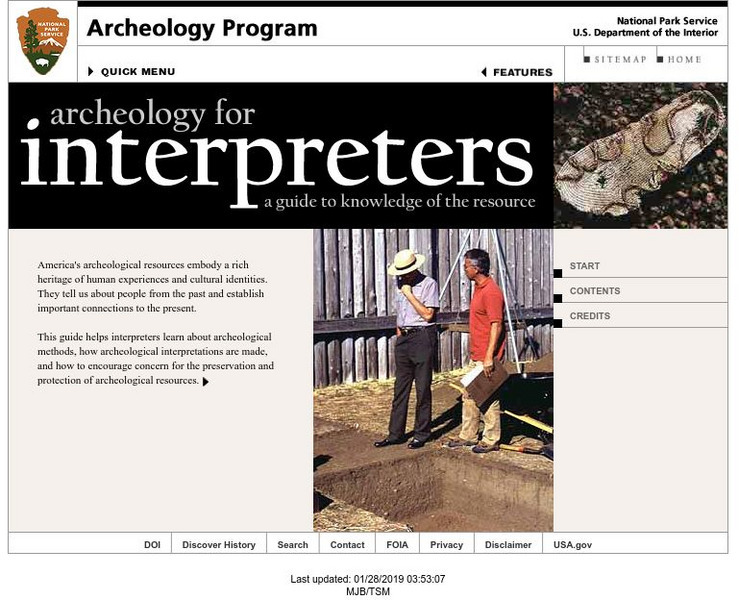
National Park Service: Archaeology for Interpreters
The National Park Service provides a guide for new interpreters--that can also be readily understood by students--to learn archeological methods, how archeological interpretations are made, and how to encourage concern for the...
Other
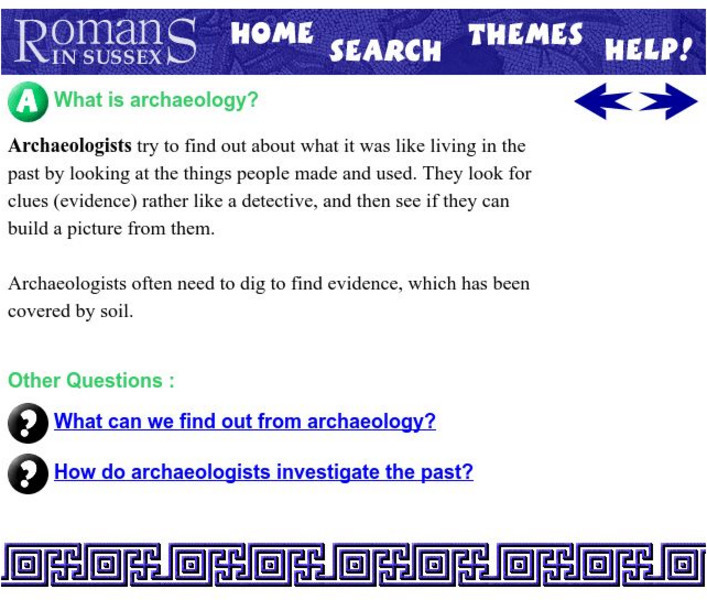
Sussex Archaeological Society: What Is Archaeology?
This site from the Sussex Archaeological Society presents a simple explanation of what archaeology is and how it is used. It also has two sub-questions which students can also investigate.