Hi, what do you want to do?






PBS
Pbs Learning Media: Arctic Ice Extent, 1999 2016
Scientists study sea ice extent closely because it influences global climate. Follow the decline in Arctic sea ice in this animation adapted from NASA showing the yearly maximum and minimum sea ice extents from 1999 to 2016. Resources...
The Franklin Institute
Missouri Botanical Garden: Ocean Facts
Click on all the links to find out many interesting facts about the ocean. Why is the ocean blue? Why is it salty? Where do most of the animals and plants live? Which ocean is the biggest? The deepest? How much of the Earth is covered by...
Woods Hole Oceanographic Institution
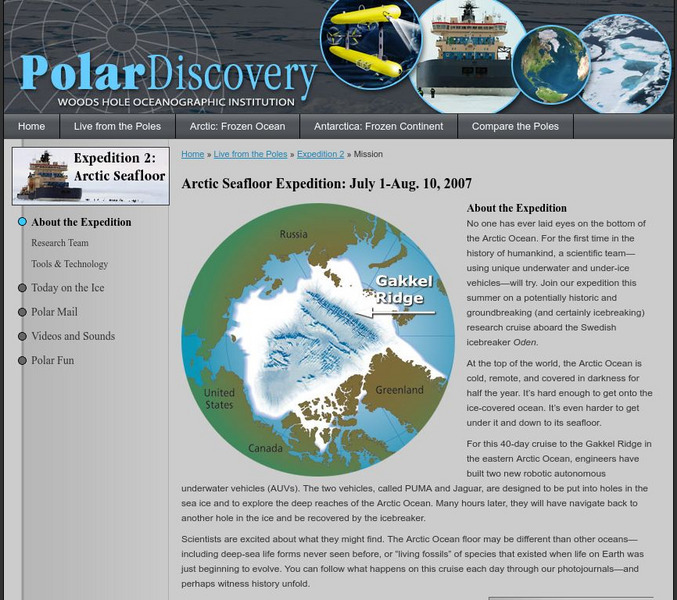
Polar Discovery: Arctic Seafloor Expedition: July 1 Aug. 10, 2007
This polar expedition to study the Arctic seafloor took place in 2007, but you can still enjoy following the footsteps of these scientists. The goal of the expedition was to see if there were active hydrothermal vents on the ocean...
Museum of Science
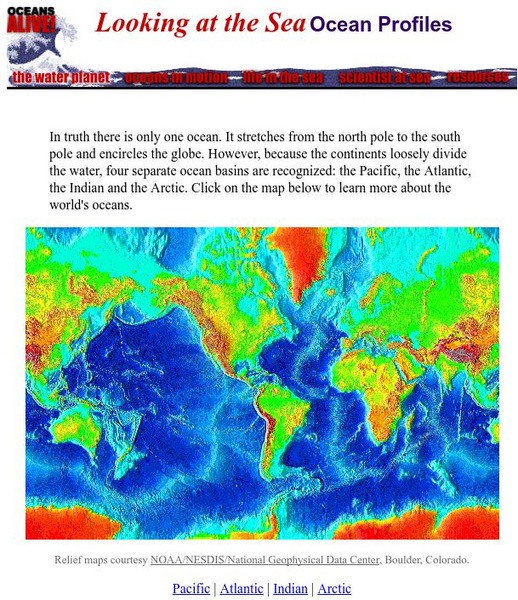
The Museum of Science: Oceans Alive: Ocean Profiles
An interactive map of the world's oceans allows you to access profiles for each of the four oceans.
NOAA
Noaa: Following the Ocean Unicorn [Pdf]
Learn what a narwhal is and how climate change may be challenging their existence. Make a poster that demonstrates your understanding.
Science Education Resource Center at Carleton College
Serc: Lab 2: Earth's Frozen Oceans
A lab experiment in a series of experiments that investigates climate and the cryosphere. In this particular lab, students explore how sea ice forms, how sea ice thickness changes over time, and how sea ice can affect ocean currents...
Missouri Botanical Garden
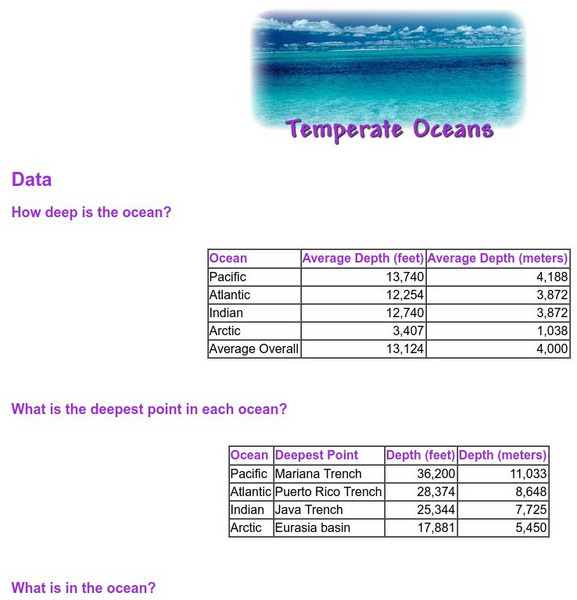
Missouri Botanical Garden: Temperate Oceans
Easy data tables compare the ocean depth of the four oceans, list the deepest point in each ocean, and list how much of different elements are contained in the oceans.
Smithsonian Institution
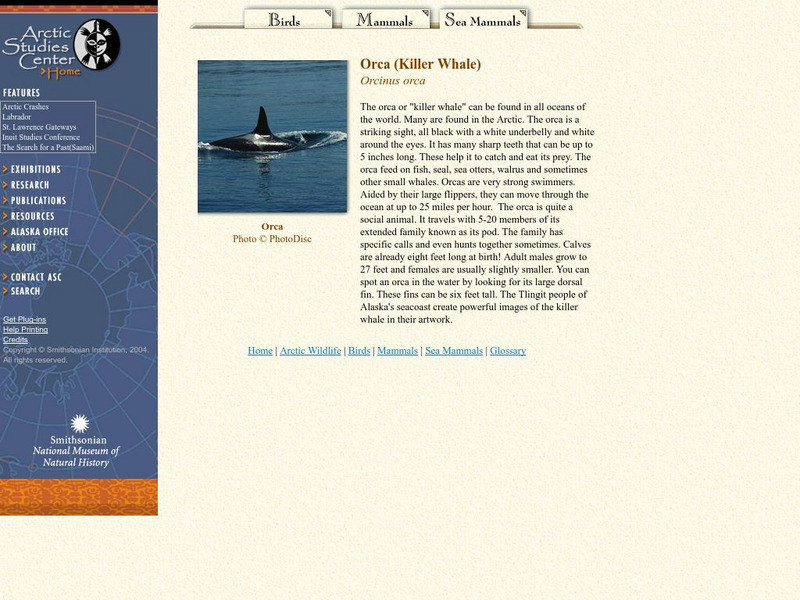
National Museum of Natural History: Arctic Studies Center: Killer Whales
This site provides a very brief overview of the orca or "killer whale."
Wonderville Media
Wonderville: Oceanographers
The planet Earth has more ocean than land, so oceanographers have a lot to work with! Whether they study marine biology, tides, engineering, or water quality, there is always more to learn about the ocean and the life within it. While...
Princeton University
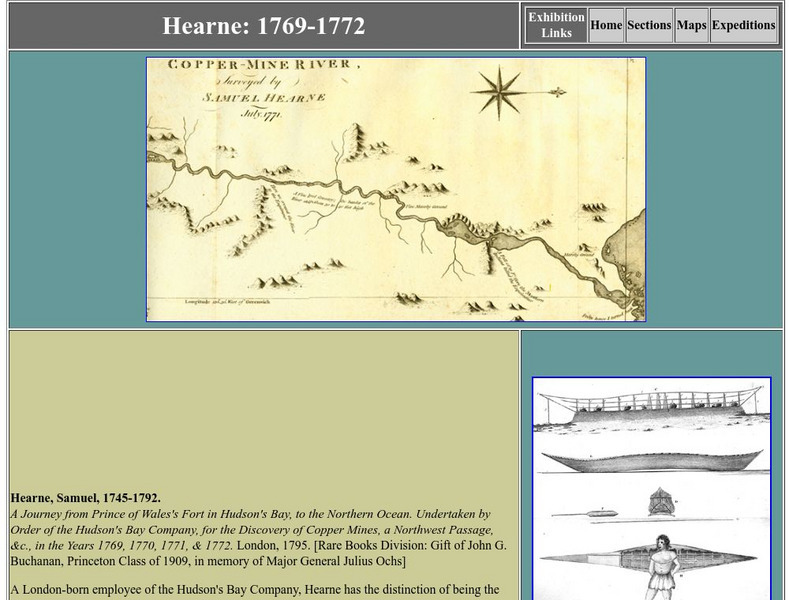
Princeton University Library: Exhibition: Of Maps and Men: Samuel Hearne
Entry about eighteenth-century explorer Samuel Hearne, from a larger exhibition about the search for a passage to the Orient through Canada. Hearne is credited with surveying the Coppermine River and with being the first European to view...
abcteach
Abcteach: Habitats and Biomes
[Free Registration/Login Required] Find a variety of activities for children to do as they learn to identify varying habitats and biomes. Included are links to an even more extensive list of resources under coral reef, desert, grassland,...
Science Education Resource Center at Carleton College
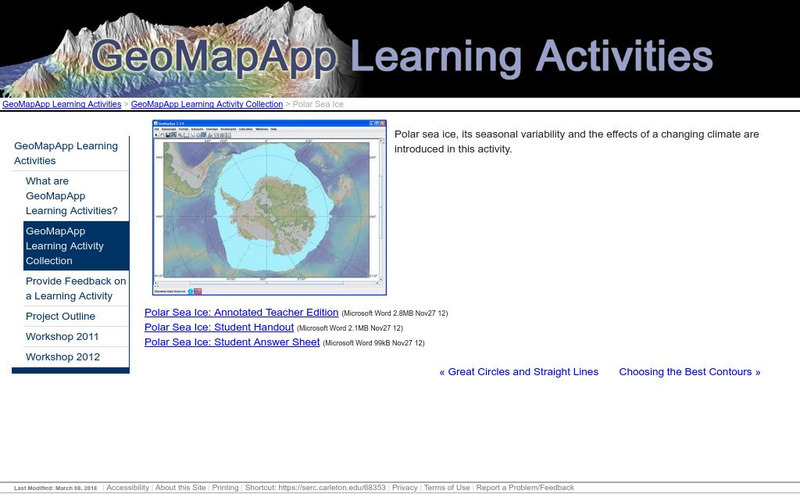
Serc: Polar Sea Ice
Polar sea ice, its seasonal variability, and the impact of a changing climate are investigated in this activity. Students will also explore the differences between polar regions that result from Antarctica being a continent and the north...

Sesame Street
Sesame Street Games
These interactive games allow young children to explore the jungle, the oceans and the arctic regions. Children can look for animals in that area of the world.
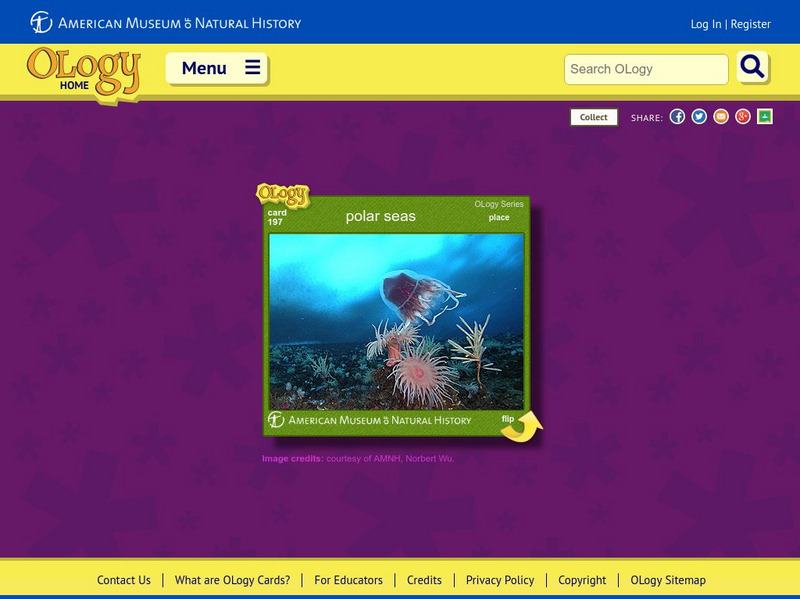
American Museum of Natural History
American Museum of Natural History: Polar Seas O Logy Card
Flip over this interactive OLogy card and start learning bite-size pieces of useful information about the marine life that lives in polar-sea regions.

Smithsonian Institution
Tween Tribune: Ice Breaking Ship Gets Fired Up
One of the ships the United States has stationed in Antarctica is heading to warmer waters for intense cleaning.
Pittsburgh Zoo & PPG Aquarium
Pittsburgh Zoo: Polar Bear
The polar bear is native to the Arctic Ocean and its surrounding seas. Use this resource to discover other unique facts about the largest carnivore found on land.

Ducksters
Ducksters: Geography for Kids: Oceans
Learn about the world's five great oceans: Pacific, Atlantic, Indian, Southern, and Arctic on this site.
Science4Fun
Science4 Fun: Oceans
Learn about the five oceans of the Earth, life in the oceans, and why oceans are salty.
World Geography Games
World Geography Games: Oceans
Identify the world's oceans through this interactive quiz.
Other
Teaching Heart: Penguins
Use this site if you want to find ideas, lessons and activities related to penguins.
PBS
Pbs Learning Media: Bowhead Whaling and Its Impact
This interactive activity, adapted from material provided by the ECHO partners, explores the history of whaling in the Arctic seas and Atlantic Ocean, introducing a landmark study of whale populations spanning from 1849 to 1914.
Curated OER
Educational Technology Clearinghouse: Maps Etc: Nova Zembla, 1903
A sketch map from 1903 of the Russian islands of Nova Zembla (Novaya Zemlya) in the Arctic Ocean. Nova Zembla is an archipelago separated from the continent by the Kara Strait, with the two main islands, the northern Barents Land...
Curated OER
Etc: Maps Etc: The Murman Coast and Archangel, 1918
A map from 1920 of the Murman (Murmansk) Coast and Archangel (Arkhangelsk) during World War I. The map covers the area from the Kola Peninsula on the Arctic Ocean south to Petrograd (St. Petersburg), Yaroslavl, and Viatka. The map shows...
Other popular searches
- Arctic Ocean Diorama
- Arctic Ocean Minerals
- Arctic Ocean Ecosystems
- Arctic Ocean Plan
- Arctic Ocean Biome Diorama
- Arctic Ocean Language Arts
- Arctic Ocean Niome Diorama
- Arctic Ocean Nome Diorama
- Greenland /Arctic Ocean
- The Arctic Ocean Landform
- Arctic Ocean Land Form
- Arctic Ocean Bio Me Diorama