Hi, what do you want to do?





TeachEngineering
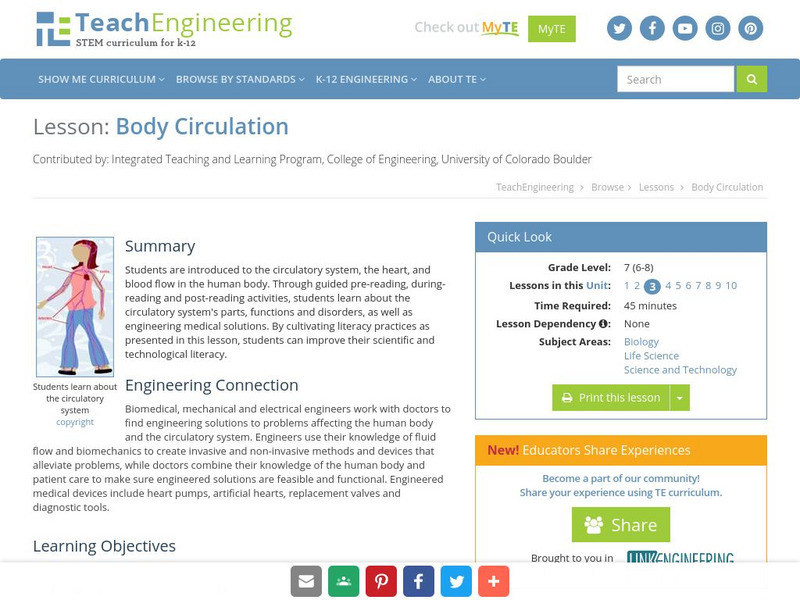
Teach Engineering: Body Circulation
Students are introduced to the circulatory system, the heart, and blood flow in the human body. Through guided pre-reading, during-reading and post-reading activities, students learn about the circulatory system's parts, functions and...
TeachEngineering
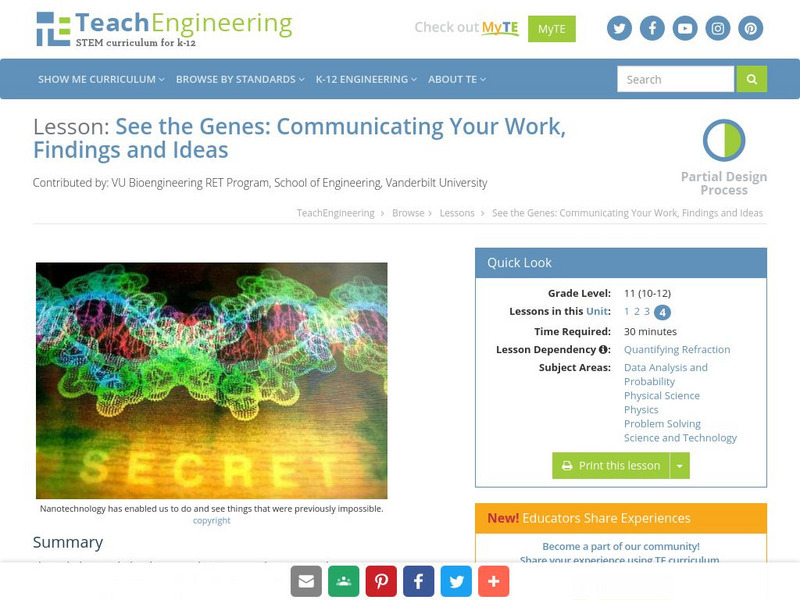
Teach Engineering: See the Genes
Through this concluding lesson and its associated activity, students experience one valuable and often overlooked skill of successful scientists and engineers- communicating work and ideas. Students create posters depicting their...
TeachEngineering
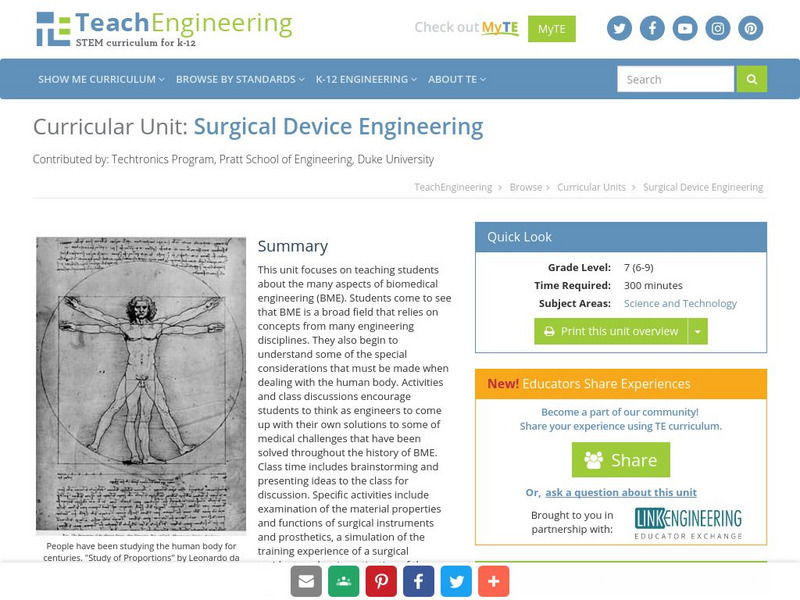
Teach Engineering: Surgical Device Engineering
This unit focuses on teaching students about the many aspects of biomedical engineering (BME). Students will see that it is a broad field that relies on concepts from each of the other disciplines of engineering. They will also begin to...
TeachEngineering
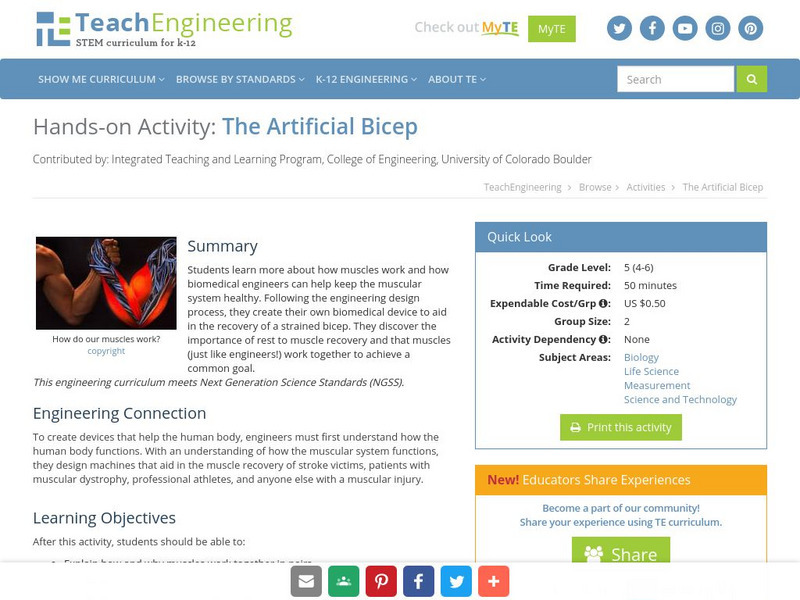
Teach Engineering: The Artificial Bicep
Students learn more about how muscles work and how biomedical engineers can help keep the muscular system healthy. Following the engineering design process, they create their own biomedical device to aid in the recovery of a strained...
TeachEngineering
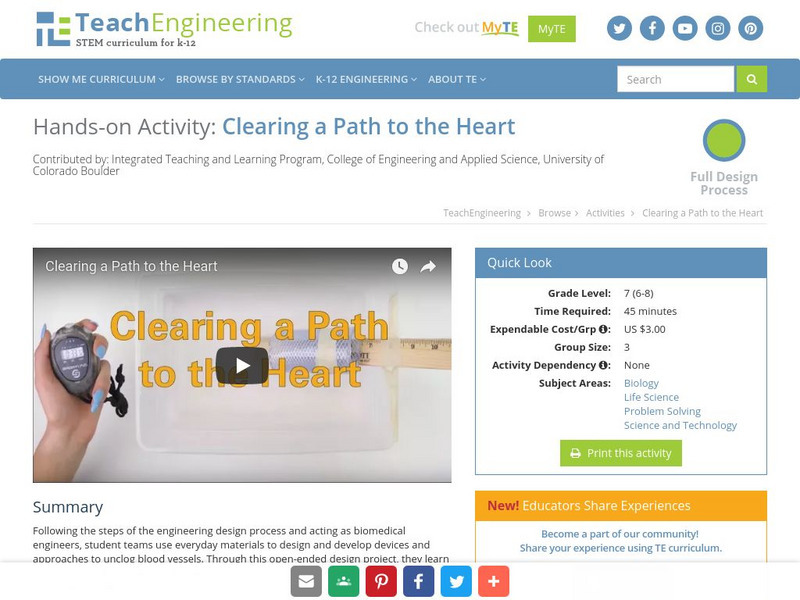
Teach Engineering: Clearing a Path to the Heart
Following the engineering design process and acting as biomedical engineers, student teams use everyday materials to design and develop devices and approaches to unclog blood vessels. They learn about the circulatory system, biomedical...
TeachEngineering
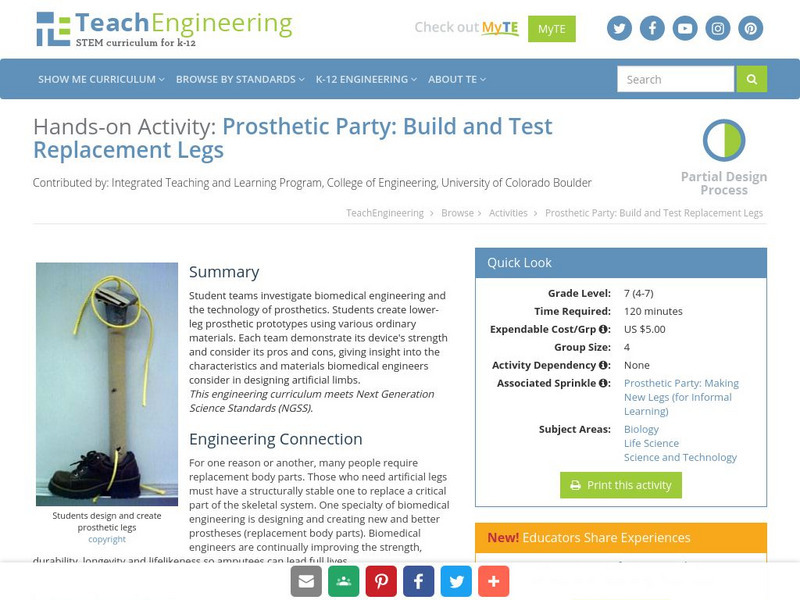
Teach Engineering: Prosthetic Party
Student teams investigate biomedical engineering and the technology of prosthetics. Students create a model prosthetic lower leg using various materials. Each team demonstrate its prosthesis' strength and consider its pros and cons,...
TeachEngineering
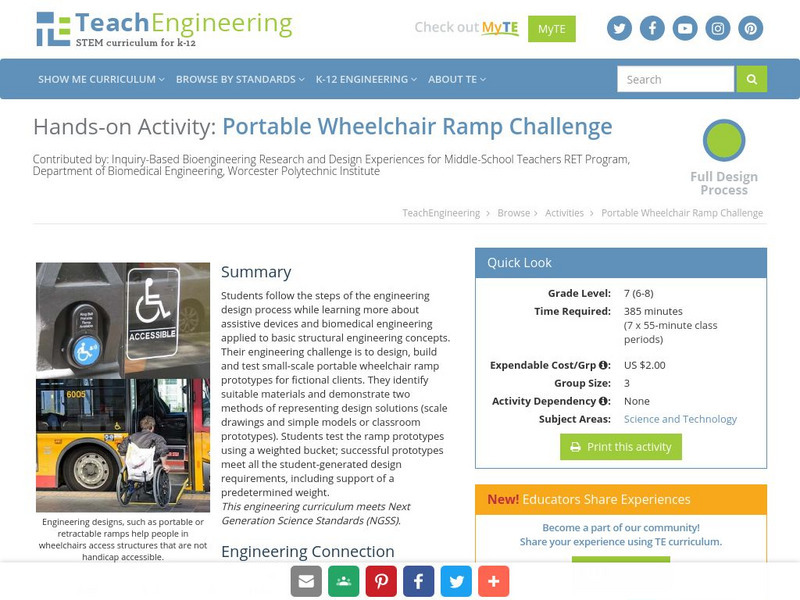
Teach Engineering: Portable Wheelchair Ramp Challenge
Students follow the steps of the engineering design process while learning more about assistive devices and biomedical engineering applied to basic structural engineering concepts. Their engineering challenge is to design, build and test...
TeachEngineering
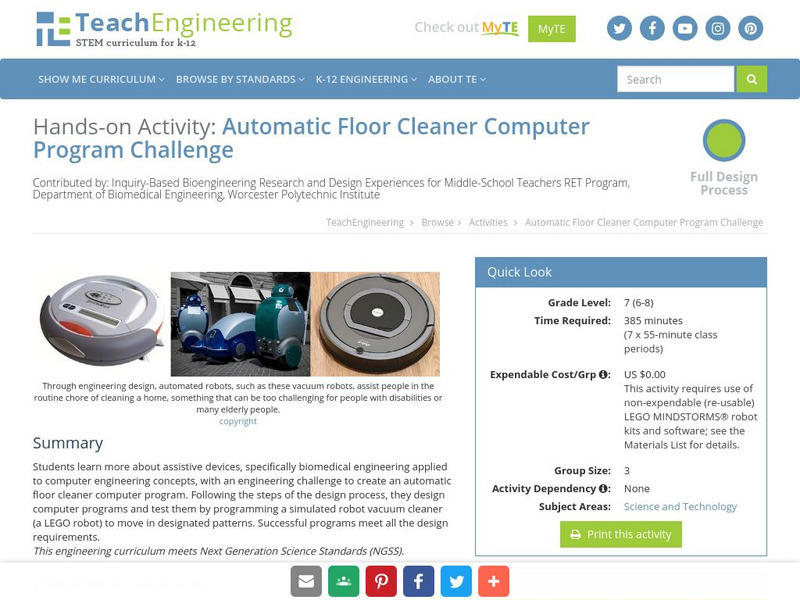
Teach Engineering: Automatic Floor Cleaner Computer Program Challenge
Students learn more about assistive devices, specifically biomedical engineering applied to computer engineering concepts, with an engineering challenge to create an automatic floor cleaner computer program. Following the steps of the...
TeachEngineering
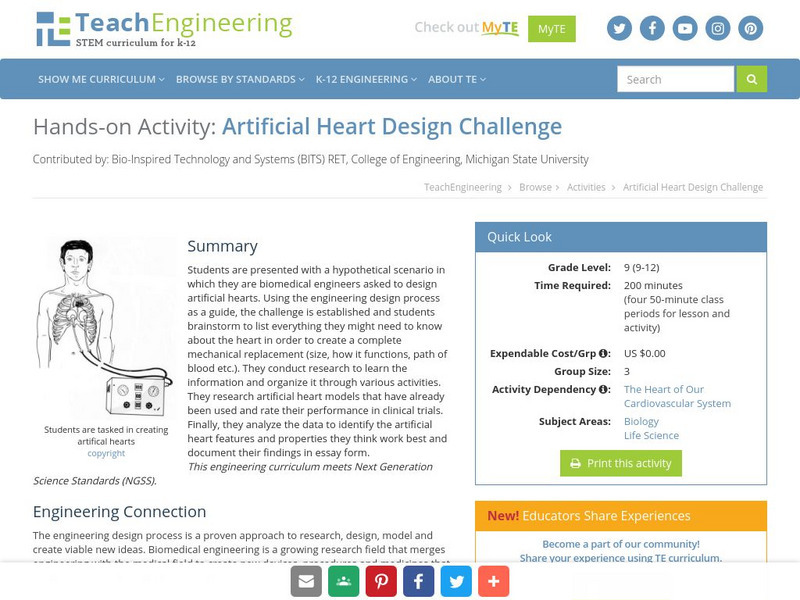
Teach Engineering: Artificial Heart Design Challenge
Students are presented with a hypothetical scenario in which they are biomedical engineers asked to design artificial hearts. Using the engineering design process as a guide, the challenge is established and students brainstorm to list...

TeachEngineering
Teach Engineering: Let the Blood Flow
Students work as biomedical engineers to find liquid solutions that can clear away polyvinyl acetate polymer "blood clots" in model arteries (made of clear, flexible tubing). Teams create samples of the "blood clot" polymer with...
TeachEngineering
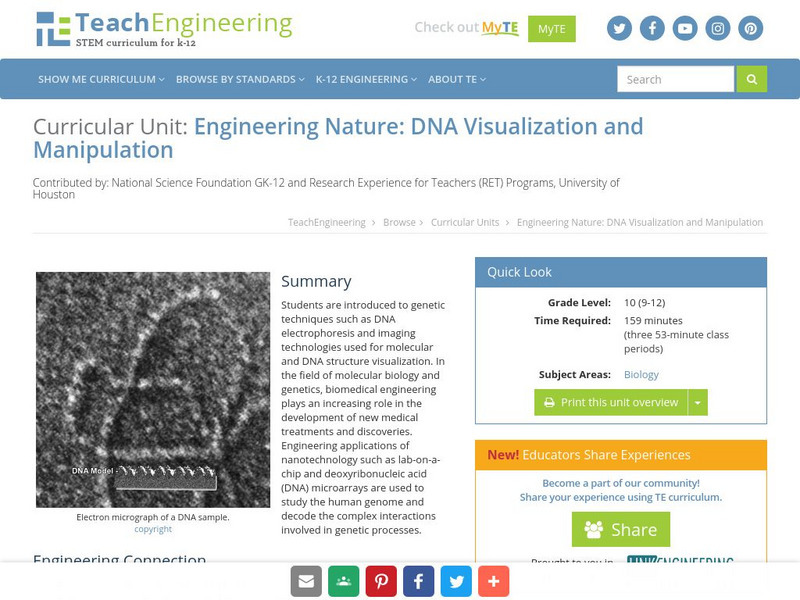
Teach Engineering: Engineering Nature: Dna Visualization and Manipulation
Students are introduced to genetic techniques such as DNA electrophoresis and imaging technologies used for molecular and DNA structure visualization. In the field of molecular biology and genetics, biomedical engineering plays an...
TeachEngineering
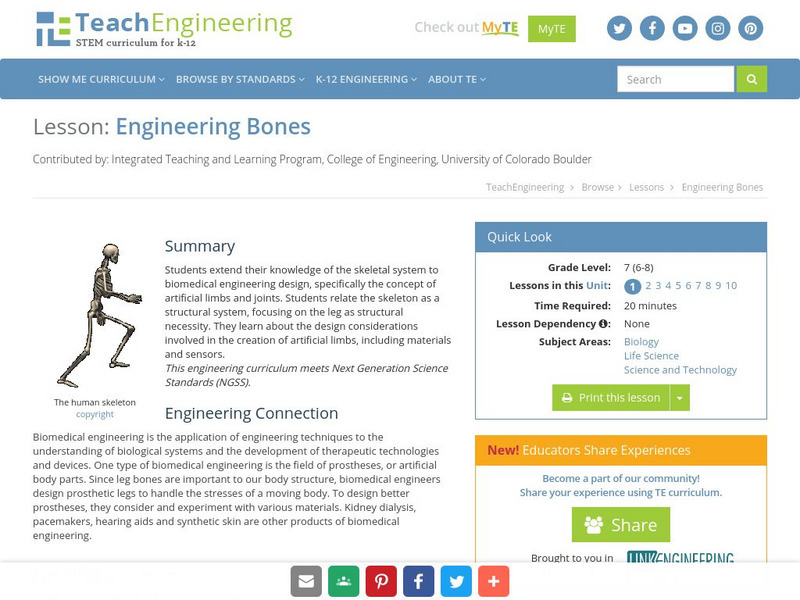
Teach Engineering: Engineering Bones
Students extend their knowledge of the skeletal system to biomedical engineering design, specifically the concept of artificial limbs. Students relate the skeleton as a structural system, focusing on the leg as structural necessity. They...
TeachEngineering
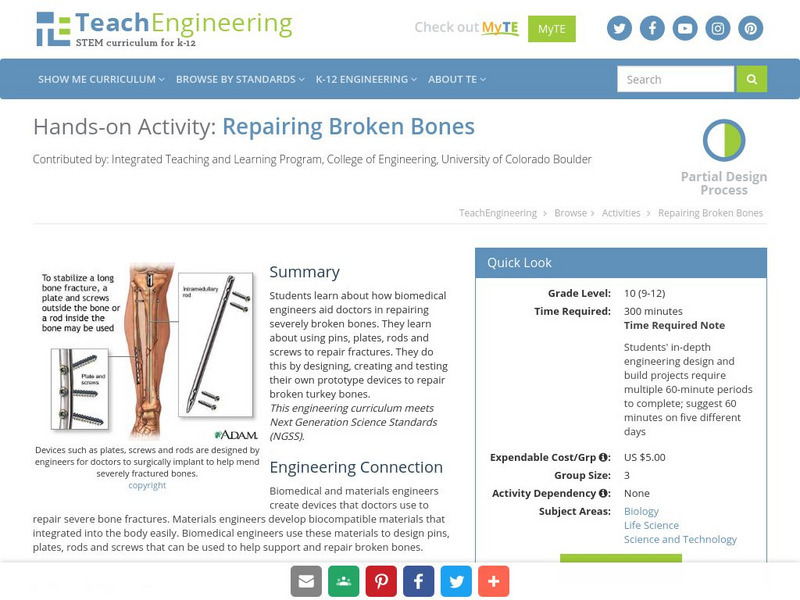
Teach Engineering: Repairing Broken Bones
Students learn about how biomedical engineers aid doctors in repairing severely broken bones. They learn about using pins, plates, rods and screws to repair fractures. They do this by designing, creating and testing their own prototype...
TeachEngineering
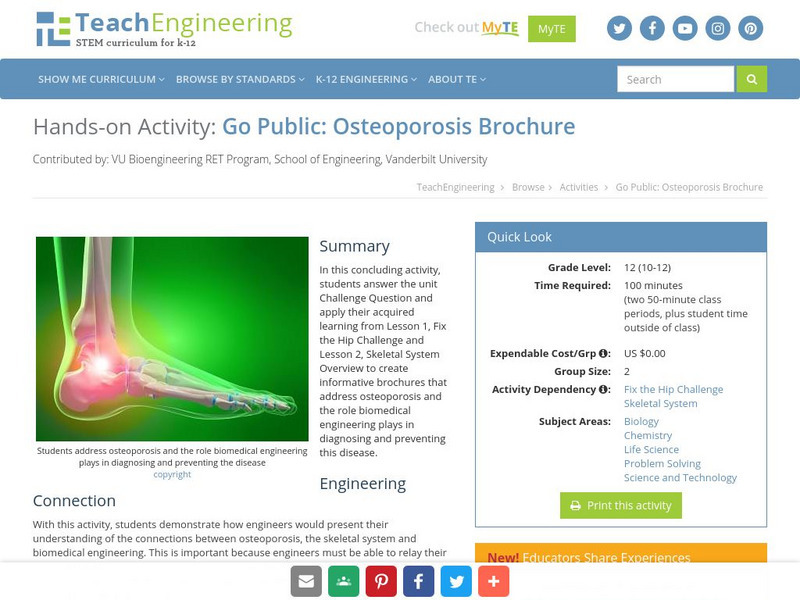
Teach Engineering: Go Public: Osteoporosis Brochure
Students will answer the Challenge Question and use the acquired learning from Lesson 1, "Fix the Hip Challenge" and Lesson 2, "Skeletal System Overview"to construct an informative brochure addressing osteoporosis and the role biomedical...
TeachEngineering
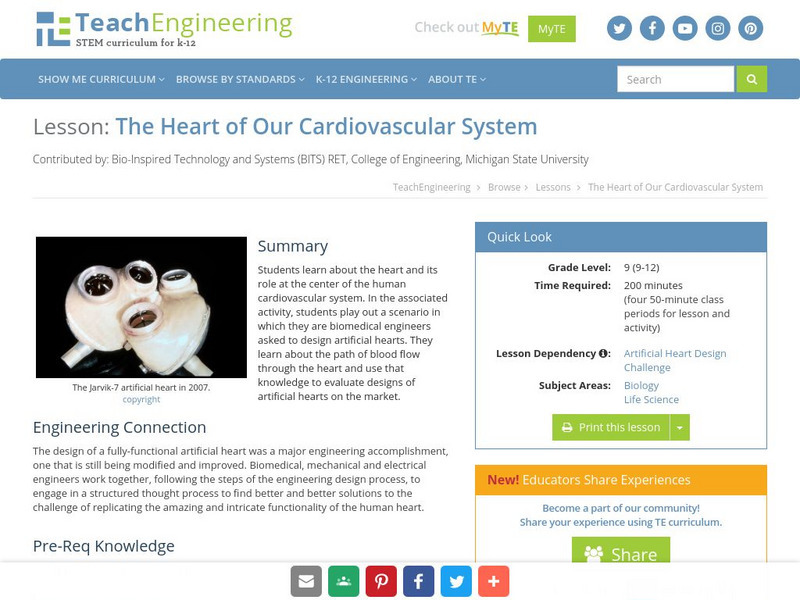
Teach Engineering: The Heart of Our Cardiovascular System
Students learn about the heart and its role at the center of the human cardiovascular system. In the associated activity, students play out a scenario in which they are biomedical engineers asked to design artificial hearts. They learn...
TeachEngineering
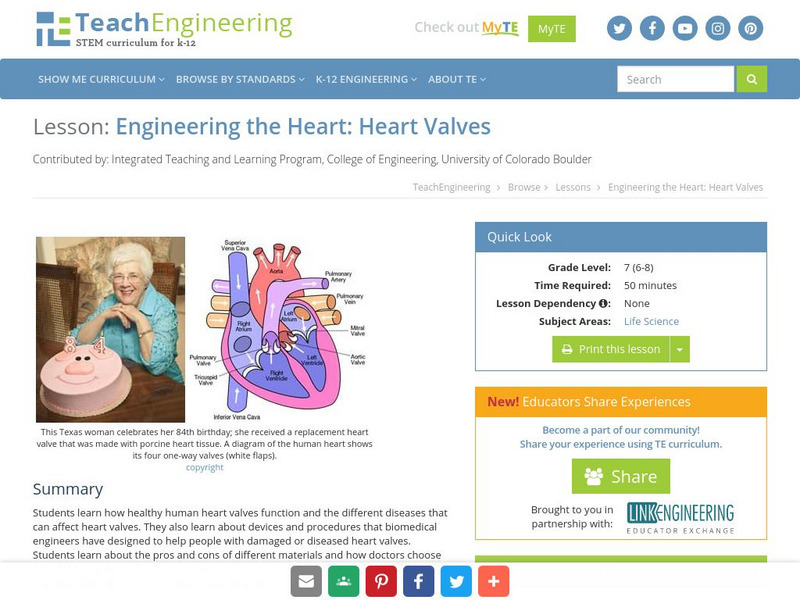
Teach Engineering: Engineering the Heart: Heart Valves
Students learn how healthy human heart valves function and the different diseases that can affect heart valves. They also learn about devices and procedures that biomedical engineers have designed to help people with damaged or diseased...
TeachEngineering
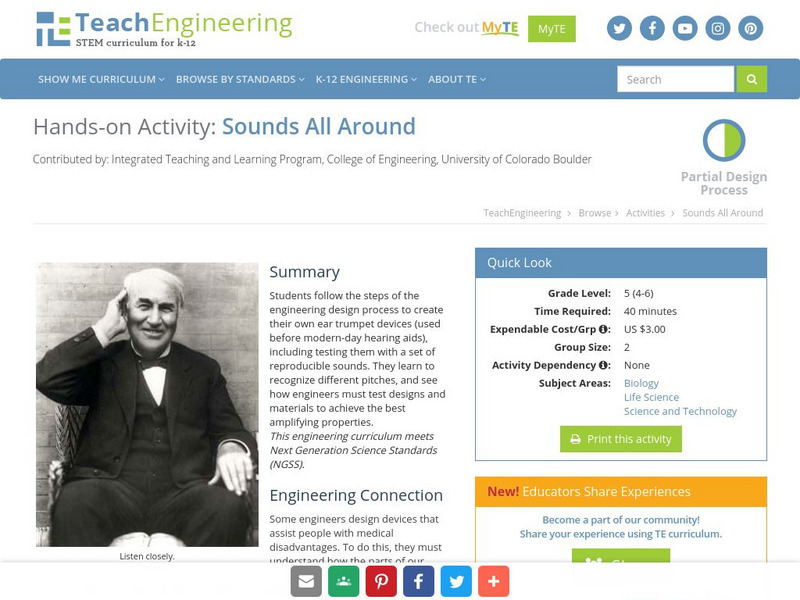
Teach Engineering: Sounds All Around
Students follow the steps of the engineering design process to create their own ear trumpet devices (used before modern-day hearing aids), including testing them with a set of reproducible sounds. They learn to recognize different...
TeachEngineering
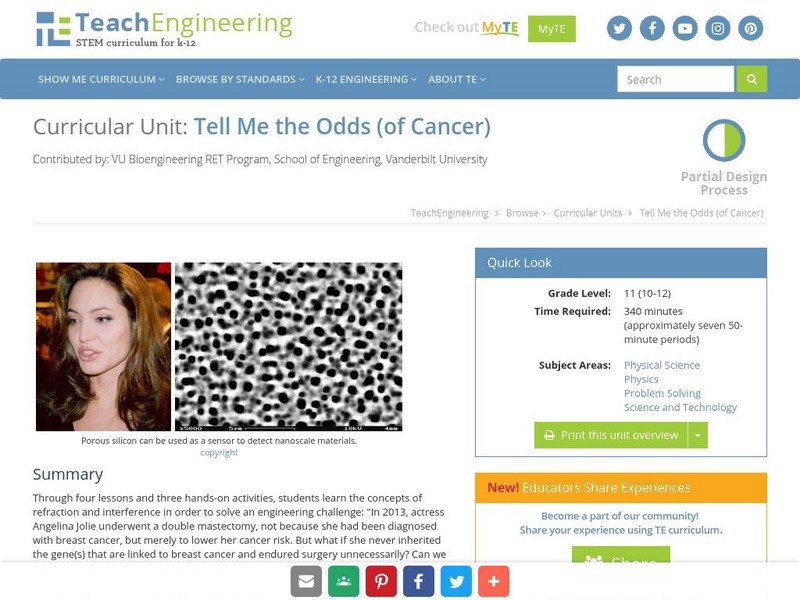
Teach Engineering: Tell Me the Odds (Of Cancer)
A seven-lesson unit where students learn the concepts of refraction and interference in order to solve this engineering challenge: In 2013, actress Angelina Jolie underwent a double mastectomy, not because she had been diagnosed with...
TeachEngineering
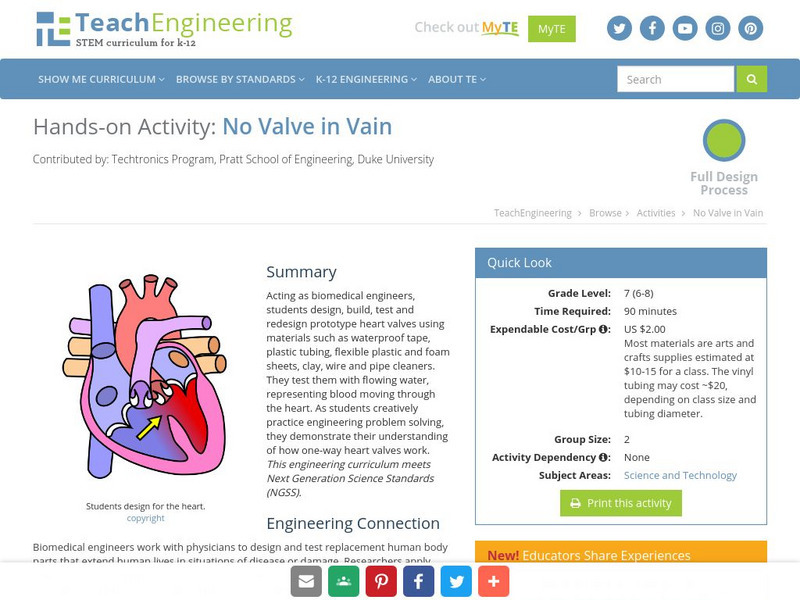
Teach Engineering: No Valve in Vain
In this activity, students will design and create their own heart valves out of a variety of materials given to them, including: waterproof tape, plastic tubing, flexible plastic sheets, foam sheets, scissors, clay, etc. This activity...
TeachEngineering
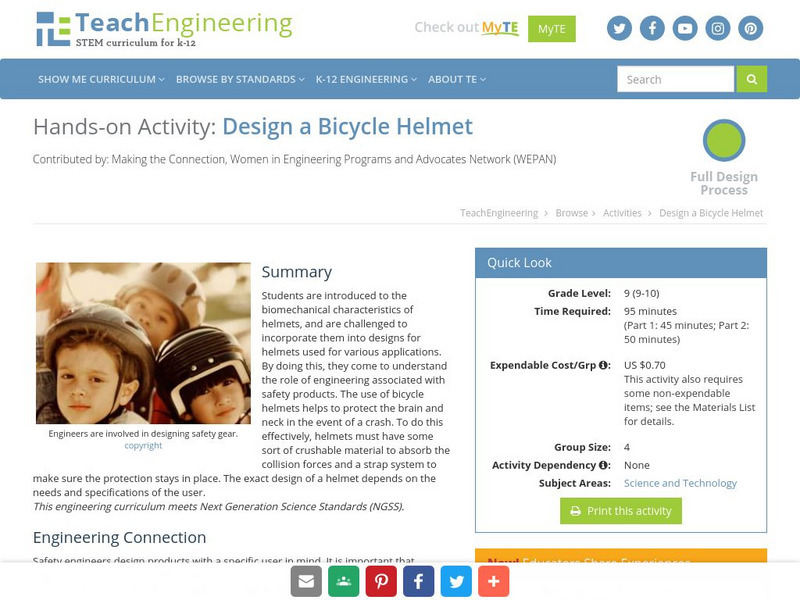
Teach Engineering: Design a Bicycle Helmet
The goal of the activities is for students to understand the basics of engineering associated with safety products. Using a bicycle helmet helps to protect the brain and neck during a crash. In order to do this effectively, helmets must...
TeachEngineering
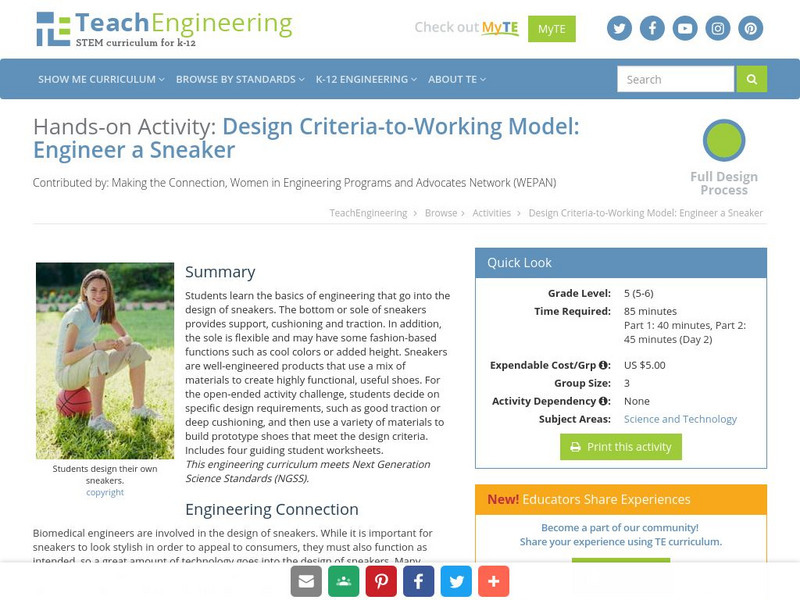
Teach Engineering: Engineer a Sneaker
The goal is for students to understand the basics of engineering that go into the design of a sneaker. The bottom or sole of a sneaker provides support, cushioning, and traction. In addition the sole is flexible and can have some fashion...
TeachEngineering
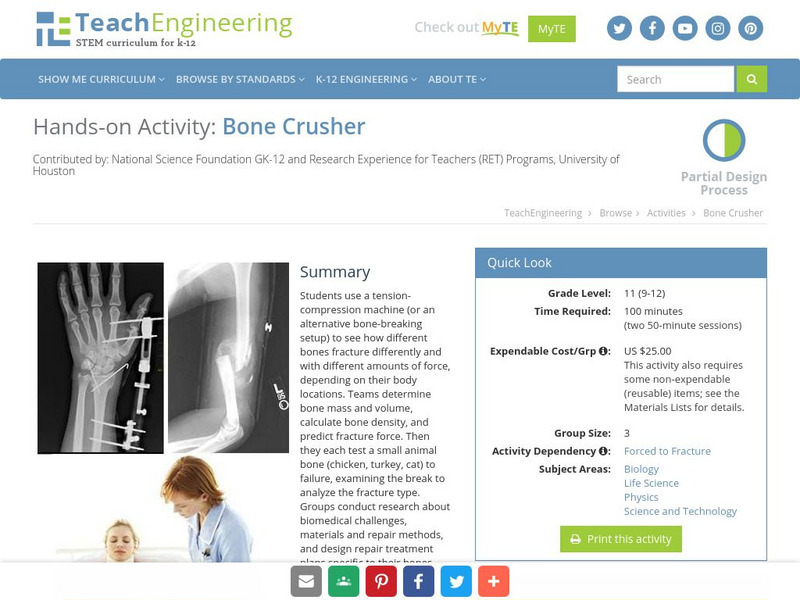
Teach Engineering: Bone Crusher
Students use a tension-compression machine or an alternative bone-breaking setup to see how different bones fracture differently and with different amounts of force, depending on their body locations. Teams determine bone mass and...
TeachEngineering
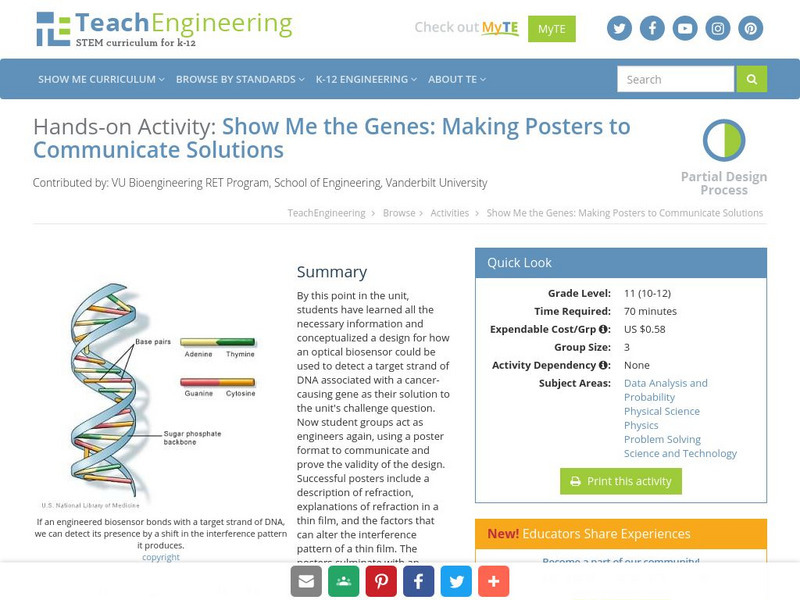
Teach Engineering: Show Me the Genes
In this activity, students create posters which explain and illustrate thin film refraction and the factors that influence it. The goal is to explain the experimental results of using an optical biosensor, and prove these results with a...
TeachEngineering
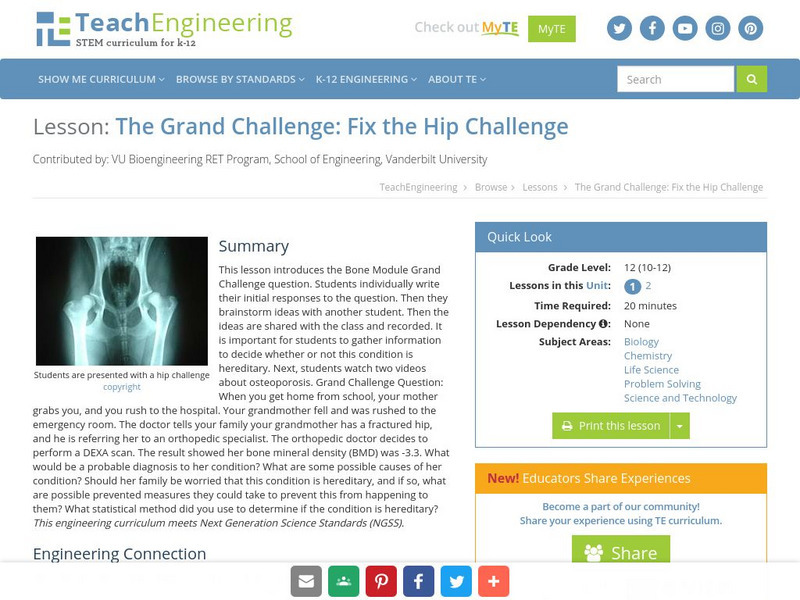
Teach Engineering: The Grand Challenge: Fix the Hip Challenge
This lesson introduces the Bone Module Grand Challenge question. Students are asked to write their initial responses to the question alone. They will then brainstorm ideas with one other student. Finally, the ideas are shared with the...