Hi, what do you want to do?






TeachEngineering
Teach Engineering: Breathe In, Breathe Out
Students are introduced to the respiratory system, the lungs and air. They learn about how the lungs and diaphragm work, how air pollution affects lungs and respiratory functions, some widespread respiratory problems, and how engineers...
TeachEngineering
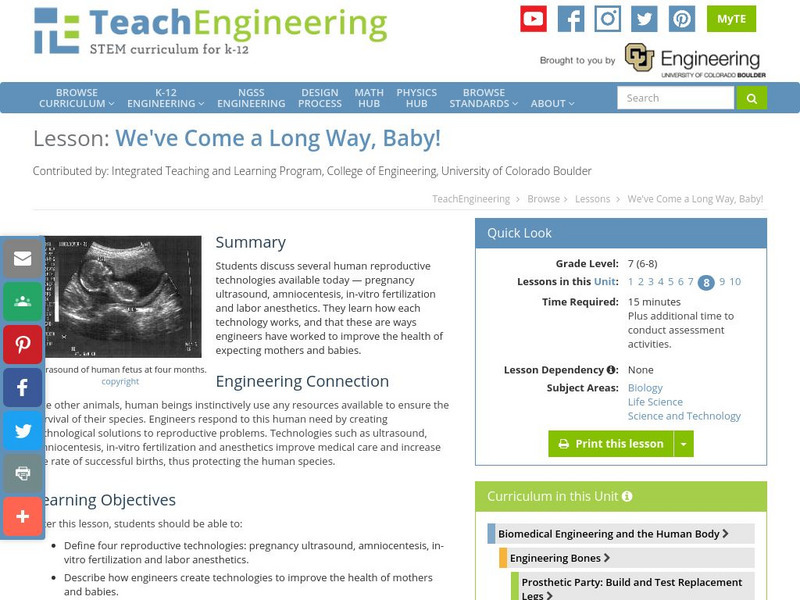
Teach Engineering: We've Come a Long Way, Baby!
Students discuss several human reproductive technologies available today--pregnancy ultrasound, amniocentesis, in-vitro fertilization and labor anesthetics. They learn how each technology works, and that these are ways engineers have...
TeachEngineering
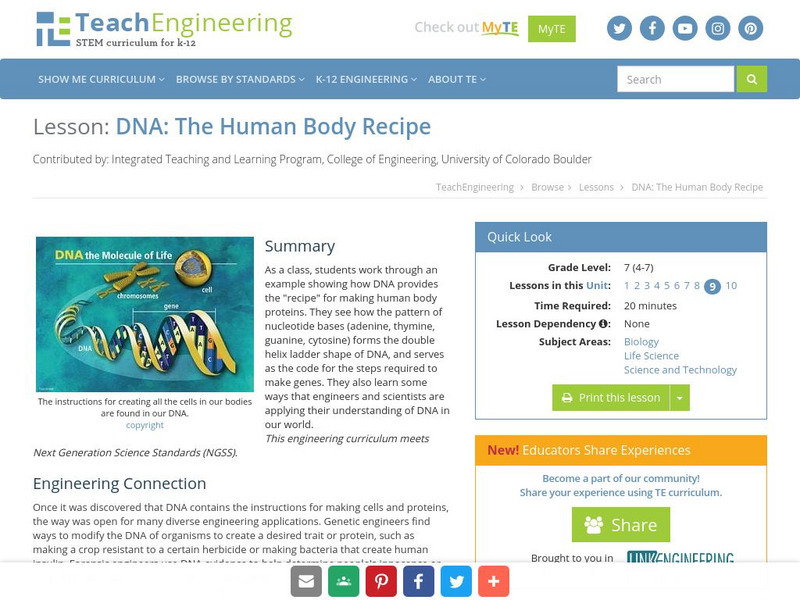
Teach Engineering: Dna: The Human Body Recipe
As a class, students work through an example showing how DNA provides the "recipe" for making our body proteins. They see how the pattern of nucleotide bases (adenine, thymine, guanine, cytosine) forms the double helix ladder shape of...
TeachEngineering
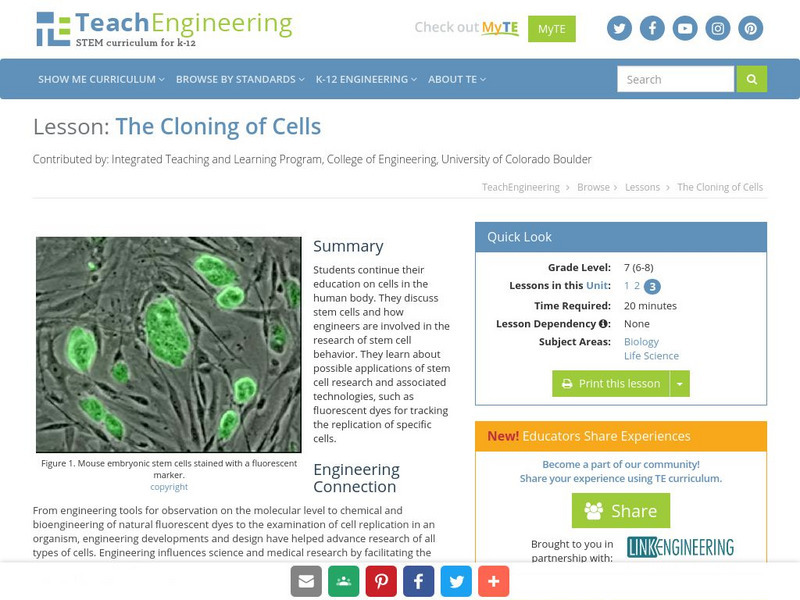
Teach Engineering: The Cloning of Cells
Students continue their education on cells in the human body. They discuss stem cells and how engineers are involved in the research of stem cell behavior. They learn about possible applications of stem cell research and associated...
TeachEngineering
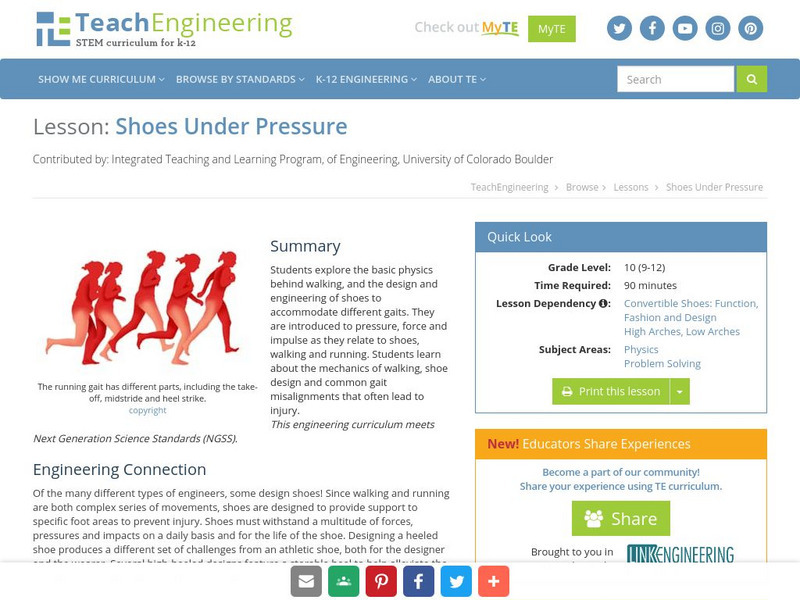
Teach Engineering: Shoes Under Pressure
Students explore the basic physics behind walking, and the design and engineering of shoes to accommodate different gaits. They are introduced to pressure, force and impulse as they relate to shoes, walking and running. Students learn...
TeachEngineering
Teach Engineering: Bacteria Are Everywhere!
Through this activity, students are introduced to the concept of engineering biological organisms and studying their growth to be able to identify periods of fast and slow growth. Students learn that bacteria are found everywhere,...
Other
The Engineering and Science Foundation: Engineering Your Future
Authors invite students to explore this site in order to gather information about a future engineering career. Information is provided on various fields such as chemical and biomedical. Site also lists important classes related to the...
TeachEngineering
Teach Engineering: Fascinating Friction!
In this activity, students use wood, wax paper and oil to investigate the importance of lubrication between materials and to understand the concept of friction. Using wax paper and oil placed between pieces of wood, the function of...

TeachEngineering
Teach Engineering: Seeing and Feeling Sound Vibrations
Students examine the existence of sound by listening to and seeing sound waves while conducting a set of simple activities as a class or in pairs at stations. Students describe sound in terms of its pitch, volume and frequency. They use...
TeachEngineering
Teach Engineering: Engineering in Sports
Imagining themselves arriving at the Olympic gold medal soccer game in Beijing, students begin to think about how engineering is involved in sports. After a discussion of kinetic and potential energy, an associated hands-on activity...
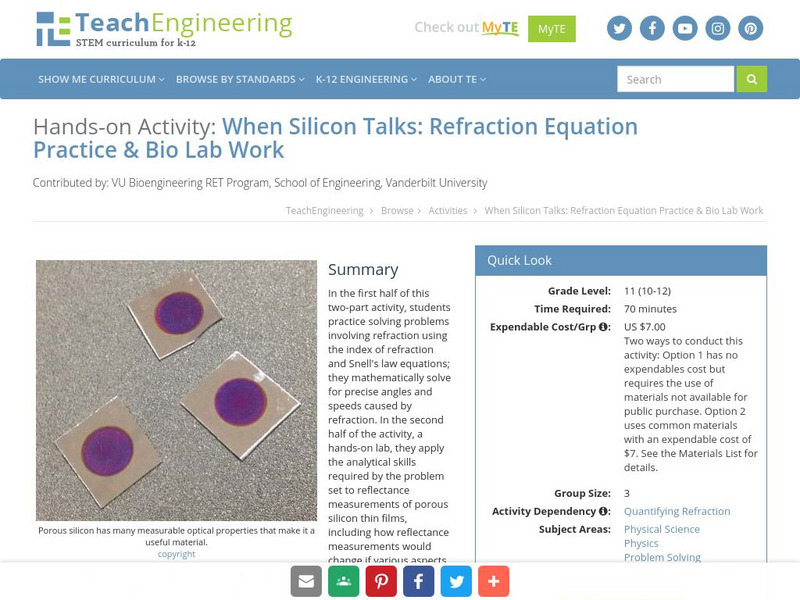
TeachEngineering
Teach Engineering: When Silicon Talks
In this activity, students tackle this aspect of engineering as they solve problems for precise angles and speeds, and predict data output when samples are altered.

TeachEngineering
Teach Engineering: Tracking a Virus
Students simulate the spread of a virus such as HIV through a population by "sharing" (but not drinking) the water in a plastic cup with several classmates. Although invisible, the water in a few of the cups will already be tainted with...
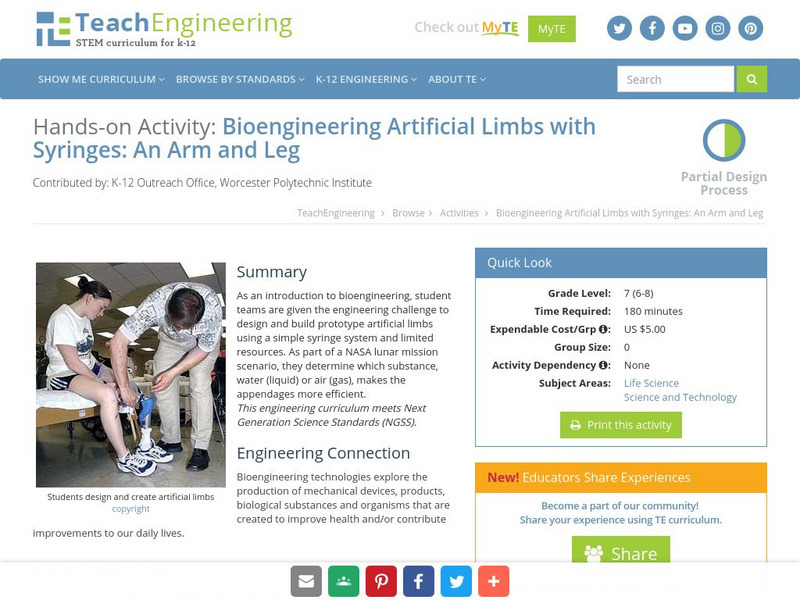
TeachEngineering
Teach Engineering: An Arm and a Leg
Students will design and build a prototype of an artificial limb using a simple syringe system as an introduction to bioengineering. Students will determine which substance water (liquid) or air (gas) will make the appendage more efficient.
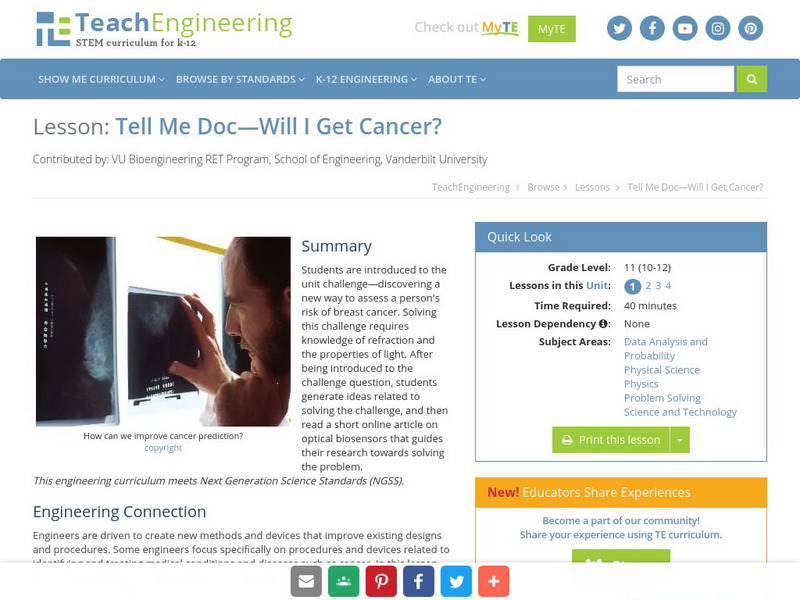
TeachEngineering
Teach Engineering: Tell Me Doc, Will I Get Cancer?
Students are introduced to the challenge called, Tell Me the Odds, discovering a new way to assess a person's risk of breast cancer. Solving this challenge requires knowledge of refraction and the properties of light.
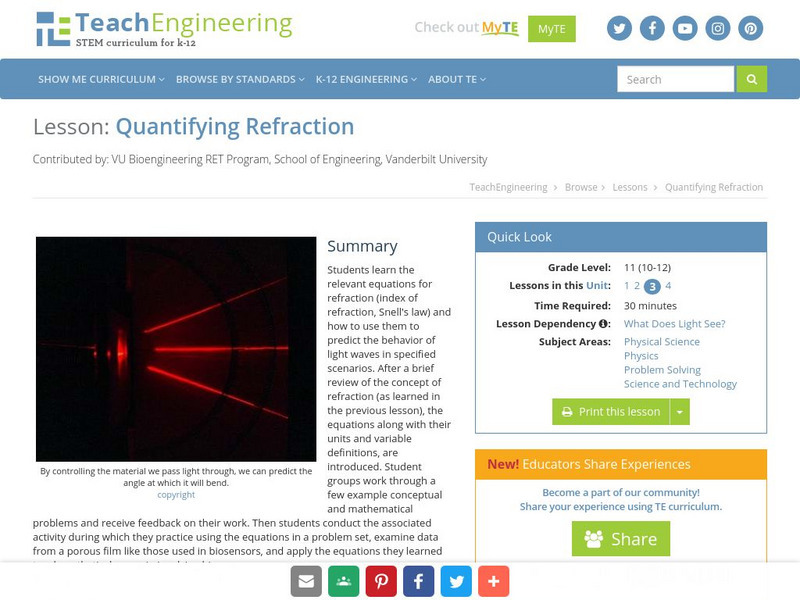
TeachEngineering
Teach Engineering: Quantifying Refraction
Learners learn the relevant equations for refraction (index of refraction and Snell's law) and how to use them to predict the behavior of light waves in specified scenarios.
TeachEngineering
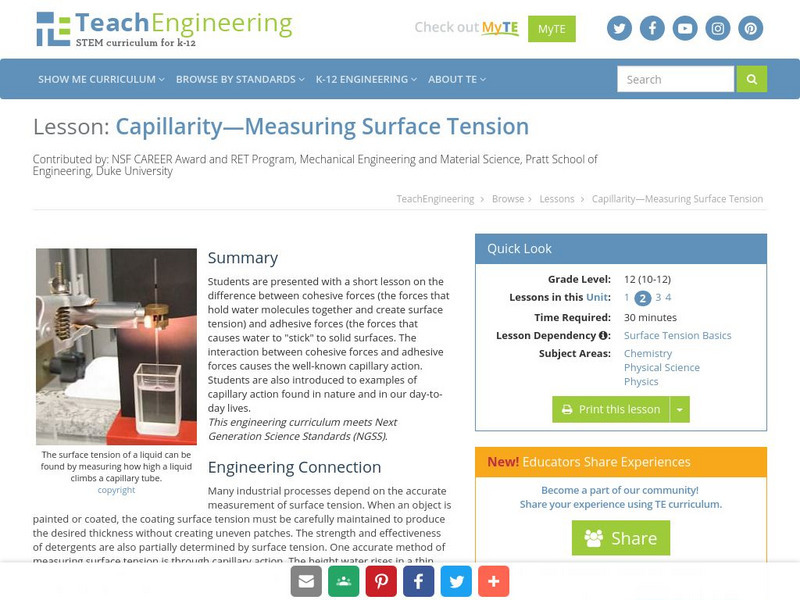
Teach Engineering: Capillarity Measuring Surface Tension
Students are presented with a short lesson on the difference between cohesive forces (the forces that hold water molecules together and create surface tension) and adhesive forces (the forces that causes water to "stick" to solid...
TeachEngineering
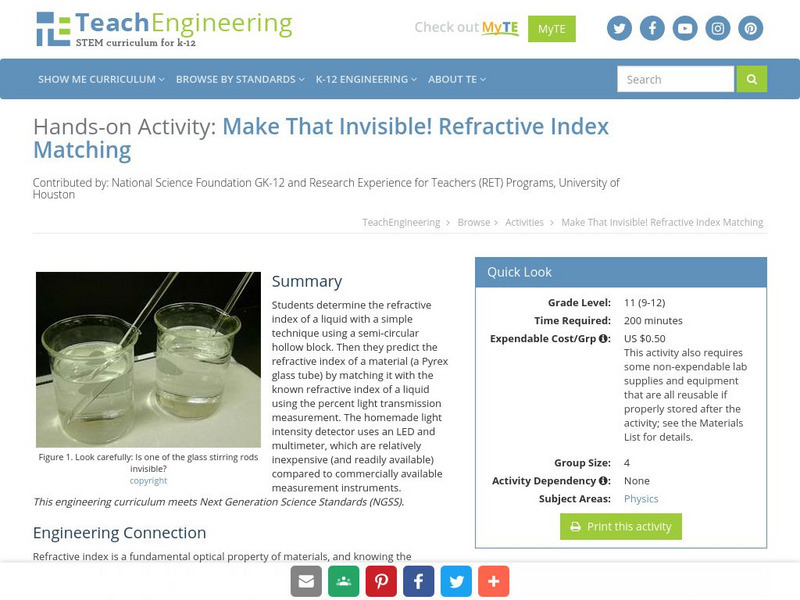
Teach Engineering: Make That Invisible! Refractive Index Matching
Students determine the refractive index of a liquid with a simple technique using a semi-circular hollow block. Then they predict the refractive index of a material (a Pyrex glass tube) by matching it with the known refractive index of a...
TeachEngineering
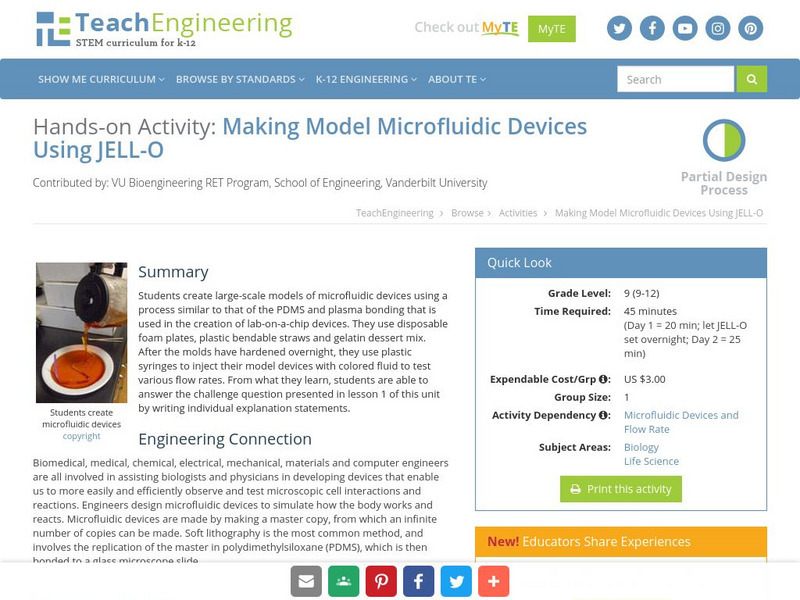
Teach Engineering: Making Model Microfluidic Devices Using Jell O
Students create large-scale models of microfluidic devices using a process similar to that of the PDMS and plasma bonding that is used in the creation of lab-on-a-chip devices. They use disposable foam plates, plastic bendable straws and...
TeachEngineering
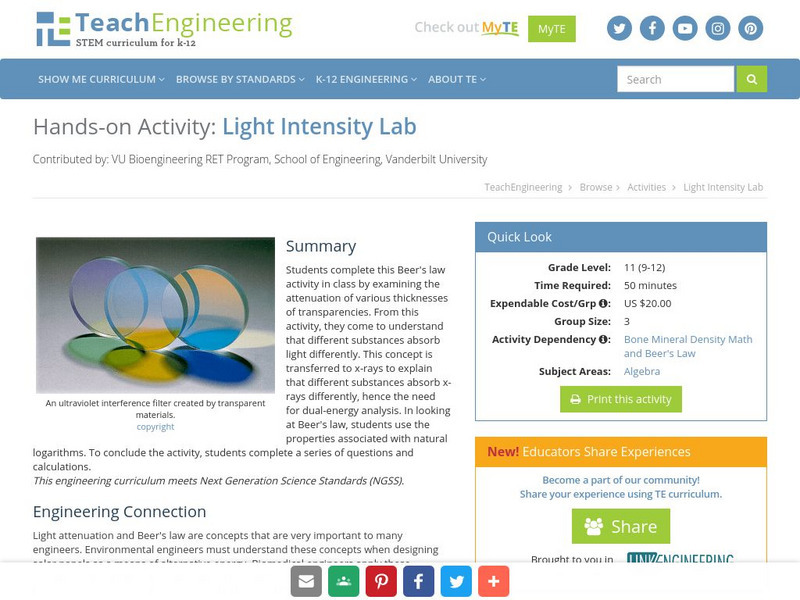
Teach Engineering: Light Intensity Lab
Students complete this Beer's Law activity in class. Students examine the attenuation of various thicknesses of transparencies. From this activity, students will understand that different substances absorb light differently. This can...

Other
Exxon Mobile: Be an Engineer
Where can an engineering degree take students? Read the stories of innovative thinkers and engineers.
American Institute of Biological Sciences
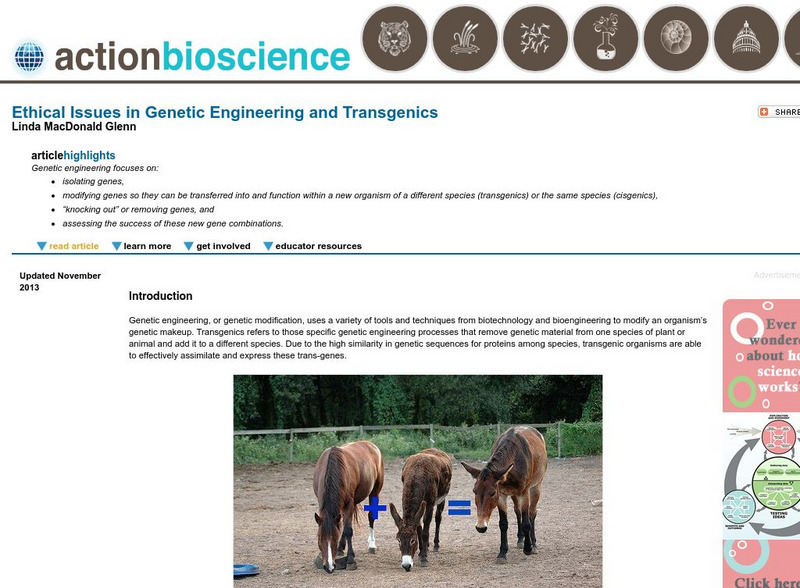
Action Bioscience: Ethical Issues in Genetic Engineering and Transgenics
Utilizing the developments in transgenic biotechnology and genetic engineering for use in the medical fields raises ethical questions.
National Science Foundation
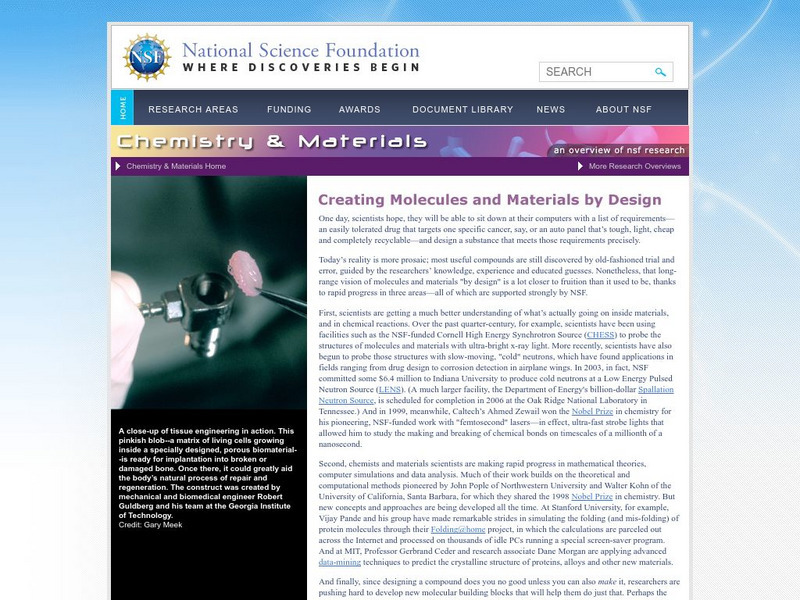
National Science Foundation: Chemistry & Materials: Creating Molecules and Materials by Design
Describes the progress being made in materials engineering, so that one day in the not too distant future scientists will easily be able to use a computer to design materials that meet any required properties.
TeachEngineering
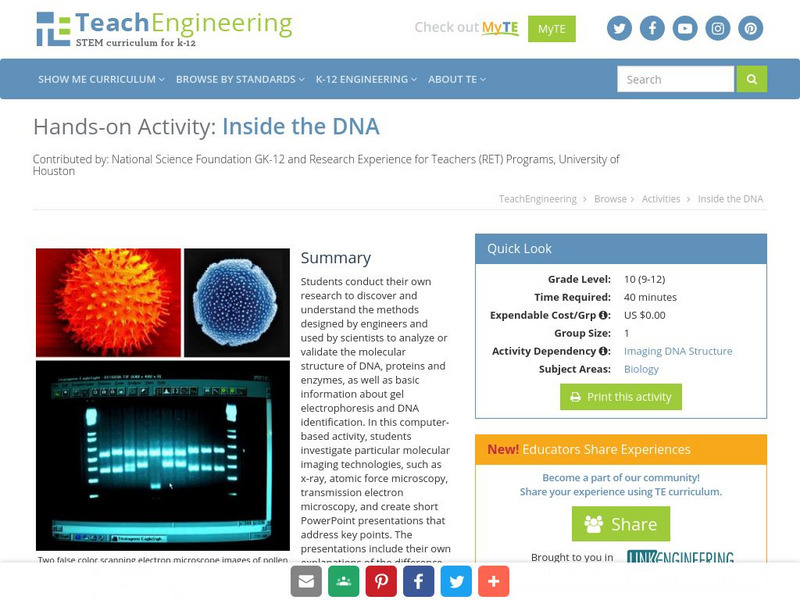
Teach Engineering: Inside the Dna
Students conduct their own research to discover and understand the methods designed by engineers and used by scientists to analyze or validate the molecular structure of DNA, proteins and enzymes, as well as basic information about gel...
TeachEngineering
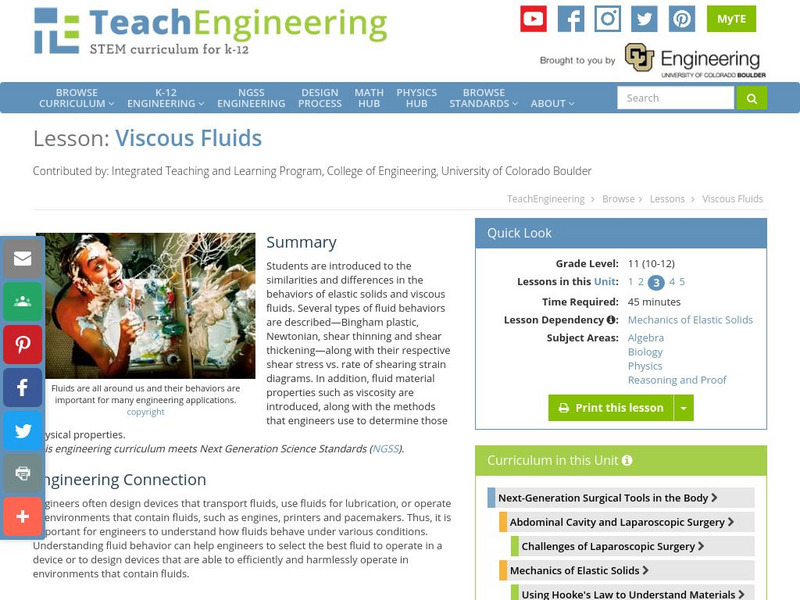
Teach Engineering: Viscous Fluids
Young scholars are introduced to the similarities and differences in the behaviors of elastic solids and viscous fluids. Several types of fluid behaviors are described--Bingham plastic, Newtonian, shear thinning and shear...