Hi, what do you want to do?






American Museum of Natural History
A Whale of a Tale
What's the most interesting fact about a blue whale? Learners read an interview about the similarities between the Titanosaur and the blue whale displays at the American Museum of Natural History. Pupils learn not only about blue whales...

Curated OER
Whale Challenge
In this review or quiz about whales learning exercise, students read phrases describing something about whales and identify the answer. Students choose 10 multiple choice answers.

Curated OER
Whales
First graders investigate two different types of whales; toothed and baleen. They describe what the different types of whale eat. They listen to a cassette of Dyan Sheldon's, The Whale Song before making stick puppets to dramatize the...

Curated OER
Wonderful Whales
Primary marine biologists consider the largest living animals on Earth, the whales. Introduce them to general anatomy, unique adaptations, and behaviors. Teach them to sing a song that will help them remember some of these facts....

Curated OER
Whale Data Cards
In this whale facts worksheet, learners cut out the whale cards and fill them out with information that includes the whale type, length, weight, diving depth, and geographic range.

Curated OER
Animal Facts and Opinions
In this fact and opinion worksheet, students read 20 informative sentences about animals. Students write "fact" or "opinion" for each sentence.

Reed Novel Studies
Dolphins of the World
Pair a novel study of Island of the Blue Dolphins by Scott O'Dell with a presentation on dolphins. The 37-slide PowerPoint shows different types of dolphins all around the world, includes a brief description of each, and provides a photo...

Curated OER
Should We Hunt the Largest Animals on the Planet?
Students discover details about whaling. In this environmental stewardship lesson, students research selected websites to locate information about commercial whaling and its implications.

Curated OER
The Whale Poem
Students watch a whale video clip for information. Students brainstorm on the facts that they learned about whales. Students use the Internet to find information and images about whales. Students write and publish a whale poem.

Curated OER
Internet Quests: Mammals
In this science and technology worksheet, students use reference books or Internet searches to find facts about the blue whale, beaver, bat and echidna. Students answer 20 questions about each mammal, fill out charts and illustrate facts.

Curated OER
Welcome to My Zoo
In this animal facts worksheet, students fill in informational facts about the following animals: elephants, cheetahs, pandas, blue whales, turtles, and kangaroos.

Curated OER
Nervous System
After reading through this presentation about nerve impulses, students should be able to complete the sentences given with the correct terms and scientific vocabulary. The basics of the ion channel behavior are detailed along with a...

Curated OER
Microbial Influence on Earth's Systems
Students identify the different biogeochemical cycles on Earth. In this biology instructional activity, students observe microbes under a microscope. They compare and contrast respiration and photosynthesis.

Curated OER
Sharks: Scavenging Stomachs
Students examine the role played by sharks in the marine food chain. They conduct a scavenger hunt collecting items that have actually been removed from the stomachs of sharks, and create a display that includes the items and newspaper...

Curated OER
Ocean Life
Students examine the fossil remains of ancient sea creatures. They create casts of fossils and identify how sea fossils are formed and consider what type of information fossils can give to scientists.

Curated OER
Roll Out the Run-ons
Students participate in activities in order to investigate the concept of run-on sentences. They identify a complete sentence and the correct characteristics that it possesses.
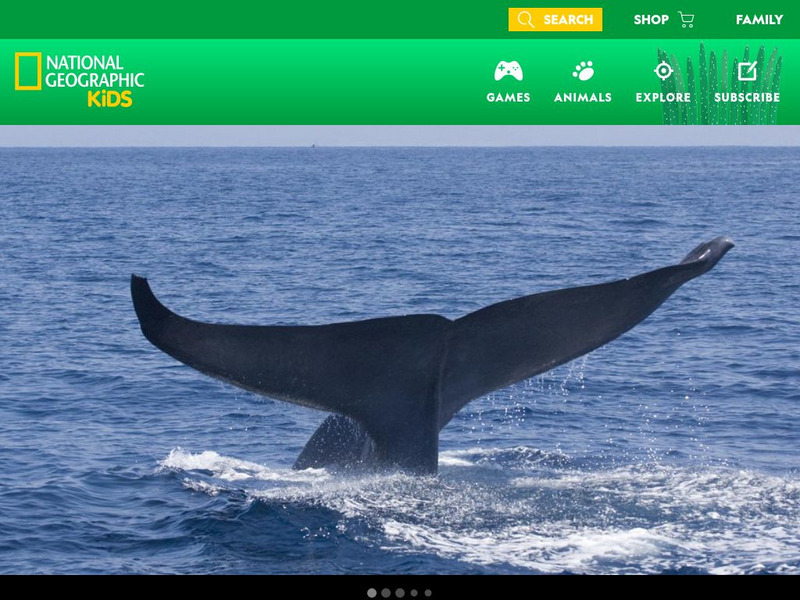
National Geographic Kids
National Geographic Kids: Animals: Blue Whales
Do you know that the blue whale is the largest animal to ever live on Earth? Take an exciting look at this mammal with easy to read facts including habitat, appearance, young, mating, diet, enemies, as well as colorful photos. Links to...
Monterey Bay Aquarium
Monterey Bay Aquarium: Blue Whale (Balenoptera Musculus)
Resource that gives information on the diet, range, relatives of the blue whale. Conservation notes and cool facts are also included. There are links to similar information on dozens of other types of marine life.
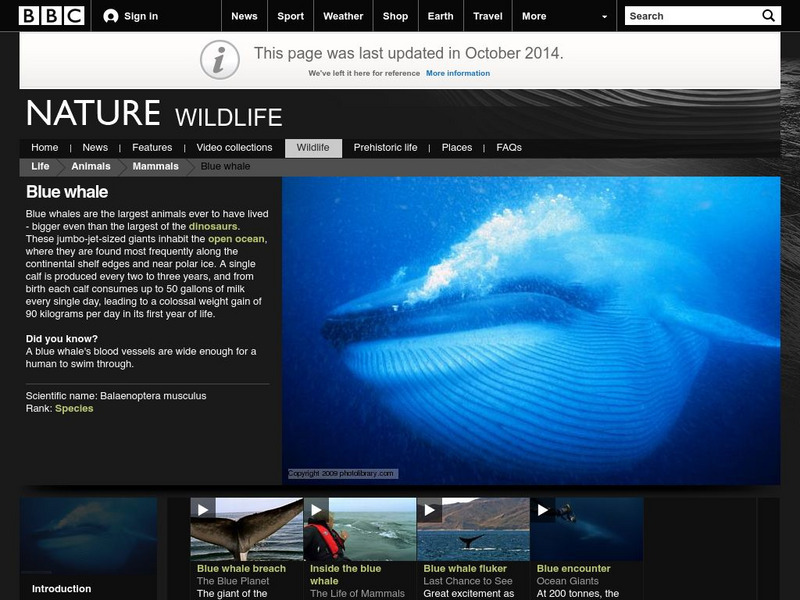
BBC
Bbc Science & Nature: Blue Whale
Get the facts on the largest animal in the world- past and present. This site provides a detailed fact sheet and photos.

Other
Save the Whales
The Blue Whale, Beluga Whale, Southern Right Whale, Gray Whale, and Sperm Whale are endangered. Find out why in this informative and colorful site.
NPR: National Public Radio
Npr: Blue Whale Sighting Thrills Researchers
National Public Radio reports on the blue whale, which has been on the endangered species list for almost 40 years. Find out why a recent siting off the coast of Alaska has given researchers some cause for optimism.
Canadian Museum of Nature
Canadian Museum of Nature: Blue Whale
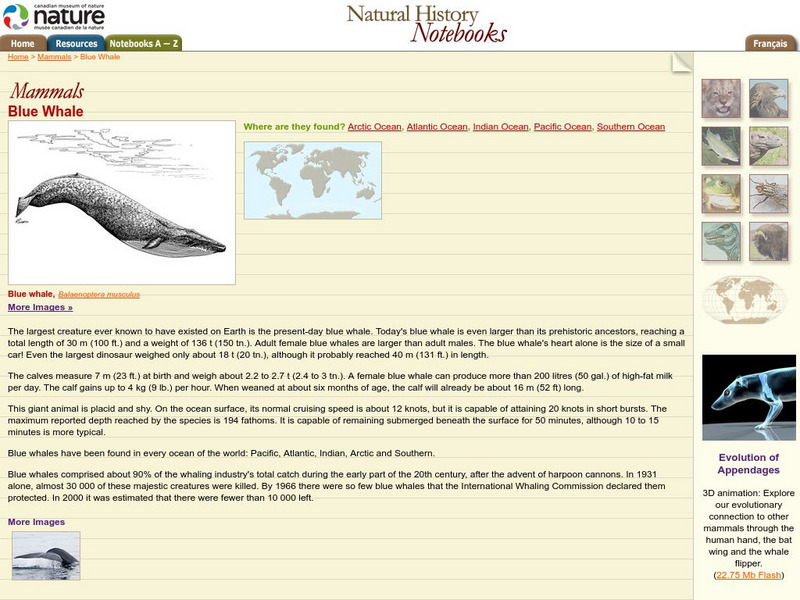
The blue whale is believed to be the largest animal that has ever existed on Earth, even larger than dinosaurs were. These gentle creatures are at risk and only about 10,000 remain today. Learn some interesting facts about them here.
Other
Shark Friends Whale Page
Dive down deep with these creatures and learn more about them without leaving your computer. Site contains information on different types of whales such as gray, northern right, fin, blue and other species.
Other
Fishin for Facts Library
A comprehensive site that includes a wealth of information on whales, sharks, penguins and squid.