Hi, what do you want to do?





Environmental Education for Kids
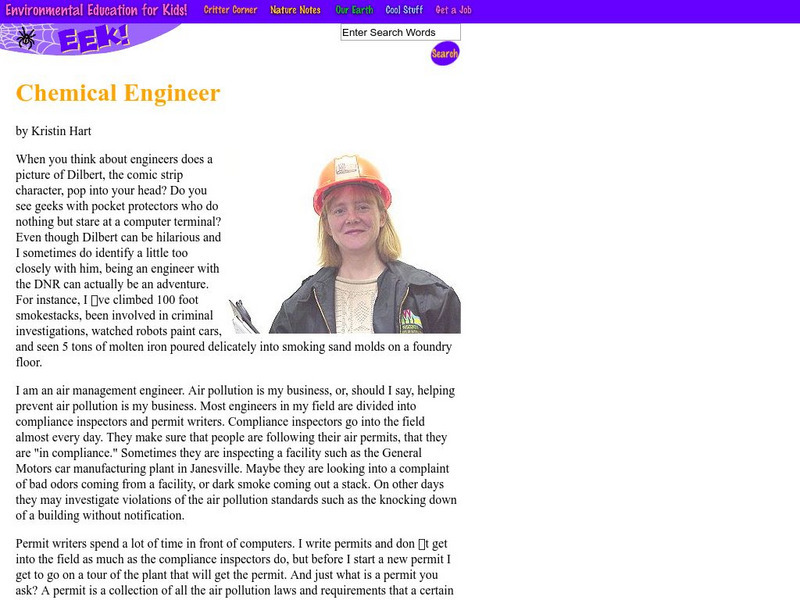
Eek!: Chemical Engineer
This site provides interesting and relevant information on engineering careers by offering a look into the life of a chemical engineer. Also, site describes what type of courses a student should study to pursue an engineering career.
TeachEngineering
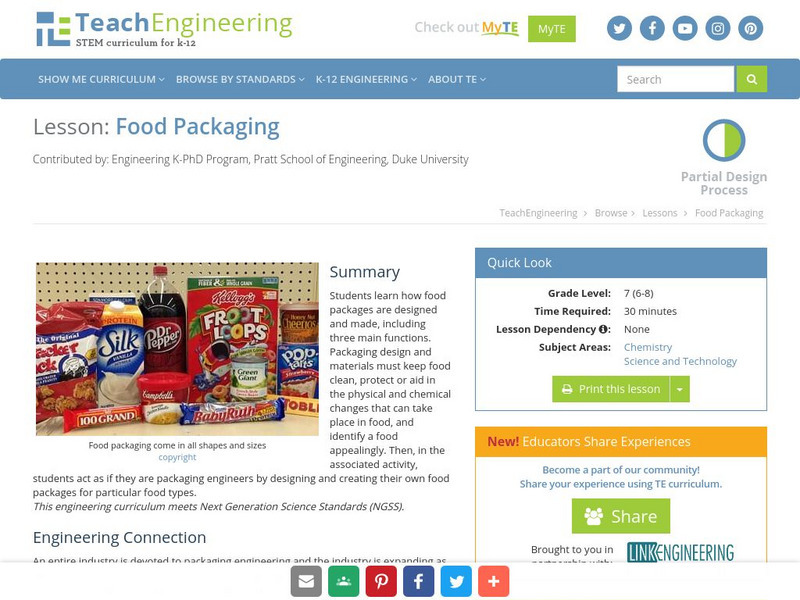
Teach Engineering: Food Packaging
This lesson plan focuses on how food packages are designed and made. Students will learn three of the main functions of a food package. They will learn what is necessary of the design and materials of a package to keep food clean,...
TeachEngineering
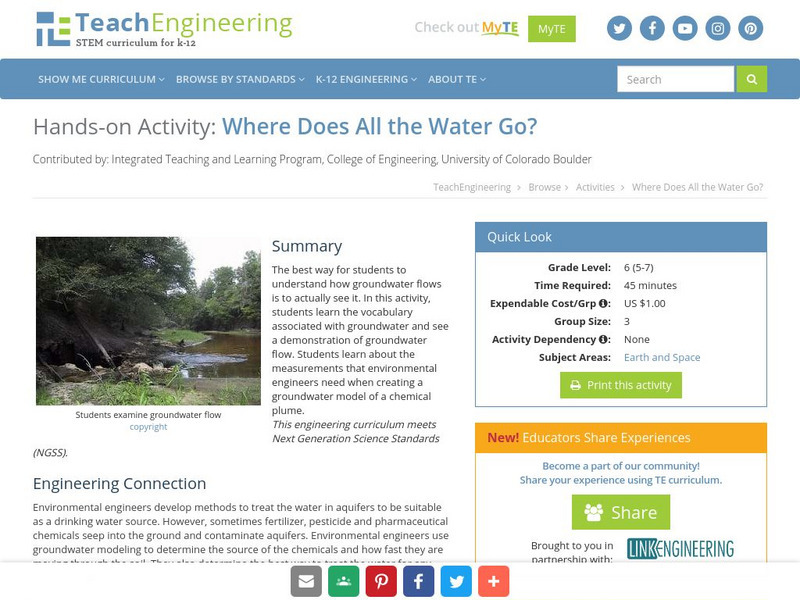
Teach Engineering: Where Does All the Water Go?
The best way for students to understand how groundwater flows is to actually see it. In this activity, students will learn the vocabulary associated with groundwater and see a demonstration of groundwater flow. Students will learn about...
TeachEngineering
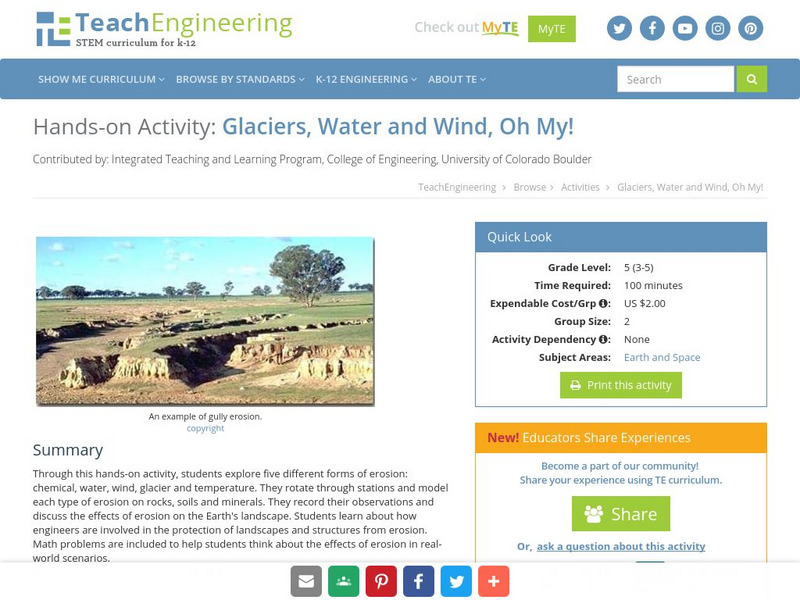
Teach Engineering: Glaciers, Water and Wind, Oh My!
This hands-on activity explores five different forms of erosion (chemical, water, wind, glacier and temperature). Students rotate through stations and model each type of erosion on rocks, soils and minerals. The students record their...
TeachEngineering
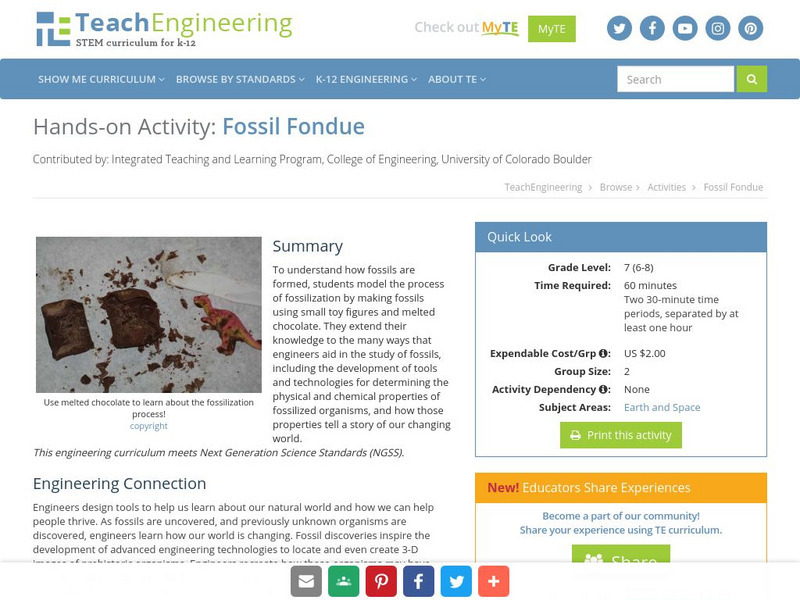
Teach Engineering: Fossil Fondue
To understand how fossils are formed, students model the process of fossilization by making fossils using small toy figures and melted chocolate. They extend their knowledge to the many ways that engineers aid in the study of fossils,...
University of Houston
University of Houston: Engines of Our Ingenuity: John Dalton's Notation
This is part of a small radio show at the University of Houston. It talks about how John Dalton came up with his version of chemical notation, and how it differs from our version of it today. It is available in audio form also.
TeachEngineering
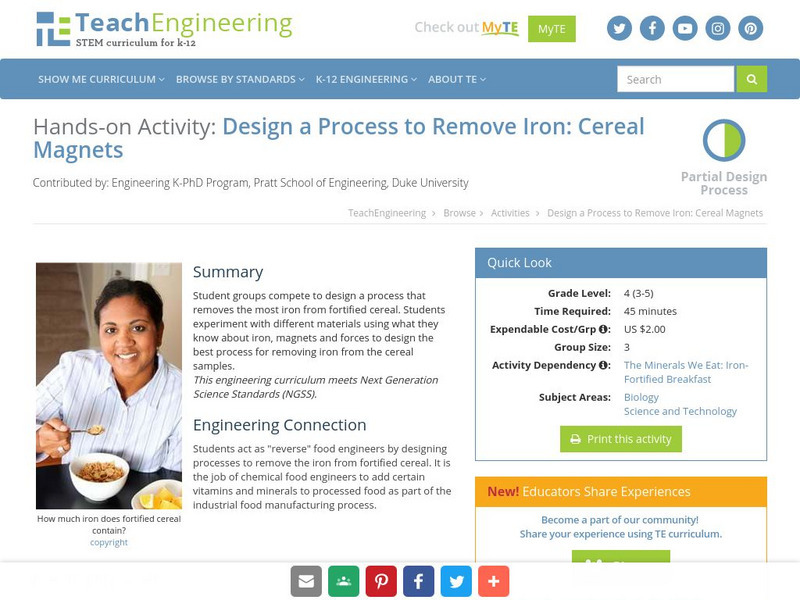
Teach Engineering: Cereal Magnets
In this activity, students will design a process that removes the most iron from the cereal. This activity is meant for the students to experiment with different materials using what they know about iron, magnets, and forces to design...
TeachEngineering
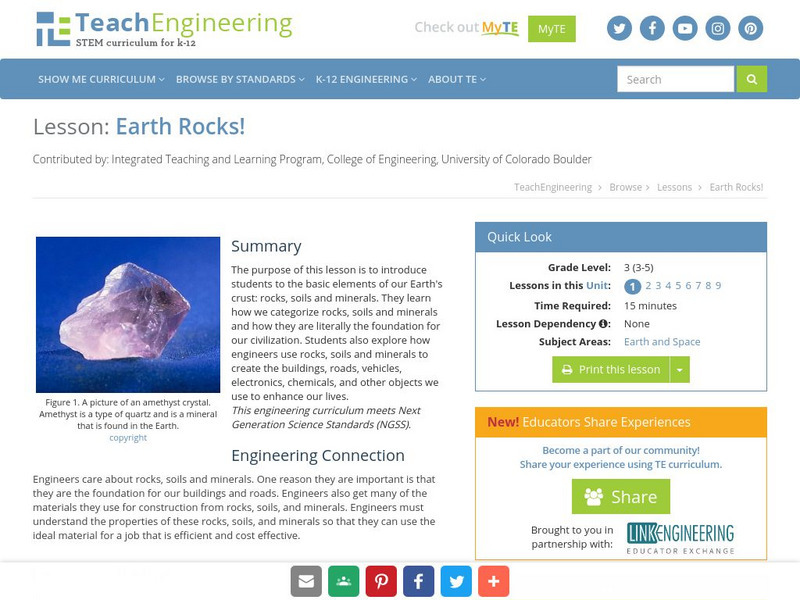
Teach Engineering: Earth Rocks!
The purpose of this lesson is to introduce students to the basic elements of our Earth's crust: rocks, soils and minerals. They learn how we categorize rocks, soils and minerals and how they are literally the foundation for our...

TeachEngineering
Teach Engineering: Solid, Liquid or Gas?
Students are given a variety of materials and asked to identify if each material as a solid, liquid or gas. They use their five senses - sight, sound, smell, texture and taste - to identify the other characteristics of each item.
TeachEngineering
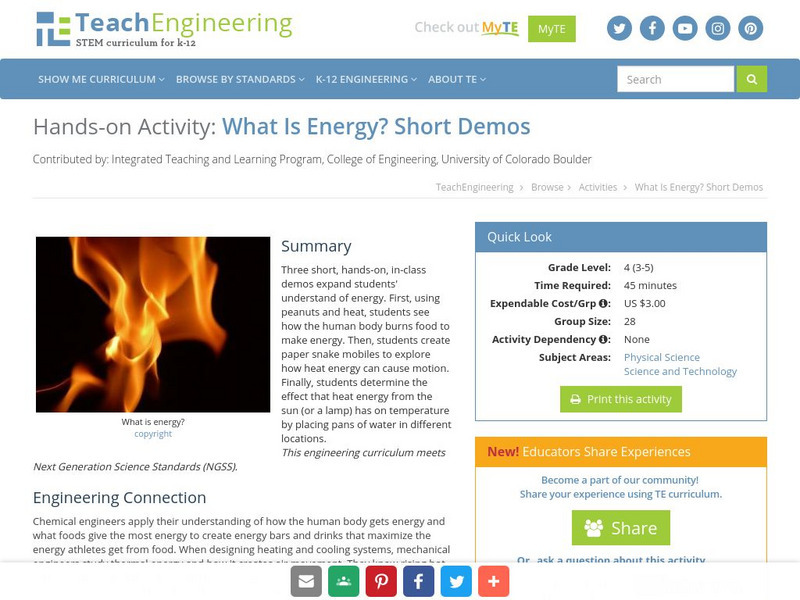
Teach Engineering: What Is Energy? Short Demos
Three short, hands-on, in-class demos expand students' understand of energy. First, using peanuts and heat, students see how the human body burns food to make energy. Then, students create paper snake mobiles to explore how heat energy...
TeachEngineering
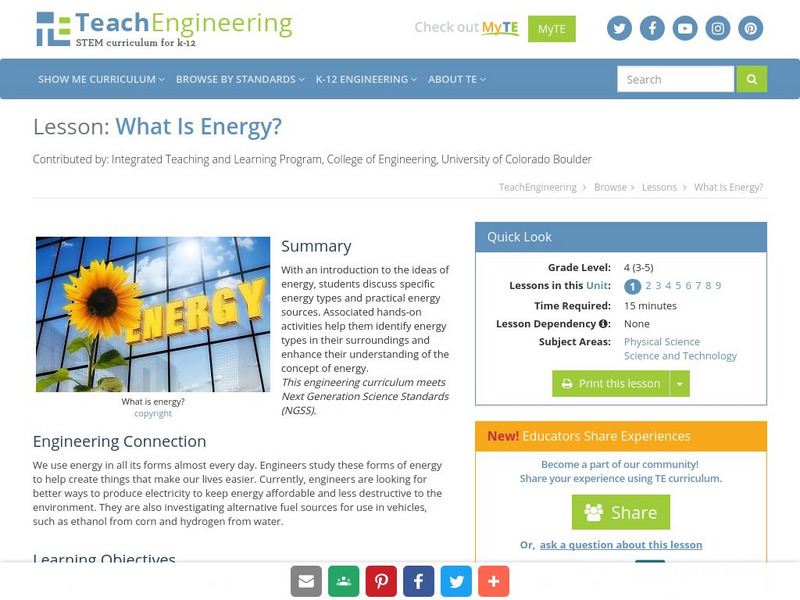
Teach Engineering: What Is Energy?
With an introduction to the ideas of energy, learners discuss specific types of energy and the practical sources of energy. Hands-on activities help them identify types of energy in their surroundings and enhance their understanding of...

Technovation
Curiosity Machine: Challenges: Build a Self Powered Rocket
A challenge where students will launch a small object using a chemical reaction. The site contains tips, a lesson plan, and a place for students to document their engineering design process.
Other
California Energy Commission: Solar Energy Science Projects [Pdf]
Four science projects in which students learn how solar energy works and how thermal energy is transferred and utlized in a solar air heater, a solar water heater, a solar hot dog cooker, and a solar cell.