Hi, what do you want to do?





TeachEngineering
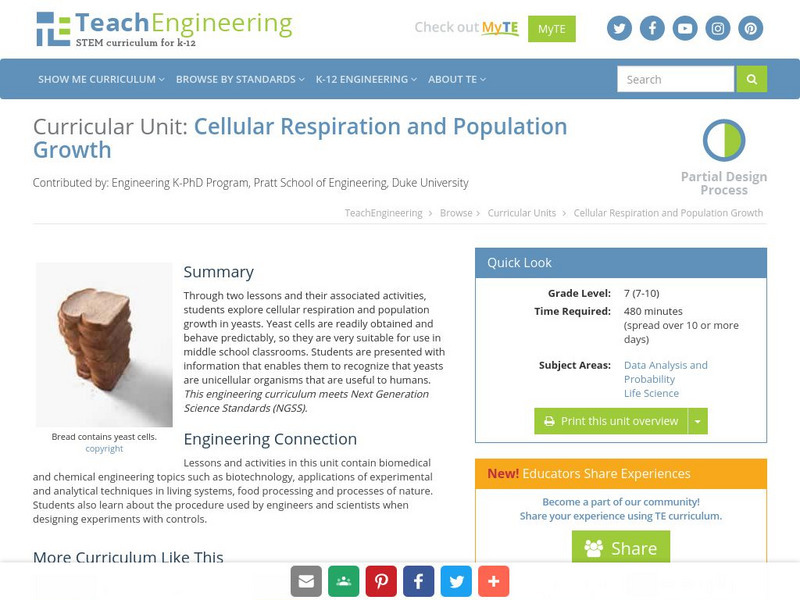
Teach Engineering: Cellular Respiration and Population Growth
Two lessons and their associated activities explore cellular respiration and population growth in yeasts. Yeast cells are readily obtained and behave predictably, so they are very appropriate to use in middle school classrooms. In the...
TeachEngineering
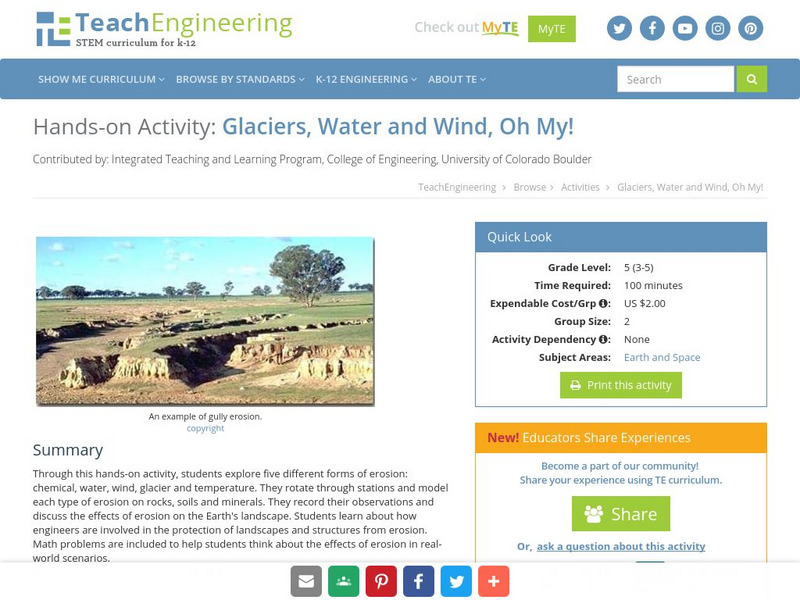
Teach Engineering: Glaciers, Water and Wind, Oh My!
This hands-on activity explores five different forms of erosion (chemical, water, wind, glacier and temperature). Students rotate through stations and model each type of erosion on rocks, soils and minerals. The students record their...
TeachEngineering
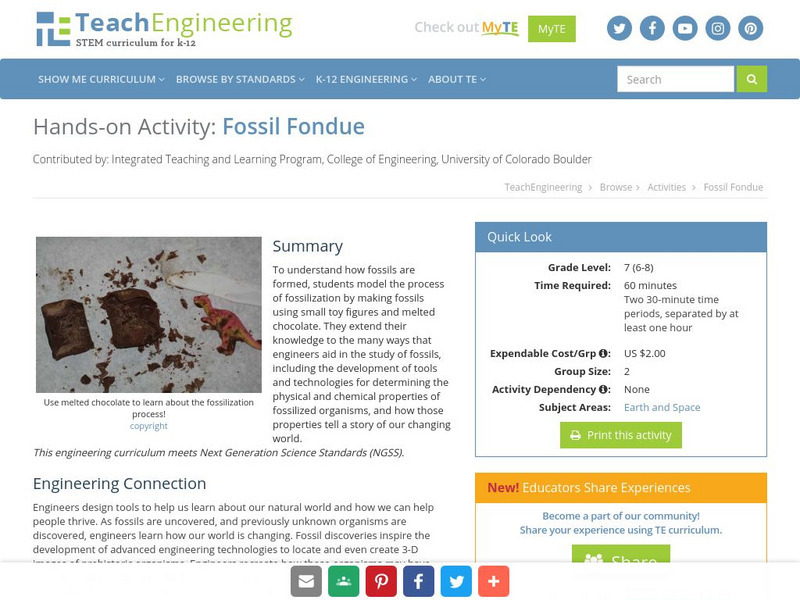
Teach Engineering: Fossil Fondue
To understand how fossils are formed, students model the process of fossilization by making fossils using small toy figures and melted chocolate. They extend their knowledge to the many ways that engineers aid in the study of fossils,...
TeachEngineering
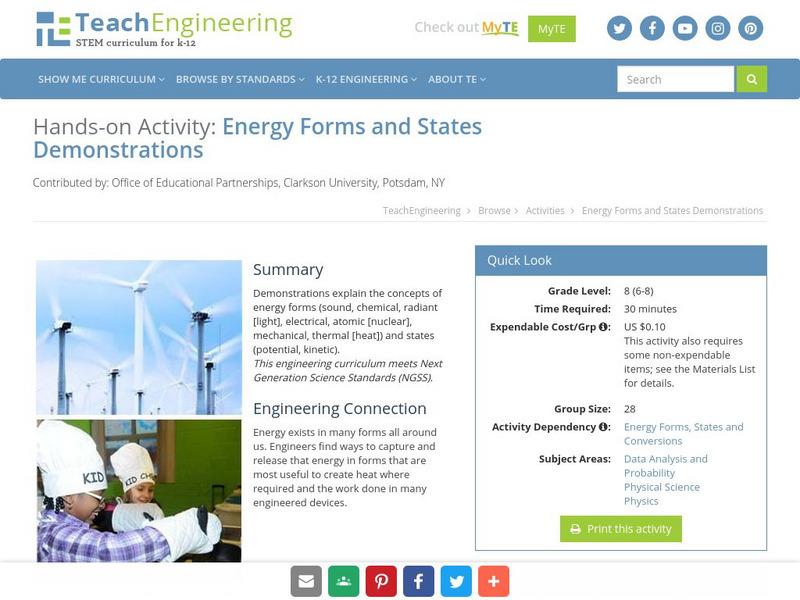
Teach Engineering: Energy Forms and States Demonstrations
Demonstrations explain the concepts of energy forms (sound, chemical, radiant [light], electrical, atomic [nuclear], mechanical, thermal [heat]) and states (potential, kinetic).
TeachEngineering
Teach Engineering: Counting Calories
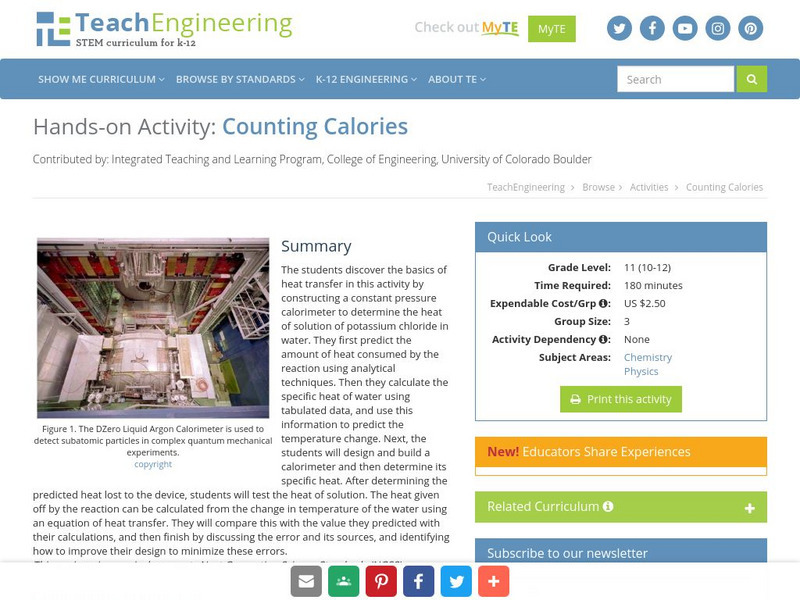
The students discover the basics of heat transfer in this activity by constructing a constant pressure calorimeter to determine the heat of solution of potassium chloride in water. They first predict the amount of heat consumed by the...
TeachEngineering
Teach Engineering: Measuring Surface Tension
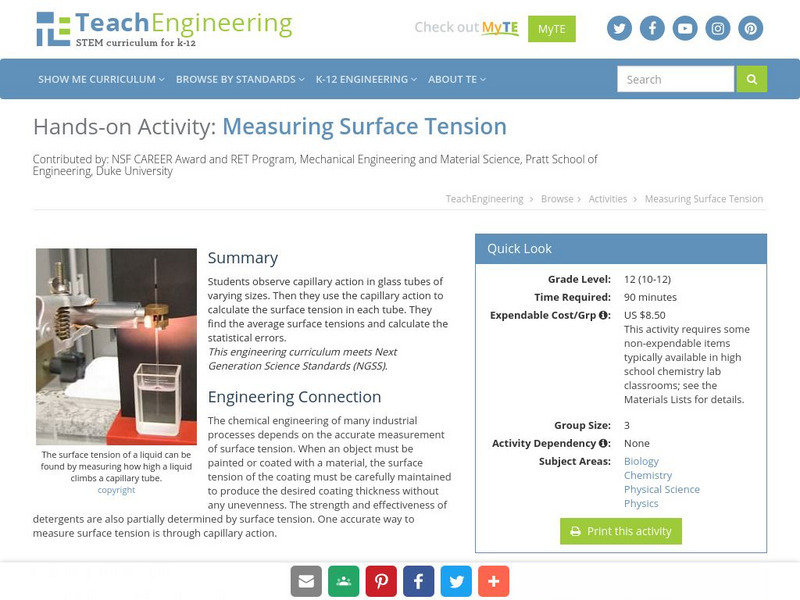
Students observe capillary action in glass tubes of varying sizes. Then they use the capillary action to calculate the surface tension in each tube. They find the average surface tensions and calculate the statistical errors.
TeachEngineering
Teach Engineering: Investigating Contact Angle
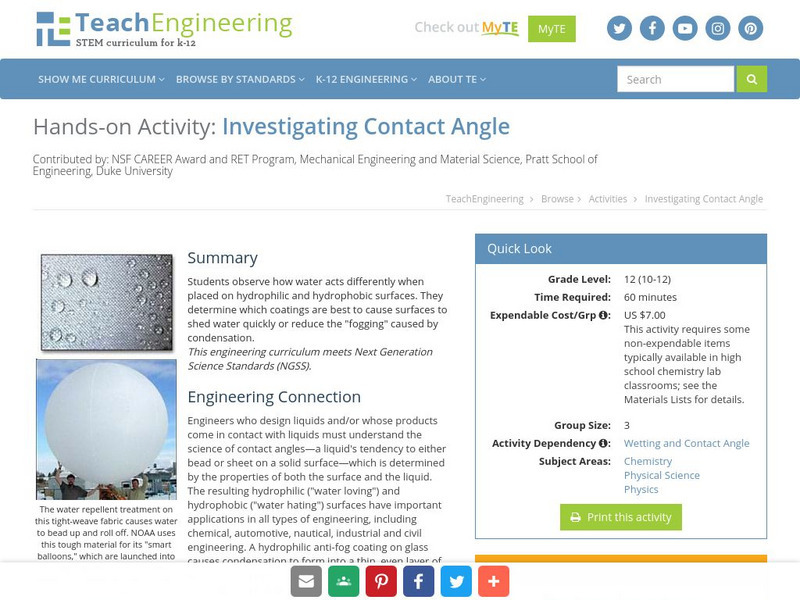
Students observe how water acts differently when placed on hydrophilic and hydrophobic surfaces. They determine which coatings are best to cause surfaces to shed water quickly or reduce the "fogging" caused by condensation.
TeachEngineering
Teach Engineering: Thirsty for Gold
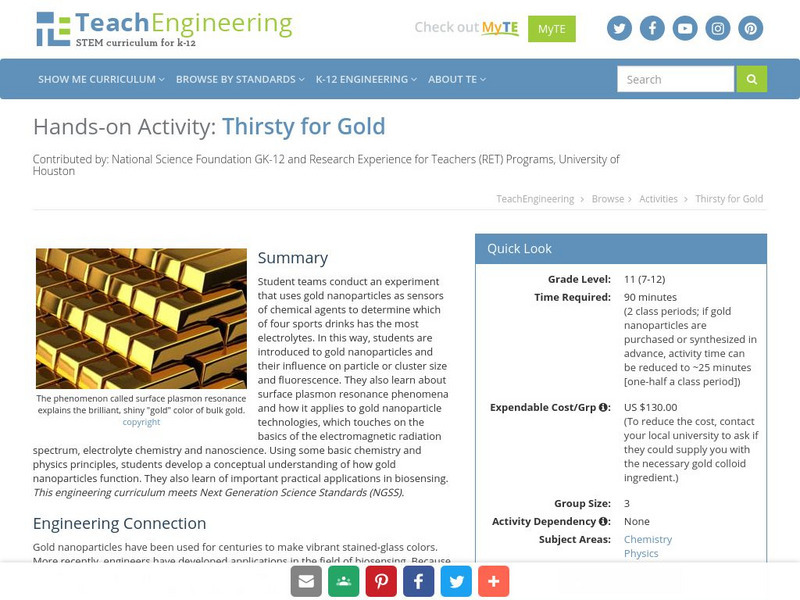
Student teams conduct an experiment that uses gold nanoparticles as sensors of chemical agents to determine which of four sports drinks has the most electrolytes. In this way, students are introduced to gold nanoparticles and their...
TeachEngineering
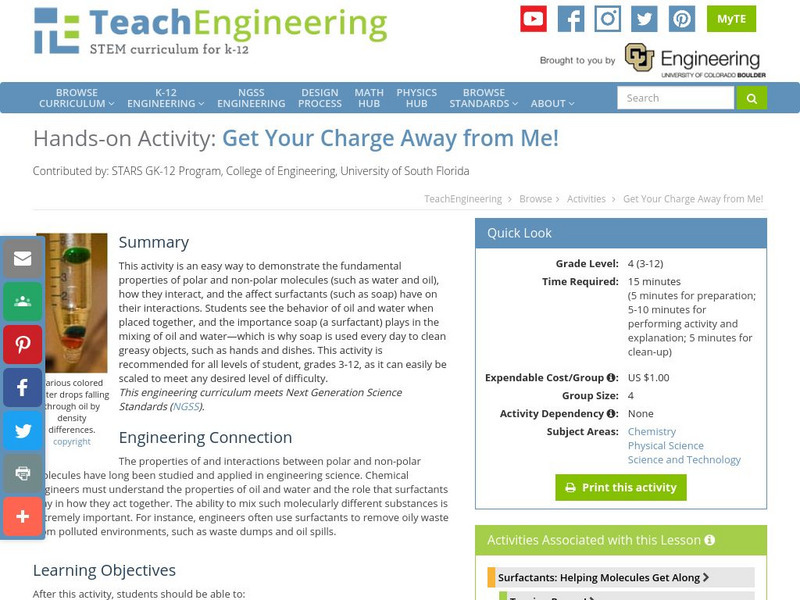
Teach Engineering: Get Your Charge Away From Me!
This activity is an easy way to demonstrate the fundamental properties of polar and non-polar molecules (such as water and oil), how they interact, and the affect surfactants (such as soap) have on their interactions. Students see the...
TeachEngineering
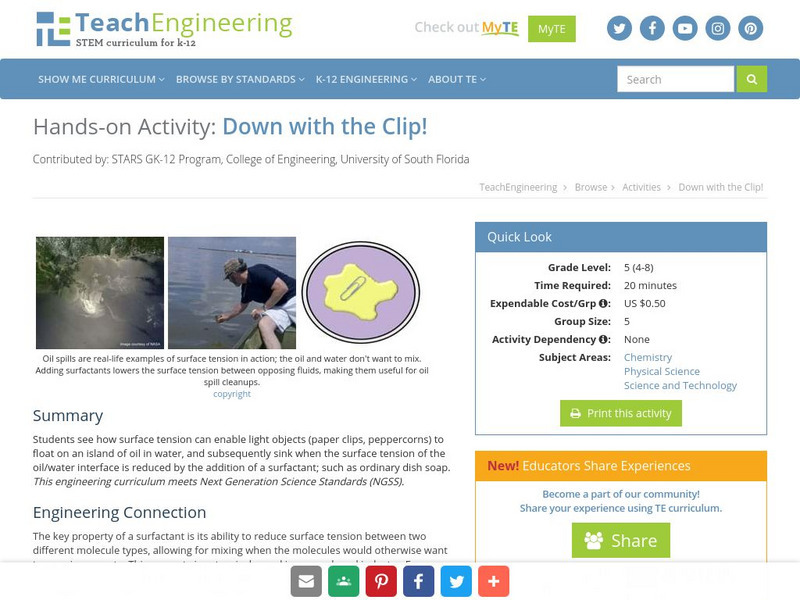
Teach Engineering: Down With the Clip!
Students see how surface tension can enable light objects (paper clips, peppercorns) to float on an island of oil in water, and subsequently sink when the surface tension of the oil/water interface is reduced by the addition of a...
TeachEngineering
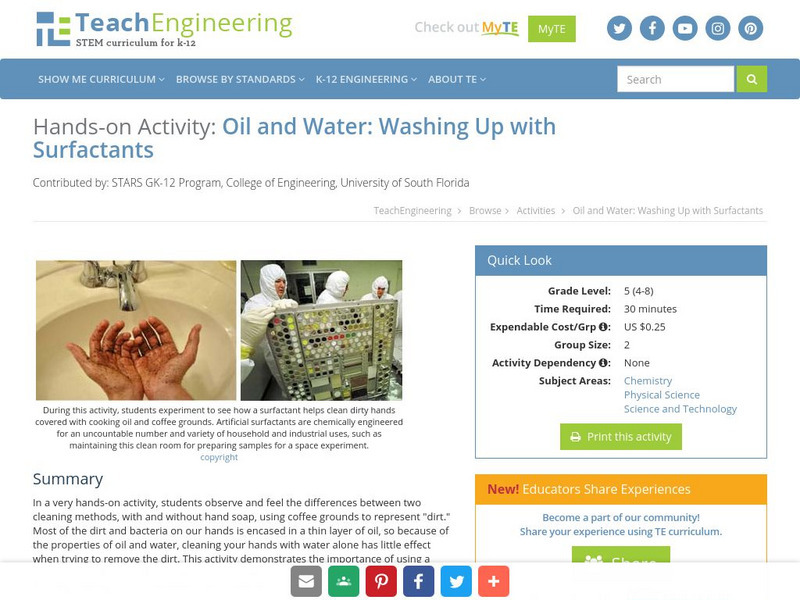
Teach Engineering: Let's Get Dirty
In a very hands-on activity, students observe and feel the differences between two cleaning methods, with and without hand soap, using coffee grounds to represent "dirt."Most of the dirt and bacteria on our hands is encased in a thin...
TeachEngineering
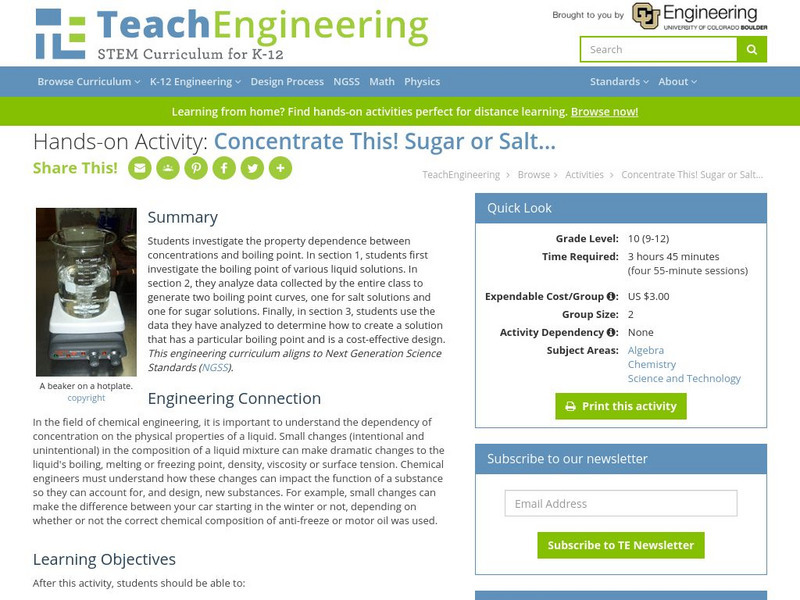
Teach Engineering: Concentrate This! Sugar or Salt
Students investigate the property dependence between concentrations and boiling point. In Section 1, students first investigate the boiling point of various liquid solutions. In Section 2 they analyze data collected from the entire class...
TeachEngineering
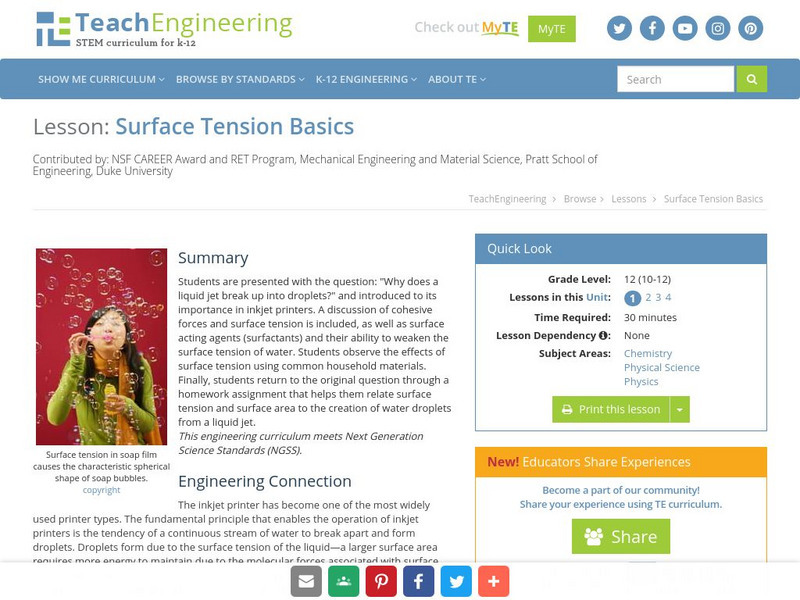
Teach Engineering: Surface Tension Basics
Students are presented with the question: "Why does a liquid jet break up into droplets?" and introduced to its importance in inkjet printers. A discussion of cohesive forces and surface tension is included, as well as surface acting...
TeachEngineering
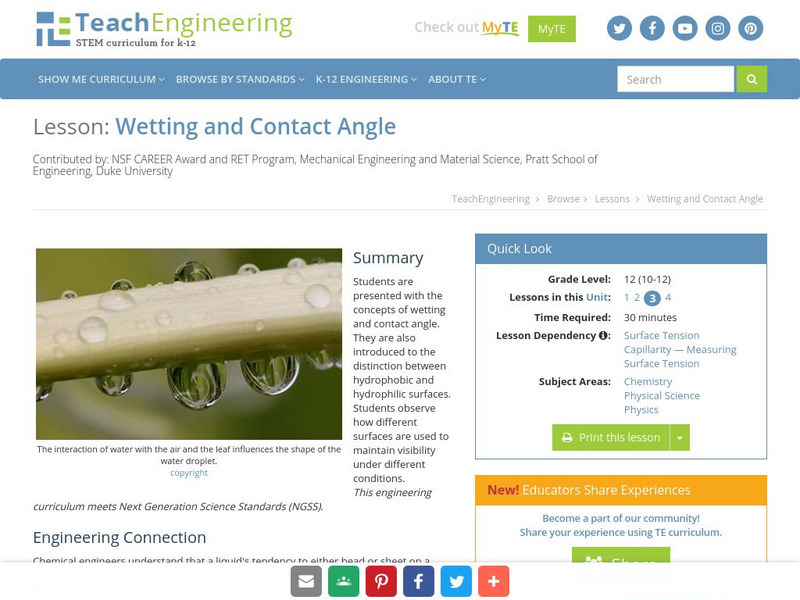
Teach Engineering: Wetting and Contact Angle
Learners are presented with the concepts of wetting and contact angle. They are also introduced to the distinction between hydrophobic and hydrophilic surfaces. Students observe how different surfaces are used to maintain visibility...
TeachEngineering
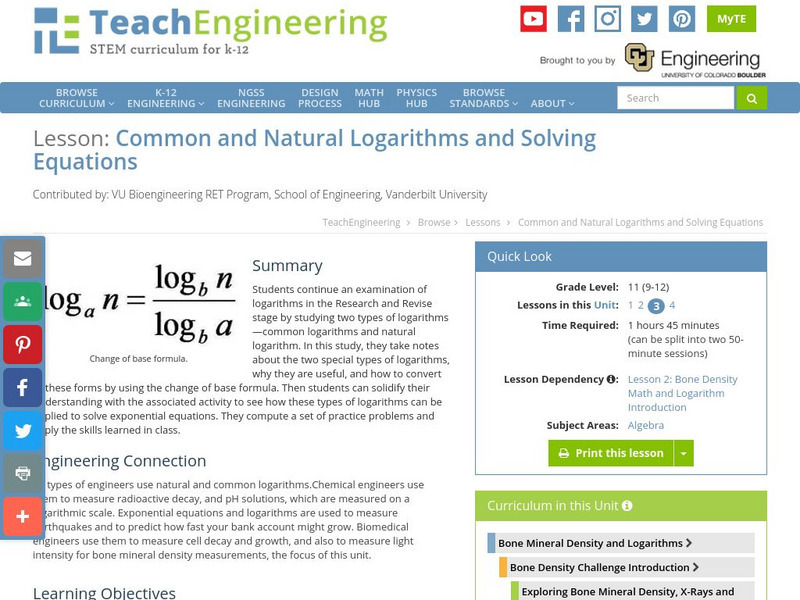
Teach Engineering: Common and Natural Logarithms and Solving Equations
Students continue an examination of logarithms in the Research and Revise stage by studying two types of logarithms--common logarithms and natural logarithm. In this study, they take notes about the two special types of logarithms, why...
TeachEngineering
Teach Engineering: Element, Mixture, Compound
This hands-on activity will help the students have a better understanding of different types of materials as pure substances and mixtures and distinguishes the homogeneous and heterogeneous mixtures by discussing some material they use...
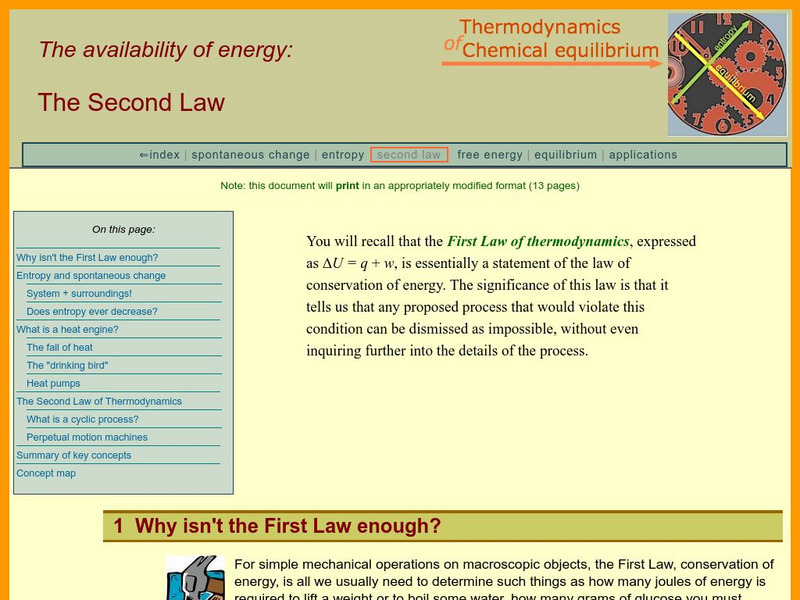
Simon Fraser University
Chem1 Virtual Textbook: What Is a Heat Engine and Why Should You Care?
With an overview of topics related to chemical equilibrium, this site provides a foundation to a study of thermodynamics and heat engines. Other topics covered include the fall of heat, nuclear plants, and more.
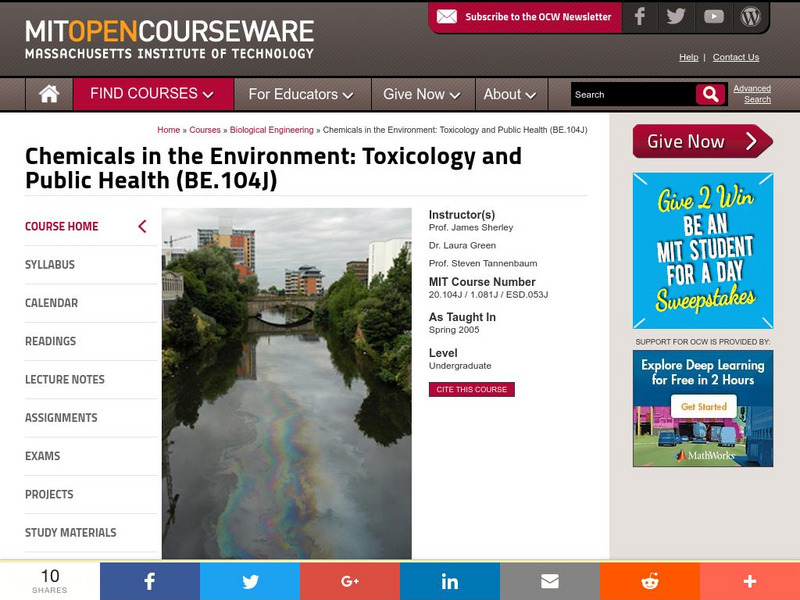
Massachusetts Institute of Technology
Mit: Open Course Ware: Chemicals in the Environment: Toxicology and Public Health
A college course featuring instructor's notes and case studies about the relationship between exposure to environmental chemicals and human diseases.
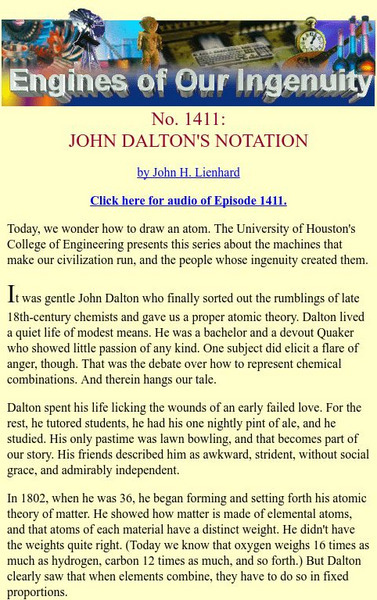
University of Houston
University of Houston: Engines of Our Ingenuity: John Dalton's Notation
This is part of a small radio show at the University of Houston. It talks about how John Dalton came up with his version of chemical notation, and how it differs from our version of it today. It is available in audio form also.
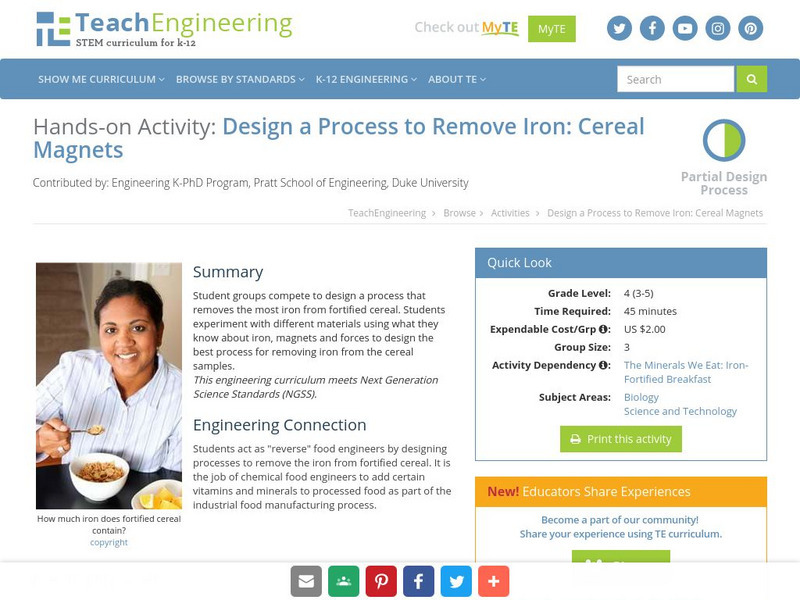
TeachEngineering
Teach Engineering: Cereal Magnets
In this activity, students will design a process that removes the most iron from the cereal. This activity is meant for the students to experiment with different materials using what they know about iron, magnets, and forces to design...

TeachEngineering
Teach Engineering: A Tasty Experiment
Students conduct an experiment to determine whether or not the sense of smell is important to being able to recognize foods by taste. They do this by attempting to identify several different foods that have similar textures. For some of...
TeachEngineering
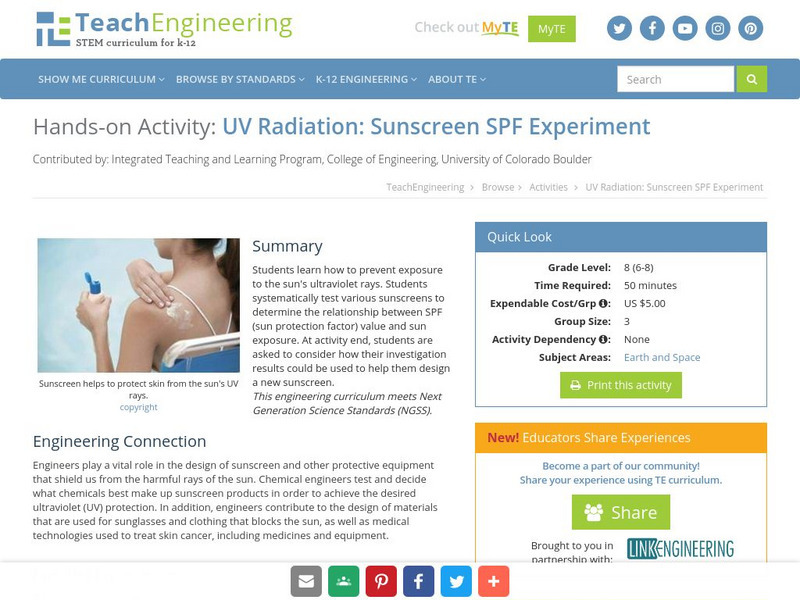
Teach Engineering: It Burns!
In this activity, students learn how to prevent exposure to the Sun's harmful ultraviolet rays. Students will systematically test various sunscreens to determine the relationship between spf (sun protection factor) value and sun...
TeachEngineering
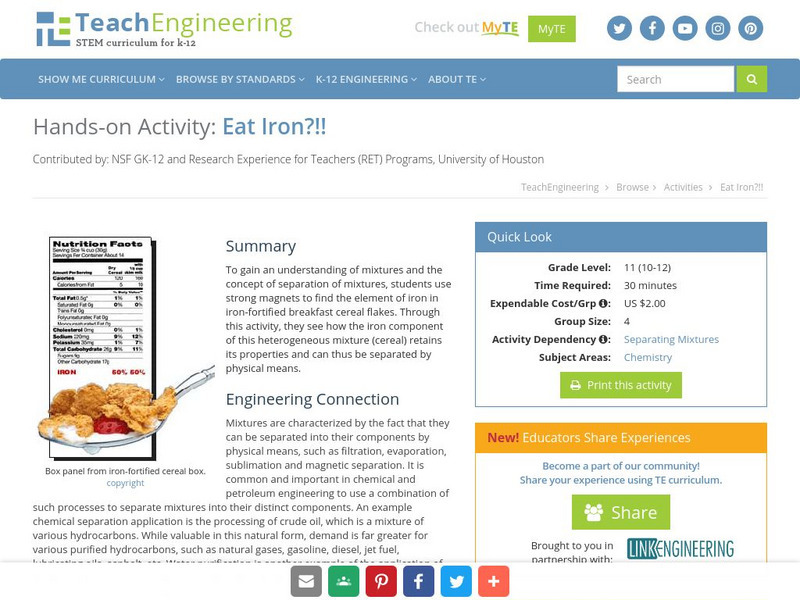
Teach Engineering: Eat Iron?!!
To gain an understanding of mixtures and the concept of separation of mixtures, students use strong magnets to find the element of iron in iron-fortified breakfast cereal flakes. Through this activity, they see how the iron component of...
TeachEngineering
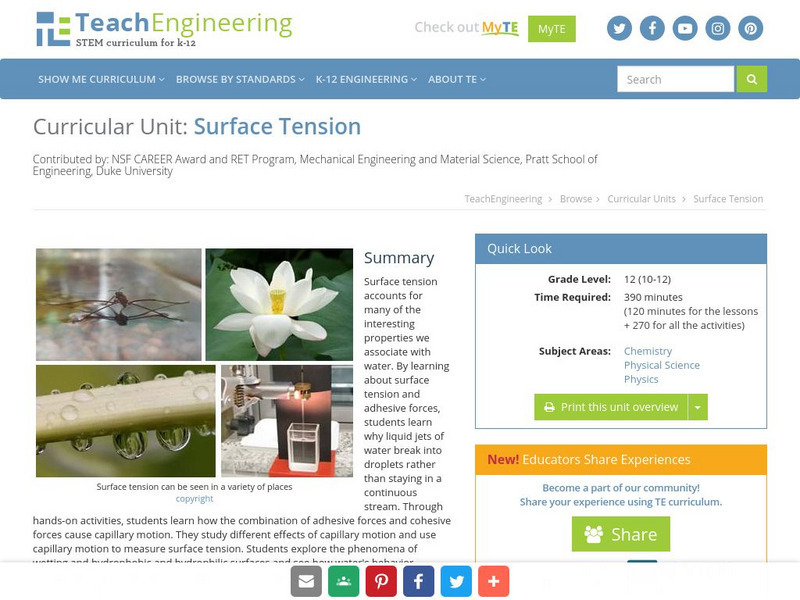
Teach Engineering: Surface Tension
Surface tension accounts for many of the interesting properties we associate with water. By learning about surface tension and adhesive forces, students learn why liquid jets of water break into droplets rather than staying in a...