Hi, what do you want to do?






Curated OER
Gingerbread Genius
Students sort gingerbread men, then identify the sorting rule that they used.

Curated OER
Using a Metric Ruler
Young scholars explore measuring with metric rulers. In this math lesson, students measure two-dimensional objects using metric units.

Curated OER
Protists
With this collection of slides, future biologists get to view photographs of protozoans from different phyla. Interspersed with the photos are bullet-style notes listing characteristics of each group. Unfortunately, most of the pictures...

Curated OER
Freeze Pops
Students experience problem-based learning as they use prior knowledge of the states of matter to keep a frozen juice bar from melting.

Curated OER
Making Maps
In this map making instructional activity, students learn about the science of making maps, which is cartography. They then answer the 11 questions on the instructional activity. The answers are on the last page.


Curated OER
Eat Right!
Students discuss the food pyramid. They create healthy meals using the food pyramid.

Curated OER
Noun/Adjective/Subject/Verb Agreement
Young scholars create a wheel from construction paper to use to create sentences. The wheel consists of four concentric circles, beginning with the largest being 8 inches in diameter. Each circle represents one part of a sentence....

Curated OER
Is There A Fungus Among Us?
Sixth graders classify fungus into two different groups. In this fungus lesson plan, 6th graders collect as many pieces of fungus as possible. Students then classify these pieces of fungus as saprophytic or parasitic.

Curated OER
Estimating Fish Populations
Students describe the mark/recapture method used to estimate fish populations. They explain the importance of being able to predict population numbers.


Curated OER
This Rock is Your Rock, This Rock is My Rock
Young scholars develop good observational skills. They examine how rocks are made up of one or more minerals.

Curated OER
A DISAPPEARING ACT Astronomy: Do Stars Always Shine?
Students observe why stars are not visible during the day with a classroom demonstration using an index card punched with holes.

Curated OER
Slimy cells
Students study the parts of a cell. In this chemistry instructional activity students complete an activity in which they make as much slime as they want.
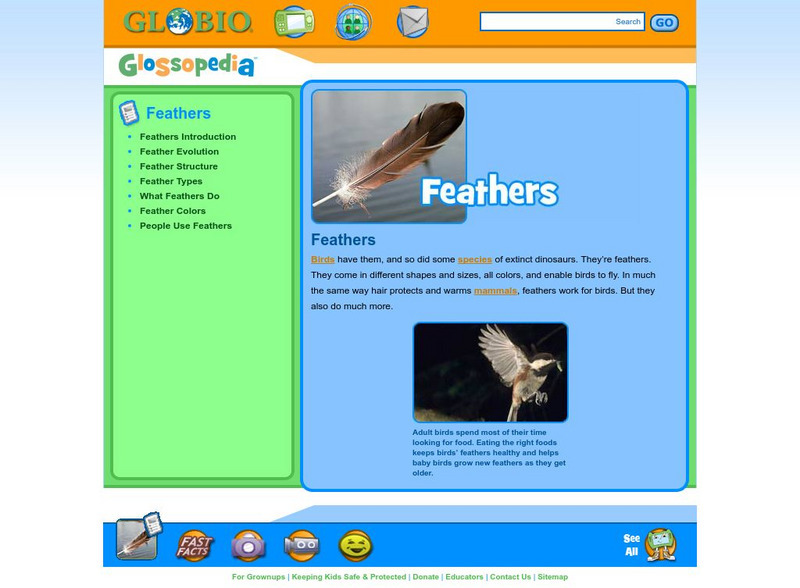
Globio
Glossopedia: Feathers
Birds have them, and so did some species of extinct dinosaurs. They're feathers. They come in different shapes and sizes, all colors, and they enable birds to fly. Lots of information can be found in this article.
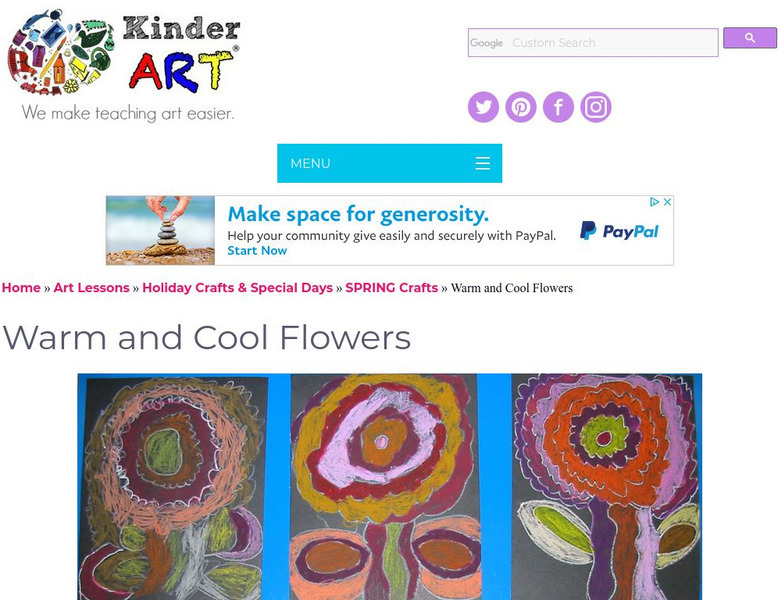
Kinder Art
Kinder Art: Flowers & Georgia O'keeffe (Lesson Plan)
Students will have the opportunity to create a drawing of a flower using Georgia O'Keeffe as their inspiration. They will develop skills in drawing and composition and understand the difference between realistic and abstract art.