Hi, what do you want to do?





NOAA
Noaa: Northeast Fisheries Science Center: Fish Faq
This site is provided for by the Northeast Fisheries Science Center. Do fish sleep? Do they chew food? Can any fish swim backwards? How many Pinnipeds are on the Endangered Species List? Find out the answers to these questions and many...
Other
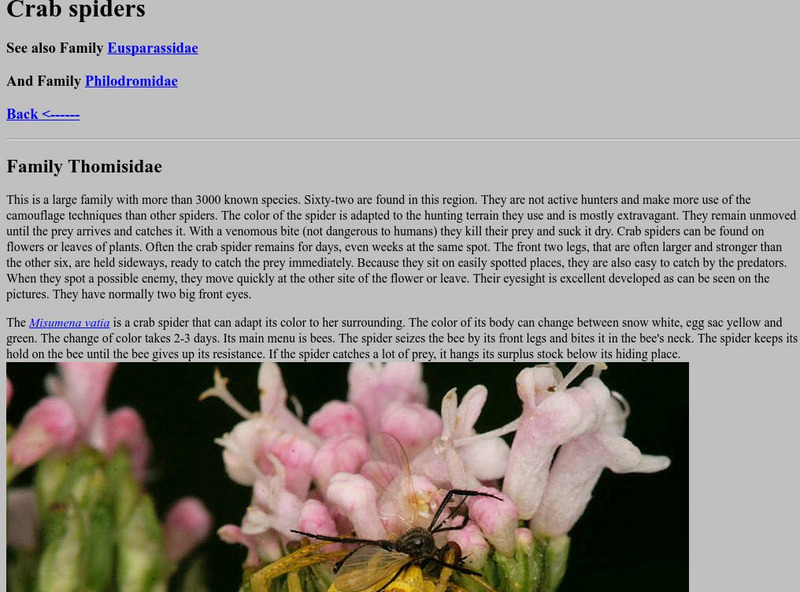
Crab Spiders: Family Thomisidae
This resource contains information on the Thomisidae family and offers plenty of pictures. Includes a section on the mating habits of the Genus Xysticus.

NASA
Nasa: Astronomy Picture of the Day: Crab Nebula and Geminga in Gamma Rays
Explains that pulsars would be the brightest objects in the sky if we could see gamma-rays.
E-learning for Kids
E Learning for Kids: Science: California Crab Boat: Why Do We Need Air?
Visit California and Timmy will tell you a lot about air and why we need it for breathing.
E-learning for Kids
E Learning for Kids: Science: Crab Boat: Why Do Plants Reproduce?
Help Carla take care of her green plants in her plant nursery, and learn about plant reproduction.
E-learning for Kids
E Learning for Kids: Science: California Crab Boat: How Do Animals Reproduce?
Join Lisa and her uncle to find out about animals and how they reproduce.

PBS
Pbs Learning Media: Marathon Migrators
This video segment from NOVA: "The Mystery of Animal Pathfinders" explores how the migratory patterns of shorebirds have evolved to coincide with the spawning of horseshoe crabs. [6:00]
NOAA
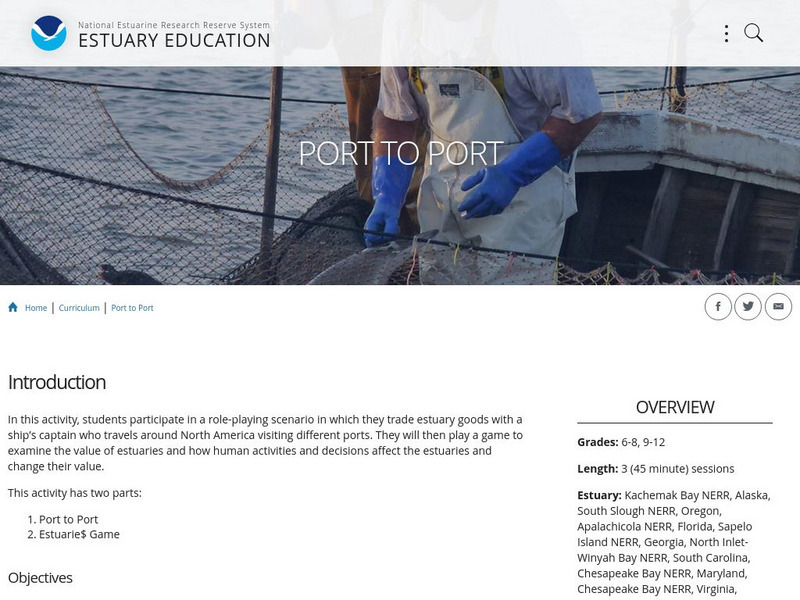
Noaa: Estuaries 101 Curriculum: Port to Port
Many people depend on the estuary to earn a living. Meet a Louisiana man who makes his living by harvesting crabs and shrimp, and is worried about the health of the estuary. Includes downloadable teacher guide and student materials.
Curated OER
Kids Health: Head Lice
Informative article about head lice: how one gets them, how to prevent them, and how to treat them. Includes a section for kids, and another for teens that covers pubic lice, or crabs.
Other
Chesapeake Bay Maritime Museum
This great site offers information about the Chesapeake Bay, its history, people and it's stories. "Tour" the museum to find interesting information.
Read Works
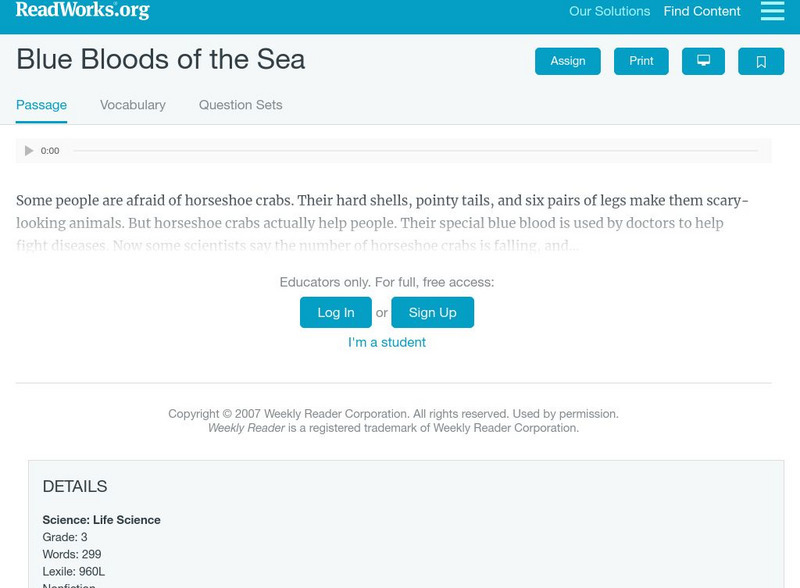
Read Works: Blue Bloods of the Sea
[Free Registration/Login Required] An informational text about horseshoe crabs. A question sheet is available to help students build skills in reading comprehension.
Virginia Institute of Marine Science
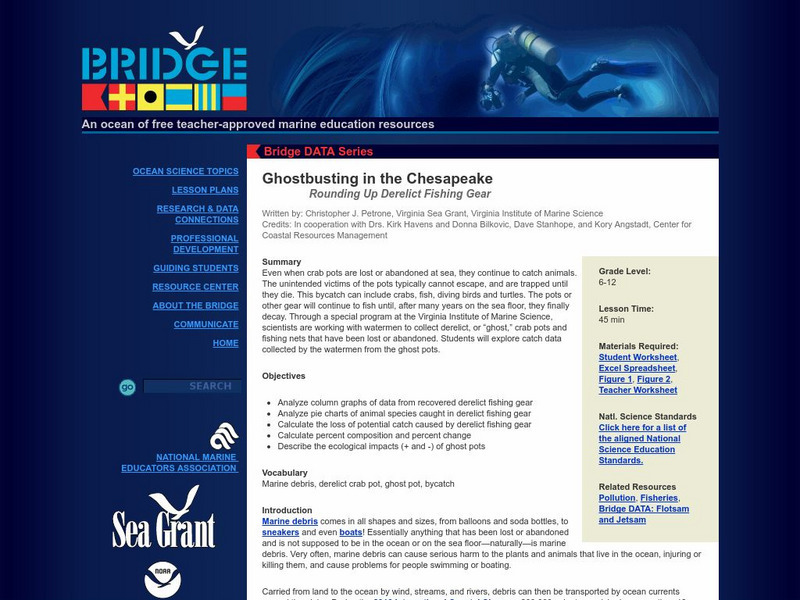
Virginia Institute of Marine Science: Ghostbusting in the Chesapeake
Because abandoned crab fishing pots can create havoc in the marine ecosystem, scientists and fishermen are researching ways in which to collect them. In this instructional activity students will explore catch data collected by the...
Other
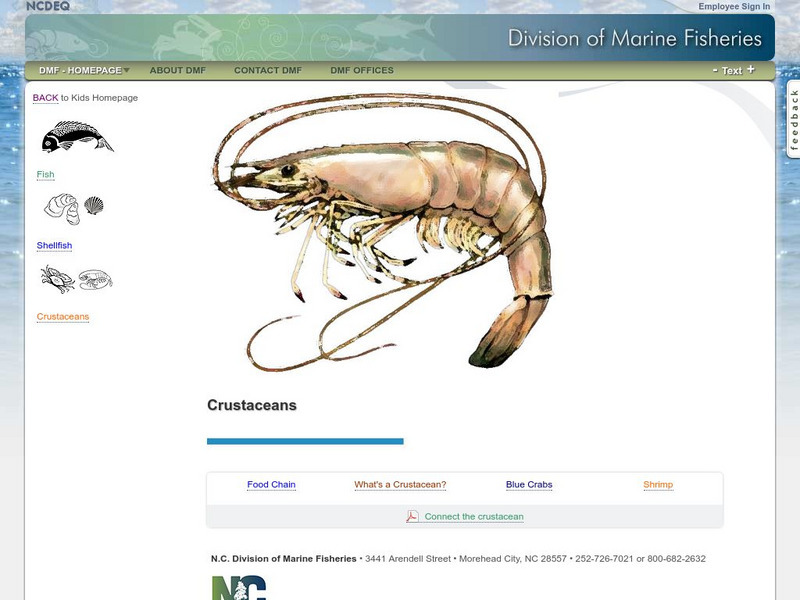
N. Carolina Dep. Of Environment & Natural Resources: Cool Kids: Crustaceans
There is all kinds of information about crustaceans available at this site from the North Carolina Department of Marine Fisheries. You can see what types of shrimp and crabs are in the area or connect the dots of your own crustacean.
Other
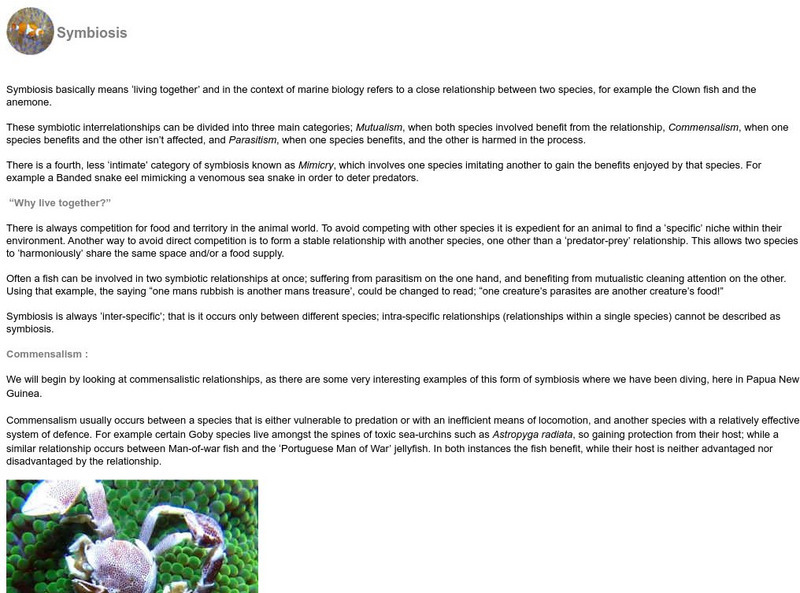
Marine Studies: Symbiosis
View graphics of a mimic octopus, frog fish, snake eel, hermit crab and clown fish. Discover how they form symbiotic relationships.

Other
Introducing the Hermit Crab
This site has a nice overall description of these opportunistic creatures and a couple of sketches.

Natural History Museum
Natural History Museum: Other Invertebrates
This online exhibit from the Natural History Museum studies a range of topics related to invertebrates, or animals without a backbone. Crabs, snails, barnacles, sponges, and more are discussed at this exhibit.
Other
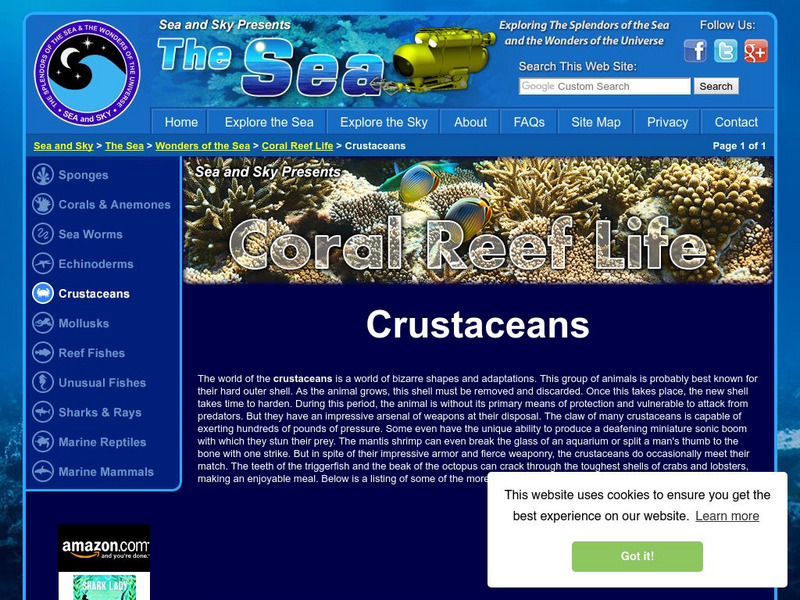
Sea and Sky: Crustaceans
A concise description of Crustaceans with a number of colorful pictures that students will enjoy.
3D Toad
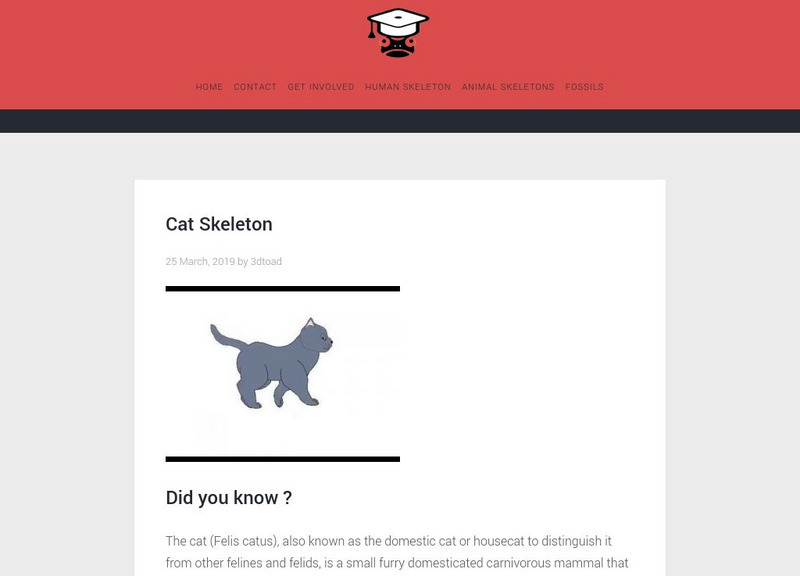
3 dtoad.com
Observe the skeletons of various animals. Skeletons include a bird, cat, cheetah, crab, dog, elephant, gazelle, giraffe, gorilla, hippo, kudo, monkey, porcupine, possum, racoon, rat, rhino and turtle.
PBS
Pbs Kids Afterschool Adventure!: Operation: Animal Measurement Activity Plan
Animal Fun is here! In this week's adventure, Animal Measurement, children will explore measurement with the help of hermit crabs (investigating size correspondence by matching a hermit crab to its appropriate shell), beavers (visual...
Read Works
Read Works: A New Tail
[Free Registration/Login Required] This passage is about Winter, a dolphin who got caught in a crab trapline and lost his tail, and how they made a prosthetic tail for him so he could swim. A comprehension question set and a vocabulary...
Other
The Marine Science Institute
The Marine Science Institute offers various general information about the San Francisco bay and its ecology.

Other
Biographical Notes for Eric Carle
Eric Carle is acclaimed and beloved as the creator of brilliantly illustrated and innovatively designed picture books for very young children. His best-known work is the familiar "The Very Hungry Caterpillar".
Language Guide
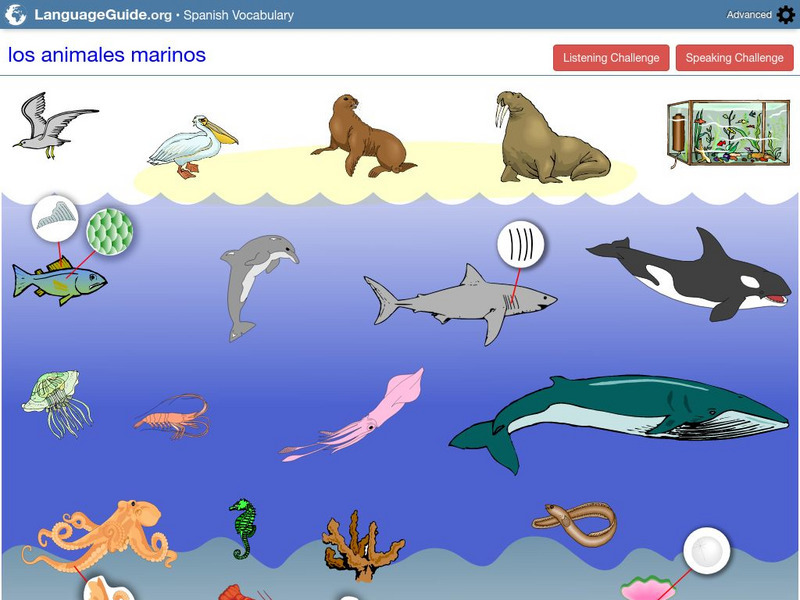
Language Guide: Los Animales Del Mar (Spanish)
This resource provides colorful pictures of sea animals interact with audio and the written vocabulary word as you move your mouse over the picture. This vocabulary would compliment a science unit on marine life.
PBS
Pbs Nova: Explore the Galapagos
Using the interactive, multimedia map, see the Islands as they exist today and learn how they inspired Darwin, who pointed to them as the "origin of all my views." You can trace the trip of Darwin and hear from biologists at each spot....
Other popular searches
- Hermit Crabs
- A House for Hermit Crab
- Horseshoe Crabs
- Facts About Horseshoe Crabs
- House for Hermit Crab
- Crab Walk
- Fiddler Crabs
- Sand Crabs
- Carnivore Crabs
- Blue Crabs
- Hermit Crab Facts
- Horseshoe Crabs Adaptations