Hi, what do you want to do?






Curated OER
Food Pyramid
Second graders are introduced to the food groups on the food pyramid. Individually, they draw pictures of their favorite foods and identify which food group it belongs. To end the instructional activity, they discuss the importance of...

Curated OER
Nutrition
Students write down their idea of a healthy meal, review the food guide pyramid and consider what could make the meal healthier.

Curated OER
Food Pyramid
Second graders explain the food pyramid, nutrients provided by each food group,and determine whether they are healthy eaters. They note what foods are in this group, what nutrients are found in these foods, and number of servings needed.

Curated OER
Pies: A Practical Application
Students participate in making a pie. They are to discuss the nutritional value and the different types of pies. They also answer questions from the teacher about fat and they complete a pie evaluation form.

Curated OER
The Roman's Food
In this Roman civilization worksheet, students read about the food options available during Roman times. Students learn about the normal breakfast, lunch, and dinner meal for Roman people.

Curated OER
Our Daily Five
Pupils explore the food pyramid through a class discussion, hands-on experience with food items, and a floor game that helps them to identify the food group involved. Lesson extensions include the use of play money, art, and dance.

Curated OER
Reading: The Food Pyramid
In this reading comprehension worksheet, students read a one page text about the food pyramid. Students then complete 8 sentences with the correct words from 2 choices.

Curated OER
Healthy Choice Shopping Frenzy
Students learn the categories of the food pyramid. In this food groups lesson, students learn to categorize food. Through this activity students scoot to different food groups learning about the foods that belong in each group.

Curated OER
Nutrition Unit
Students engage in a variety of activities designed to help them understand about the importance of good nutrition and eating healthy foods. The activities include playing food bingo, making a collage, designing posters, etc.

Curated OER
Arianna Travels the Orient Express
Fourth graders discuss how they eat when they travel. They resequence a letter that has been separated into pieces. They read the letter aloud, discuss the foods eaten by the writer and analyze whether she ate the right amount of food...

Curated OER
Pyramid
Students work in small groups as they are assigned one of the food groups. They decide how to act out one of the foods included in that group. Next, they discuss their favorite foods and where they fit on the food pyramid and examine the...

Curated OER
Reading: How to Be Healthy
In this reading for information worksheet, students read a one page text about healthy living practices. Students then answer 8 multiple choice questions about what they have read.

Curated OER
The Food Pyramid
In this Internet research worksheet, students are directed to a specific site pertaining to the food pyramid. Students answer 11 questions using information they learn on the Web site.

Curated OER
Frenzied Food: Fantastic Fuel?
Students infer the causes of obesity. For this health science lesson, students brainstorm ways improve to their diet. They write personalized journals with goals on how to live a healthy lifestyle.

Curated OER
Nutrition: Why do we need rice in our diet?
Second graders discover what the Food Guide Pyramid represents. In this health lesson, 2nd graders experience the types of foods represented in each of the groups found in the pyramid. As part of this lesson, students discover one food...

Curated OER
Smart Snacking Dragon
Second graders participate in activities that focus on making healthy snack choices.

Curated OER
Fun Facts About Bananas: Test Your Research Skills
In this facts about bananas instructional activity, students answer a set of 10 multiple choice questions about bananas. Answers included on page 2.

Curated OER
Snacks 'R Us
First graders experiment with fat content by analyzing snack foods. They learn what makes up a nutritious snack.

Centers for Disease Control and Prevention
Centers for Disease Control: Fruit and Veggies Matter
Learners explore fruits and vegetables. The activity includes a questionnaire that asks an individual's age, sex, and level of physical activity to determine the fruits and vegetables needed in an individual's diet. The resource consists...

Unite for Literacy
Unite for Literacy: Plants and Food: What Colors Do You Eat?
Fruits and vegetables come in many different colors. Book includes audio narration in 22 additional languages with text in English.

Other
Produce for Better Health Foundation: Food Champs: Fruit and Veggie Champs
Advice, recipes, tips, nutrition information, games, and activities to help kids learn why it's so important to eat plenty of fruits and vegetables.
Centers for Disease Control and Prevention
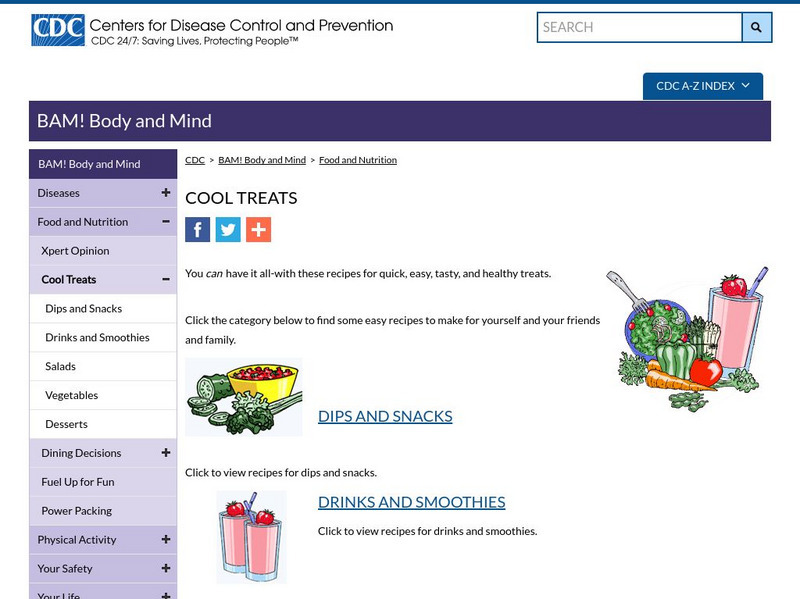
Centers for Disease Control: Body and Mind: Cool Treats, You Can Have It All
Eat fruits and vegetables every day. This website will help you do just that. Learn simple recipes for healthy dips, salads, smoothies, desserts, and veggie dishes, all of which are packed with the vitamins you need to stay healthy.
Other
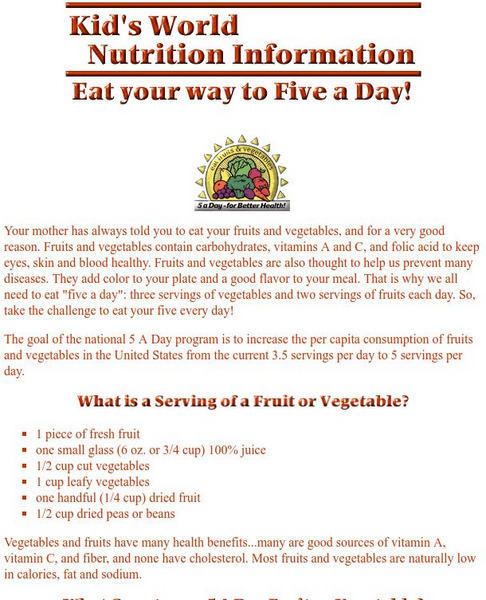
Eat Your Way to Five a Day!
This resource presents guidelines to follow to help you make healthy food choices and get the nutrients from fruits and vegetables that your body needs.
Other
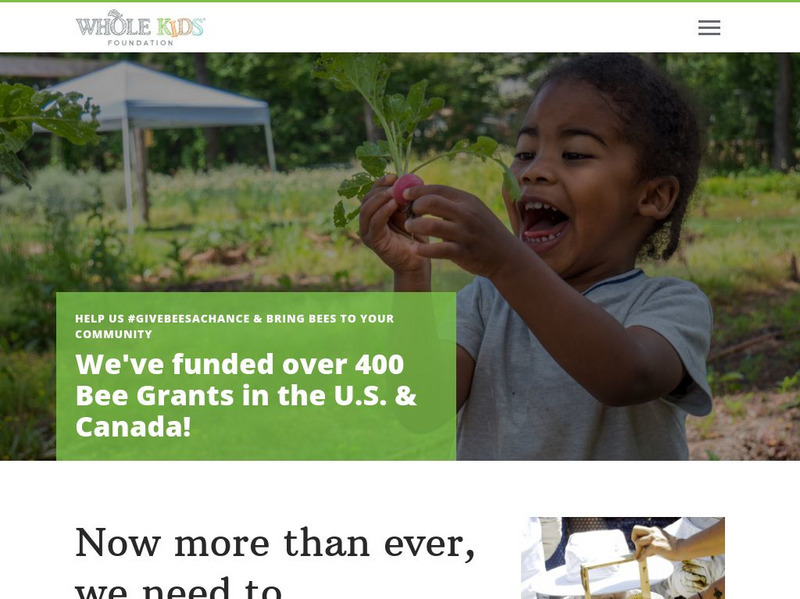
Whole Kids Foundation
This website was developed by the Whole Foods Market promotes the access to healthy food for all children. Students are encouraged to get excited about eating fruits, vegetables, and whole grains.