Hi, what do you want to do?





TeachEngineering
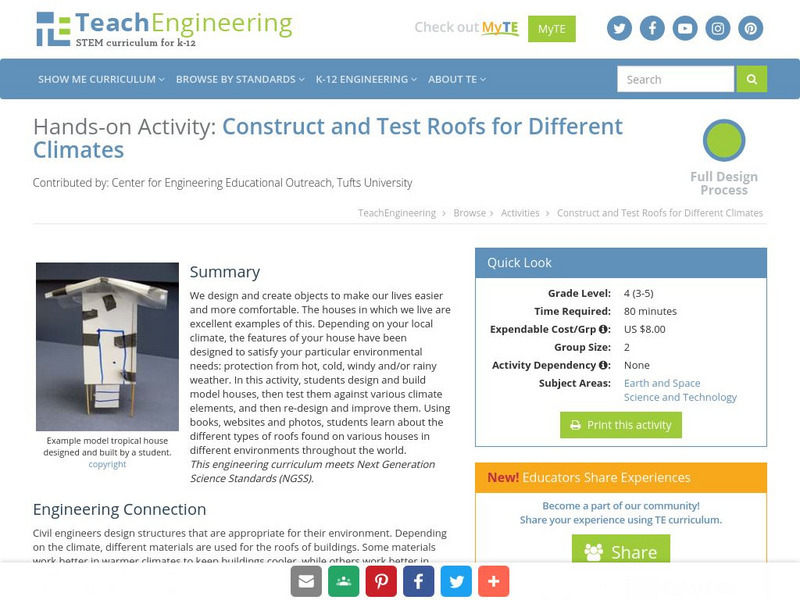
Teach Engineering: Construct and Test Roofs for Different Climates
We design and create objects to make our lives easier and more comfortable. The houses in which we live are an excellent example of this. Depending on your local climate, the features of your house will be different to satisfy your...

TeachEngineering
Teach Engineering: Solving Everyday Problems Using the Engineering Design Cycle
Students are introduced to two real-life problems that can be solved by using the engineering design process. For the first one, they watch a slide presentation that shows how students use the engineering design process to build an...
TeachEngineering
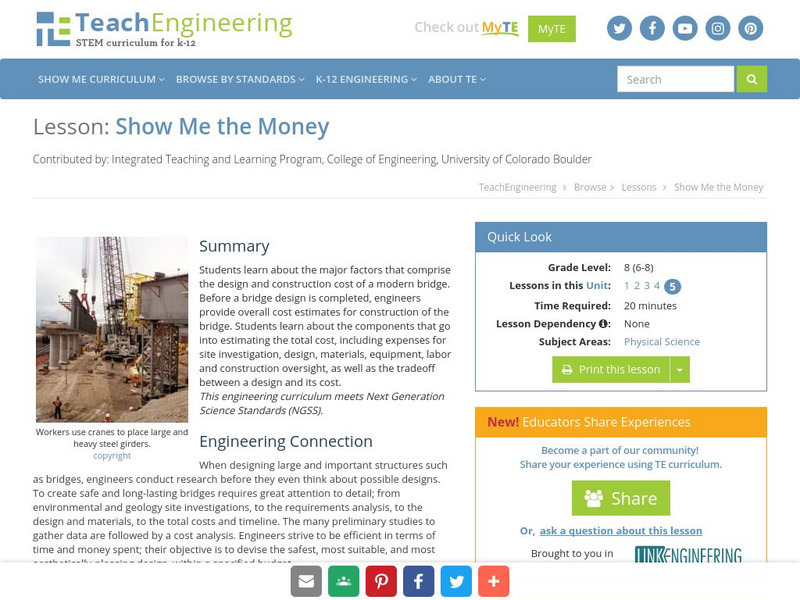
Teach Engineering: Show Me the Money
Students learn about the major factors that comprise the design and construction cost of a modern bridge. Before a bridge design is completed, engineers provide overall cost estimates for construction of the bridge. Students learn about...
TeachEngineering
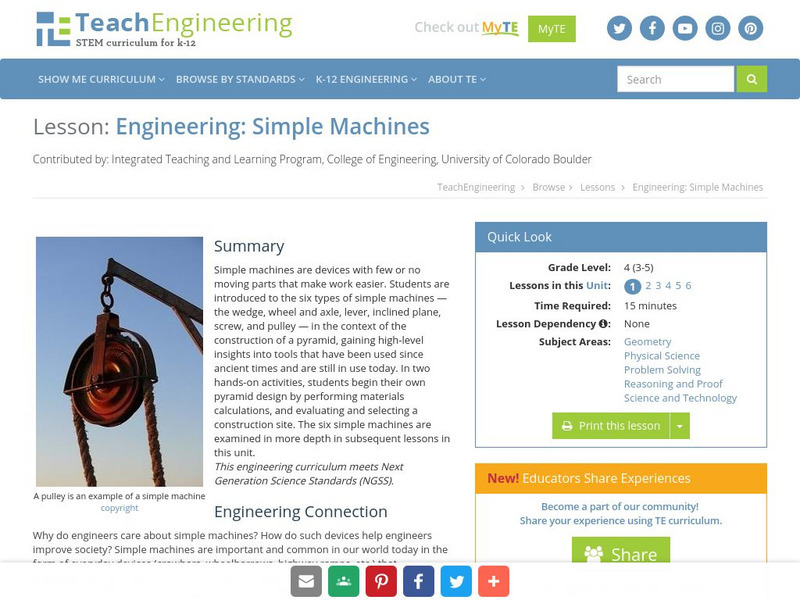
Teach Engineering: Engineering: Simple Machines
Simple machines are devices with few or no moving parts that make work easier. Students are introduced to the six types of simple machines - the wedge, wheel and axle, lever, inclined plane, screw, and pulley - in the context of the...

TeachEngineering
Teach Engineering: Simple Machines and Modern Day Engineering Analogies
Students apply the mechanical advantages and problem-solving capabilities of six types of simple machines (wedge, wheel and axle, lever, inclined plane, screw, pulley) as they discuss modern structures in the spirit of the engineers and...
TeachEngineering
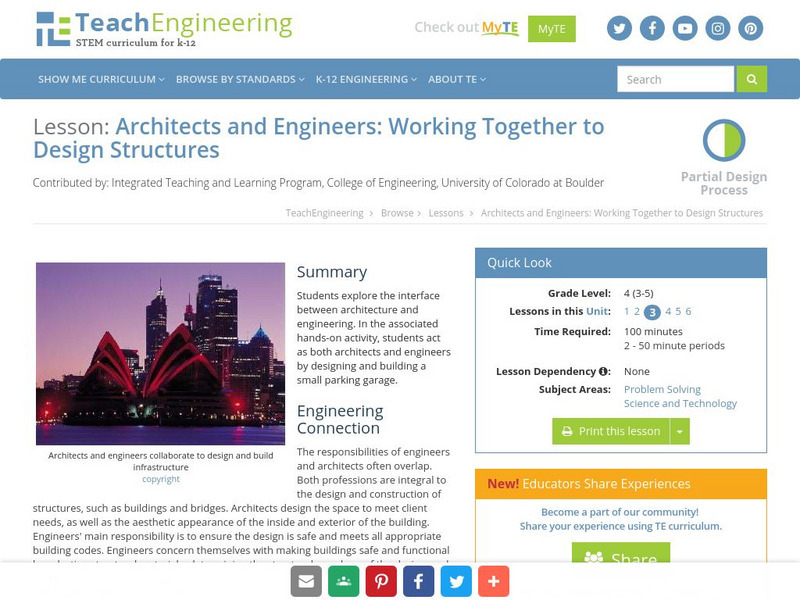
Teach Engineering: Architects and Engineers
Students explore the interface between architecture and engineering. In the associated hands-on activity, students act as both architects and engineers by designing and building a small parking garage.
TeachEngineering
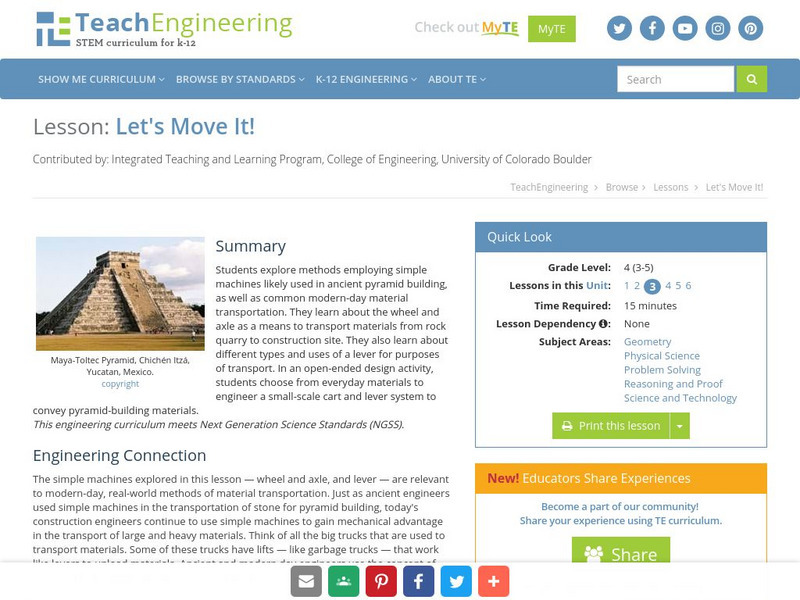
Teach Engineering: Let's Move It!
Students explore methods employing simple machines likely used in ancient pyramid building, as well as common modern-day material transportation. They learn about the wheel and axle as a means to transport materials from rock quarry to...
TeachEngineering
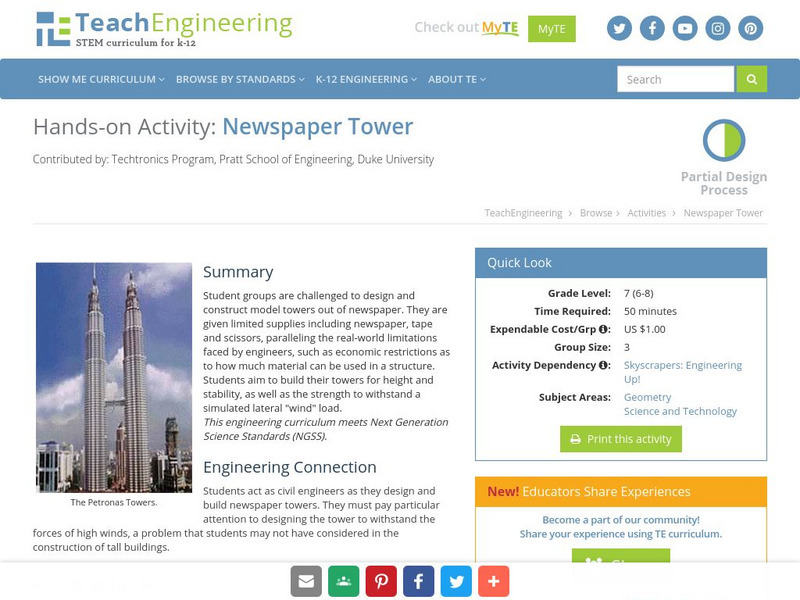
Teach Engineering: Newspaper Tower
Students will be challenged to design and construct a tower out of newspaper. They will have limited supplies including newspaper, tape, and scissors since engineers are often restricted by economic reasons as to how much material they...
TeachEngineering
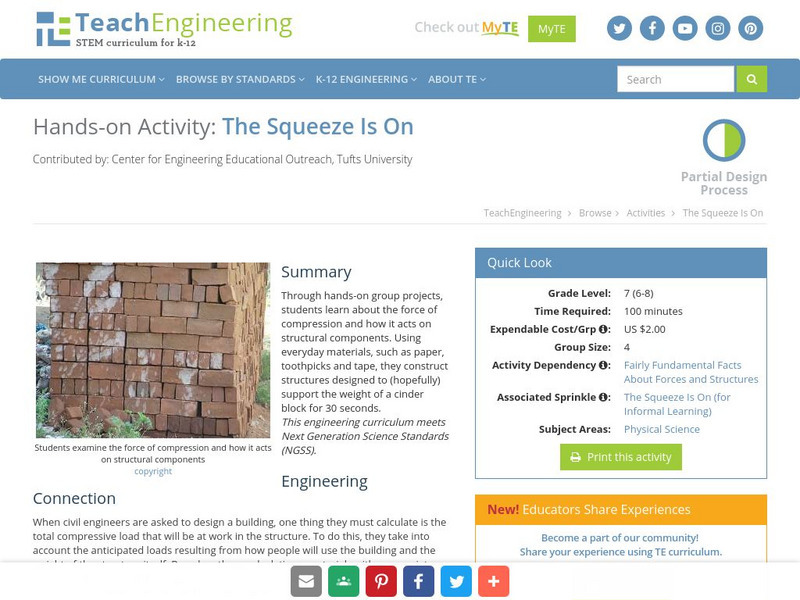
Teach Engineering: The Squeeze Is On
Students will learn about the force of compression and how it acts on structural components through a hands-on group project. Using everyday products such as paper, toothpicks, and tape they will construct a structure that will support...
TeachEngineering
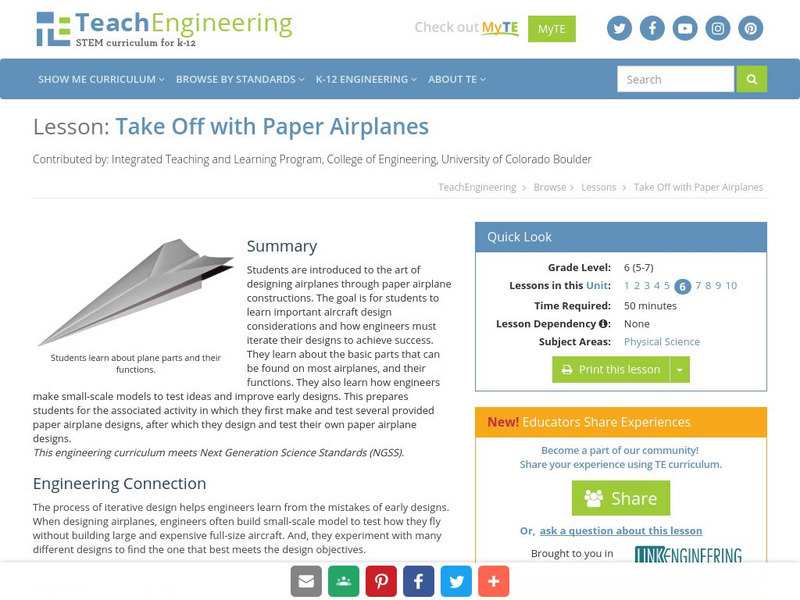
Teach Engineering: Take Off With Paper Airplanes
This lesson introduces students to the art of designing an airplane through paper airplane constructions. The goal is that students will learn important aircraft design considerations and how engineers must iterate their designs to...
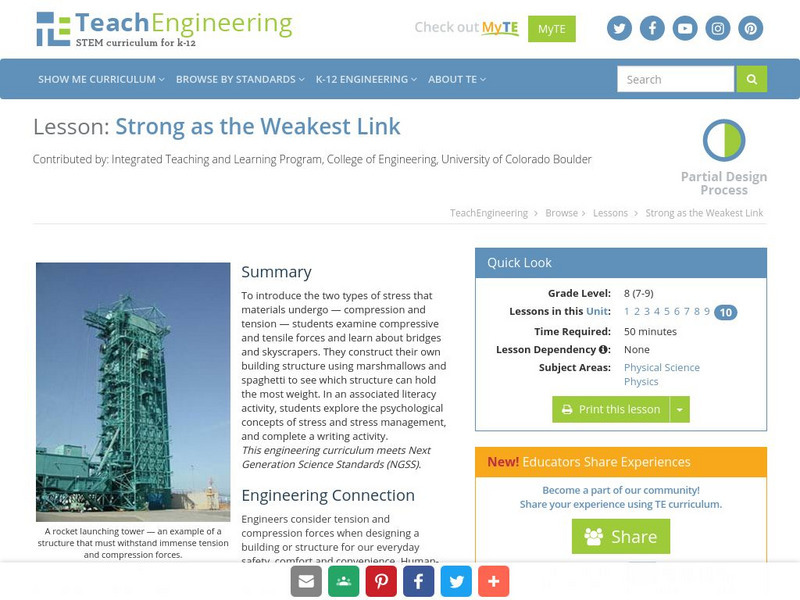
TeachEngineering
Teach Engineering: Strong as the Weakest Link
To introduce the two types of stress that materials undergo - compression and tension - students examine compressive and tensile forces and learn about bridges and skyscrapers. They construct their own building structure using...
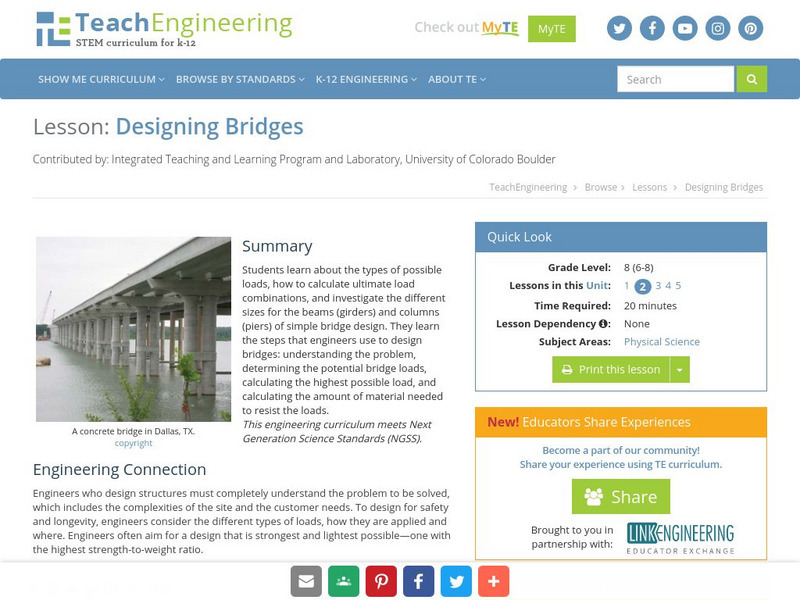
TeachEngineering
Teach Engineering: Designing Bridges
Young scholars learn about the types of possible loads, how to calculate ultimate load combinations, and investigate the different sizes for the beams (girders) and columns (piers) of simple bridge design. Students learn the steps that...
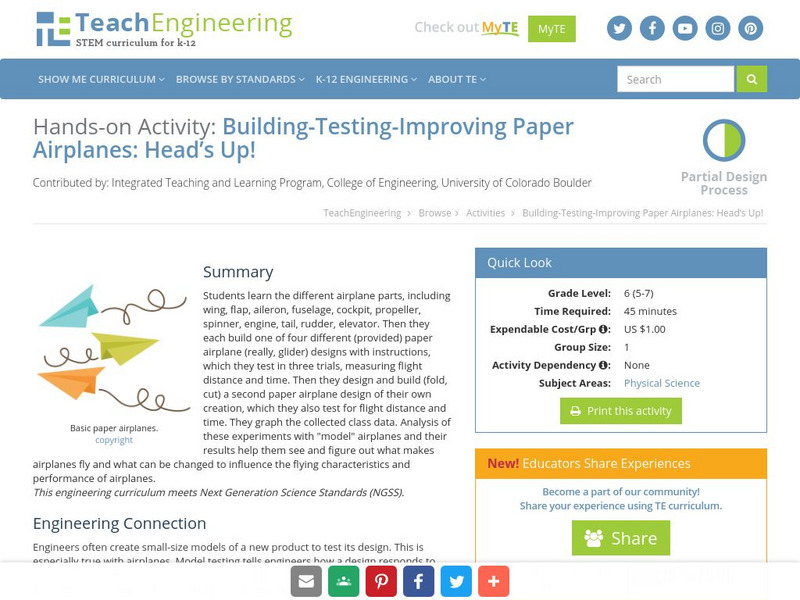
TeachEngineering
Teach Engineering: Heads Up
The purpose of this activity is to demonstrate some of the different parts of an airplane through the construction of a paper airplane. Students will build several different kinds of paper airplanes in order to figure out what makes an...
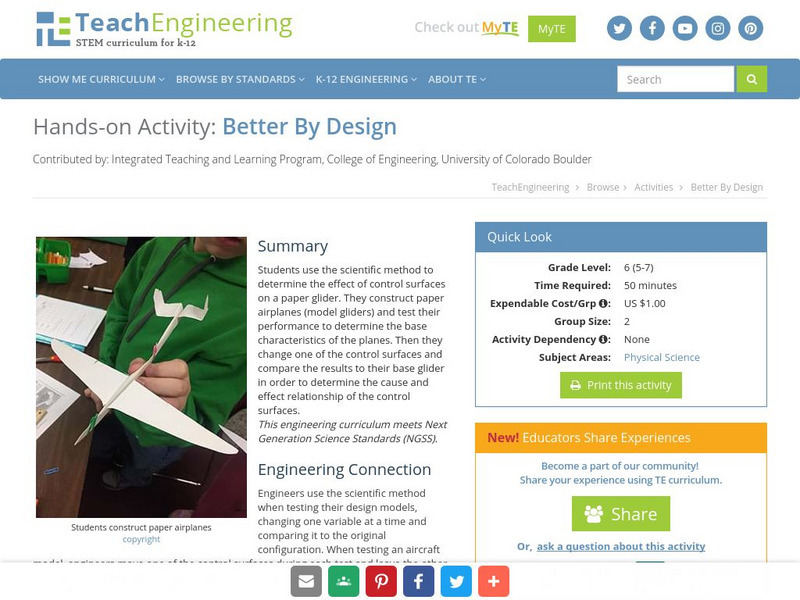
TeachEngineering
Teach Engineering: Better by Design
The purpose of this activity is to use a scientific method to determine the effect of control surfaces on a paper glider. The students will construct a paper airplane/glider and test its performance to determine the base characteristics...
TeachEngineering
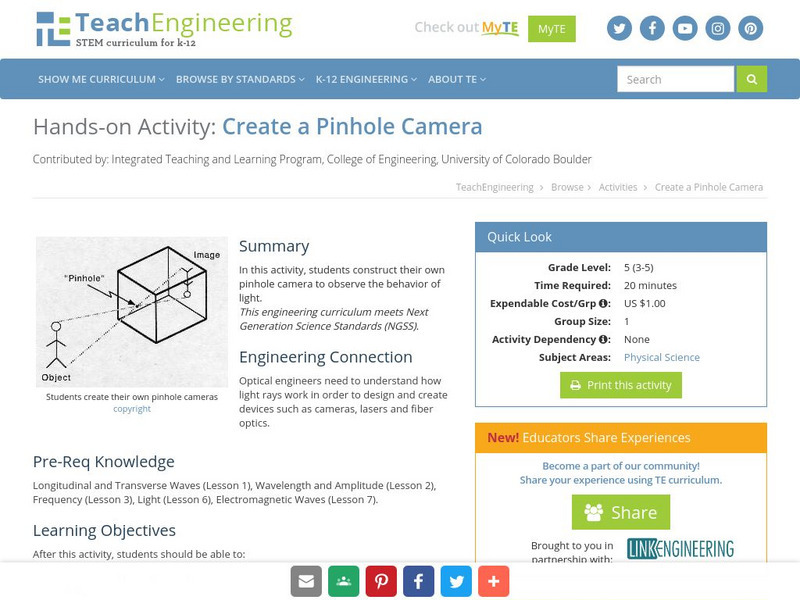
Teach Engineering: Create a Pinhole Camera
In this activity, students construct their own pinhole camera to observe the behavior of light.

TeachEngineering
Teach Engineering: Engineer a Coin Sorter
Students learn about the engineering design process and how it is used to engineer products for everyday use. Students individually brainstorm solutions for sorting coins and draw at least two design ideas. They work in small groups to...
TeachEngineering
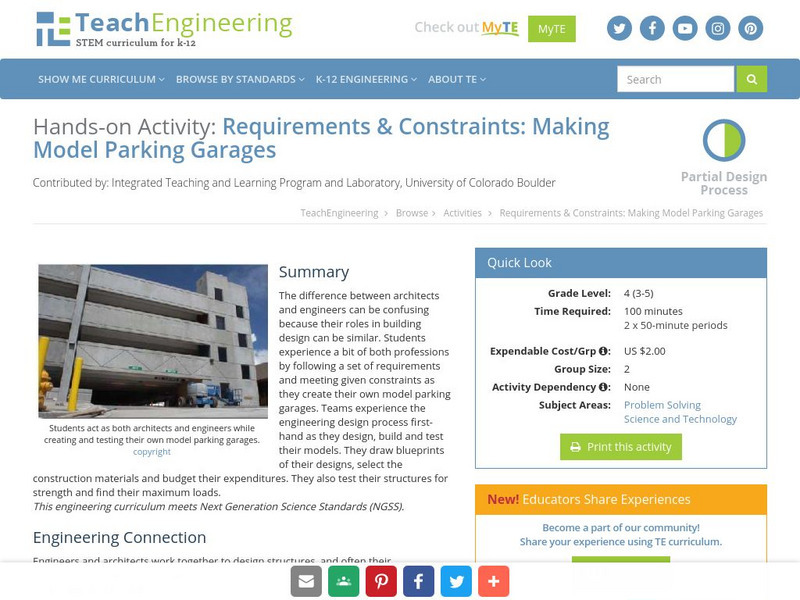
Teach Engineering: Requirements & Constraints: Making Model Parking Garages
The difference between an architect and an engineer is sometimes confusing because their roles in building design can be similar. Students experience a bit of both professions by following a set of requirements and meeting given...
Other
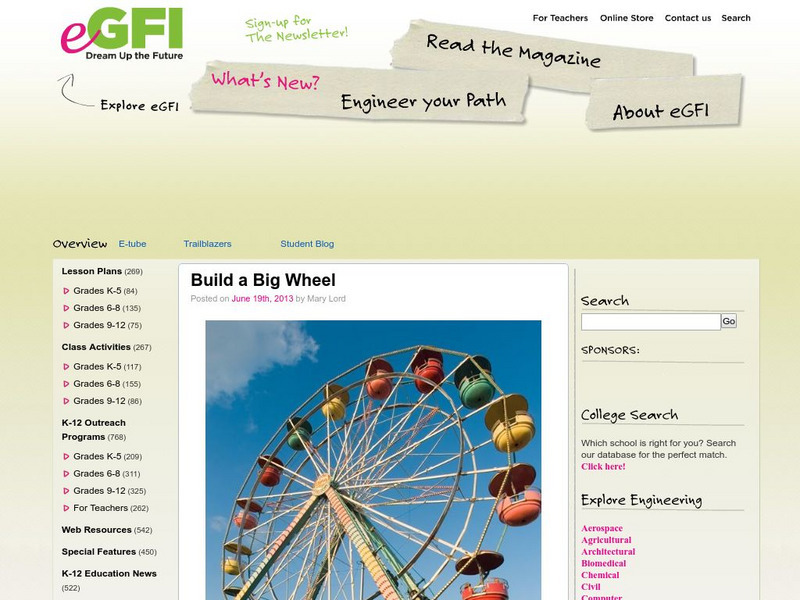
American Society for Engineering Education: E Gfi: Build a Big Wheel
In this activity, teams of students learn about the history and engineering behind big wheels (Ferris wheels) by constructing a working model using pasta, glue, and teabags.
TeachEngineering
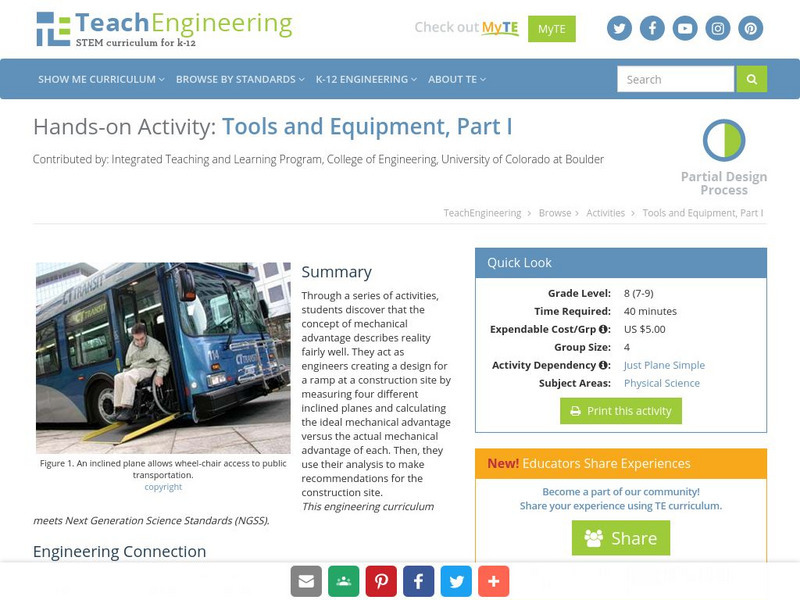
Teach Engineering: Tools and Equipment, Part I
Through a series of activities, students discover that the concept of mechanical advantage describes reality fairly well. They act as engineers creating a design for a ramp at a construction site by measuring four different inclined...
TeachEngineering
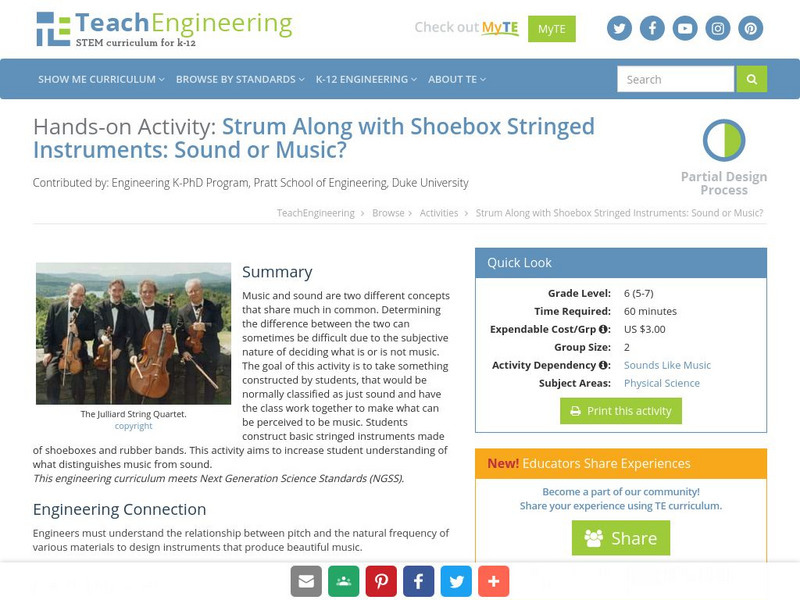
Teach Engineering: Strum Along
Music and sound are two different concepts that share much in common. Determining the difference between the two can sometimes be difficult due to the subjective nature of deciding what is or is not music. The goal of this activity is to...
TeachEngineering
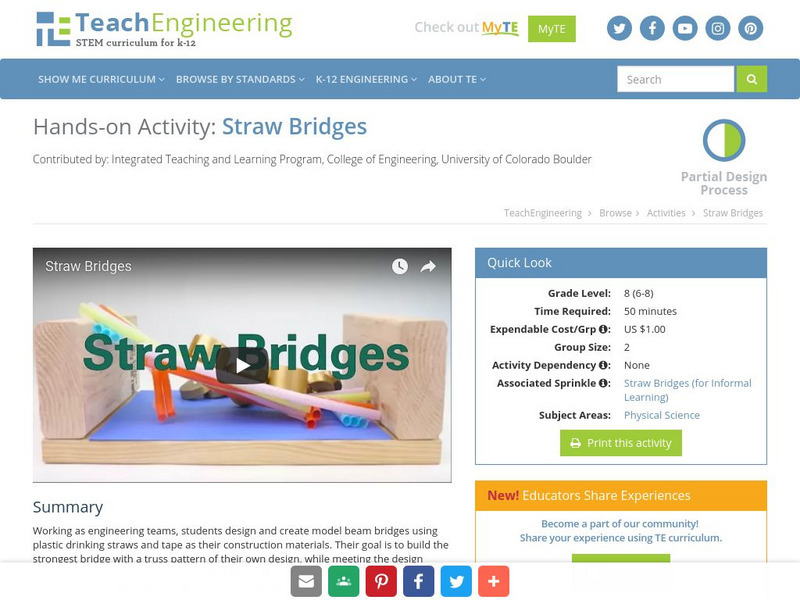
Teach Engineering: Straw Bridges
Working as engineering teams, students design and create model beam bridges using plastic drinking straws and tape as their construction materials. Their goal is to build the strongest bridge with a truss pattern of their own design,...
TeachEngineering
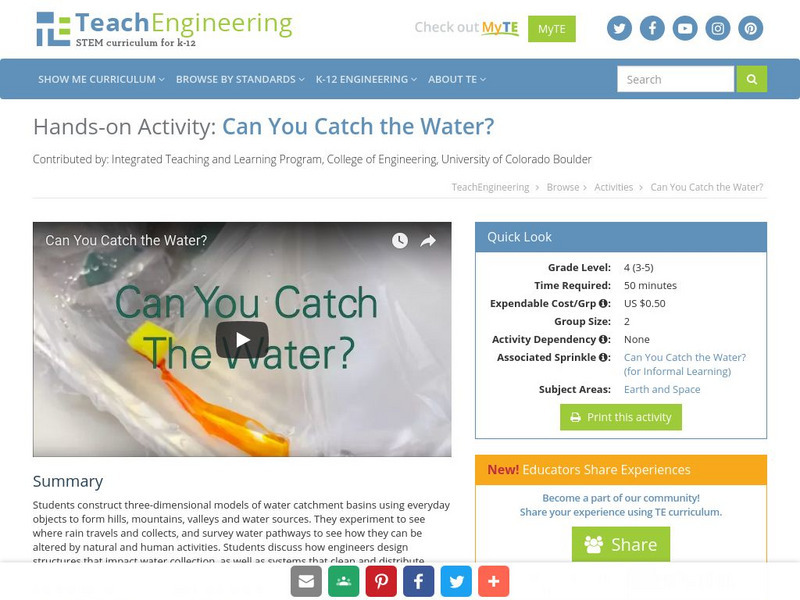
Teach Engineering: Can You Catch the Water?
Students construct a three-dimensional model of a water catchment basin using everyday objects to create hills, mountains, valleys and water sources. They experiment to see where rain travels and collects, and survey water pathways to...

TeachEngineering
Teach Engineering: Falling Water
Students drop water from different heights to demonstrate the conversion of water's potential energy to kinetic energy. They see how varying the height from which water is dropped affects the splash size. They follow good experiment...
TeachEngineering
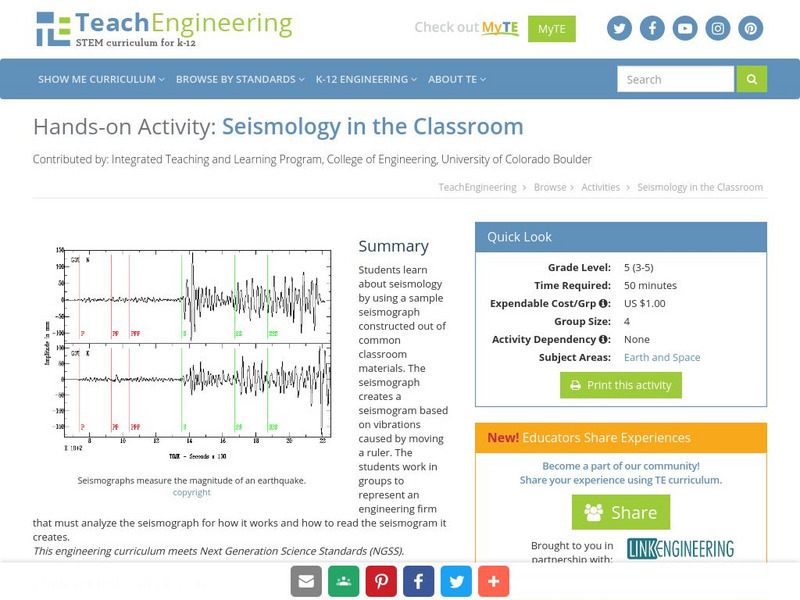
Teach Engineering: Seismology in the Classroom
Students learn about seismology by using a sample seismograph constructed out of common classroom materials. The seismograph creates a seismogram based on vibrations caused by moving a ruler. The students work in groups to represent an...