Hi, what do you want to do?






Howard Hughes Medical Institute
Milk—How Sweet Is It?
Have you ever wondered why some people are lactose intolerant? Participants test simulated patients in a hands-on lab activity to find out! They learn about lactose intolerance by performing an experiment, analyzing data, and drawing...

Nuffield Foundation
Extracting DNA from Living Things
Help! Someone's trying to take my DNA! An interesting lab experiment has scholars use basic materials to extract DNA. By applying ethanol, cold water, and a protease enzyme, like pineapple juice, they pull strands of DNA from peas,...

Teach Engineering
Inside the DNA
Get your class to take a closer look at DNA. Pupils conduct research to determine the methods used by scientists to analyze the molecular structure of DNA. The class members investigate different types of molecular imaging along with gel...

Serendip
Genetic Engineering Challenge – How Can Scientists Develop a Type of Rice That Could Prevent Vitamin A Deficiency?
Brown rice contains vitamins B and E, while white rice lasts longer in storage. The availability of rice around the world makes it a great candidate for genetic engineering. Scholars apply their knowledge of genetic engineering to solve...
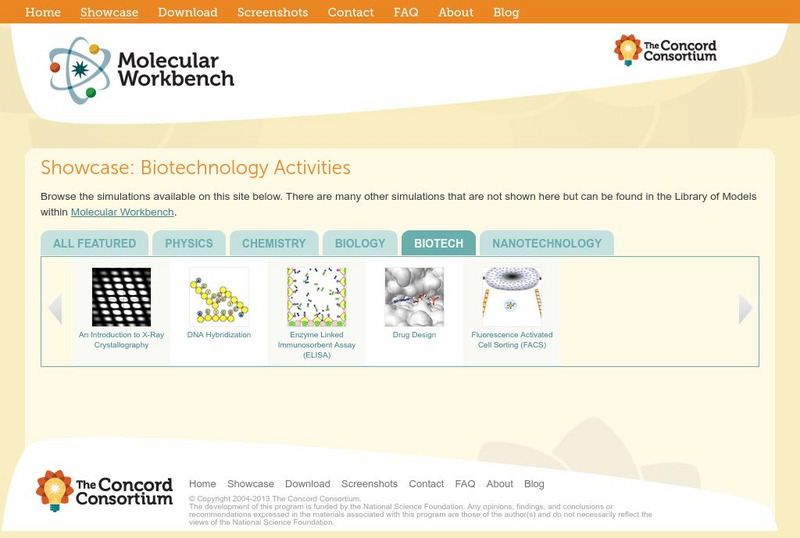
Concord Consortium
Concord Consortium: Molecular Workbench Showcase: Biotech
Simulations of common biotechnology techniques performed in a laboratory setting. Learn how to complete these techniques and what task they are used for in the lab.

Bio Topics
Bio Topics: The Action of Amylase on Starch
An experiment designed to show students how enzymes work. This experiment specifically investigates how amylase acts upon starch.

Other
Science Alive: Changing the Starch in "Yams" to Sugar
This lab activity provides students with the experience of using their own enzymes to convert starch to sugar (a disaccharide called maltose), then testing to see if the conversion has taken place.