Hi, what do you want to do?





Science Buddies
Science Buddies: Science Careers: Materials Scientist and Engineer
An interest in chemistry and physics is what you need to explore the career of materials scientist or engineer. In this career you manipulate atoms to change the structure of materials to make new products. This Science Buddies site lays...

TryEngineering
Try Engineering: Engineering Air Traffic
Young scholars work in teams to explore how radar and computer technology is used to provide the necessary data to air traffic controllers. Students become "engineers" as they work to find ways to enhance the current air traffic control...
OpenStax
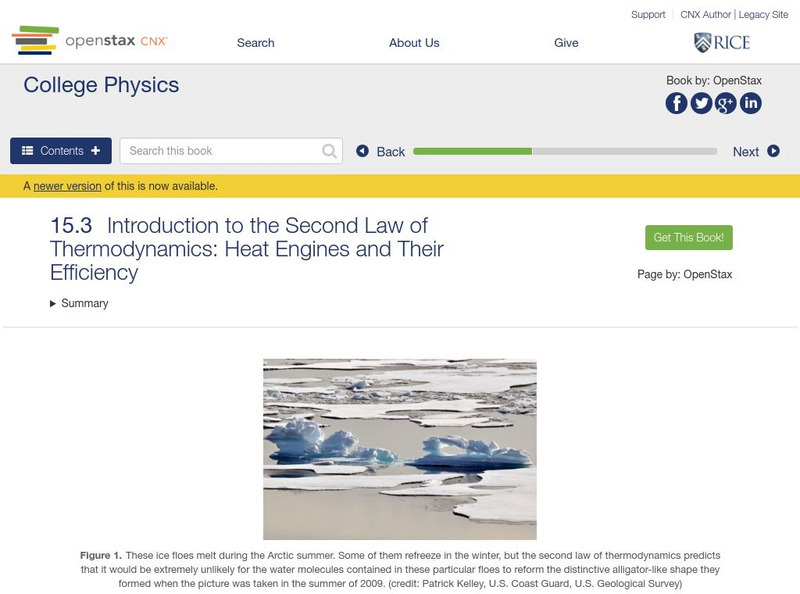
Open Stax: Second Law of Thermodynamics: Heat Engines and Their Efficiency
In this section of the textbook, learn about the second law of thermodynamics and how it relates to the function of heat engine. Section will also explain how to calculate net work and efficiency of cyclical processes such as a heat...
TryEngineering
Try Engineering: Engineering Ups and Downs
Engineering design lesson examines the principles behind working elevators. Teams of students explore how elevators work, then design, build, and evaluate their own elevator to service a toy car garage.
TeachEngineering
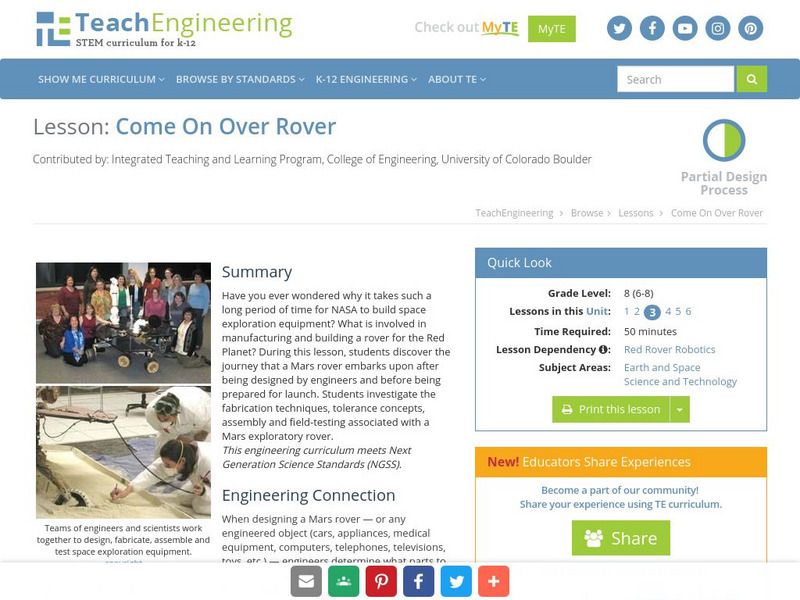
Teach Engineering: Come on Over Rover
Have you ever wondered why it takes such a long period of time for NASA to build space exploration equipment? What is involved in manufacturing and building a rover for the Red Planet? During this lesson, students will discover the...
CK-12 Foundation
Ck 12: Heat Engine
[Free Registration/Login may be required to access all resource tools.] Students will learn about heat engines, explore pressure volume diagrams, and figure how to calculate ideal efficiencies of heat engines.
TryEngineering
Ieee: Try Engineering: Build Your Own Robot Arm
Students design and build a working robotic arm from a set of everyday items with a goal of having the arm be able to pick up a Styrofoam cup. Working in teams of three or four students, the students explore effective teamwork skills...
TryEngineering
Try Engineering: Measuring the Wind
Students explore the design of anemometers and how they are used in measuring the speed of wind. Working in teams of "engineers", they will design, build, and evaluate the effectiveness of their own anemometers, presenting their findings...
TryEngineering
Try Engineering: Working With Wind Energy
Students use the engineering design process to build a working windmill out of everyday materials. Lesson explores the technology behind wind energy being used to generate energy in businesses and homes worldwide.
TryEngineering
Try Engineering: Find It With Gps!
Using a GPS handheld device and online resources, learners work in teams to explore the technology behind GPS, current GPS applications, and brainstorm new applications for future global use to solve society's issues.
University of Richmond
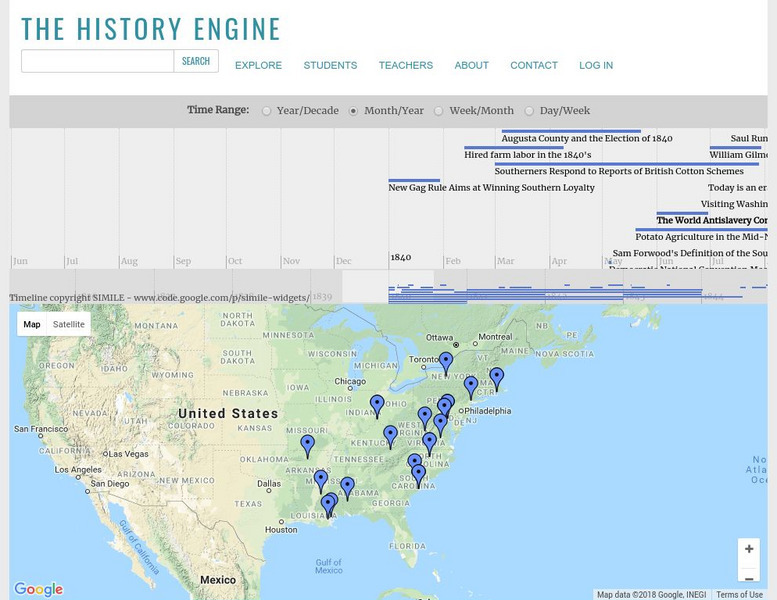
University of Richmond: The History Engine
Explore this in-depth history of the United States beginning in 1840 by clicking on a date or location on this interactive map, or by manipulating the timeline above. Each event is accompanied by a description and details, with links to...
TeachEngineering
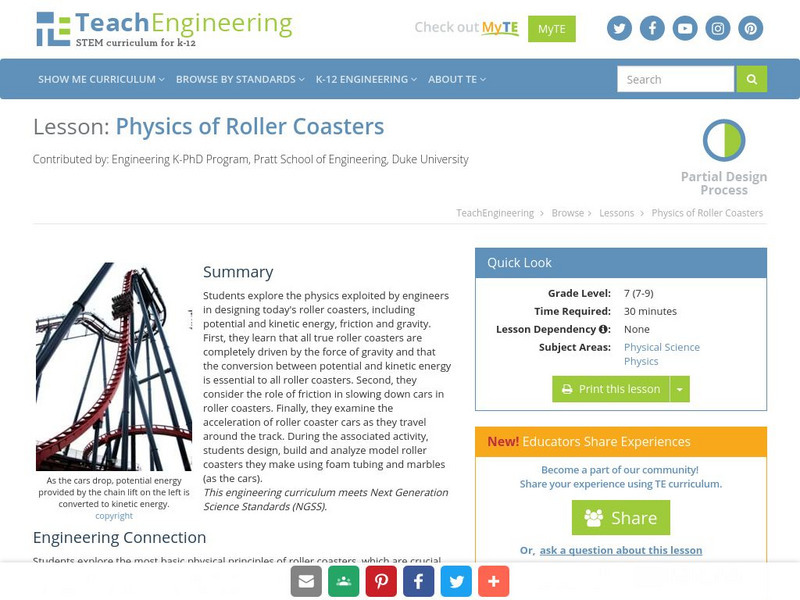
Teach Engineering: Physics of Roller Coasters
Young scholars explore the physics utilized by engineers in designing today's roller coasters, including potential and kinetic energy, friction, and gravity. First, students learn that all true roller coasters are completely driven by...
Other
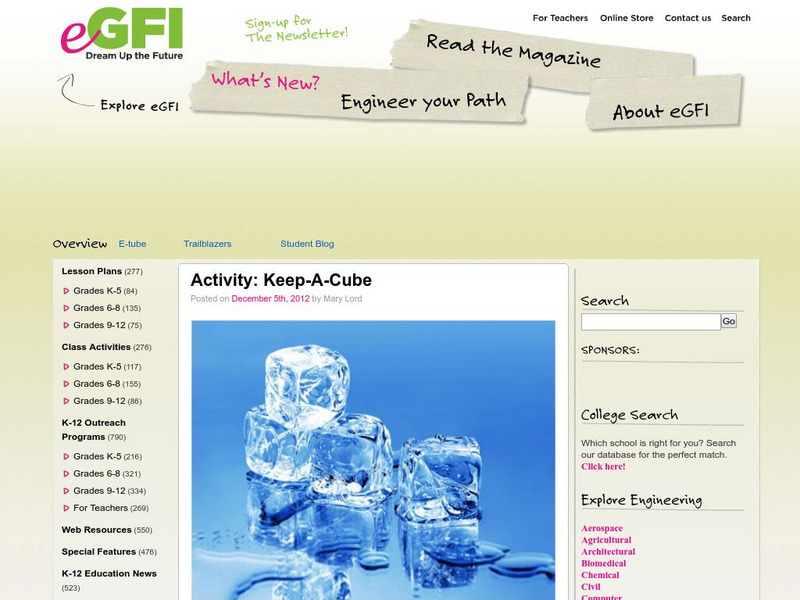
American Society for Engineering Education: E Gfi: Activity: Keep a Cube
In this activity, student teams in grades K-6 explore the design process by engineering a way to keep an ice cube from melting for 30 minutes. [6:00]
TryEngineering
Try Engineering: Build a Big Wheel
Learners learn about the engineering design process as they design, build, test, and evaluate a big wheel or Ferris wheel made with pasta, glue, and teabags. The objective of the lesson is to explore how big wheels have been designed...
TryEngineering
Try Engineering: Telescoping Periscope
Working in teams of "engineers", students explore how a periscope works and is used. They design, build, and test a working periscope made from everyday materials that has adjustable mirrors and be able to telescope as well.

Learn Engineering
Learn Engineering: Theory of Vibration
Did you know that some bridges have failed due to the effect of vibration? This article and video explore vibration and its importance in the design of civil structures and mechanical equipment. The article discusses all concepts covered...
TryEngineering
Try Engineering: Hand Biometrics Technology
Lesson probes how biometrics technologies have been used worldwide to address security and identification systems. After exploring different biometric techniques, students work in teams to find their own hand geometry biometrics, then...
TryEngineering
Try Engineering: Tinkering With Tops
Lesson explores the history, design, and motion of spinning tops. Student teams design and build their own tops that can spin for at least 10 seconds within a circle 30 centimeters in diameter.
NC State University
The Engineering Place: Volcanoes: Viscosity Demonstration
For this lesson, students explore how the viscosity of lava affects the intensity of a volcanic eruption, and the resultant landforms that are created.
City College of New York
City Technology: Fantastic Elastic
Explore engineering technology with this unit. Students will study how to design and execute two types of homemade vehicles using elastic.

TeachEngineering
Teach Engineering: Swinging on a String
Students explore how pendulums work and why they are useful in everyday applications. In a hands-on activity, they experiment with string length, pendulum weight and angle of release. In an associated literacy activity, students explore...
TryEngineering
Try Engineering: Solar Structures
During this lesson, students will construct a passive solar house from everyday items then explore how the sun's energy is used to heat and cool it.
TeachEngineering
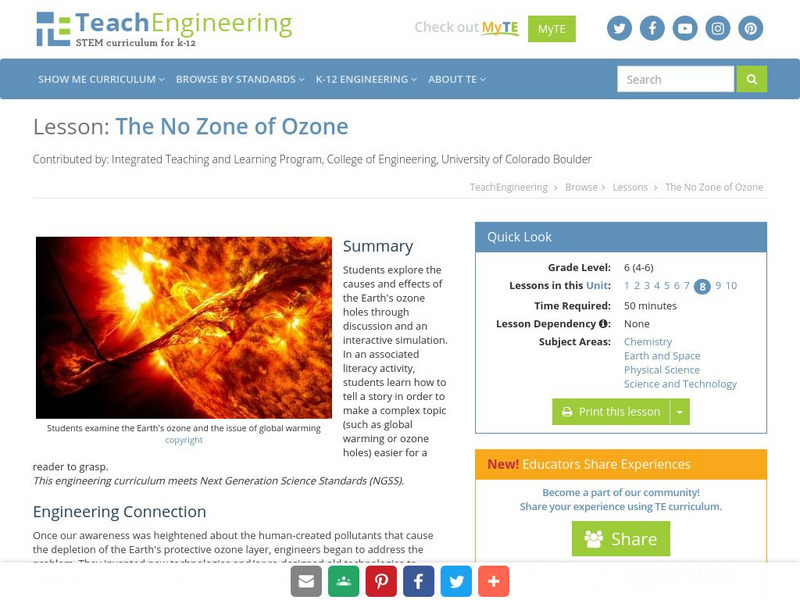
Teach Engineering: The No Zone of Ozone
Students explore the causes and effects of the Earth's ozone holes through discussion and an interactive simulation. In an associated literacy activity, students learn how to tell a story in order to make a complex topic (such as global...
Biotechnology Institute
Biotechnology Institute: Your World: Planting for the Future [Pdf]
This Biotechnology Institute's issue explores plant-made pharmaceuticals, using plants to manufacture useful proteins. It's one of the many aspects of biotechnology--the use of living organisms to benefit humanity.