Hi, what do you want to do?






Science Buddies
Science Buddies: How Sweet It Is: Hummingbird Food Preferences
Do you like to watch hummingbirds? Have you ever wondered why there is specialty hummingbird food? What is it about the food that makes it so appealing? In this zoology science fair project, you will observe these remarkable creatures...

Other
Virginia State Department of Agriculture/consumer Sciences: About Food Poisoning
This site about food poisoning discusses Staphylococcus Aureus - what it is, where the common sources of "staph" are, common symptoms, and what can be done to prevent contamination and infection.
Utah Education Network
Uen: Source Relay
Second graders will sort breakfast food items into sources in this activity.
Stephen Byrne
History for Kids: Native American Food
Resource outlines the history of Native American food sources and details how various tribes throughout North America used the resources available to them.
University of Wisconsin
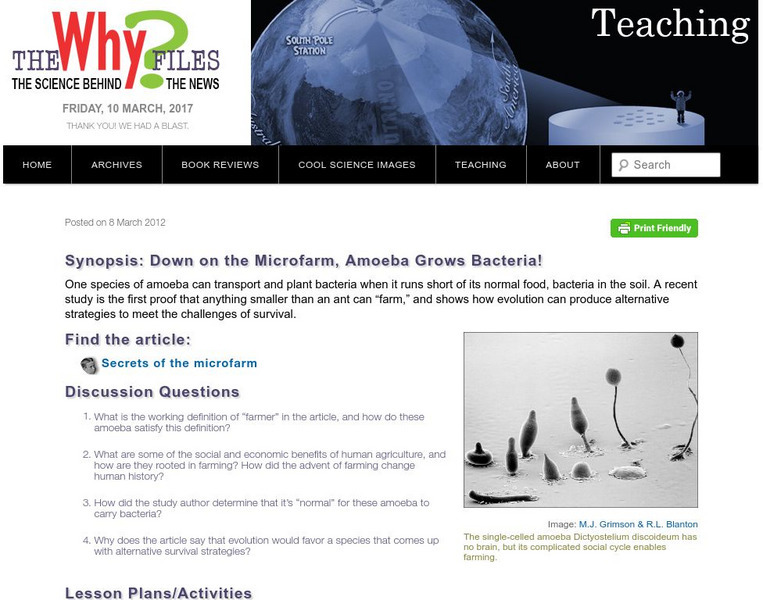
The Why Files: Down on the Microfarm
Explanation of how an amoeba can farm to make its own food when necessary.
Michigan Reach Out
Newton's Apple: Body Fat
Through these lesson plans, investigate the different types of fat found in food and found in the human body. Discuss the functions and problems associated with dietary fat and make wise food choices based on what you learn about fat,...
Precision Nutrition
Encyclopedia of Food: Phytochemicals
Phytochemicals are necessary to fight diseases. Identify sources and the benefits to health these non-nutritive chemicals provide.
Harvard University
Harvard School of Public Health: The Nutrition Source: What Should I Eat?
A lot of confusing and erroneous information exists regarding proper nutrition. Get the correct facts and improve your healthy eating knowledge here.

BioEd Online
Bio Ed Online: They're Everywhere: Bacteria
Bacteria are everywhere and can cause many different kinds of diseases. Bacteria are a major source of food contamination. Students will grow bacteria collected from different places and compare the results.
Science Buddies
Science Buddies: Yeast Reproduction in Sugar Substitutes
There's nothing quite like the smell of fresh-baked bread to make your mouth water. As any baker can tell you, you can't bake bread without yeast. This project makes clever use of bread dough to measure yeast reproduction three different...
Science Buddies
Science Buddies: Go and Stop? Ant Traffic Signals
Have you ever stopped to watch a trail of ants moving back and forth between a food source and their nest? Have you ever wondered how they establish their trail? You've probably read that ants use chemical signals to communicate with one...
Science Buddies
Science Buddies: Cold Room? Heat It Up With a Homemade Solar Air Heater
Humans need food, water, and warm shelter to survive. But a lot of humans depend on fossil fuels to supply gas and electricity to heat our homes. But burning fossil fuels to create energy is harmful to the environment. In this science...

Library of Congress
Loc: Family Customs Past and Present: Exploring Cultural Rituals
In this lesson, students will use photos, documents, and music from the Library's digital collection. Then they will students investigate rituals and customs of various cultures.

Curated OER
Kids Health: Eating for Sports
Know what foods you need to eat in order to stay competitive. This website offers suggestion for kids who are active in sports and includes hints for eating healthy and staying hydrated.
BiologyWise
Biology Wise: Volvox Facts
Provides information about Volvox, a type of green algae. Discusses appearance, habitat, method of reproduction, and its food sources.
University of Massachusetts
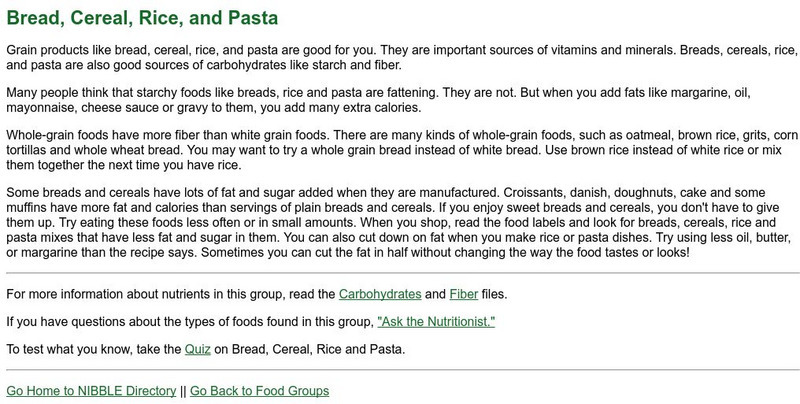
University of Mass.: Bread, Cereal, Rice, and Pasta
At this website from the University of Massachusetts you can read about the different foods that make up the bread group in the food pyramid. Learn about the nutritional value of bread, cereal, rice, and pasta, and read about the...
University of Massachusetts
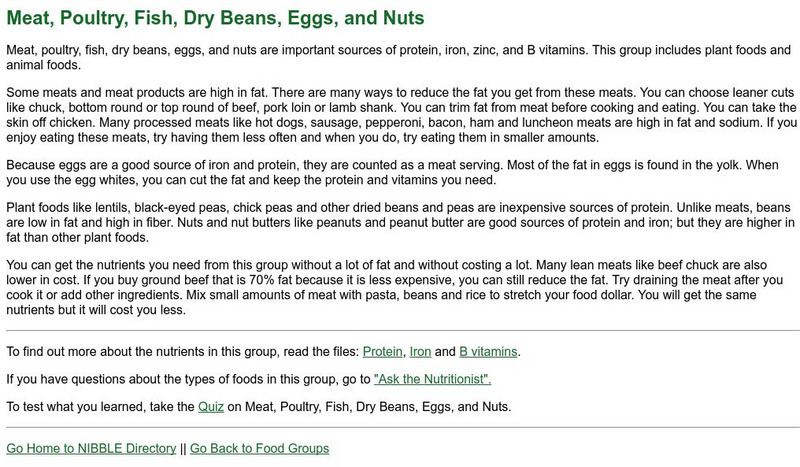
University of Massachusetts: Meat and Poultry
At this site from the University of Massachusetts you can read about the different foods that are known for being "Important sources of protein, iron, zinc, and B vitamins." Learn to cut your consumption of fat, while still benefitting...
NASA
Nasa: The Space Place: Power Up With Tortillas!
This site from NASA provides The Space Place which gives a great explanation of energy sources for young readers using the space shuttle, cars, and our human body as examples.

University of Massachusetts
University of Massachusetts: Milk, Yogurt, and Cheese
This brief article from the University of Massachusetts provides information on the nutritional values of milk products. Take a three-question quiz to test your knowledge of the milk food group.
Other
Union of Concerned Scientists: Science for a Healthy Planet and Safer World
The official website for Union of Concerned Scientists provides information on environmental issues and suggestions on actions people can take to curb environmental harm.
TeachEngineering
Teach Engineering: What to Wear? What to Drink? Weather Patterns and Climatic R
How does our climate affect us? How do we decide what to wear each day? What factors determine if our clothing choices are comfortable? What is the source of our water? Young scholars explore characteristics that define climatic regions....
Smithsonian Institution
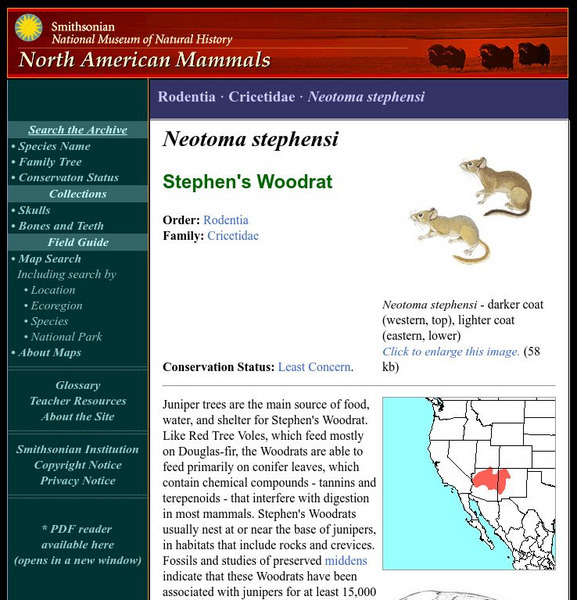
National Museum of Natural History: American Mammals: Stephen's Woodrat
Juniper trees are the main source of food, water, and shelter for Stephen's Woodrat. Like Red Tree Voles, which feed mostly on Douglas-fir, the Woodrats are able to feed primarily on conifer leaves, which contain chemical compounds -...
Next.cc
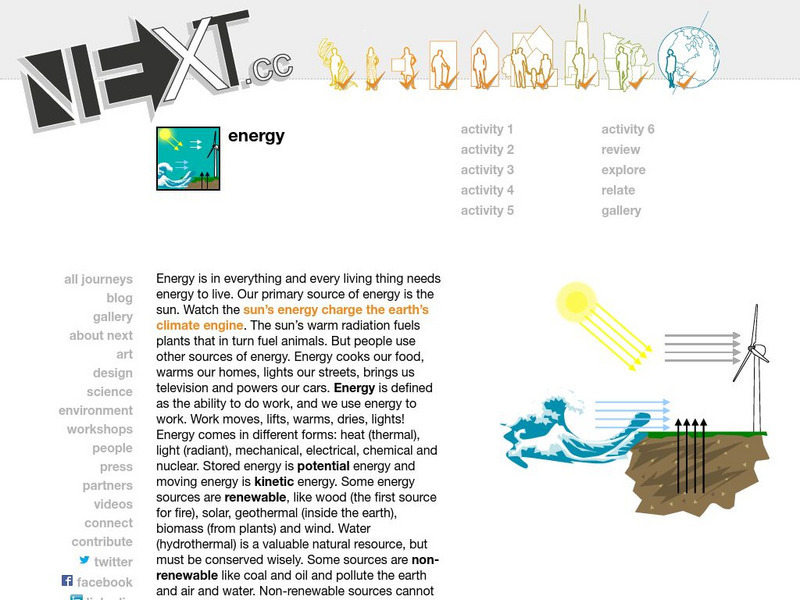
Next: Energy
Multiple activities explore and explain the different forms of energy, the ability to do work.