Hi, what do you want to do?






Annenberg Foundation
Balancing Sources
Pupils turn into investigative reporters throughout history to learn what it takes to balance different primary sources on the same topic. They use what they learn to create a narrative based on their own interpretation of a historic...

DocsTeach
The Impact of Bloody Sunday in Selma
Who is to blame when a peaceful protest turns deadly? Scholars research the impact of the civil rights march in Selma, better known as Bloody Sunday. The activity uses files from the FBI's investigation to help academics understand the...

iCivics
DBQuest: The Nashville Sit-In Movement
What was it like to be a part of the sit-ins during the Civil Rights Movement? Learners consider the question and whether the protests were effective using an online documents-based investigation. The program allows for virtual...

Annenberg Foundation
Evaluating Evidence
Was the Civil War fought only due to slavery? Using an interactive web tool, scholars investigate the four main causes of the Civil War. Gathering evidence and data to support their claims, they present a final statistical breakdown...

US National Archives
WWII: Western Europe 1939-45 – Deception and Bluff
World War II left the British desperate for help in any form—including in the form of a magician! High schooler conduct research on Jasper Maskelyne, a stage magician who used his talents to deceive the Germans on the war front, before...

US National Archives
Eastern Europe 1939-45 — Ukraine
Was Joseph Stalin desperate or exaggerating the USSR's need for assistance on the Eastern Front in 1942? History students examine two differing opinions on Stalin's position and the reality of the Eastern Front just three years before...

US National Archives
WWII: The Pacific 1939-45 – Japan and the Atom Bomb
Though the scientists who developed the atom bomb did not believe it should be used to end World War II, American President Harry S. Truman and British Prime Minister Winston Churchill were of like mind in their decision to drop the bomb...
Annenberg Foundation
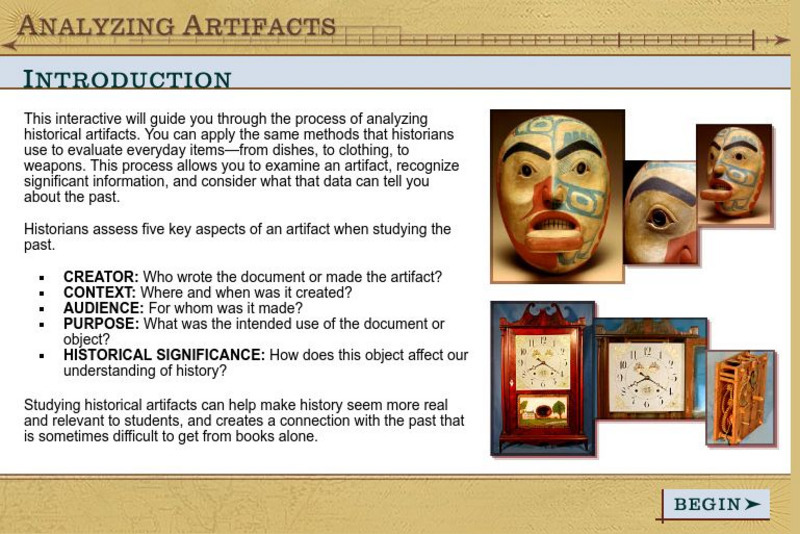
Annenberg Learner: Analyzing Artifacts
Learn the steps in the 5-step process that historians use when they analyze an artifact as you investigate what you can learn from Native American and other items.

Smithsonian Institution
National Museum of Natural History: The Secret in the Cellar
The Secret in the Cellar is an interactive web comic based on the real finding of a body from the 17th century in the Chesapeake Bay area. Using historical and archaeological clues, students are guided to discover the truth about how...

Other
Historic Mount Vernon: The Home of Our First President
An excellent site for information about Mount Vernon, the home of George Washington, as well as information about Washington himself. Be sure to take the virtual tour of the house and investigate the archaeology projects going on.
Smithsonian Institution
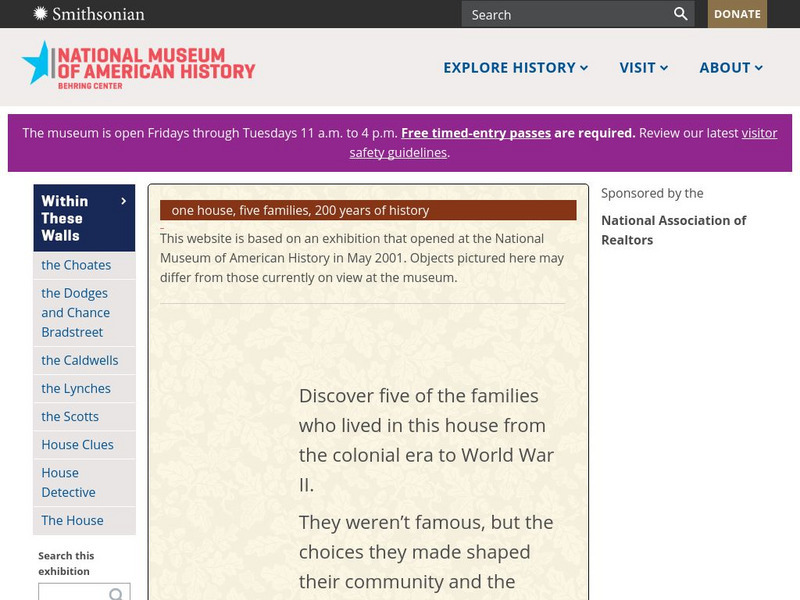
National Museum of American History: Within These Walls
Creatively tells the story of a house that has been a home to five American families over the period of time from the colonial era to the Second World War. You can find information about the house itself as well as the culture of the...
PBS
Pbs: River Rewilding: Evaluating Impacts on Ecosystems and Communities
A units that follow a community as they work through Grand River Revitalization Efforts. Investigate how these efforts impacts the social, economic, historic, and biology of the Grand River.