Hi, what do you want to do?






American Museum of Natural History
Light, Matter and Energy
Let Einstein's work shine the way. Pupils read about Einstein's iconic equation, E=mc^2, using a remote learning resource and see how ideas from other scientists such as Kepner, Curie, Galilei, and Newton led to its discovery. They...

American Museum of Natural History
Trip Up Your Brain
Sometimes different parts of the brain disagree. See what this disagreement looks like using a remote learning resource to experience how brains often take shortcuts. Pupils complete the activity, observe their results, and then read...

Poetry4kids
Five Ways to Overcome Writer’s Block
Every writer knows how terrible writer's block can feel. Use these five writer's block-busting techniques to help young writers get out of their rut and into a better state of mind.

American Museum of Natural History
Train of Thought
Hop aboard the train of thought. A remote learning resource has learners consider thought experiments to consider scientific theories. It provides two examples, one on orbiting bodies and the other on the speed of light, for them to work...

American Museum of Natural History
Nobody's Perfect
Even Einstein made mistakes, you know. A remote learning resource explains how scientists are sometimes unsuccessful. Pupils learn about Einstein's failed quest to find a unified field theory that explained the entire universe.

University of North Carolina
Should I Use “I”?
Despite the formal nature of academic writing, personal pronouns frequently appear in high school and college papers. While your first instinct may be to cross them out, sometimes it's okay to use them, an idea covered in a handout that...

Goodwill Community Foundation, Inc.
Meeting New People
Find out your conversation partner's name, job, place of origin, and current residence with a straightforward Spanish practice guide. Learners click on audio icons to hear the proper pronunciation of ¿Como te llamas? and ¿De...

University of North Carolina
Revising Drafts
Don't simply proofread ... revise instead! Revising drafts is the topic of the 17th handout in UNC's Writing the Paper series of 24 lessons. Writers discover the importance of revision, as well as steps to follow during the process.

American Museum of Natural History
Being a Paleontologist: Mark Norell
Get to know paleontologist Mark Norell with a 19 question interview. Written questions, answers, and photographs with descriptions sit among bright and cheery graphics
Other
University of Virginia: How Things Work
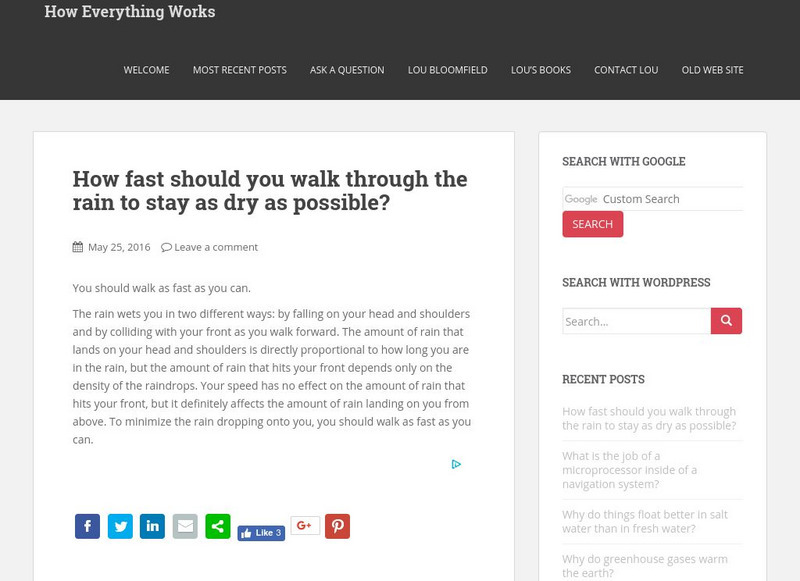
A site maintained by A. Bloomfield, the author of "How Things Work: The Physics of Everyday Life." You can read old questions or ask Bloomfield your own. Great explanations of everyday physics.
Stanford University
Stanford University: How Everyday Things Are Made
If you've ever wondered how things are made - products like candy, cars, airplanes, or bottles - or if you've been interested in manufacturing processes, like forging, casting, or injection molding, then you've come to the right place....

Virtual Museum of Canada
Virtual Museum of Canada: Community Stories: The Work of the Blacksmith Green Family Forge, Trinity, Nl
Learn about the tools used by the blacksmith at the forge and how iron was worked with to create such things as horseshoes and the iron bands for cart wheels. Selecting the print story provides for more detailed information.

Other
University of Tennessee: Football Physics
Classical physics describes and predicts how things work in our everyday environment. Football falls well into the limits of classical physics. In football we encounter many situations where only a few interactions, maybe only one push...
Ducksters
Ducksters: Physics for Kids: Friction
Kids learn about the science behind friction including how it works as a force to slow things down, how it helps us stand, preventing friction, types, and fun facts.
Ducksters
Ducksters: Biology for Kids: Enzymes
Explore information about enzymes in the science of biology including what they do, how they work, and things that affect enzyme activity.
Other
Mozilla: Webmaker
Webmaker is a Mozilla project that people can use to create their own content through remixing web materials, and to deepen their understanding of how the Internet works. They provide starter projects, templates and event guides for...
PBS
Pbs Learning Media: Daniel Tiger's Neighborhood: Life's Little Lessons: Sharing
There will be times in life when everyone needs to share. By having caring adults around who can help young children learn that sharing is one way to build friendships, children can learn that sharing with friends (who have become...
CNN
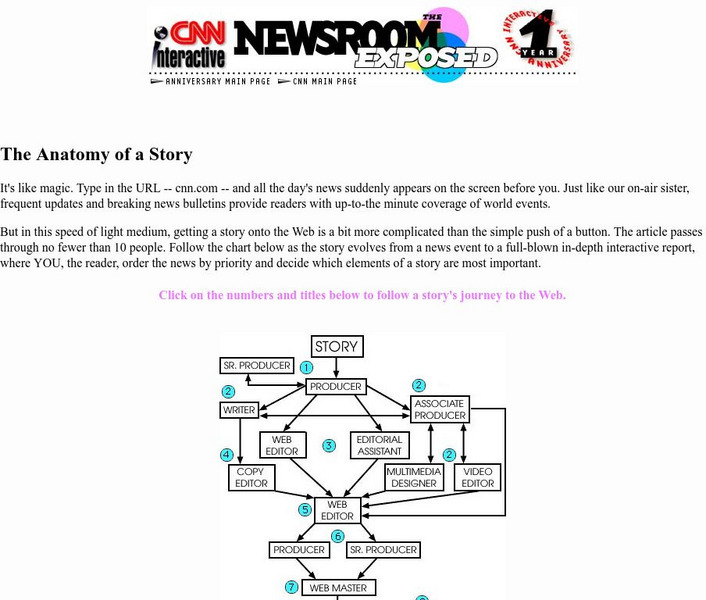
Cnn: Anatomy of a Story
A fun interactive site for finding out what happens in all departments of a broadcast newsroom.
Other popular searches
- How Things Work Lenses
- How Things Work Toaster
- Explaining How Things Work
- How Things Work" Odometer
- Explanation How Do Things Work
- How Things Work Odometer
- "How Things Work" Odometer