Hi, what do you want to do?






Bozeman Science
Reproductive System
The human reproductive system contains the largest (egg) and smallest (sperm) cells in the human body. It's time for scholars to review the differences between asexual and sexual reproduction. The instructor reminds them how meiosis...

Curated OER
STEMbite: Seed Dispersal
Dandelion and maple tree seeds are blown and thrown to show two methods of seed dispersal. The narrator videotapes from his vantage point, his hands visible, but never his face. He examines helicopter blades as a human imitation of...

Howard Hughes Medical Institute
Viral Lifecycle
This lesson has gone viral ... literally! An animation video describes how a single virus cell gives rise to a multitude of progeny viruses. Learners explore how a virus infects many cells in a short amount of time.

TED-Ed
Why Do Women Have Periods?
The female body is an amazing thing. This short video explains the amazing cycle that has developed to ensure the continuation of life. Did you know that only monkeys, apes, bats, humans, and maybe elephant shrews menstruate?

Crash Course
Crash Course A&p #40: Reproductive System, Part 1 Female Reproductive System
The first of a four part series about human reproduction beginning with the female reproductive system. [10:15]

Howard Hughes Medical Institute
Hhmi: Bio Interactive: Life Cycle of Malaria, Part 2
In this lifelike narrated animation, watch what happens inside a mosquito when the malaria parasites reproduce and travel to the salivary glands, ready to infect another human host with the next bite. [4:00]
Cells Alive
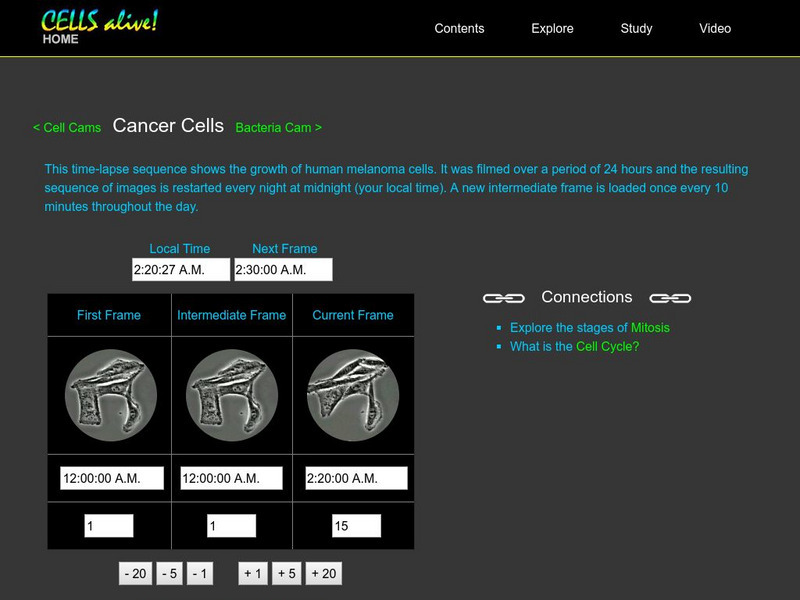
Cells Alive!: Cancer Cell Cam: Human Melanoma Cells Growing in Culture
A time-lapse video of melanoma cells dividing in a period of 24 hours. Review the difference between normal mitosis versus mitosis taking place in a cancer cell.