Hi, what do you want to do?






Intel
Insects: The Good, The Bad, The Ugly
What would the world be like with no insects? Ponder this question using a research-based STEM unit that encourages scholars to investigate insects from both a beneficial and hazardous perspective. They learn about insect behaviors,...

Curated OER
Insects
Students construct a viable insect collecting apparatus. Students determine the effectiveness of the instrument he has designed by collecting specimens.

National Park Service
Biodiversity—Bee Week
If you want scholars to fall in love with bees, this is the unit for you! Celebrate bees with a full week of material—designed for the Next Generation Science Standards—that addresses the importance of pollination and fertilization....
CK-12 Foundation
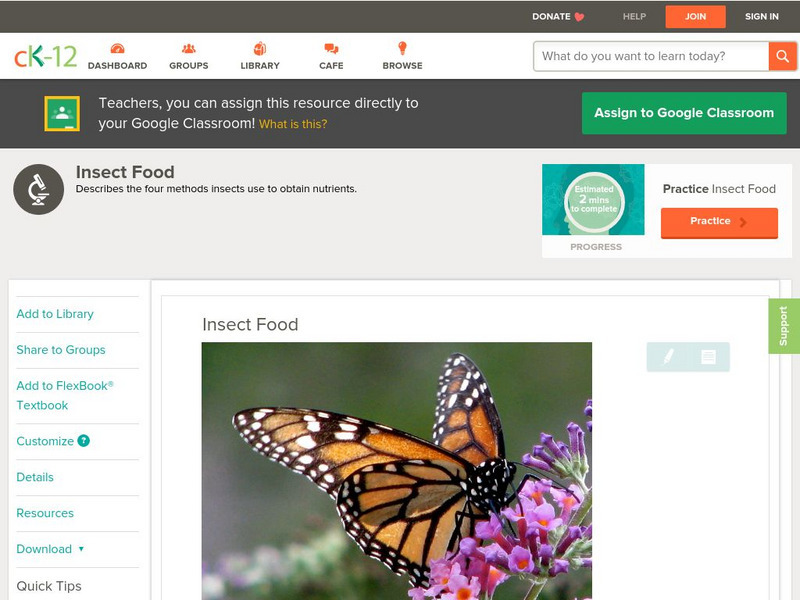
Ck 12: Life Science: Insect Food
[Free Registration/Login may be required to access all resource tools.] Insects have different types of appendages adapted for capturing and feeding on prey. They also have special senses that help them detect prey. Furthermore, insects...

TED Talks
Ted: Ted Ed: The Sexual Deception of Orchids
Anne Gaskett dives into the surprisingly complex ways orchids attract insects.
Scholastic
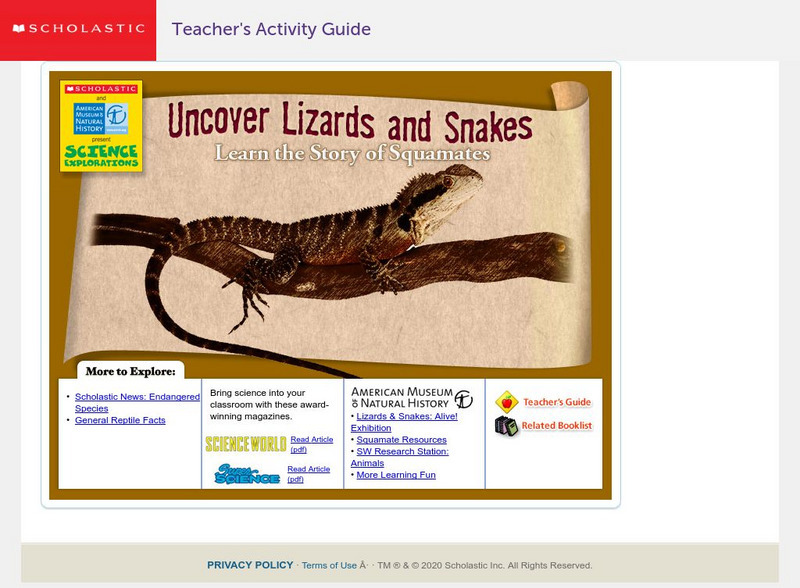
Scholastic: Science Explorations: Uncover Lizards and Snakes
An exploration of squamates, or scaled reptiles. Take notes about lizards and snakes using the pdf "Squamate Chart" while viewing a slideshow, investigate the squamate anatomy and how squamates differ from other animals, such as insects...
CK-12 Foundation
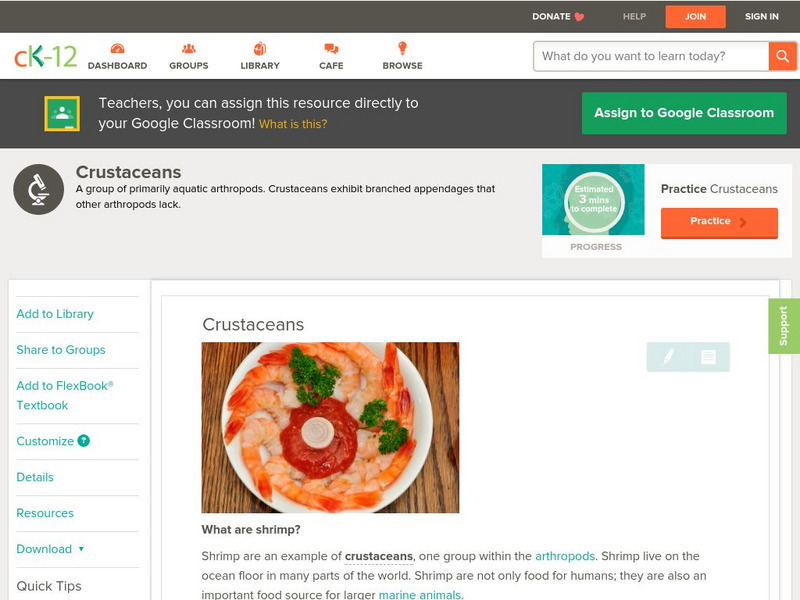
Ck 12: Life Science: Crustaceans
[Free Registration/Login may be required to access all resource tools.] Crustaceans are a large group of arthropods, consisting of almost 52,000 species. The majority of crustaceans are aquatic. A few groups have adapted to living on...

TED Talks
Ted: Ted Ed: How Life Came to Land
This video explores arthropods, who first made the transition from water to land and who outnumber all terrestrial animals. [5:28] Followed by a short quiz and a list of additional resources to explore.