Hi, what do you want to do?





TeachEngineering
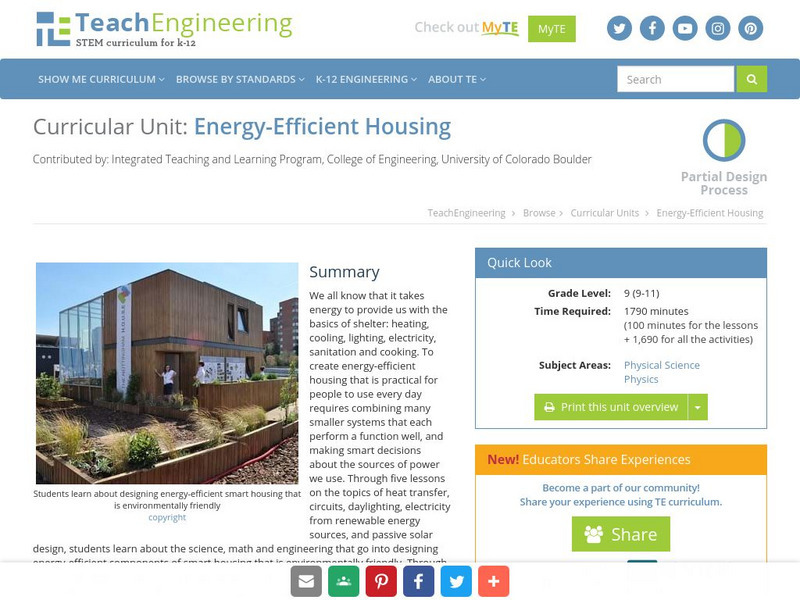
Teach Engineering: Energy Efficient Housing
We all know that it takes energy to provide us with the basics of shelter: heating, cooling, lighting, electricity, sanitation and cooking. To create energy-efficient housing that is practical for people to use every day requires...
TeachEngineering
Teach Engineering: Photovoltaic Efficiency
Through a series of four lessons, students are introduced to many factors that affect the power output of photovoltaic (PV) solar panels. Factors such as the angle of the sun, temperature of the panels, specific circuit characteristics,...

TeachEngineering
Teach Engineering: Simple Machines From Pyramids to Skyscrapers
Simple machines are devices with few or no moving parts that make work easier, and which people have used to provide mechanical advantage for thousands of years. Students learn about the wedge, wheel and axle, lever, inclined plane,...
TeachEngineering
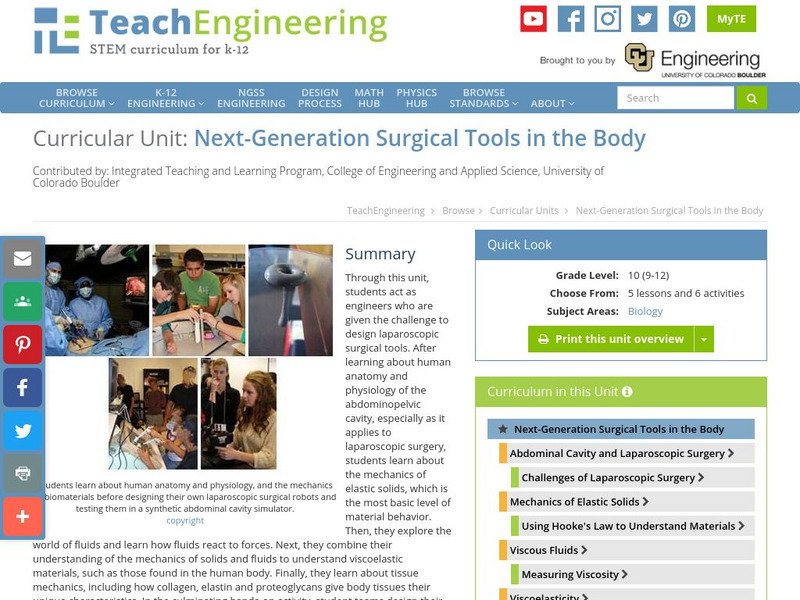
Teach Engineering: Next Generation Surgical Tools in the Body
Through this unit, students act as engineers who are given the challenge to design laparoscopic surgical tools. After learning about human anatomy and physiology of the abdominopelvic cavity, especially as it applies to laparoscopic...
TeachEngineering
Teach Engineering: Exploring Solar Power
This unit provides students the opportunity to explore methods engineers have devised for harnessing sunlight to generate power. Students will initially explore heat transfer and heat storage through the construction, testing, and...
TeachEngineering
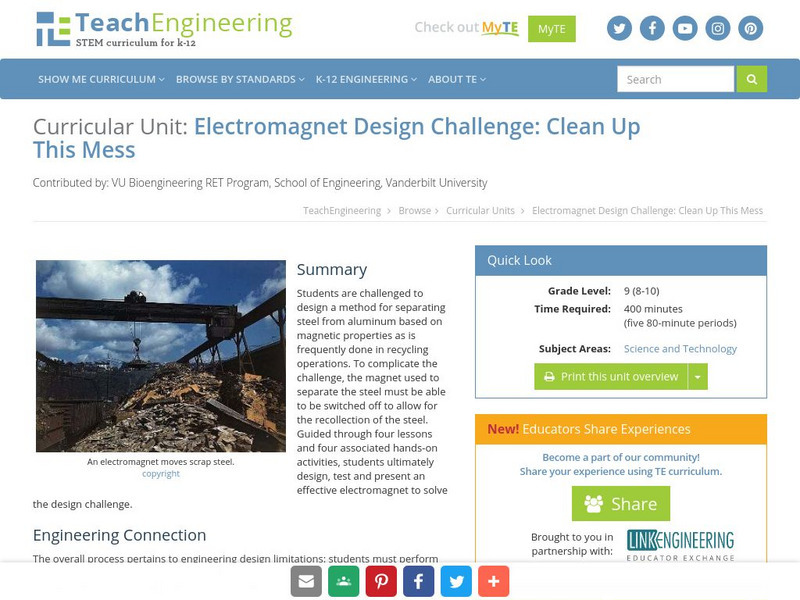
Teach Engineering: Clean Up This Mess
Students are challenged to design a method for separating steel from aluminum based on magnetic properties as is frequently done in recycling operations. To complicate the challenge, the magnet used to separate the steel must be able to...

TeachEngineering
Teach Engineering: Teaching the Engineering Design Process
Students follow the steps of the engineering design process (EDP) while learning about assistive devices and biomedical engineering. They first go through a design-build-test activity to learn the steps of the cyclical engineering design...
TeachEngineering
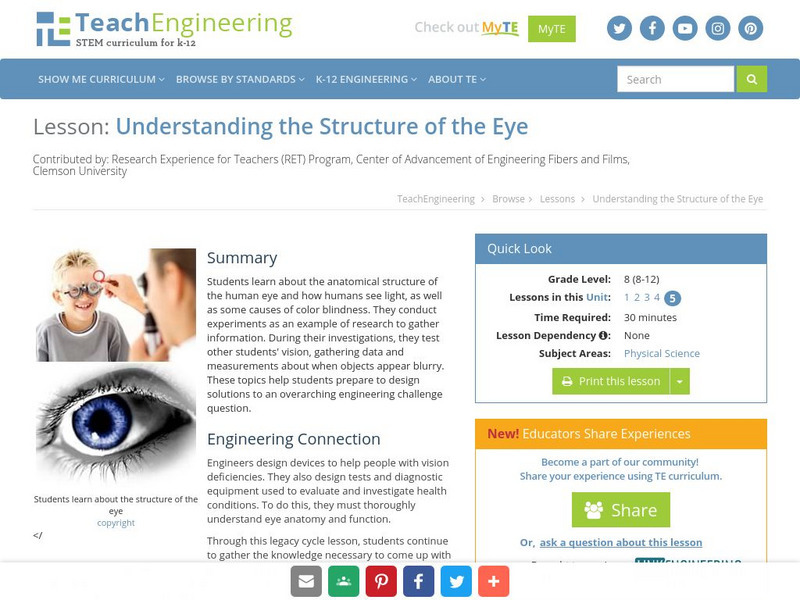
Teach Engineering: Understanding the Structure of the Eye
Students learn about the anatomical structure of the human eye and how humans see light, as well as some causes of color blindness. They conduct experiments as an example of research to gather information. During their investigations,...
TeachEngineering
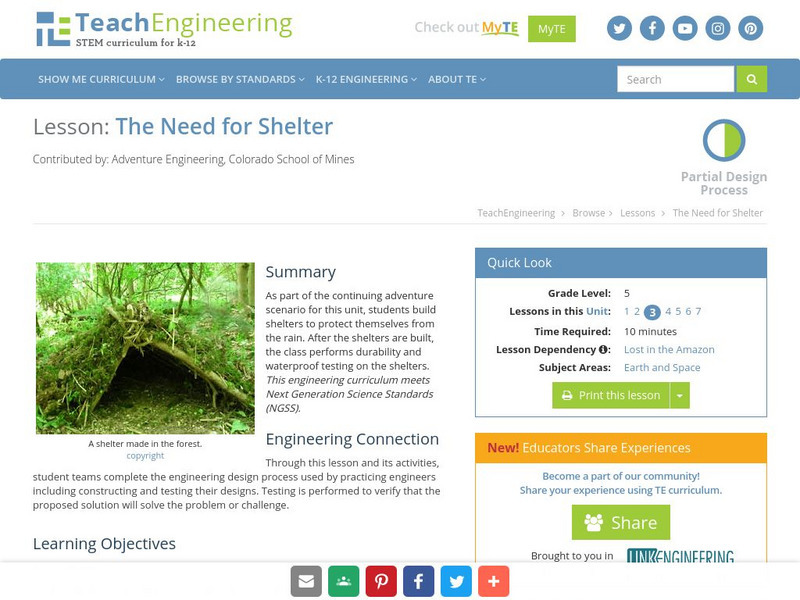
Teach Engineering: The Need for Shelter
In this lesson, the students will build a shelter in order to protect themselves from the rain. After the shelters are built, the class will perform durability and water proof testing on the shelters.
TeachEngineering
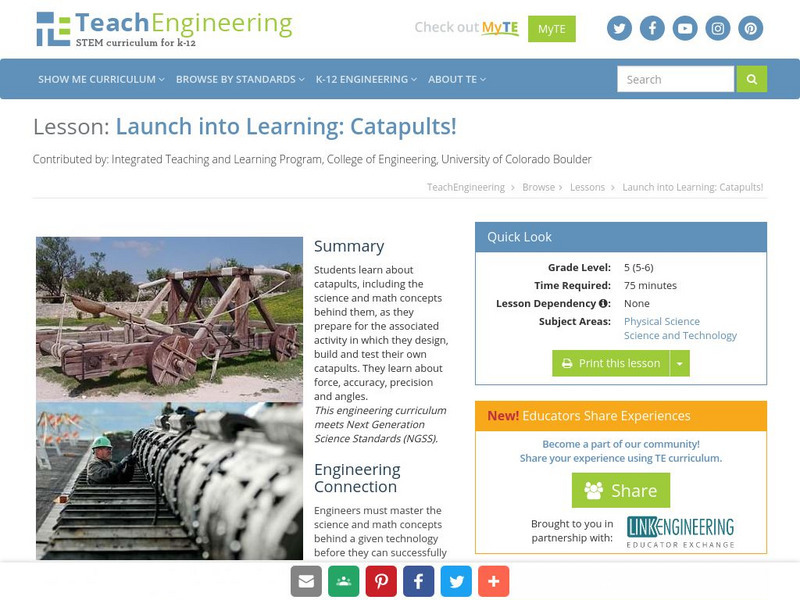
Teach Engineering: Launch Into Learning: Catapults!
Students learn about catapults, including the science and math concepts behind them, as they prepare for the associated activity in which they design, build and test their own catapults. They learn about force, accuracy, precision and...
TeachEngineering
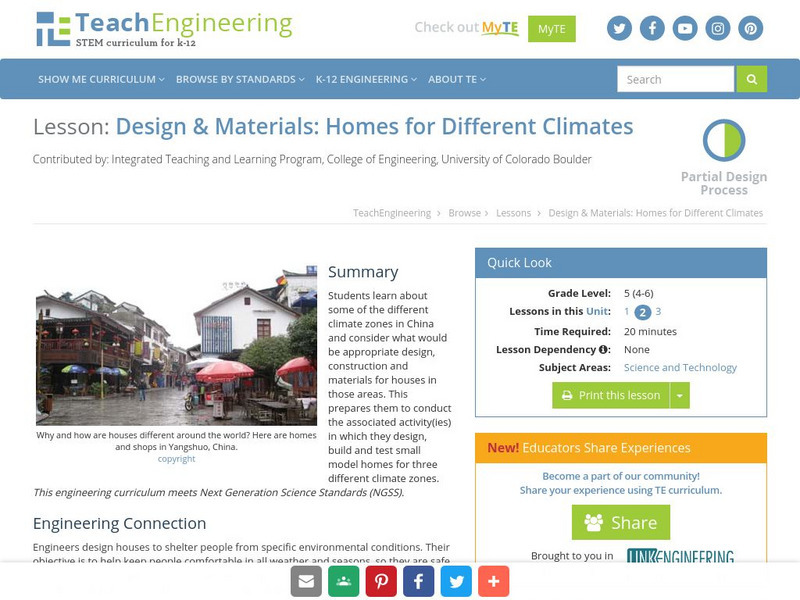
Teach Engineering: Homes for Different Climates
Students learn about some of the different climate zones in China and consider what would be appropriate design, construction and materials for houses in those areas. This prepares them to conduct the associated activity(ies) in which...
TeachEngineering
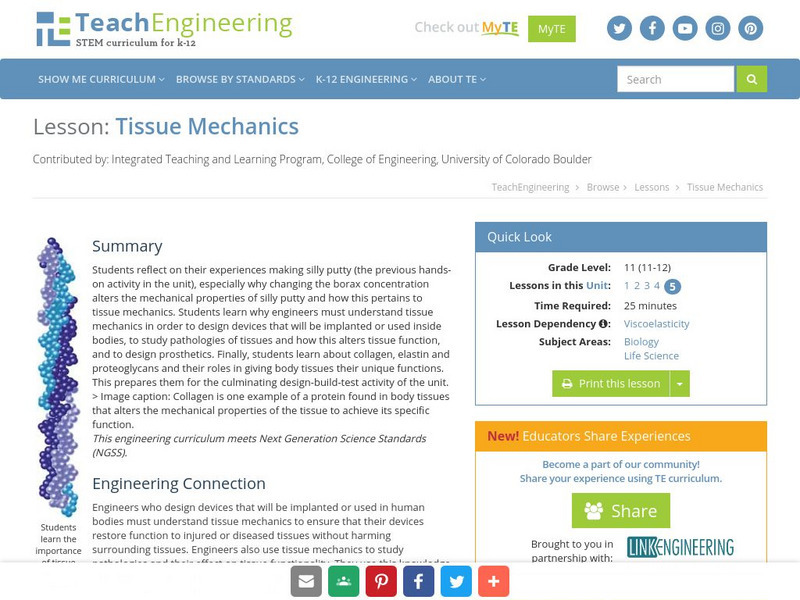
Teach Engineering: Tissue Mechanics
Students reflect on their experiences making silly putty (the previous hands-on activity in the unit), especially why changing the borax concentration alters the mechanical properties of silly putty and how this pertains to tissue...
TeachEngineering
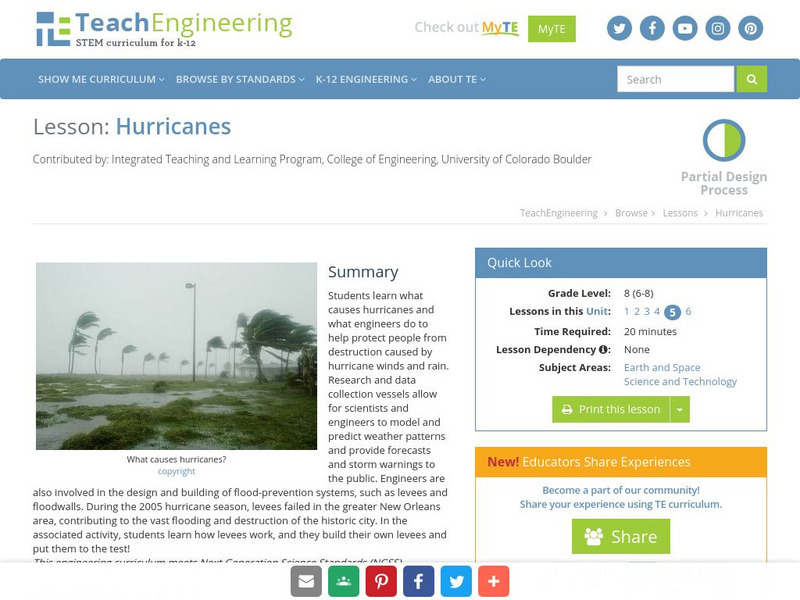
Teach Engineering: Hurricanes
Students learn what causes hurricanes and what engineers do to help protect people from destruction caused by hurricane winds and rain. Research and data collection vessels allow for scientists and engineers to model and predict weather...
TeachEngineering
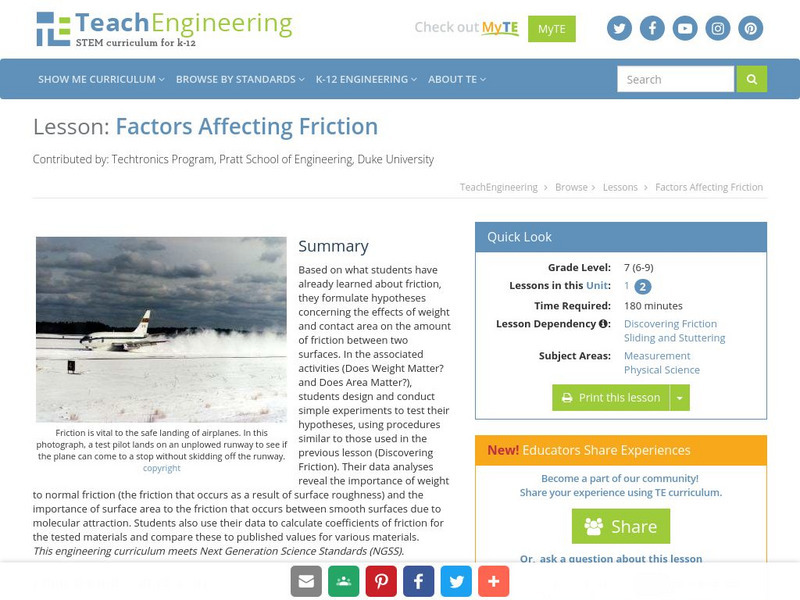
Teach Engineering: Factors Affecting Friction
In this lesson, students use previous knowledge about friction to formulate hypotheses concerning the effects of weight and contact area on the amount of friction between two surfaces. In the Associated Activities (Does Weight Matter?...
TeachEngineering
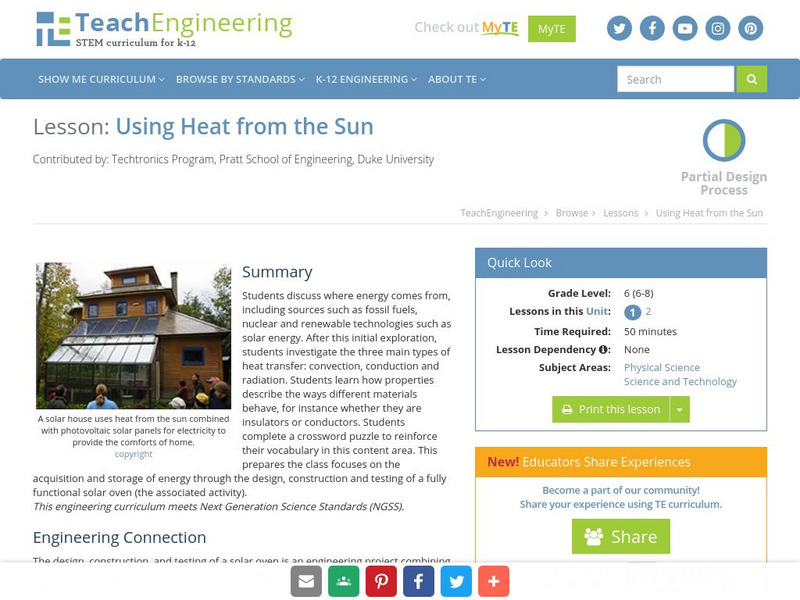
Teach Engineering: Using Heat From the Sun
In this lesson, students will first discuss where energy comes from, including sources such as fossil fuels, nuclear, and such renewable technologies as solar. After this initial exploration, students will investigate the three main...
TeachEngineering
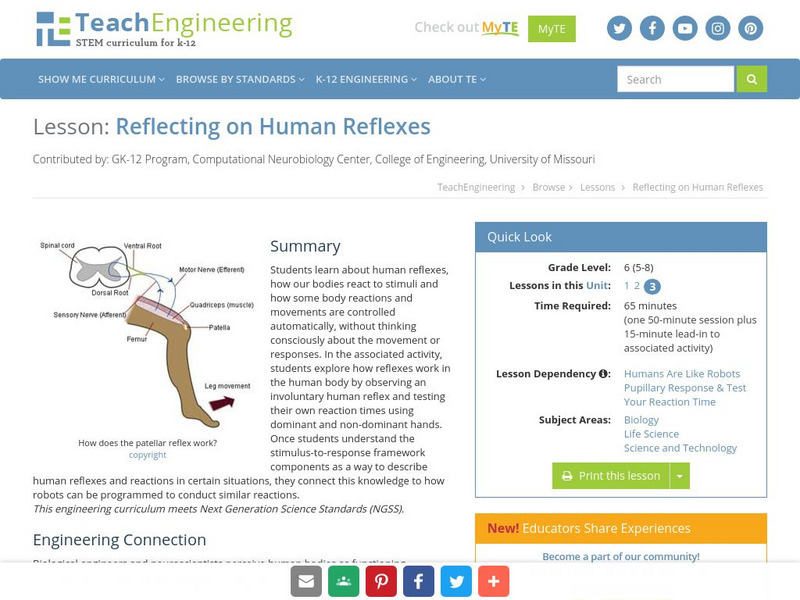
Teach Engineering: Reflecting on Human Reflexes
Learners learn about human reflexes, how our bodies react to stimuli and how some body reactions and movements are controlled automatically, without thinking consciously about the movement or responses. In the associated activity,...
TeachEngineering
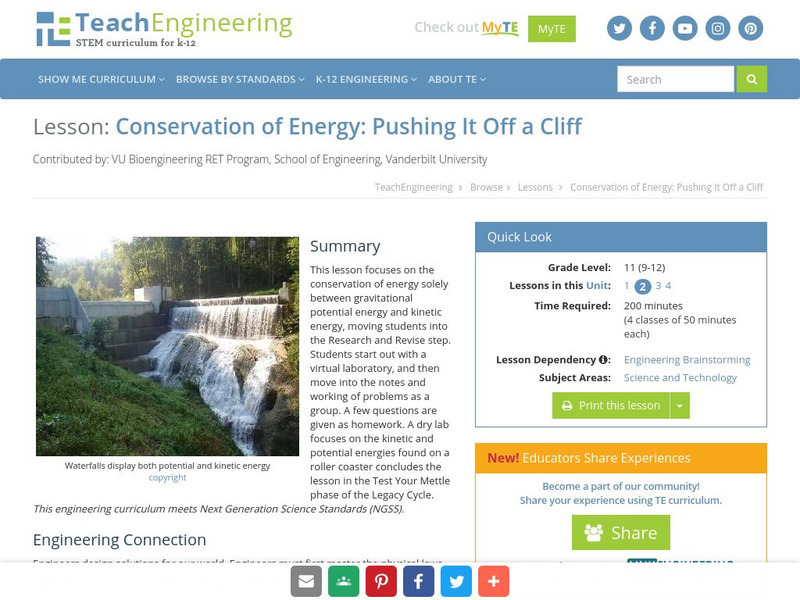
Teach Engineering: Pushing It Off a Cliff
Lesson 2 moves into the Research and Revise step and focuses on the conservation of energy solely between gravitational potential energy and kinetic energy. Young scholars start out with a virtual laboratory, and then move into the notes...
TeachEngineering
Teach Engineering: It's Tiggerific!
In Lesson 3, as part of the Research and Revise step, students investigate potential energy held within springs (elastic potential energy). Class begins with a video of either spring shoes or bungee jumping. Students then move on into...

TeachEngineering
Teach Engineering: Survive That Tsunami!
Students use a table-top-sized tsunami generator to observe the formation and devastation of a tsunami. They see how a tsunami moves across the ocean and what happens when it reaches the continental shelf. Students make villages of model...
TeachEngineering
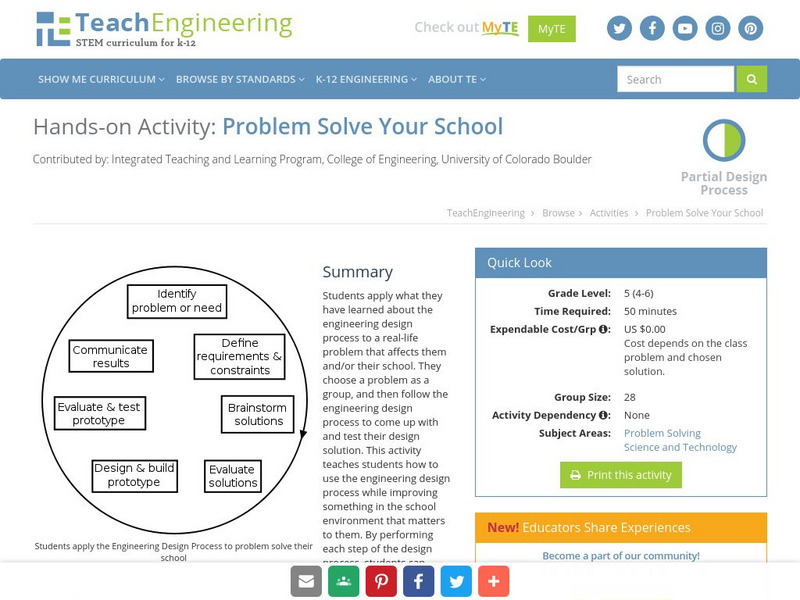
Teach Engineering: Problem Solve Your School
Students apply what they have learned about the engineering design process to a real-life problem that affects them and/or their school. They chose a problem as a group, and then follow the engineering design process to come up with and...
TeachEngineering
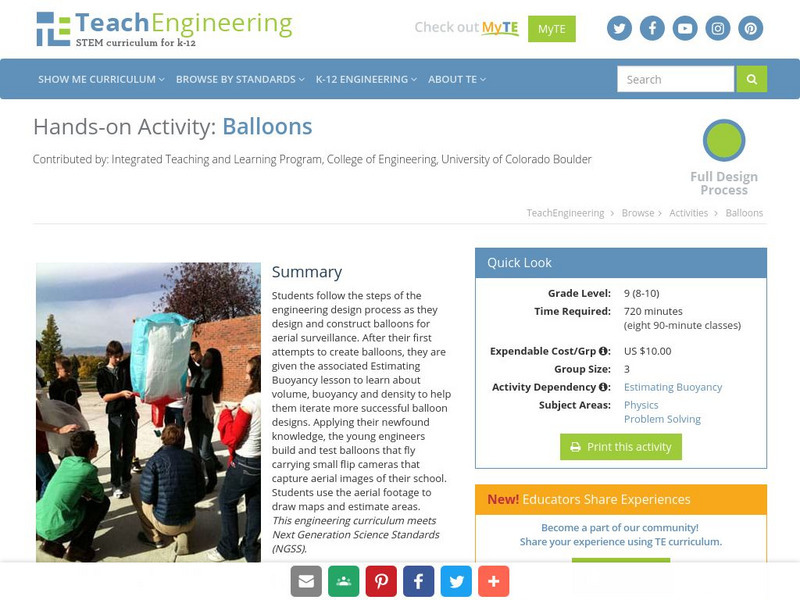
Teach Engineering: Balloons
Students follow the steps of the engineering design process as they design and construct balloons for aerial surveillance. After their first attempts to create balloons, they are given the associated Estimating Buoyancy lesson to learn...
TeachEngineering
Teach Engineering: Simulating the Bug
Students modify a provided App Inventor code to design their own diseases. This serves as the evolution step in the software/systems design process. The activity is essentially a mini design cycle in which students are challenged to...
TeachEngineering
Teach Engineering: Battle of the Beams
Students explore the properties of composites using inexpensive materials and processing techniques. They create beams using Laffy Taffy and water, and a choice of various reinforcements (pasta, rice, candies) and fabricating...
TeachEngineering
Teach Engineering: Making Model Microfluidic Devices Using Jell O
Students create large-scale models of microfluidic devices using a process similar to that of the PDMS and plasma bonding that is used in the creation of lab-on-a-chip devices. They use disposable foam plates, plastic bendable straws and...