Hi, what do you want to do?






TeachEngineering
Teach Engineering: Tracking a Virus
Students simulate the spread of a virus such as HIV through a population by "sharing" (but not drinking) the water in a plastic cup with several classmates. Although invisible, the water in a few of the cups will already be tainted with...

TeachEngineering
Teach Engineering: Do Different Colors Absorb Heat Better?
Students test whether the color of a material affects how much heat it absorbs. Students will place an ice cube in a box made of colored paper (one box per color; white, yellow, red and black), which they will place in the sun. The...
TeachEngineering
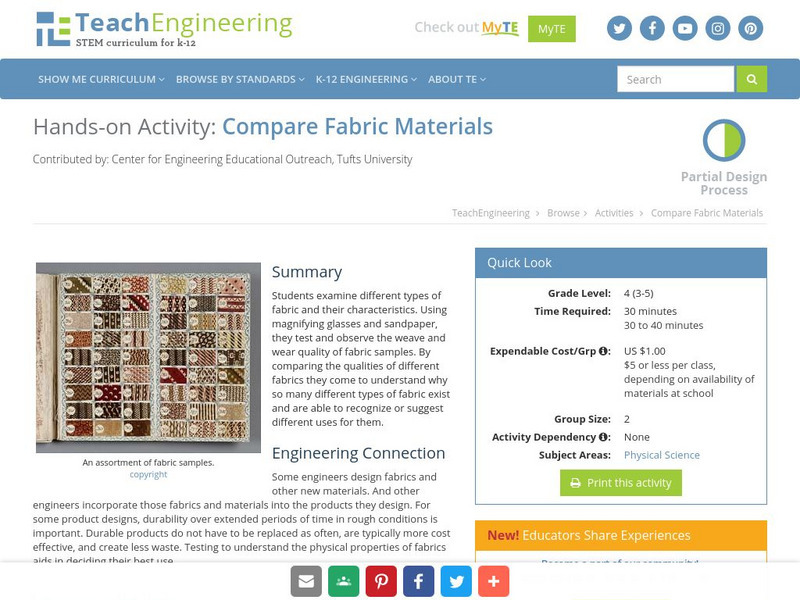
Teach Engineering: Compare Fabric Materials
Students will look at different types of fabric and their respective individual properties. Using a magnifying glass and sandpaper they will test and observe the weave of fabrics and the wear quality of sample fabrics. By comparing the...
TeachEngineering
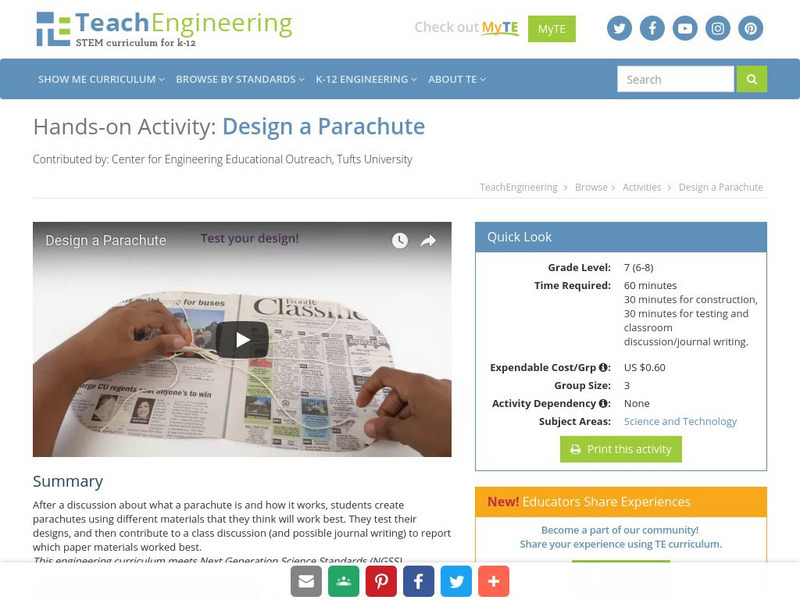
Teach Engineering: Design a Parachute
After a discussion about what a parachute is and how it works, students will create a parachute using different materials that they think will work best. The students will test their designs, which will be followed by a class discussion...
TeachEngineering
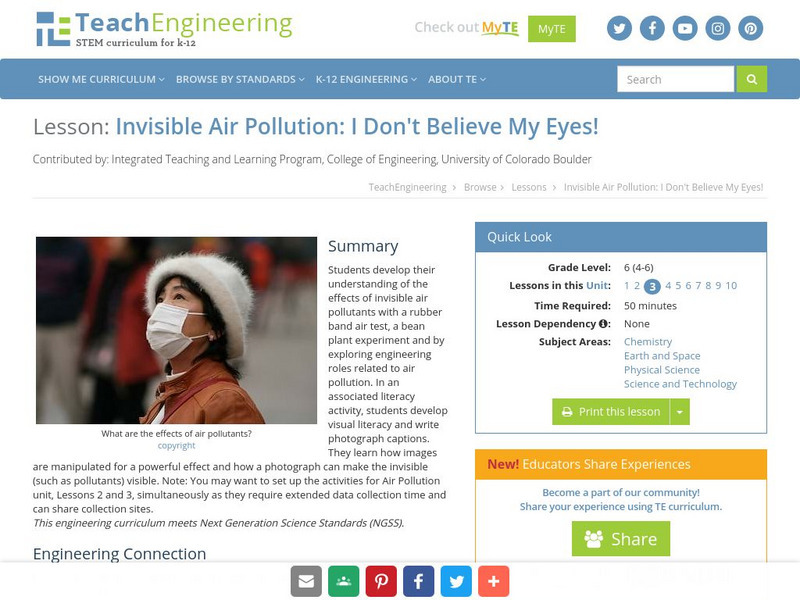
Teach Engineering: I Don't Believe My Eyes!
Students develop their understanding of the effects of invisible air pollutants with a rubber band air test, a bean plant experiment and by exploring engineering roles related to air pollution. In an associated literacy activity,...
TeachEngineering
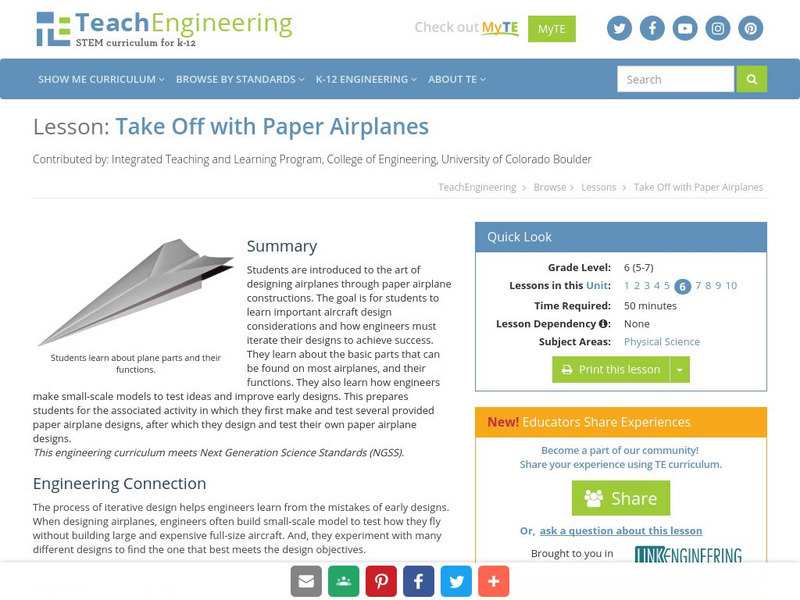
Teach Engineering: Take Off With Paper Airplanes
This lesson introduces students to the art of designing an airplane through paper airplane constructions. The goal is that students will learn important aircraft design considerations and how engineers must iterate their designs to...
TeachEngineering
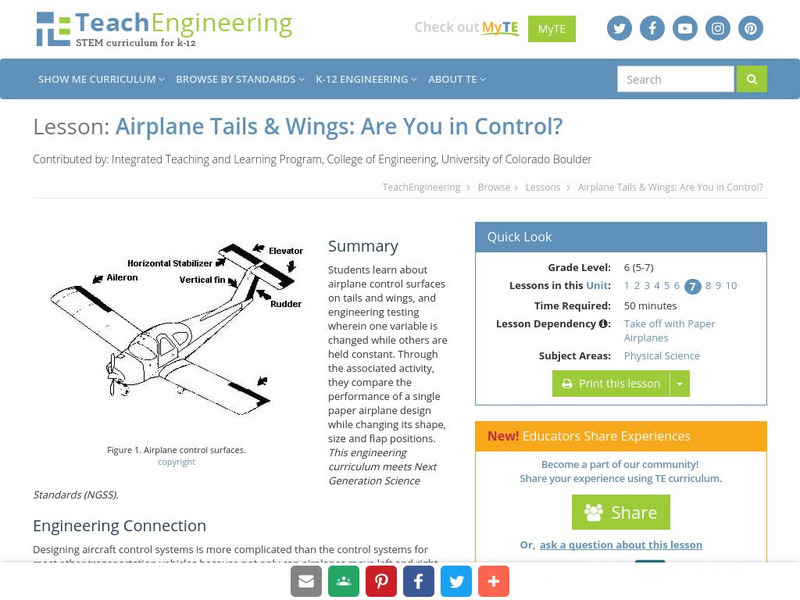
Teach Engineering: Are You in Control?
This lesson teaches the engineering method for testing wherein one variable is changed while the others are held constant. Students compare the performance of a single paper airplane design while changing the shape, size and position of...
TeachEngineering
Teach Engineering: Planting Thoughts
Students gain an understanding of the parts of a plant, plant types and how they produce their own food from sunlight through photosynthesis. They also learn about transpiration, the process by which plants release moisture to the...
TeachEngineering
Teach Engineering: Harnessing Wind
This instructional activity introduces the ways that engineers study and harness the wind. Students will learn about the different kinds of winds and how to measure wind direction. In addition, students will learn how air pressure...
TeachEngineering
Teach Engineering: Let the Sun Shine!
Students learn how the sun can be used for energy. They learn about passive solar heating, lighting and cooking, and active solar engineering technologies (such as photovoltaic arrays and concentrating mirrors) that generate electricity....
TeachEngineering
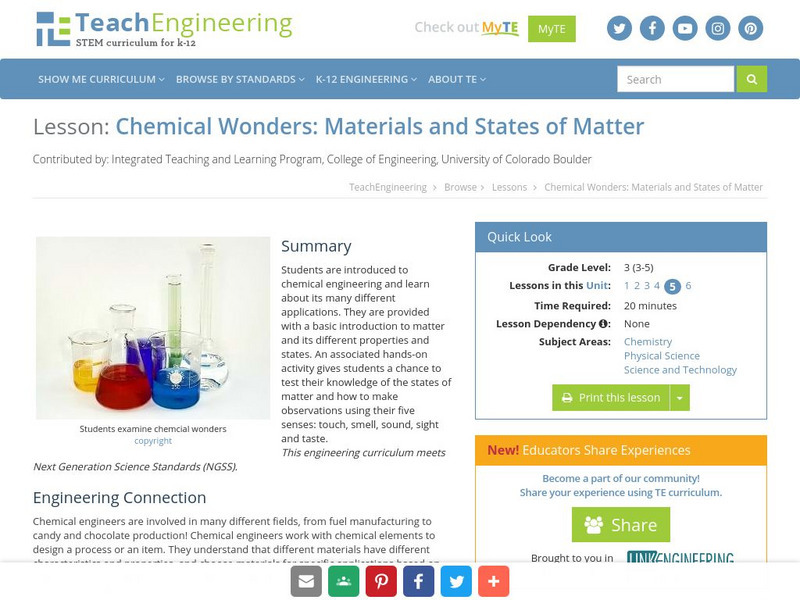
Teach Engineering: Chemical Wonders
Learners are introduced to chemical engineering and learn about its many different applications. They are provided with a basic introduction to matter and its different properties and states. An associated hands-on activity gives...
TeachEngineering
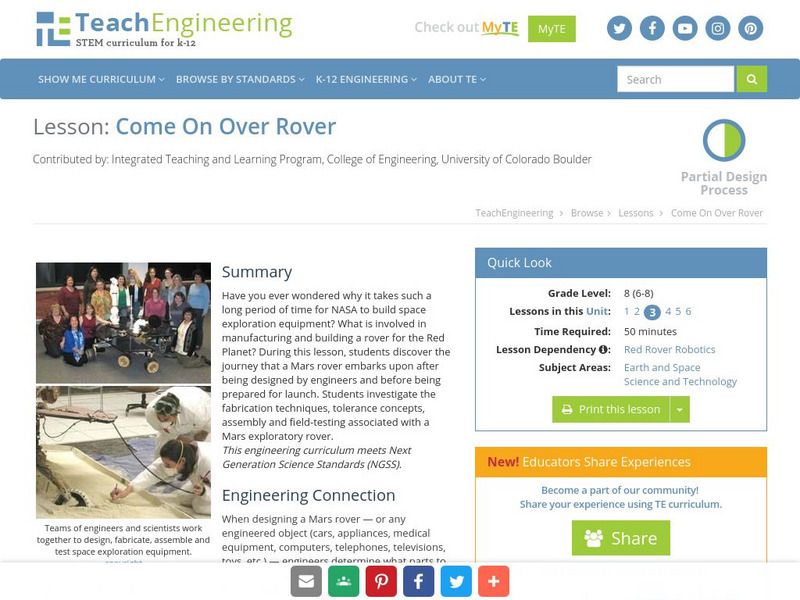
Teach Engineering: Come on Over Rover
Have you ever wondered why it takes such a long period of time for NASA to build space exploration equipment? What is involved in manufacturing and building a rover for the Red Planet? During this instructional activity, students will...
TeachEngineering
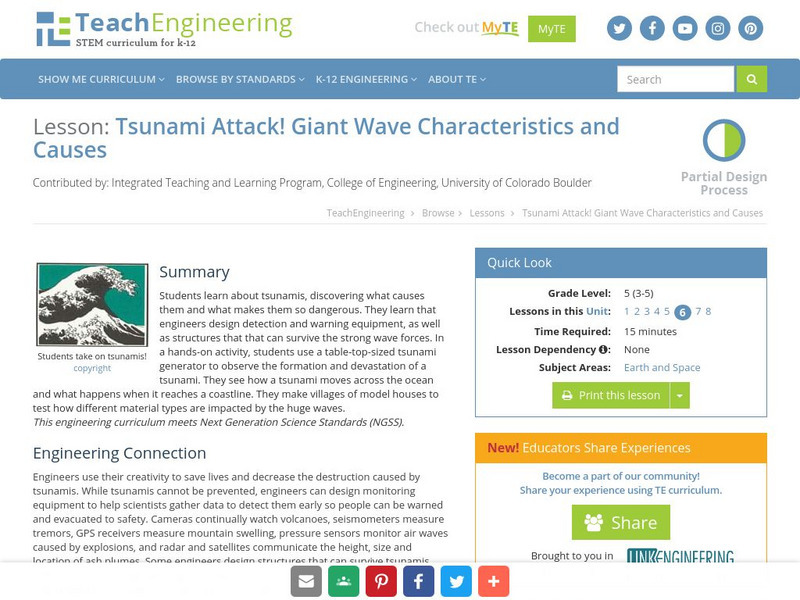
Teach Engineering: Tsunami Attack!
Students learn about tsunamis, discovering what causes them and what makes them so dangerous. They learn that engineers design detection and warning equipment, as well as structures that that can survive the strong wave forces. In a...
TeachEngineering
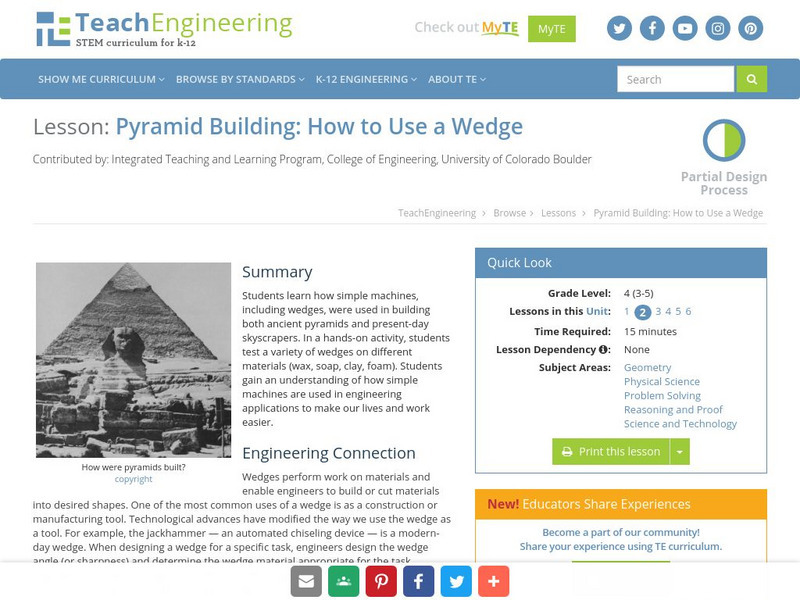
Teach Engineering: Pyramid Building: How to Use a Wedge
Learners learn how simple machines, including wedges, were used in building both ancient pyramids and present-day skyscrapers. In a hands-on activity, students test a variety of wedges on different materials (wax, soap, clay, foam)....
TeachEngineering
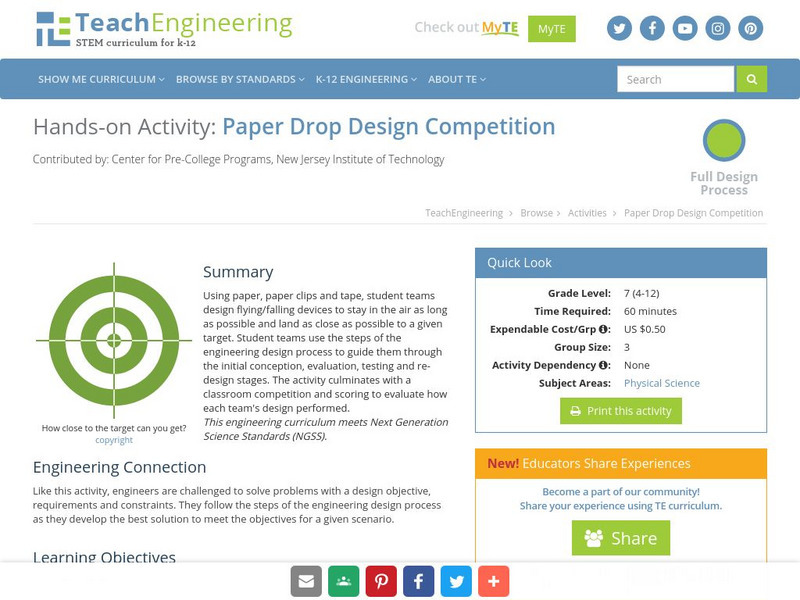
Teach Engineering: Paper Drop Design Competition
Using paper, paper clips and tape, student teams design flying devices to (1) stay in the air as long as possible and (2) land as close as possible to a given target. Student teams will use the engineering design process to guide them...
TeachEngineering
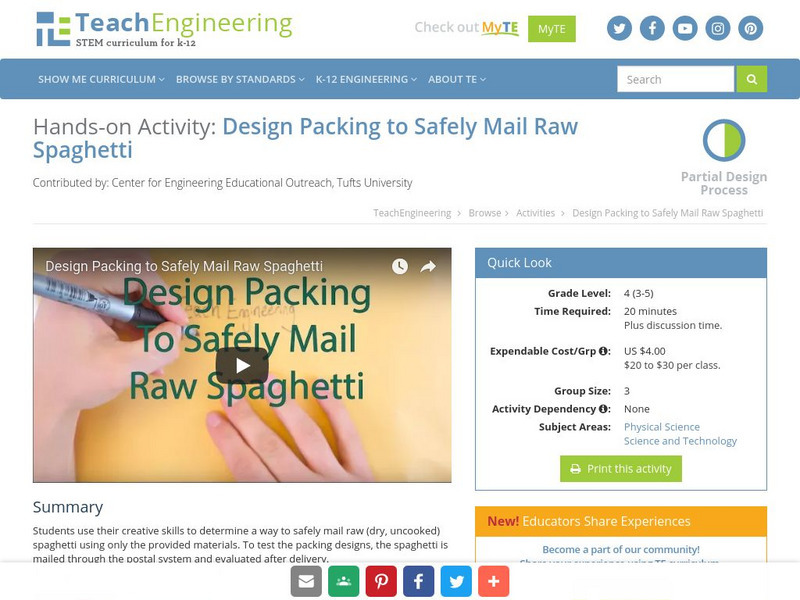
Teach Engineering: Design Packing to Safely Mail Raw Spaghetti
Students will use their creative skills to determine a way to mail raw spaghetti. The students will need to choose a way to safely package their raw spaghetti using only the materials provided. To test the packing designs, the spaghetti...
TeachEngineering
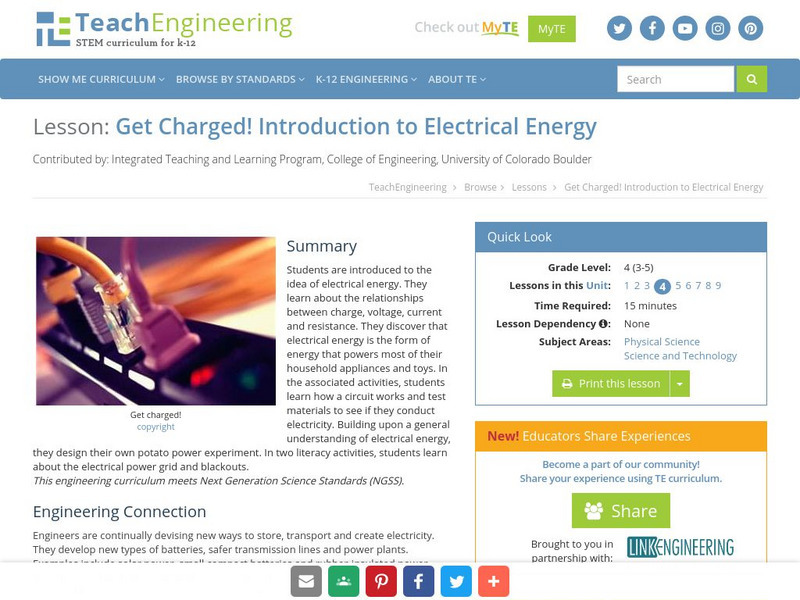
Teach Engineering: Get Charged!
Students are introduced to the idea of electrical energy. They learn about the relationships between charge, voltage, current and resistance. They discover that electrical energy is the form of energy that powers most of their household...
Wolfram Research
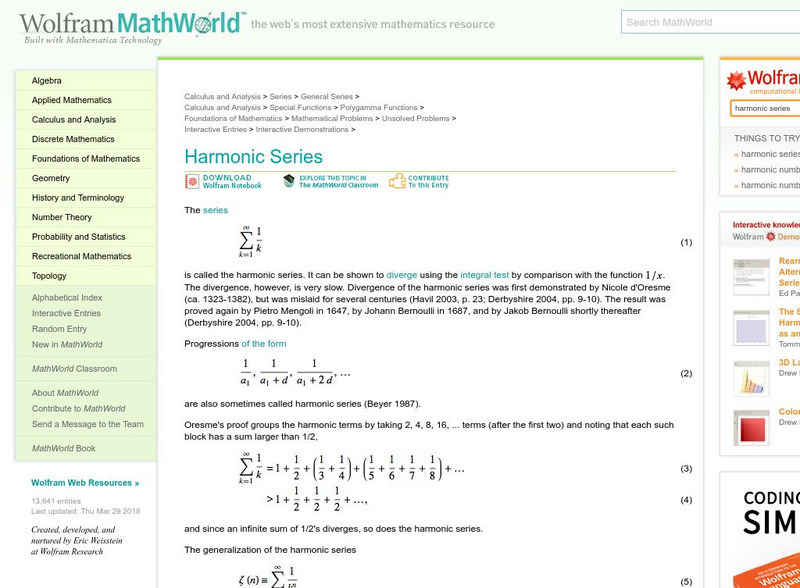
Wolfram Math World: Harmonic Series
This MathWorld site provides a general overview of the harmonic series.
Digital History
Digital History: To the Heart of Dixie
In the early 1960s civil rights activists put the ban on segregation to the test. In 1961, "Freedom riders," boarded buses headed south to test the federal ban on segregated travel. And in 1962, the University of Mississippi was ordered...

Department of Defense
Do Dea: Fundamental Theorem of Calculus Part 2
This part of the Fundamental Theorem of Calculus tells us what happens when you take the derivative of an integral that has a variable as an upper limit of integration. Examples and explanations are provided. Great review for the AP...
NumberNut
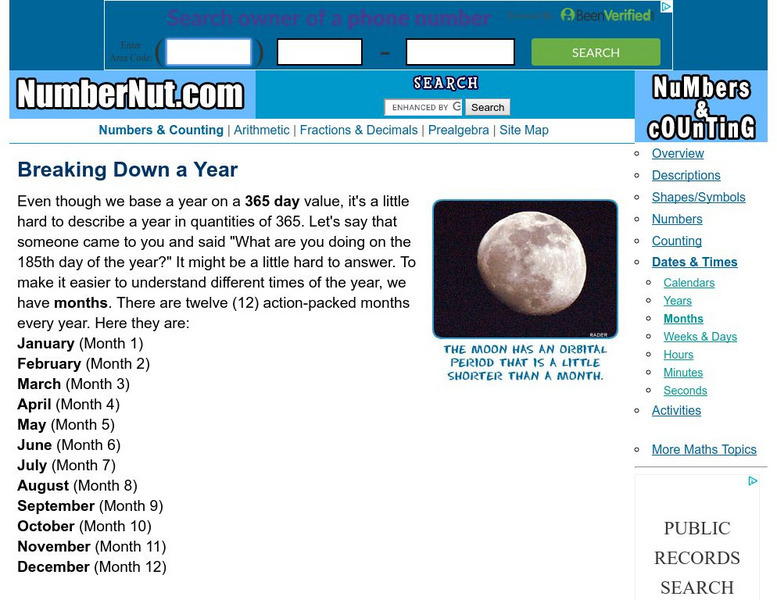
Number Nut: Breaking Down a Year
Math and science are uncovered when we break down the numbers in a year. Build you number sense and science knowledge in this lesson that focuses on the relationships of numbers in a calendar year. Test your knowledge with the...
Department of Defense
Do Dea: Ap Calculus
View xplanations and examples using the Fundamental Theorem of Calculus. Great review for the AP Calculus test!
TeachEngineering
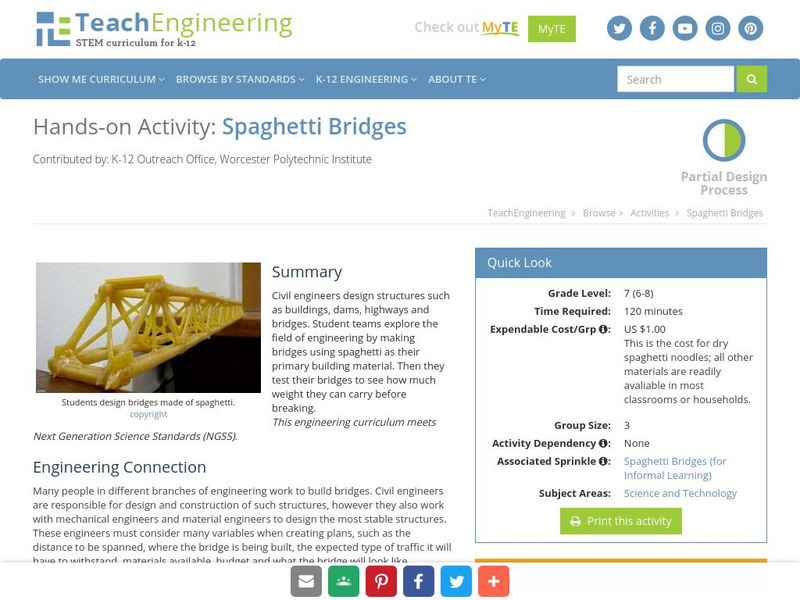
Teach Engineering: Spaghetti Bridge
Civil engineers design and construct structures such as buildings, dams, and bridges. We can explore the field of engineering by making a bridge using spaghetti. This bridge is then tested based on the weight it can carry without breaking.
Math2
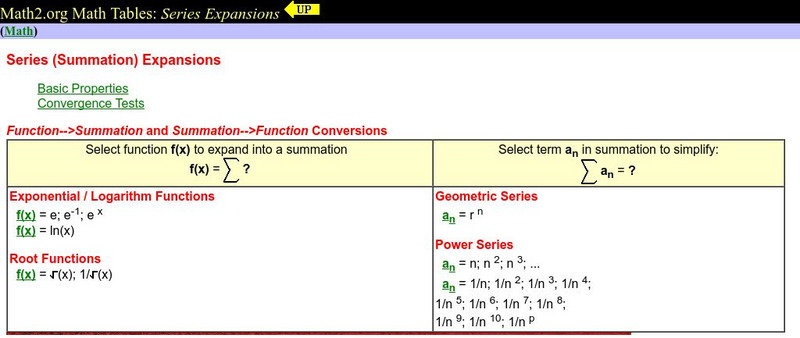
Math2.org: Series Expansion
A lengthy look at the rules and formulas of calculus Fourier series. Included topics: Fourier series of functions, remainders of Fourier series, Riemann's theorem, Parseval's theorem, arbitrary intervals, and Fourier transformations.