Hi, what do you want to do?





TeachEngineering
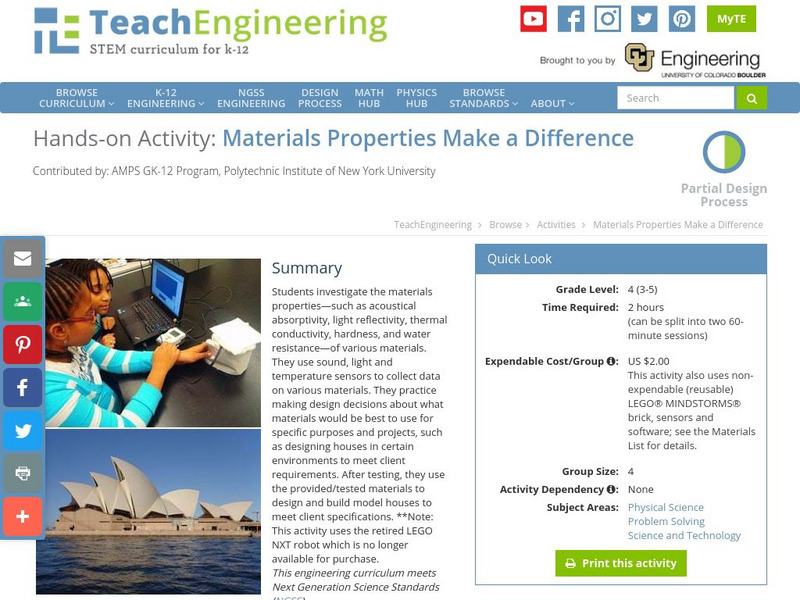
Teach Engineering: Materials Properties Make a Difference
Students investigate the materials properties-such as acoustical absorptivity, light reflectivity, thermal conductivity, hardness, and water resistancea-of various materials. They use sound, light and temperature sensors to collect data...
TeachEngineering
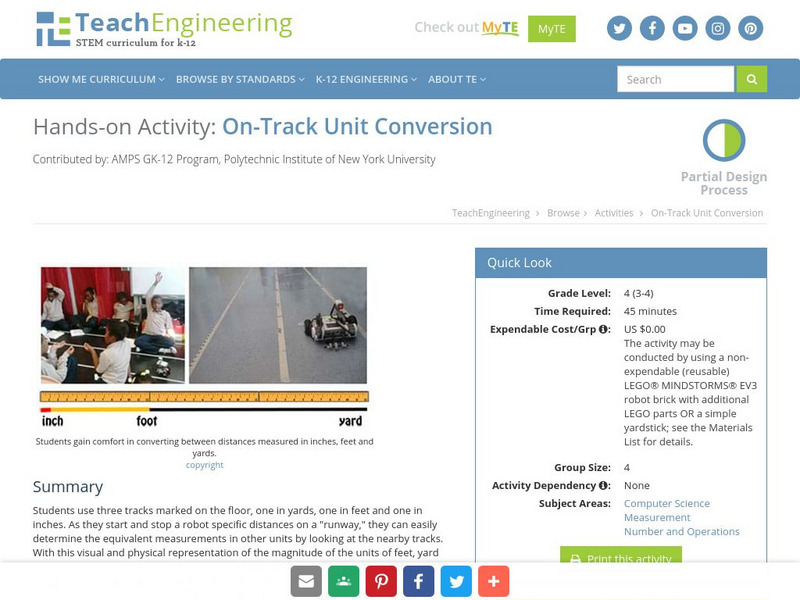
Teach Engineering: On Track Unit Conversion
Students use three tracks marked on the floor, one in yards, one in feet and one in inches. As they start and stop a robot specific distances on a "runway," they can easily determine the equivalent measurements in other units by looking...
TeachEngineering
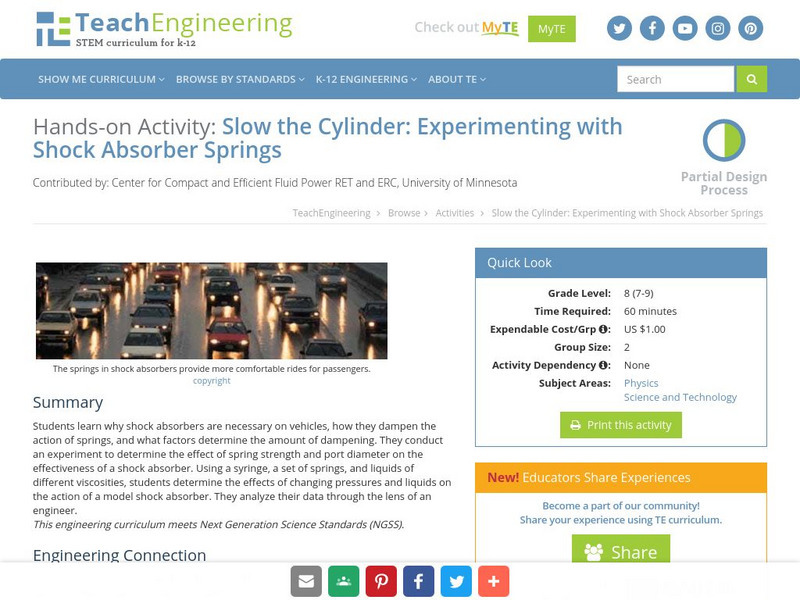
Teach Engineering: Slow the Cylinder
Students learn why shock absorbers are necessary on vehicles, how they dampen the action of springs, and what factors determine the amount of dampening. They conduct an experiment to determine the effect of spring strength and port...
TeachEngineering
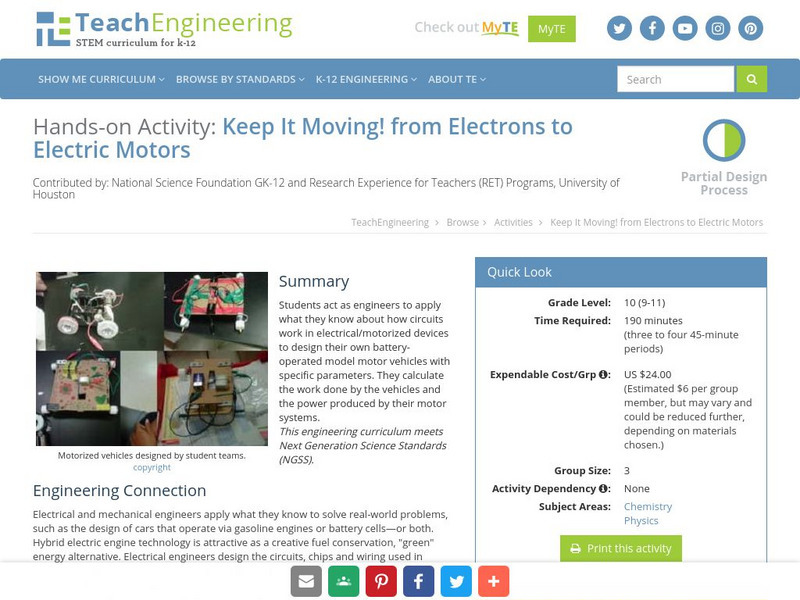
Teach Engineering: Keep It Moving! From Electrons to Electric Motors
Students act as engineers to apply what they know about how circuits work in electrical/motorized devices to design their own battery-operated model motor vehicles with specific paramaters. They calculate the work done by the vehicles...
TeachEngineering
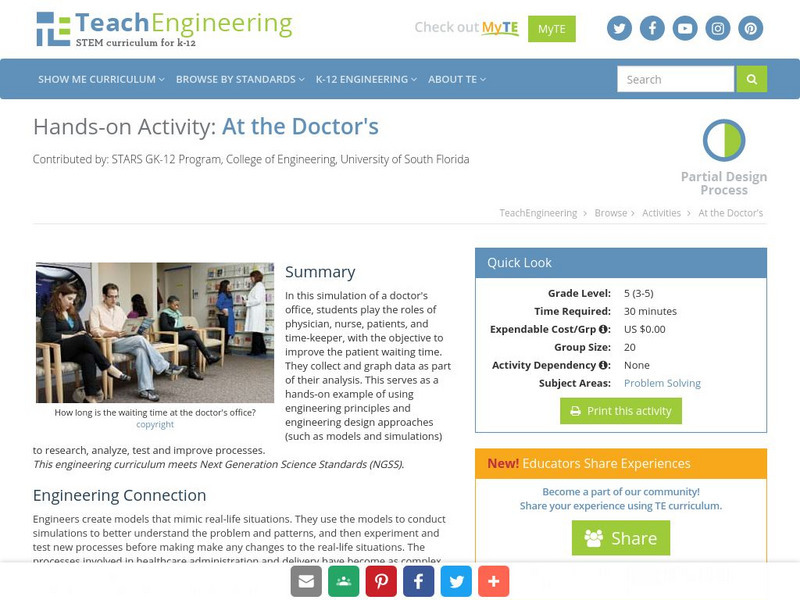
Teach Engineering: At the Doctor's
In this simulation of a doctor's office, students play the roles of physician, nurse, patients, and time-keeper, with the objective to improve the patient waiting time. They collect and graph data as part of their analysis. This serves...
TeachEngineering
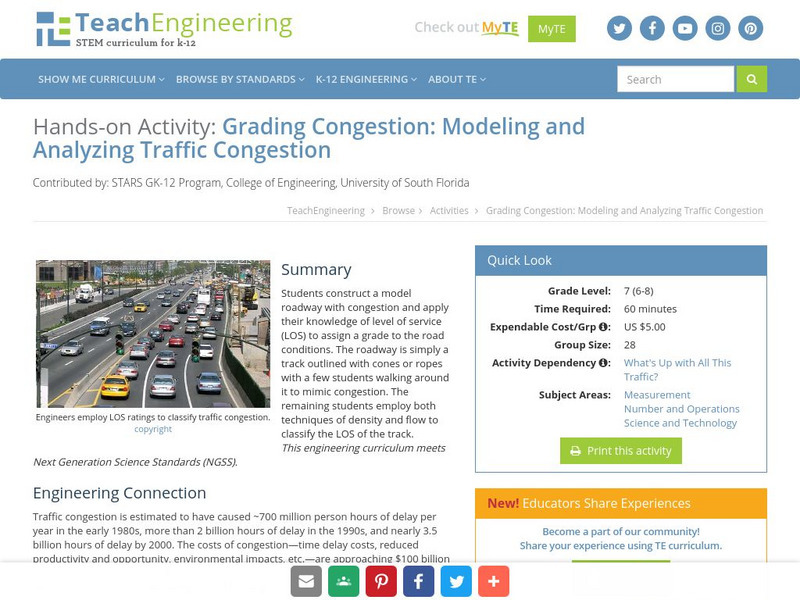
Teach Engineering: Grading Congestion
Students construct a model roadway with congestion and apply their knowledge of level of service (LOS) to assign a grade to the road conditions. The roadway is simply a track outlined with cones or ropes with a few students walking...
TeachEngineering
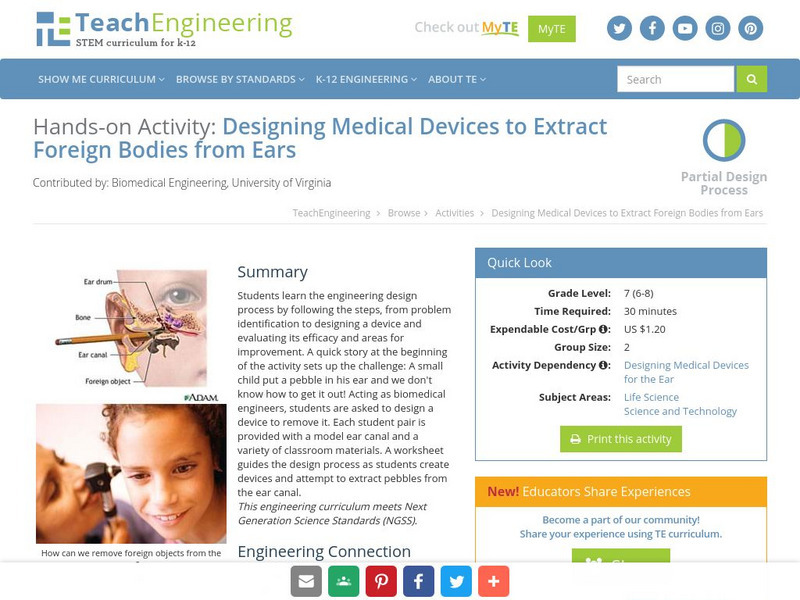
Teach Engineering: Designing a Medical Device
Students learn the engineering design process by following the steps, from problem identification to designing a device and evaluating its efficacy and areas for improvement. A quick story at the beginning of the activity sets up the...

TeachEngineering
Teach Engineering: Adaptations for Aeronautical Engineering
This activity first asks the students to study the patterns of bird flight and understand that four main forces affect the flight abilities of a bird. They will study the shape, feather structure, and resulting differences in the pattern...
TeachEngineering
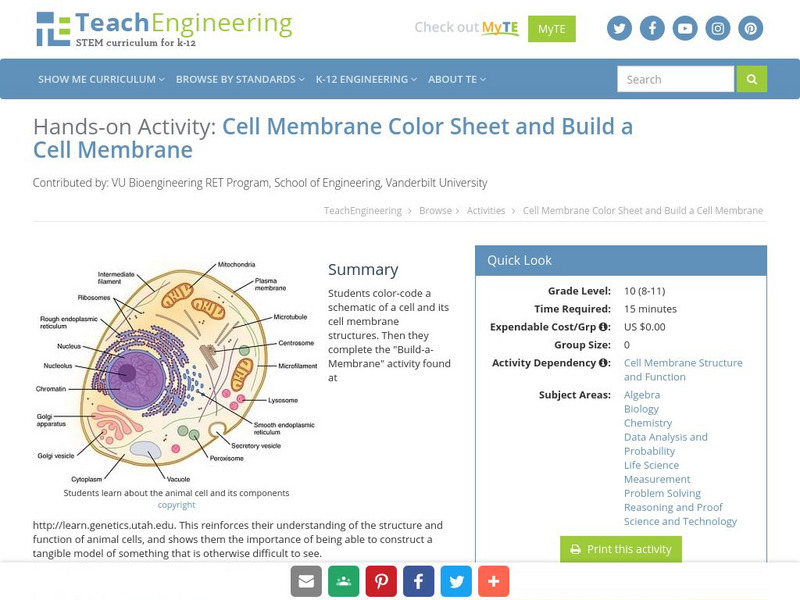
Teach Engineering: Cell Membrane Color Sheet and Build a Cell Membrane
Students color-code a schematic of a cell and its cell membrane structures. Then they complete the "Build-a-Membrane" activity found at http://learn.genetics.utah.edu. This reinforces their understanding of the structure and function of...
TeachEngineering
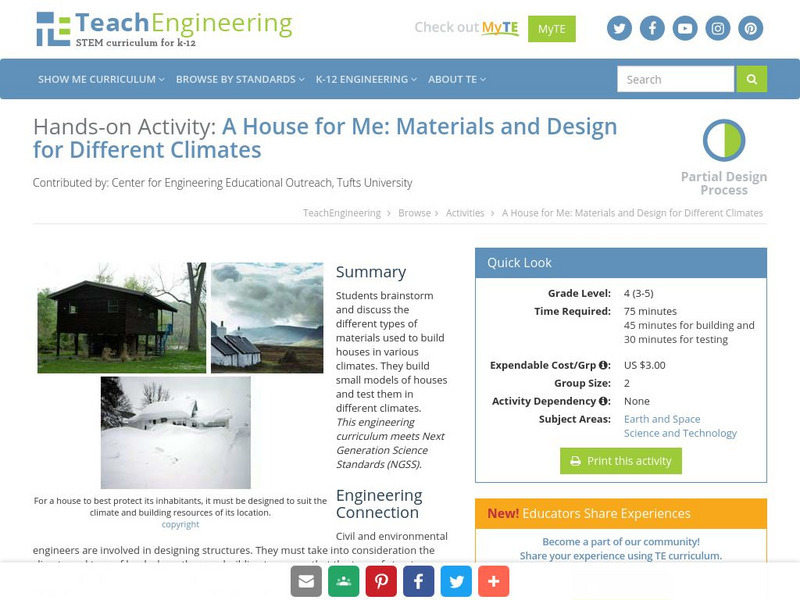
Teach Engineering: A House Is a House for Me
Students brainstorm and discuss the different types of materials used to build houses in various climates. Small models of houses are built and tested against different climates.
TeachEngineering
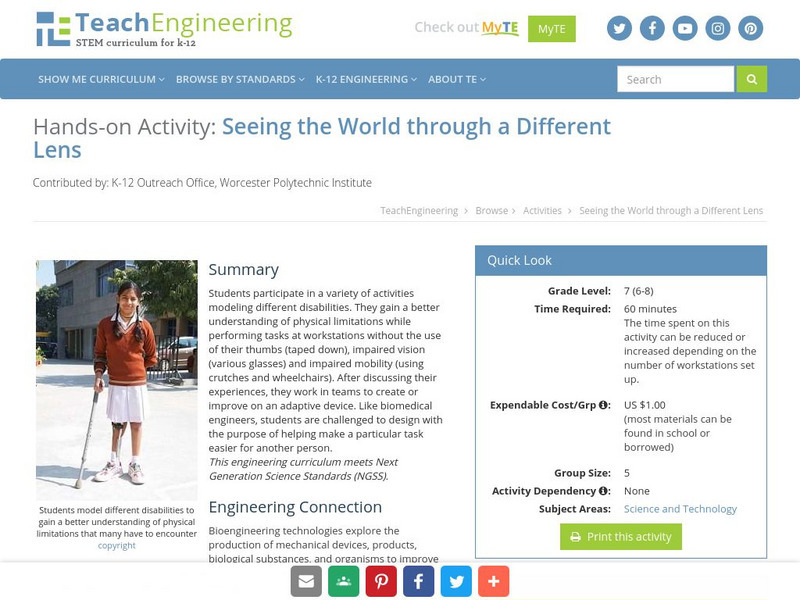
Teach Engineering: Seeing the World Through a Different Lens
Students will participate in a variety of activities modeling different disabilities. After discussing their experiences, students work in teams to devise or improve on an adaptive device.
TeachEngineering
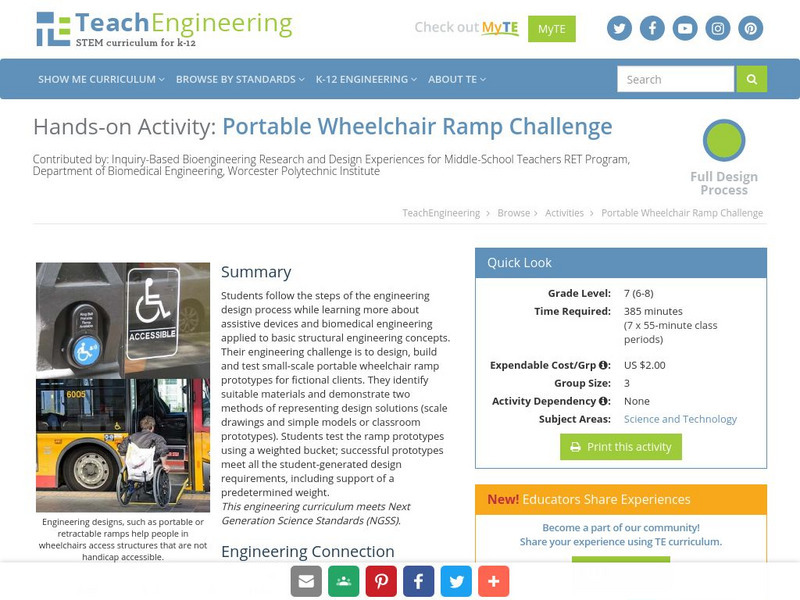
Teach Engineering: Portable Wheelchair Ramp Challenge
Students follow the steps of the engineering design process while learning more about assistive devices and biomedical engineering applied to basic structural engineering concepts. Their engineering challenge is to design, build and test...
TeachEngineering
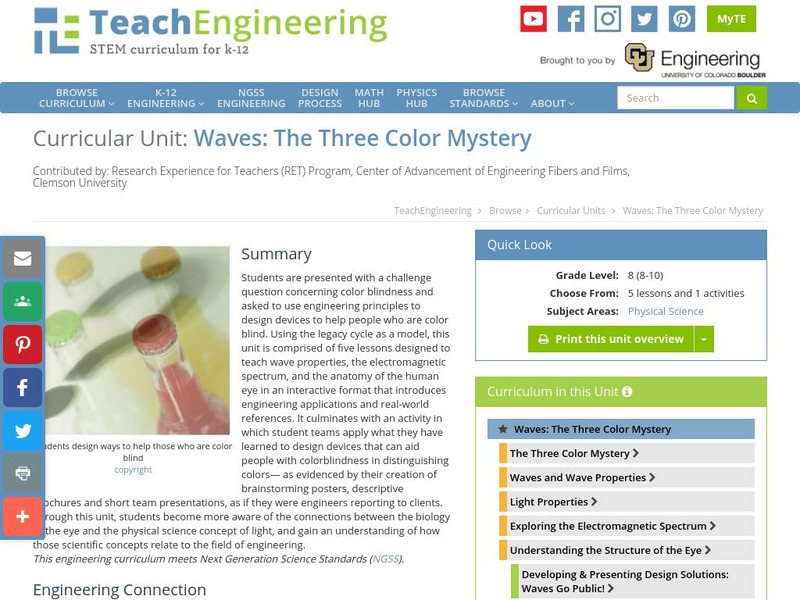
Teach Engineering: Waves: The Three Color Mystery
Students are presented with a challenge question concerning color blindness and asked to use engineering principles to design devices to help people who are color blind. Using the legacy cycle as a model, this unit is comprised of five...
TeachEngineering
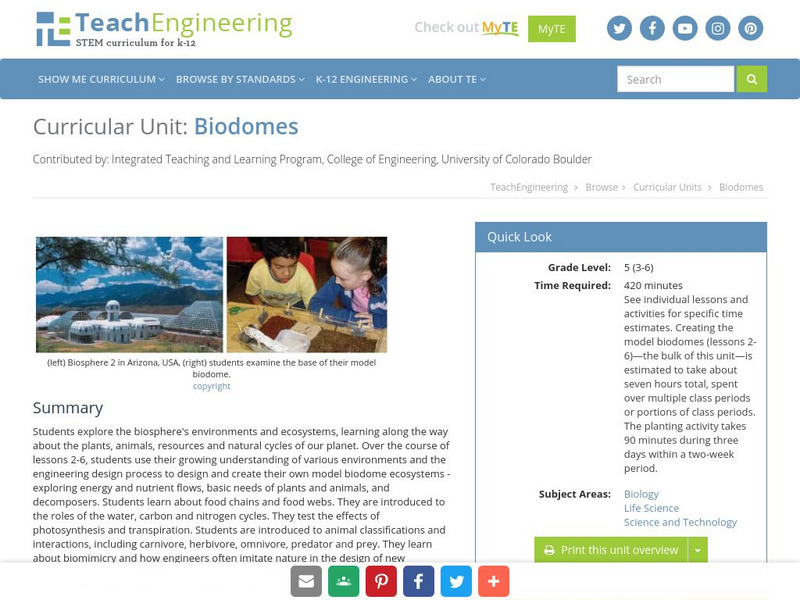
Teach Engineering: Biodomes
Students explore the biosphere's environments and ecosystems, learning along the way about the plants, animals, resources and natural cycles of our planet. Over the course of lessons 2-6, students use their growing understanding of...
TeachEngineering
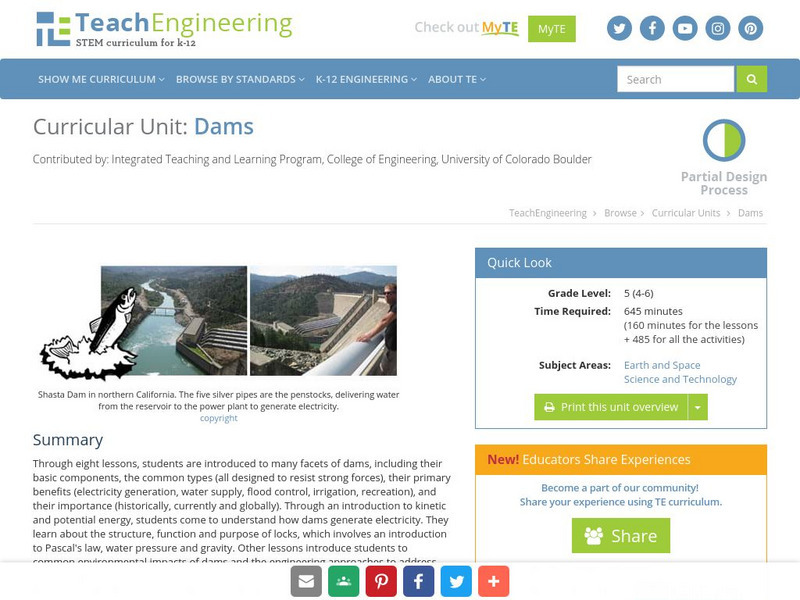
Teach Engineering: Dams
Through eight lessons, students are introduced to many facets of dams, including their basic components, the common types (all designed to resist strong forces), their primary benefits (electricity generation, water supply, flood...

TeachEngineering
Teach Engineering: Life Science
This unit covers the processes of photosynthesis, extinction, biomimicry and bioremediation. In the first lesson on photosynthesis, students learn how engineers use the natural process of photosynthesis as an exemplary model of a complex...
TeachEngineering
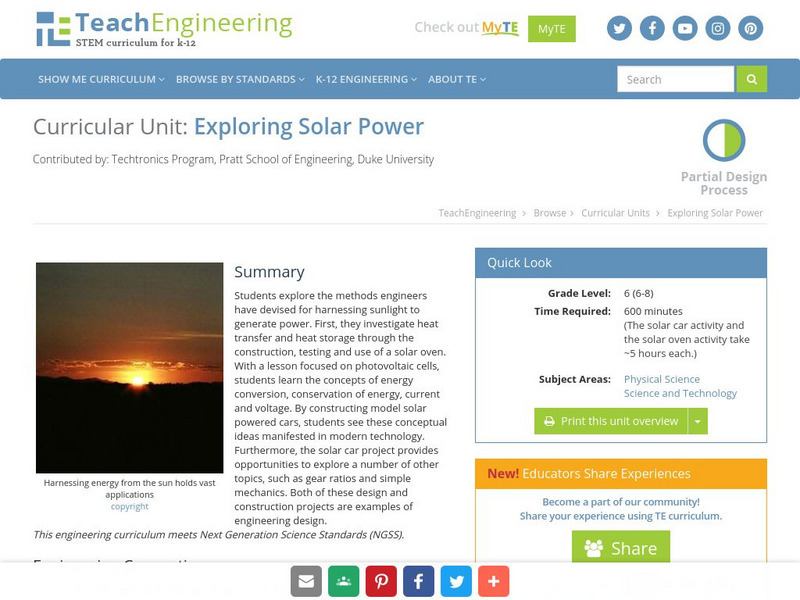
Teach Engineering: Exploring Solar Power
This unit provides students the opportunity to explore methods engineers have devised for harnessing sunlight to generate power. Students will initially explore heat transfer and heat storage through the construction, testing, and...

TeachEngineering
Teach Engineering: Teaching the Engineering Design Process
Students follow the steps of the engineering design process (EDP) while learning about assistive devices and biomedical engineering. They first go through a design-build-test activity to learn the steps of the cyclical engineering design...
TeachEngineering
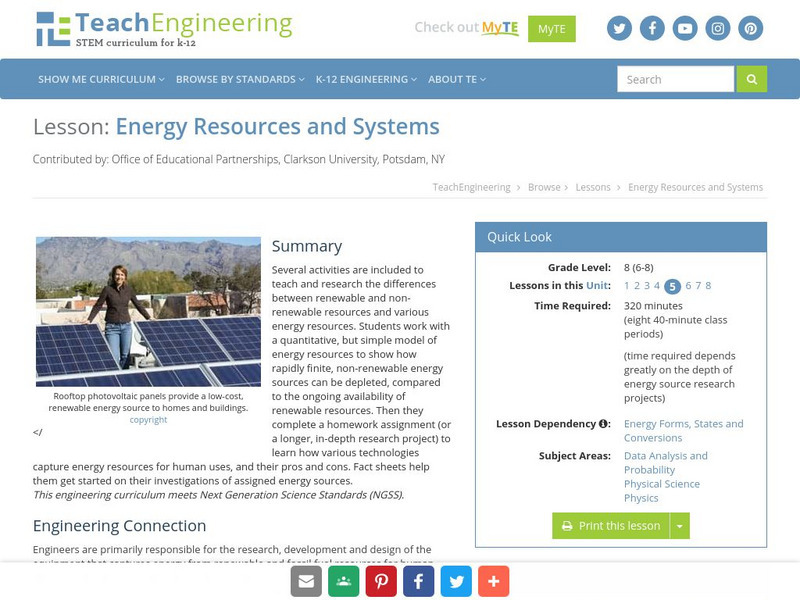
Teach Engineering: Energy Resources and Systems
Several activities are included to teach and research the differences between renewable and non-renewable resources and various energy resources. Middle schoolers work with a quantitative, but simple model of energy resources to show how...
TeachEngineering
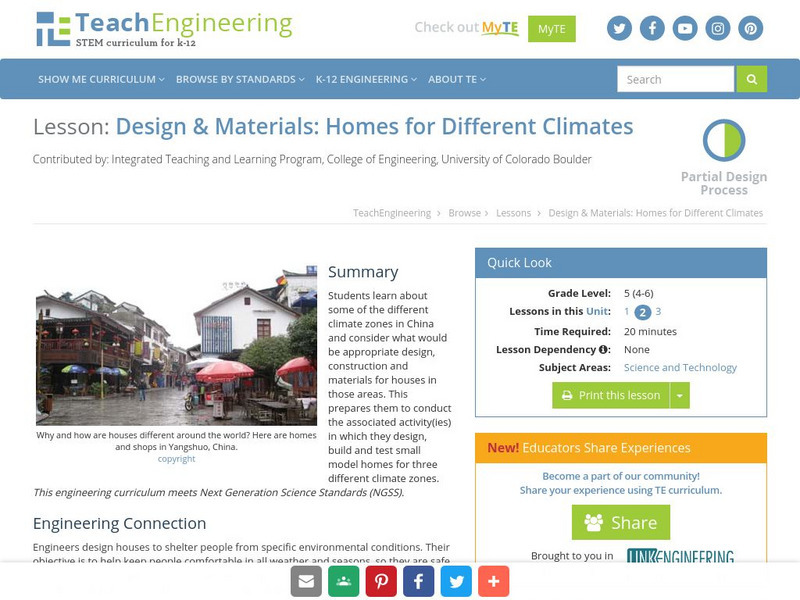
Teach Engineering: Homes for Different Climates
Students learn about some of the different climate zones in China and consider what would be appropriate design, construction and materials for houses in those areas. This prepares them to conduct the associated activity(ies) in which...

TeachEngineering
Teach Engineering: Photosynthesis Life's Primary Energy Source
This lesson covers the process of photosynthesis and the related plant cell functions of transpiration and cellular respiration. Students will learn how engineers can use the natural process of photosynthesis as an exemplary model of a...
TeachEngineering
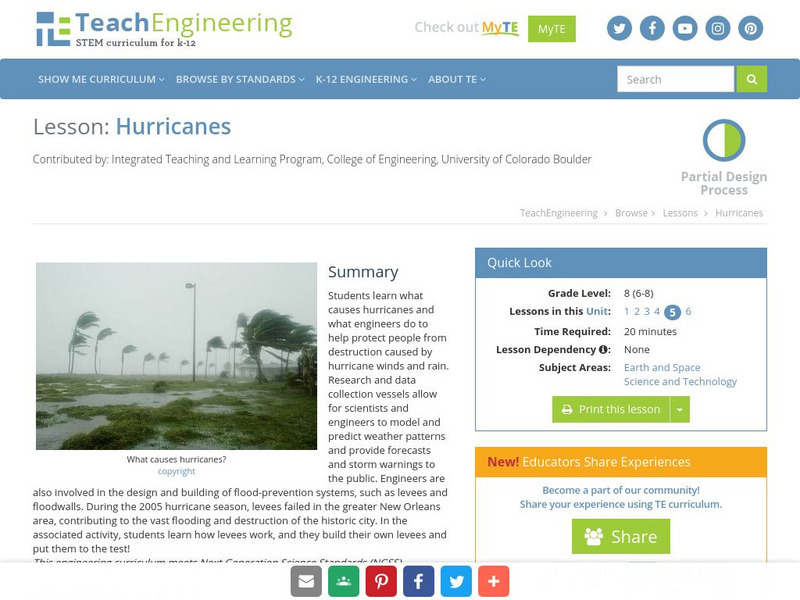
Teach Engineering: Hurricanes
Students learn what causes hurricanes and what engineers do to help protect people from destruction caused by hurricane winds and rain. Research and data collection vessels allow for scientists and engineers to model and predict weather...
TeachEngineering
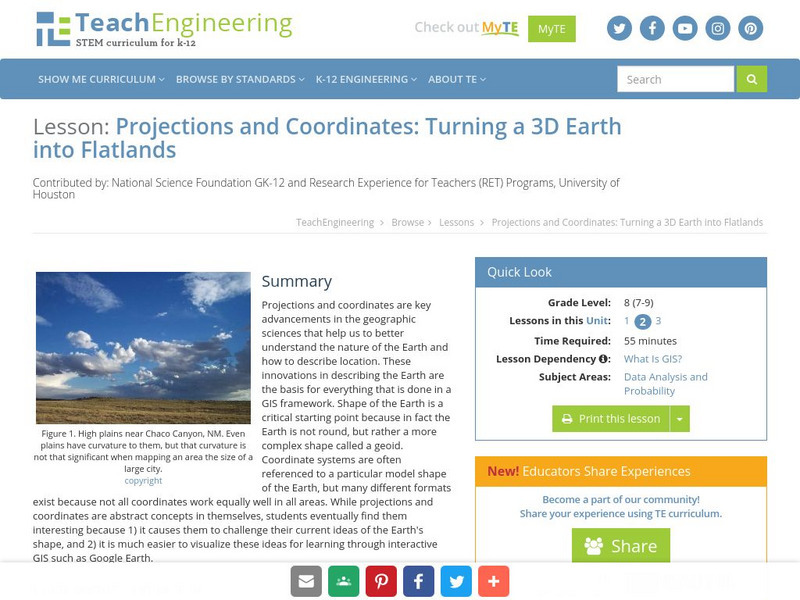
Teach Engineering: Projections and Coordinates: Turning a 3 D Earth Into Flatlands
Projections and coordinates are key advancements in the geographic sciences that allow us to better understand the nature of the Earth and how to describe location. These innovations in describing the Earth are the basis for everything...
TeachEngineering
Teach Engineering: Applications of Linear Functions
This instructional activity culminates the unit with the Go Public phase of the legacy cycle. In the associated activities, students use linear models to depict Hooke's law as well as Ohm's law. To conclude the instructional activity,...