Hi, what do you want to do?





Arizona State University
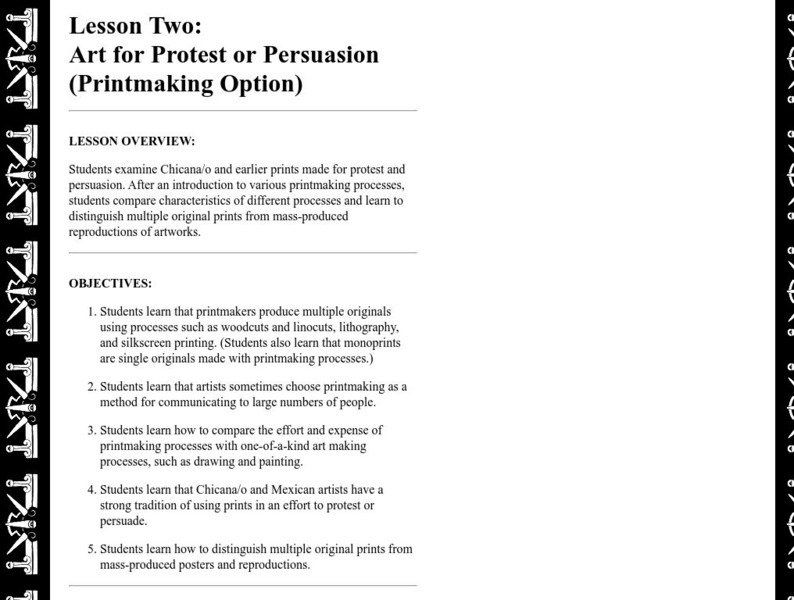
Asu: Lesson Two: Art for Protest or Persuasion (Printmaking Option)
Site for teachers who are seeking to integrate art and printmaking with language, communication and social studies. It is based on Chicano and Mexican use of the print to make social statements.

TeachEngineering
Teach Engineering: Biodomes Engineering Design Project: Lessons 2 6
In this lesson students learn about biodomesand how engineers use them. Students then create their own biodomes.
Better Lesson
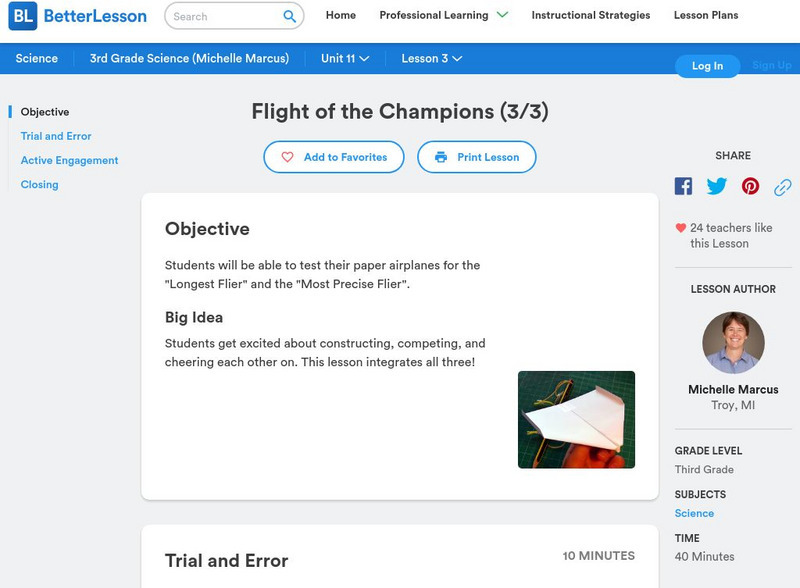
Better Lesson: Flight of the Champions (3/3)
Third graders get excited about constructing, competing, and cheering each other on. This lesson integrates all three!
Other
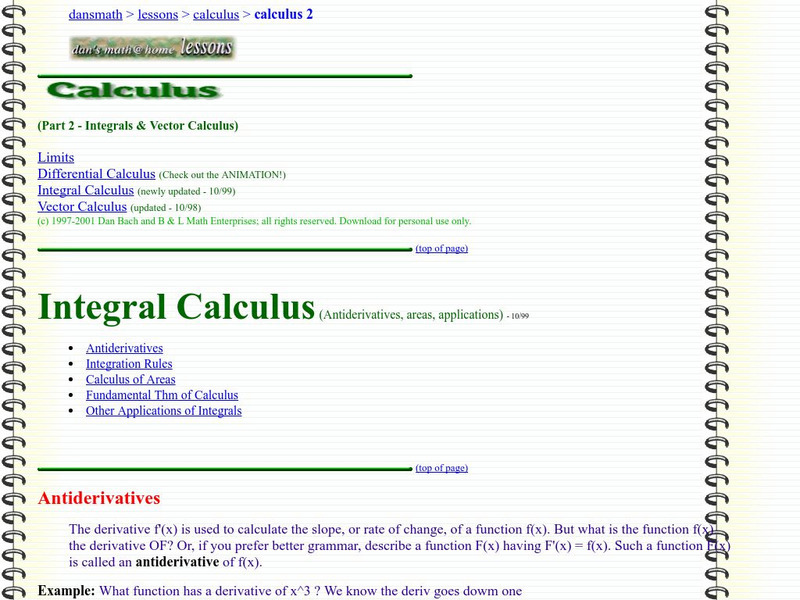
Dans Math: Lessons: Calculus (Part 2)
College professor Dan Bach offers a review of the calculus concepts of integrals and vectors. Examples and animated graphs are provided.

Alabama Learning Exchange
Alex: Character Education Integrity
The purpose of this lesson is to identify some of the skills and attitudes that are essential for solving problems effectively. This lesson will be implemented as part of a character education unit on integrity. The meaning of integrity...
TeachEngineering
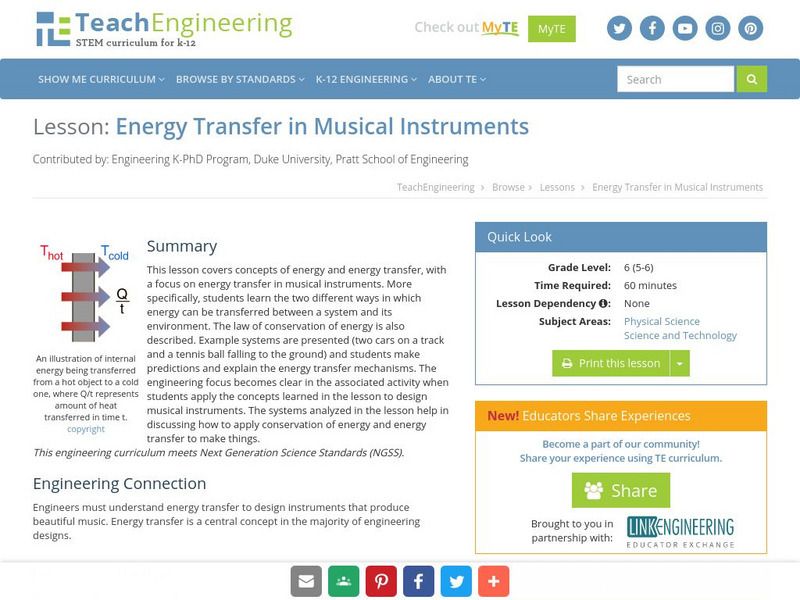
Teach Engineering: Energy Transfer in Musical Instruments
This lesson covers concepts of energy and energy transfer utilizing energy transfer in musical instruments as an example. More specifically, the lesson explains the two different ways in which energy can be transferred between a system...

TeachEngineering
Teach Engineering: The Other Water Cycle
For students that have already been introduced to the water cycle, this lesson is intended as a logical follow-up. Students will learn about human impacts on the water cycle that create a pathway for pollutants beginning with urban...
TeachEngineering
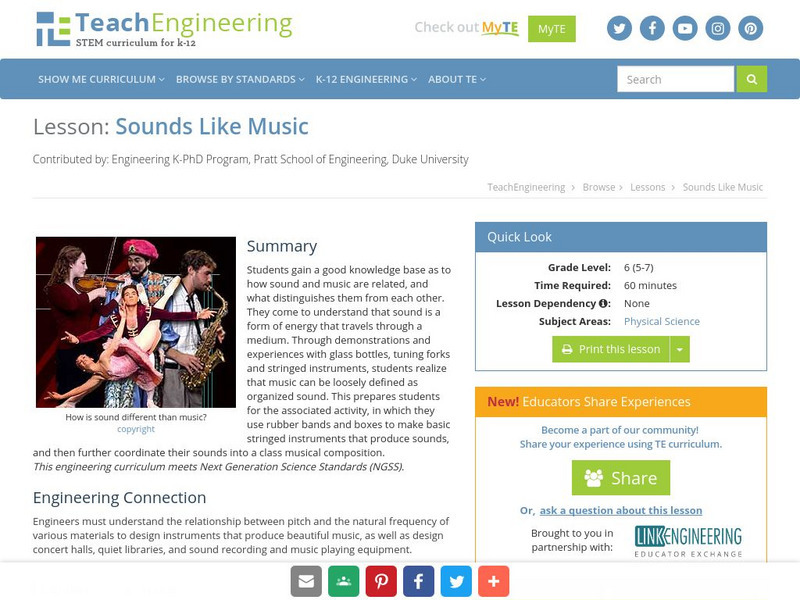
Teach Engineering: Sounds Like Music
Music can loosely be defined as organized sound. The lesson plan objectives, understanding sound is a form of energy, understanding pitch, understanding sound traveling through a medium, and being able to separate music from sound, can...
TeachEngineering
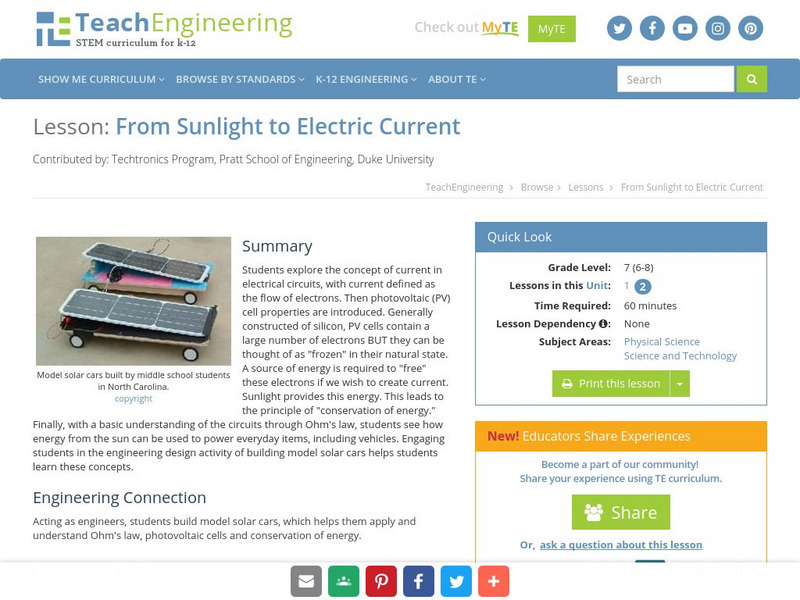
Teach Engineering: From Sunlight to Electric Current
The lesson will first explore the concept of current in electrical circuits. Current will be defined as the flow of electrons. Photovoltaic (PV) cell properties will then be introduced. This will lead to the principle of "Conservation of...
TeachEngineering
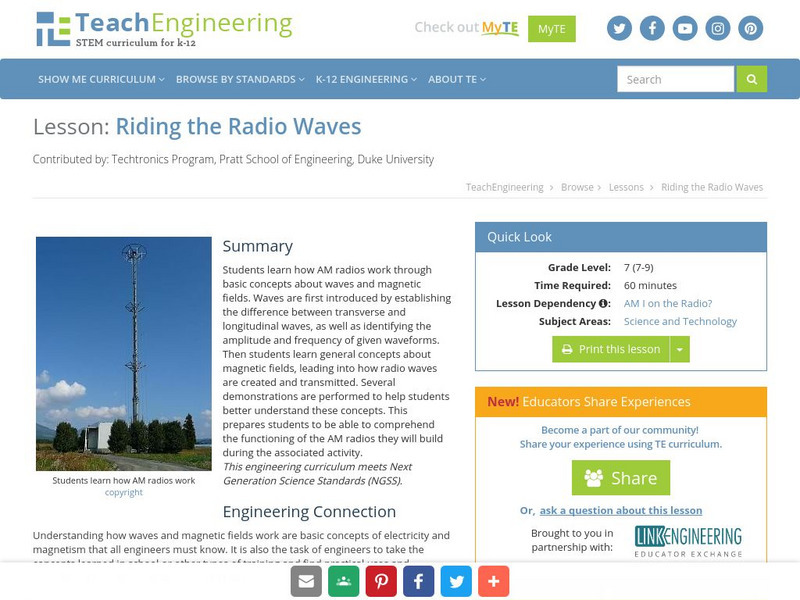
Teach Engineering: Riding the Radio Waves
In this lesson plan students learn how AM radios work through basic concepts about waves and magnetic fields. Waves are first introduced by establishing the difference between transverse and longitudinal waves, as well as identifying the...

Incredible Art Department
The Incredible Art Department: Art Tessellations
Looks at tessellation artists, including M.C. Escher, Robert Fathauer, and Roger Penrose. This is followed by a discussion of fractals and their similarities and differences to tessellations, and links to lessons and resources on...
TeachEngineering
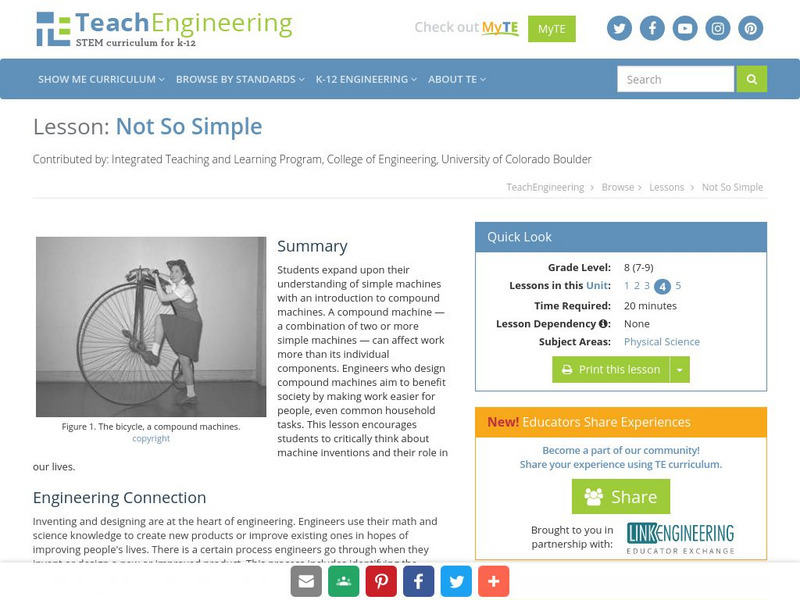
Teach Engineering: Not So Simple
Middle schoolers expand upon their understanding of simple machines with an introduction to compound machines. A compound machine - a combination of two or more simple machines - can affect work more than its individual components....
TeachEngineering
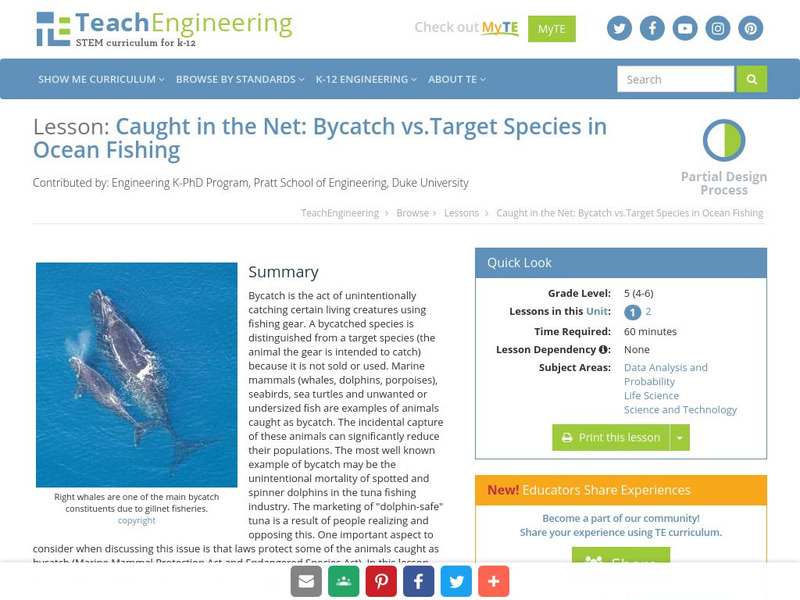
Teach Engineering: Caught in the Net
Bycatch can be defined as the act of unintentionally catching certain living creatures using fishing gear. A bycatched species is distinguished from a target species (the animal the gear is intended to catch) because it is not sold or...
TeachEngineering
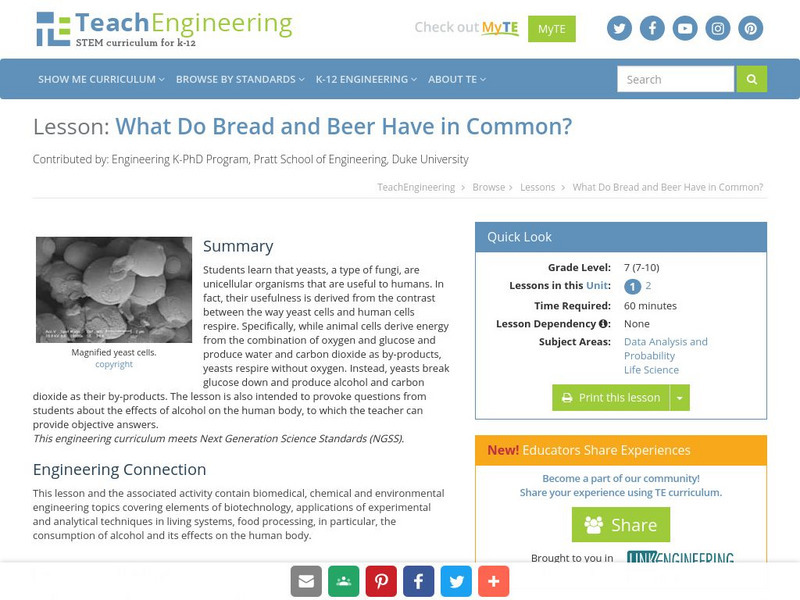
Teach Engineering: What Do Bread and Beer Have in Common?
Students are presented with information that will allow them to recognize that yeasts are unicellular organisms that are useful to humans. In fact, their usefulness is derived from the contrast between the way yeast cells and human cells...
TeachEngineering
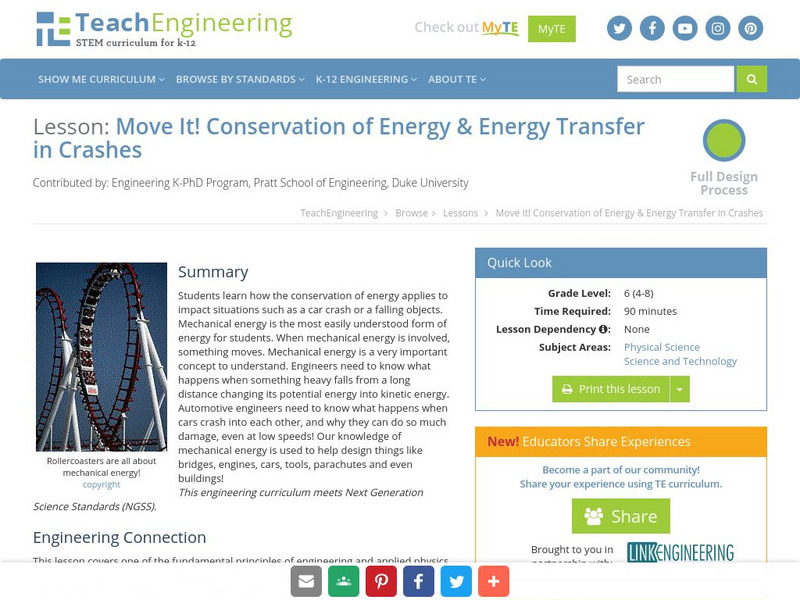
Teach Engineering: Move It!
Mechanical energy is the most easily understood form of energy for students. When there is mechanical energy involved, something moves. Mechanical energy is a very important concept to understand. Engineers need to know what happens when...
TeachEngineering
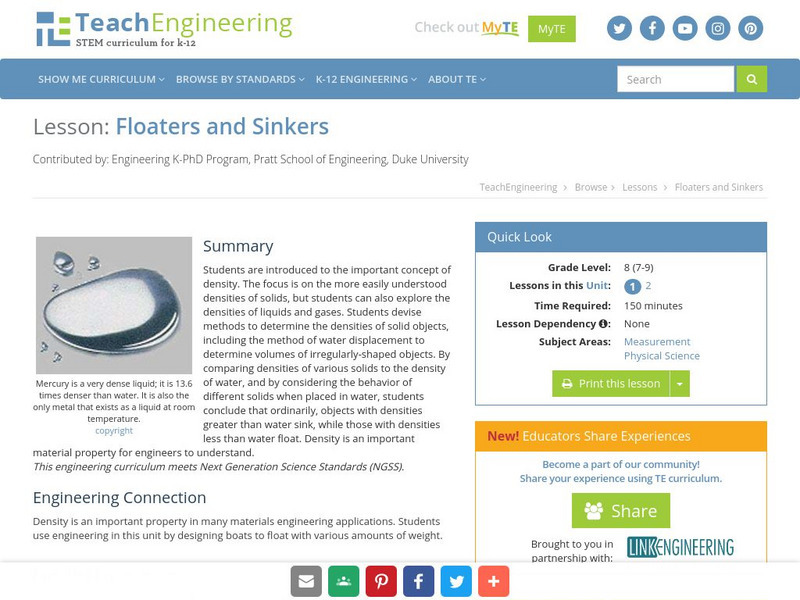
Teach Engineering: Floaters and Sinkers
This lesson introduces students to the important concept of density. The focus is on the more easily understood densities of solids, but students can also explore the densities of liquids and gases. Students devise methods to determine...
TeachEngineering
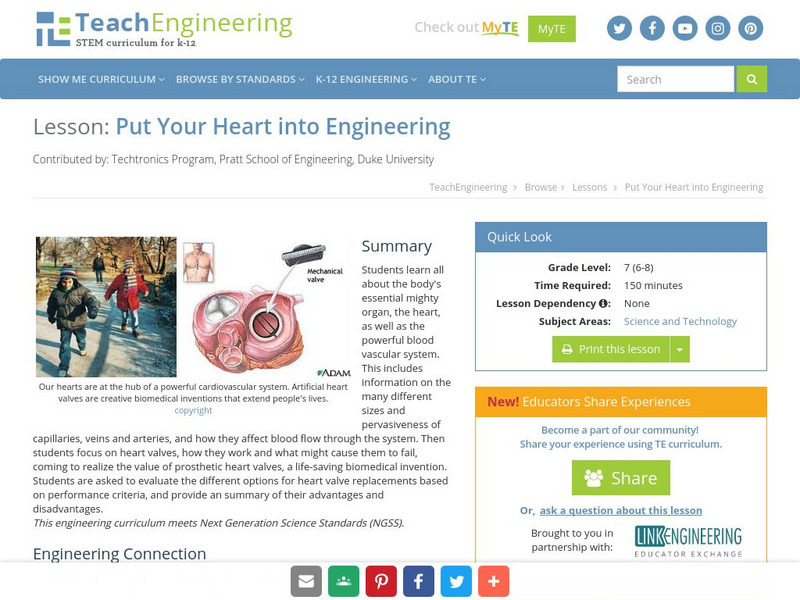
Teach Engineering: Put Your Heart Into Engineering
This lesson contains background about the blood vascular system and the heart. Also, the different sizes of capillaries, veins, and arteries, and how they affect blood flow through the system. We will then proceed to talk about the...
TeachEngineering
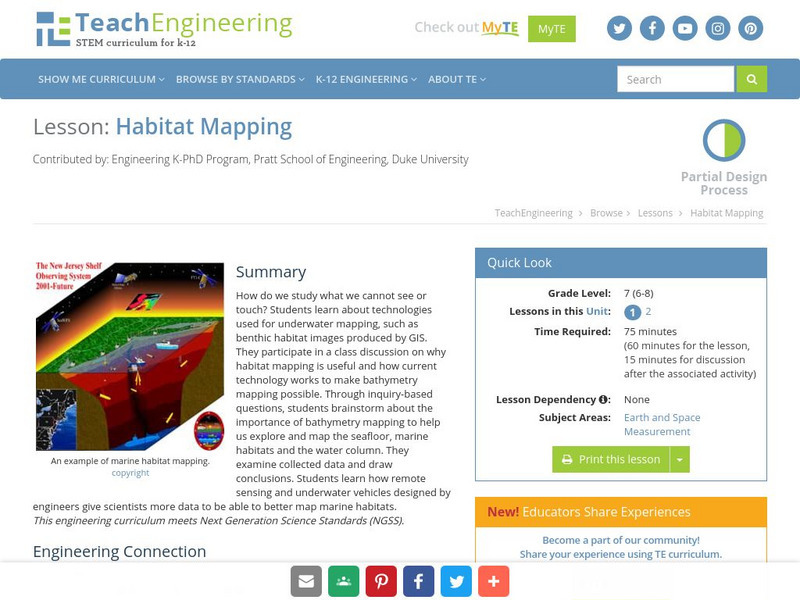
Teach Engineering: Habitat Mapping
The marine environment is unique and requires technologies that can use sound to gather information since there is little light underwater. In this lesson, the learners will be shown benthic habitat images produced by GIS. These images...
TeachEngineering
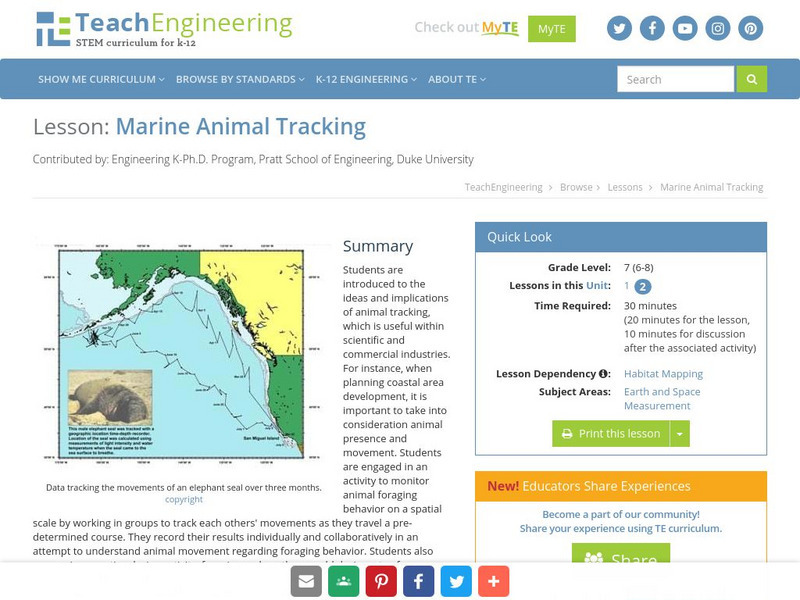
Teach Engineering: Marine Animal Tracking
This lesson engages students in an activity to monitor animal foraging behavior on a spatial scale. The students will break into groups and track each other's movements as they move through a pre-determined course. The results will be...
TeachEngineering
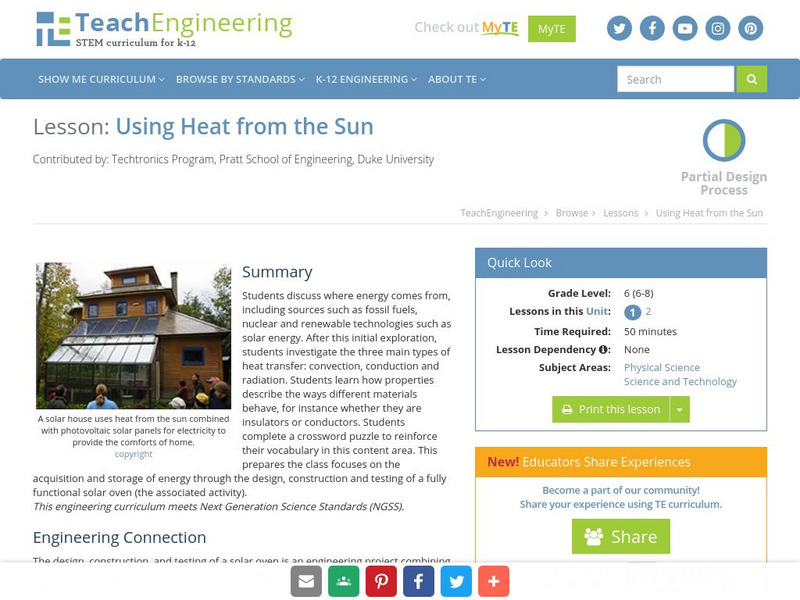
Teach Engineering: Using Heat From the Sun
For this lesson, young scholars will first discuss where energy comes from, including sources such as fossil fuels, nuclear, and such renewable technologies as solar. After this initial exploration, students will investigate the three...
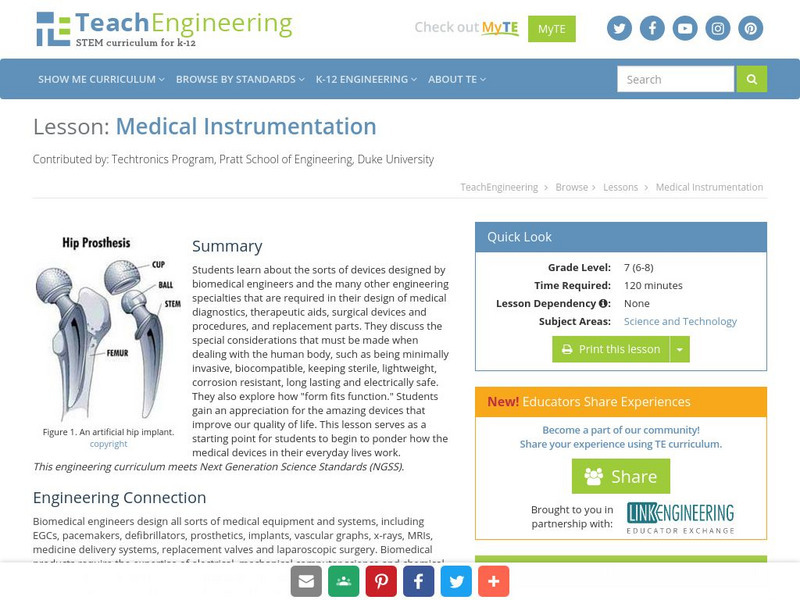
TeachEngineering
Teach Engineering: Medical Instrumentation
Students will discuss the special considerations that must be made when dealing with the human body, and will gain an appreciation for the amazing devices that have improved our quality of life. They will also explore how 'Form Fits...
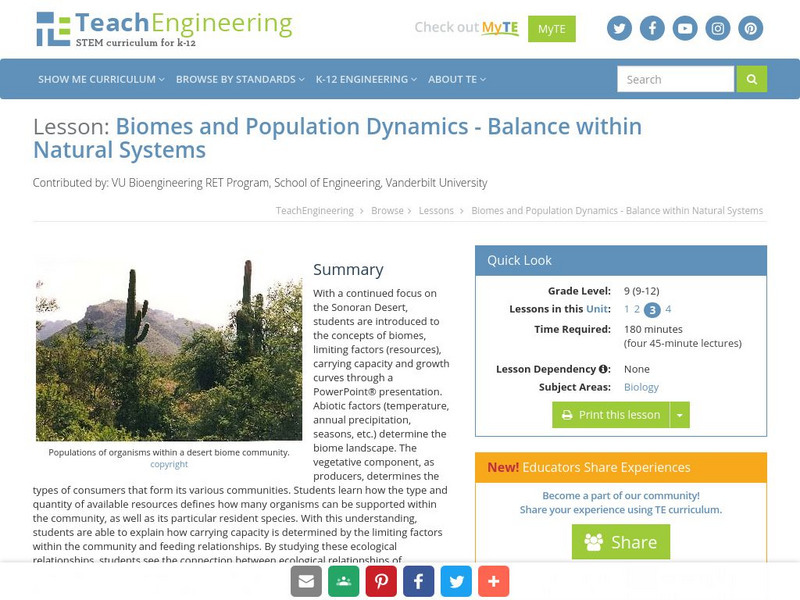
TeachEngineering
Teach Engineering: Biomes and Population Dynamics
This lesson begins with a PowerPoint slideshow that covers important ecological concepts about biomes, limiting factors, carrying capacity, and population growth. Students will look at the population dynamics involved with the diversity...

Yale University
Yale New Haven Teachers Institute: Supreme Court Rules on School Desegregation
This thoughtful unit explores the history of school desegregation legislation, including a discussion of the impact of the Plessy v. Ferguson and Brown v. Board of Education decisions. A six-week plan of lessons, along with other sample...

TeachEngineering
Teach Engineering: Survive That Tsunami!
Students use a table-top-sized tsunami generator to observe the formation and devastation of a tsunami. They see how a tsunami moves across the ocean and what happens when it reaches the continental shelf. Students make villages of model...