Hi, what do you want to do?






Curated OER
Why Be An Independent Learner?
Learners discuss why research skills are important to have as a skill in life. As a class, they identify their prior knowledge when it comes to researching a topic and discuss why it is important to be an independent learner. In...

Curated OER
Shiny Shells on the Shore
Students investigate how: A single phoneme, which is a vocal gesture in spoken words, can be represented by more than one grapheme. Also how a digraph is the combination of two letters that make one sound (there are both vowel and...

Curated OER
State Report - HyperStudio
Students create a HyperStudio stack and use an LCD projector to share a state report with their class. Eighth grade students collaborate with fourth grade students to create the presentation.

Curated OER
Regions of Virginia
Fourth graders utilize prior knowledge of the five geographic regions of Virginia to create review questions to share with the class. Groups work together to edit and prepare questions to be placed into a game format. Hyperstudio is...

Curated OER
Shelly Shark Goes Shopping
Pupils identify the digraph /sh/ in written and spoken language. Students practice the production of the /sh/ sound through words and tongue twisters. They identify the initial and final placement of the new digraph /sh/ through reading...

Curated OER
Give the Dog a Bone
Students listen as the /sh/ sound is modeled and discover the sound as it appears in the words "sheep", "fish", and "ship". They then play a secret game with a magic code placing the correct dog with its bone. Once all the words are...

Curated OER
Shh!
Students explore how to read silently to help them read fluently. They discuss why it is important to read silently. Students read "Jane and Babe" as the teacher models how to read quietly and then silently. They write a story describing...

Curated OER
American and Japanese Cities
Learners compare different cities within Japan and within the United States, as well as Japanese and American cities with each other. Students research cities and then write a short essay comparing them.

Curated OER
The Laser Spider Web
Students create a supersized spider web using yarn. They weave the yarn over and under an existing web to create a new design.

Curated OER
Information Fluency Unit
Second graders create a proposal for the Science Spectrum to have an exhibit of a wide variety of aquatic animals for the children of the South Plains. These students would like to see aquatic animals up close.

Curated OER
Evaluating Information Quality: Identifying Useful Information
Third graders examine different types of information and evaluate its accuracy. In groups, they research tribal heroes from the present and past. As a class, they identify what they need to look for to determine if the information is...

Curated OER
Bringing the Past to the Present
Second graders work in pairs and read a primary source artifact. They create a PowerPoint slide that will be part of a "museum" presentation for the rest of their class. Students select artifacts from a group of digitalized artifacts...

Curated OER
How Do We Forecast Weather?
Third graders investigate how scientists collect weather data in order to forecast the weather. They work in small groups in order to research one type of weather technology such as, satellite images, radar, surface observations, or...
Sophia Learning
Sophia: Research Sources: Libraries and Librarians
This slideshow lesson focuses on using libraries and librarians as research sources. It explains what makes them excellent sources of information because of expertise and reference materials available; it also lists the cons of using...
Other
Podcasting 101 for K 12 Librarians
This article gets down to the basics, including what podcasts are, how to access them, how to create them, and why to use them. While it is specifically directed toward school librarians, the information is equally applicable for...
Other
Story Arts Online: Storytelling Lesson Plans & Activities
"This collection of story-related activities, projects and games-developed by storyteller/author Heather Forest for her storytelling workshops with pupils, teachers, and librarians-can be used by educators in a school setting to...
Houghton Mifflin Harcourt
Houghton Mifflin Books for Children: Curious George
Stop here if you are looking for anything related to Curious George! From the publishers, this is an extensive collection of materials including history of the books and authors, and a bunch of educational resources. Check out "Educators...
Information Fluency
Imsa 21st Century Information Fluency (21 Cif) Portal
The 21st Century Information Fluency (21CIF) Portal was developed by the Illinois Mathematics and Science Academy (IMSA) to improve Internet search skills for the advancement of information literacy. The goal of this project is to help...
Information Fluency
Imsa 21st Century Information Fluency (21 Cif) Portal
The 21st Century Information Fluency (21CIF) Portal was developed by the Illinois Mathematics and Science Academy (IMSA) to improve Internet search skills for the advancement of information literacy. The goal of this project is to help...
Other
University of Washington Libraries: Starting Research
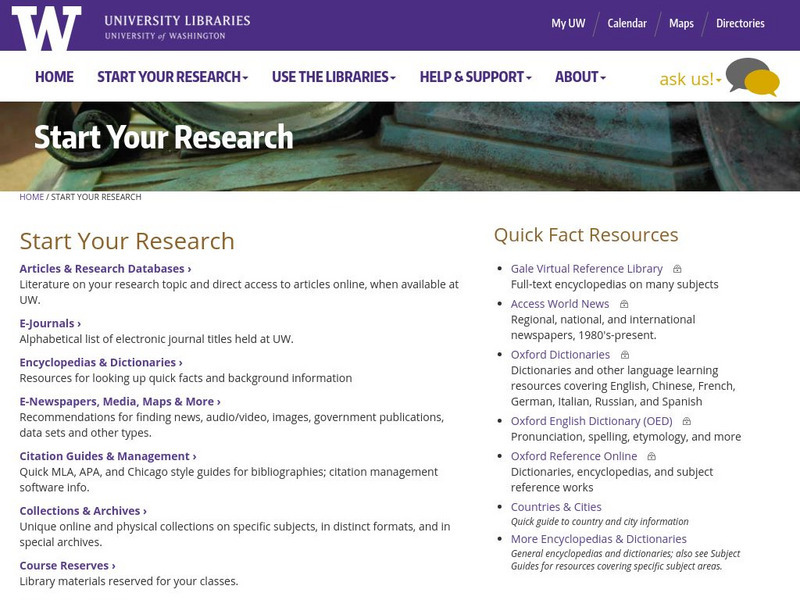
If you need help knowing where to start your research, or if you're a teacher looking for a way to help students understand the research process, this resource is terrific. Interactive tutorials on a number of topics offer review quizzes...
Scholastic
Scholastic: Maniac Magee
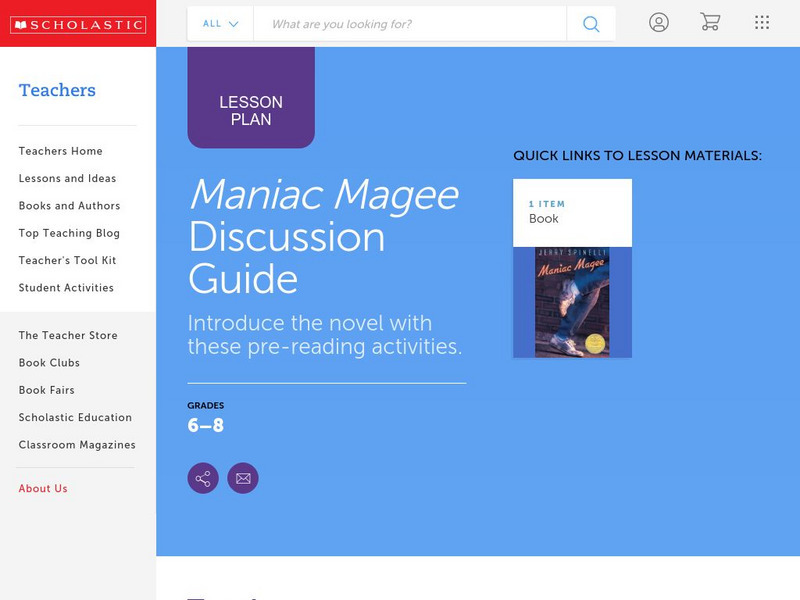
Have you ever read "Maniac Magee" by Jerry Spinelli? Use this resource to learn more about this book. An educational resource with discussion questions, extension activities and more.
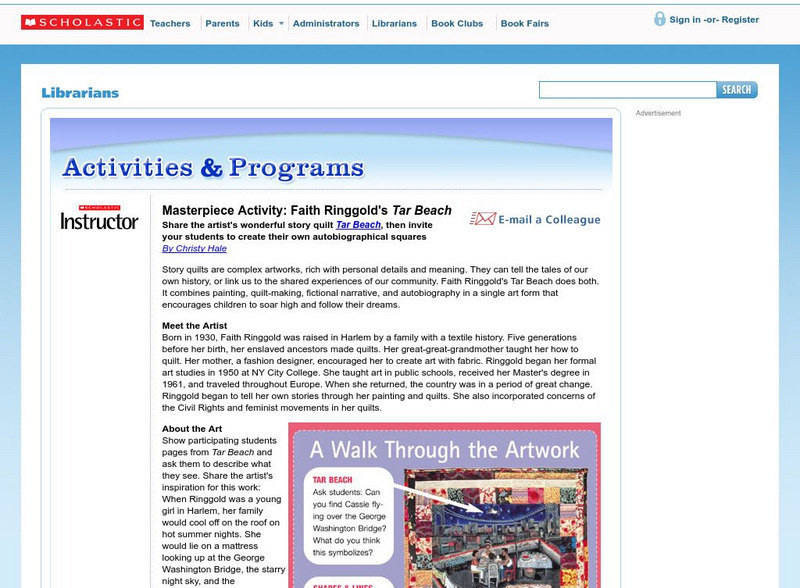
Scholastic
Scholastic: Masterpiece Lesson Faith Ringgold
This resource features a look at Faith Ringgold's work "Tar Beach." It provides information on how this author/artist created this story quilt. Find out how you can have your students develop their own autobiographical story quilt.
Scholastic
Scholastic: Discussion Guide: Using Graphic Novels With Children and Teens
Scholastic presents this discussion guide of "Using Graphic Novels with Children and Teens: A Guide for Teachers and Librarians" by Jeff Smith. The guide includes discussion questions, extension activities, and more.
ReadWriteThink
Read Write Think: Writing a Persuasive Letter
This lesson plan uses "Emily's Runaway Imagination" by Beverly Cleary in conjunction with writing a persuasive letter. Included in the lesson plan is an overview, practice, objectives, resources, preparation, and more.