Hi, what do you want to do?






American Museum of Natural History
What's This? Life at the Limits
There are some amazing ways species evolve to survive. From large ears to sneezing salt, learners read about these interesting adaptations in an interactive lesson. Great to supplement an in-class lesson, it also works well as a remote...

American Museum of Natural History
What is Marine Biology?
A marine environment covers the majority of the earth but is arguably the least understood. Teach young scientists about the characteristics of oceans and ocean species using an interactive online lesson. The in-person or remote learning...

American Museum of Natural History
They Glow!
Would you believe marine animals can make their own light? An online resource describes the process of bioluminescence and how animals in the ocean use it to survive. The lesson features a catchy tune that describes the behavior of ocean...

American Museum of Natural History
Climate Change
It actually is possible to have too much of a good thing when it comes to climate change. A slide show lesson describes how burning fossil fuels contributes to climate change. Individuals read about the scientific process and the...

American Museum of Natural History
Moving Mammals
How many different ways do mammals move from place to place? An online resource uses animation to show how different mammals move. Learners use a slider to speed up or slow down a variety of mammals. The versatile lesson works as a...
Smithsonian Institution
National Museum of Natural History: Ocean Planet
Detailed website that was a companion to a 1995 traveling exhibit of the Smithsonian. Links to lesson plans and other educational materials are at the bottom of the page. Enter the exhibition to explore the world of the ocean.
Smithsonian Institution
National Museum of Natural History: Ocean Portal: Ocean Life & Ecosystems
From the tiny to the titanic, from the familiar to the undiscovered, the ocean offers a stunning diversity of marine life and nearly every kind of habitat imaginable. Dive in and explore them here. Links incude stories, videos and photos...

Mariners' Museum and Park
Mariner's Museum: Women and the Sea
Enter the world of the sea and find out how women have played an active role in maritime affairs throughout history. Read about everything from mythical mermaids to real women in the navy.

NASA
Nasa: Oceanography
Join NASA in its study of oceanography and learn about the Earth system, the physical ocean, and life in the ocean. Try out the Giovanni: Earth Data Visualization Tool and access satellite-derived data to enhance the learning experience.
Encyclopedia of Earth
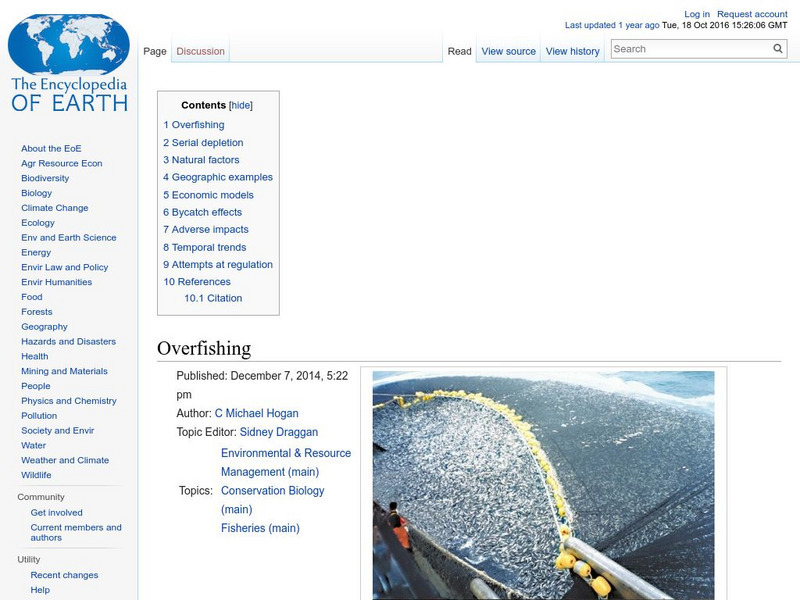
Encyclopedia of Earth: Conservation Biology: Overfishing
Article describing the scope of the problem of overfishing in the ocean and in fresh water bodies around the world. Adverse effects of this practice on both natural and human systems, and efforts to contain it are detailed. (Published:...
Smithsonian Institution
National Museum of Natural History: Ocean Portal, You Navigate
Delight in the fresh colors, sights, and sounds on this dynamic site on the ocean. Major categories consist of Ocean Life & Ecosystems, The Ocean Over Time, Ocean Science, and The Ocean and You. New information on sharks, a slideshow...
Boise State University
Boise State University: Hadalpelagic Zone
View images and learn facts about this zone found deep in the ocean.
PBS
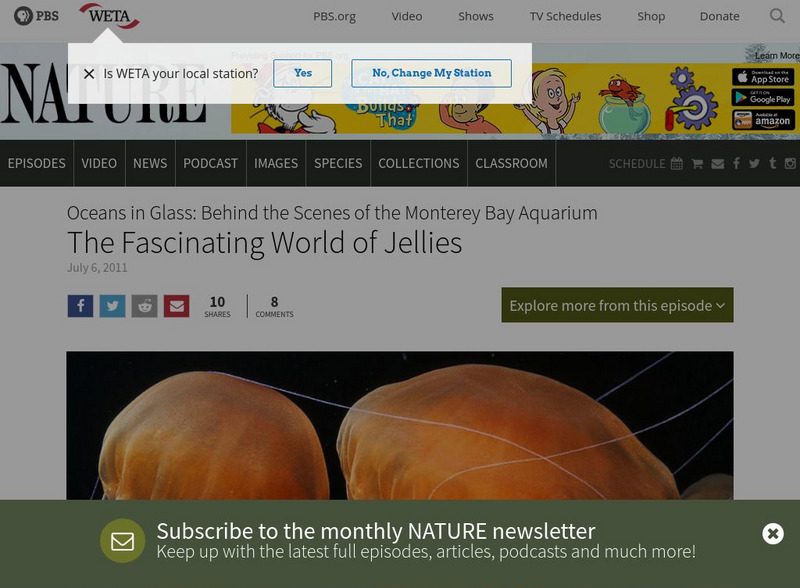
Pbs: Nature: The Fascinating World of Jellies
Learn about the mysterious jellyfish blooms that have occurred in the world's oceans. Because the resulting alteration to the marine food web has had devastating effects, researchers grow and study jellyfish at the Monterey aquarium....
NOAA
Noaa: Ship Okeanos Explorer: "America's Ship for Ocean Exploration"
Follow teams of scientists as they explore marine life and habitats of the deep ocean. Covers past and current expeditions in various regions of the world. Includes webcasts, videos, lesson plans and modules, and career resources. An...
Other
Sailors for the Sea: Protecting Our Oceans
Did you know that you can make a difference in keeping our oceans safe and beautiful? Become more knowledgeable about our oceans and the harm they face each day, including invasive species, overfishing and habitat alteration by perusing...
Untamed Science
Untamed Science: Biology: World Biomes: Deep Sea Biome
Read about the different zones and life in the deep sea as well as watch videos and examine photos of this aquatic biome. [5:54]
Other
Aquarium Kaiukan: Creatures and Anecdotes (Japanese)
The Japanese-language homepage of the Osaka Kaiukan Aquarium, one of the largest in the world. It introduces visitors to the creatures that inhabit zones of the Pacific, from the Aleutian Islands in the north to Antarctica in the south....
Woods Hole Oceanographic Institution
Woods Hole Oceanographic Institute: Dive and Discover: Expeditions to Sea Floor
Join Woods Hole scientists as they search for new volcanic eruptions on the ridge system in the eastern Pacific.
Other
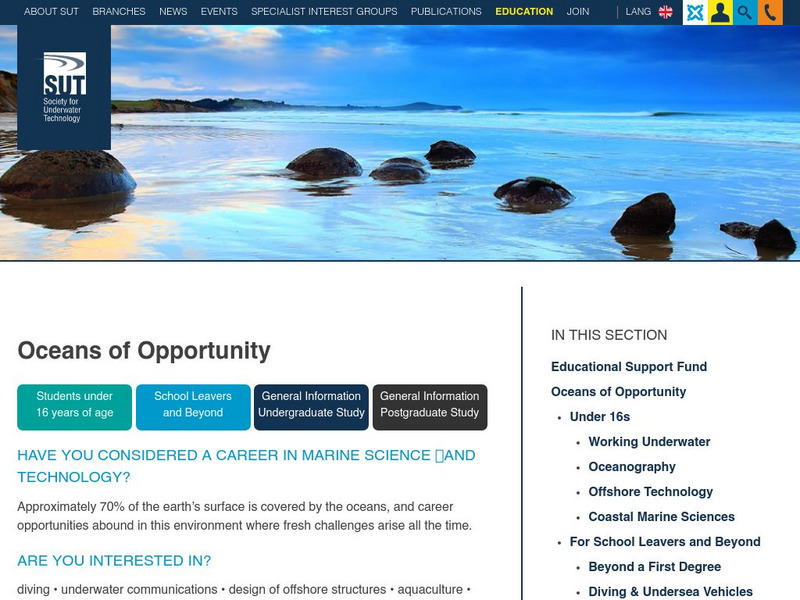
Sut: Careers in Underwater Technology
Are you interested in an ocean related career? Explore the variety of career opportunities that are available in underwater technology.
Other
Voyage to the Deep: Tubeworm
This is a very brief overview of tubeworms, a hydrothermal vent marine animal.
Other
Voyage to the Deep: Vent Crab
Learn about vent crabs in this overview that includes a QuickTime video clip and several photos.
Other
New Bedford Whaling Museum: William Bradford: Sailing Ships and Arctic Seas
Online exhibit of the life and work of nineteenth-century American marine artist William Bradford, whose lifelong interest in the sea led him north from New Bedford to Labrador and to the Arctic Ocean. See examples of Bradford's...
Other
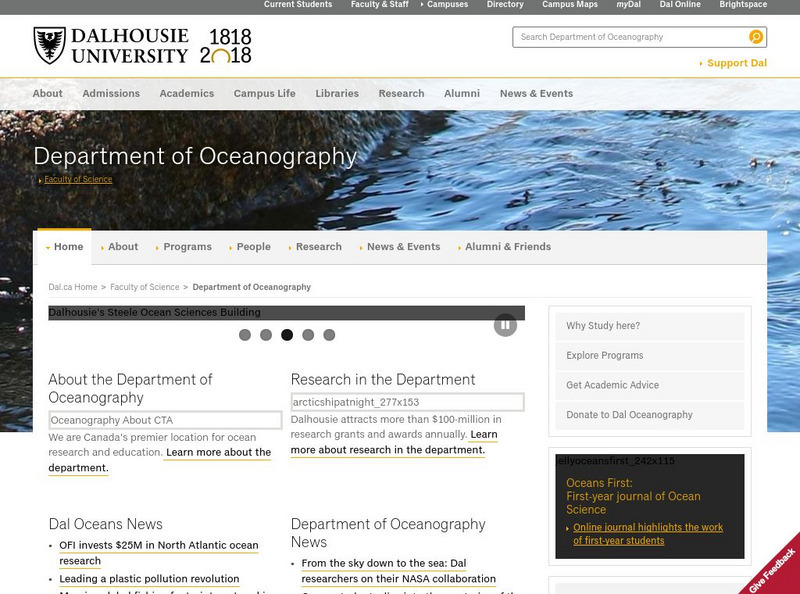
Dalhousie University: Department of Oceanography
Find out more about Grad studies, classes, seminars in the area of oceanography and also see some amazing pictures.
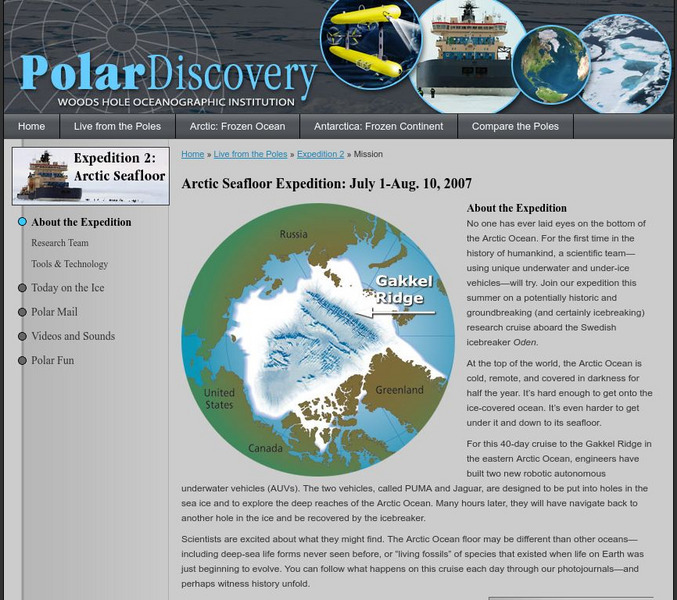
Woods Hole Oceanographic Institution
Polar Discovery: Arctic Seafloor Expedition: July 1 Aug. 10, 2007
This polar expedition to study the Arctic seafloor took place in 2007, but you can still enjoy following the footsteps of these scientists. The goal of the expedition was to see if there were active hydrothermal vents on the ocean...