Hi, what do you want to do?






Curated OER
Molecules
Students combine movement with science in this fun integrated lesson. When students are "liquid" they can "melt" or "ooze" at the end and when they are are "solids" they can "freeze" in a shape.

Curated OER
Roll or Attendance
Students stand for roll call in designated spots painted by the teacher. They stand on the alphabet, numbers, periodic table, and keyboard.
Vision Learning
Visionlearning: Food Chemistry: Carbohydrates
Read about carbohydrates, which make up one of the three "Major classes of macronutrients that are essential to living organisms." In addition to defining several terms, including carbohydrate, simple sugars, complex carbohydrates,...

PBS
Pbs Learning Media: Build a Steroid
In this interactive activity from NOVA, learn about the molecular structure of steroids. See the intermediate molecules that are part of the pathway for synthesizing cortisone from diosgenin.

TED Talks
Ted: Ted Ed: What Is Fat?
George Zaidan examines triglycerides, the varied molecules that make up fat, and how to identify which types of fat you are consuming. [4:22]
TED Talks
Ted: Ted Ed: How Do We Smell?
An adult human can distinguish up to 10,000 odors. You use your nose to figure out what to eat, what to buy and even when it's time to take a shower. But how do the molecules in the air get translated into smells in your brain? This...
Science Buddies
Science Buddies: I Love Ice Cream, but It Doesn't Love Me: Lactose Intolerance
Pizza, milk shakes, and ice cream sundaes all contain dairy products, therefore they cannot be eaten by the majority of people around the world. Dairy products contain the sugar molecule lactose, and the majority of people on the planet...
Other
Story md.com: Wellness and Nutrition: Fats
Fats are part of a larger family of molecules known as lipids. Lipids occur naturally in your body and can also be ingested through the foods in your diet. Which fats are healthy and which should you avoid? The answer may surprise you.
Nobel Media AB
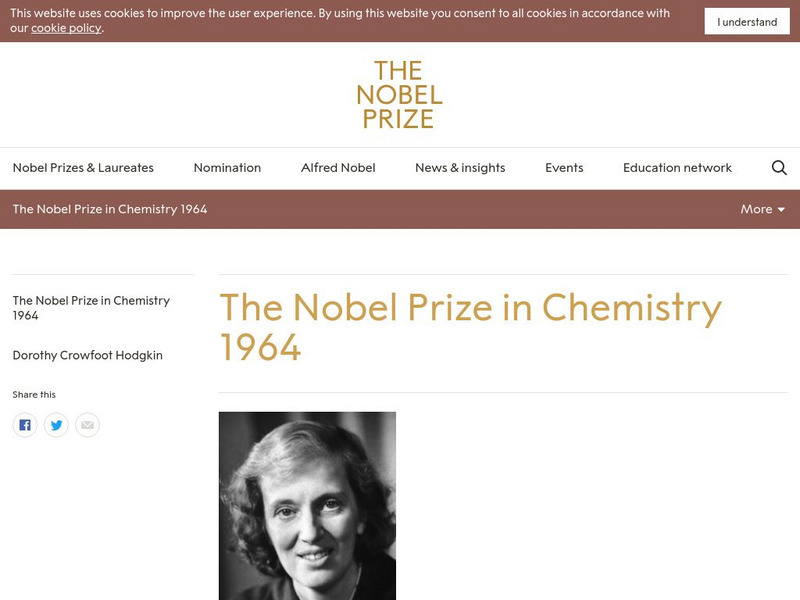
The Nobel Prize: The Nobel Prize in Chemistry 1964
This site from the Nobel eMuseum allows you to read about the recipient of the 1964 Nobel Prize in Chemistry, Dorothy Crowfoot Hodgkin (1910-1994 CE), who was honored "For her determinations by X-ray techniques of the structures of...
Cold Spring Harbor Laboratory
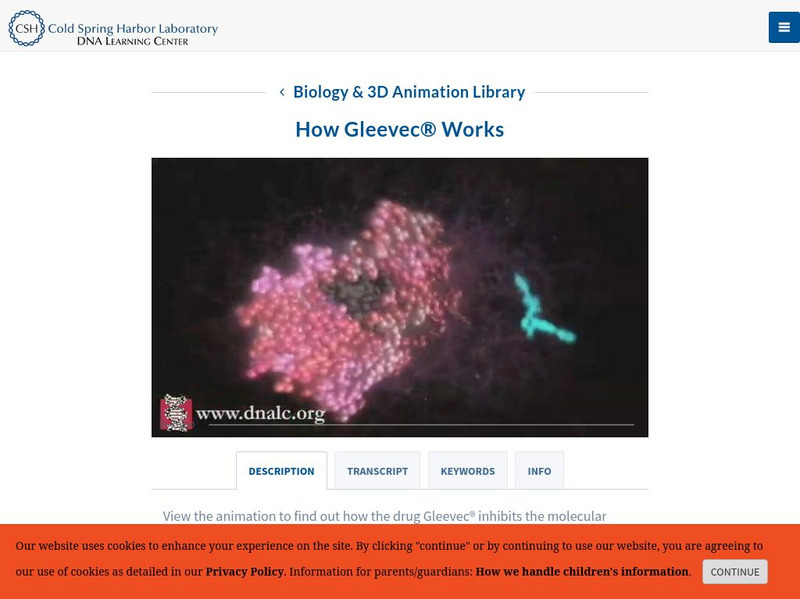
Dna Learning Center: Disease & Mutation: How Gleevec Works
Chronic myeloid leukemia is a disease caused by a genetic mutation that gives rise to this abnormal protein molecule. The abnormal protein triggers the bone marrow to release dangerous numbers" of white blood cells. Gleevec, the thin...
CK-12 Foundation
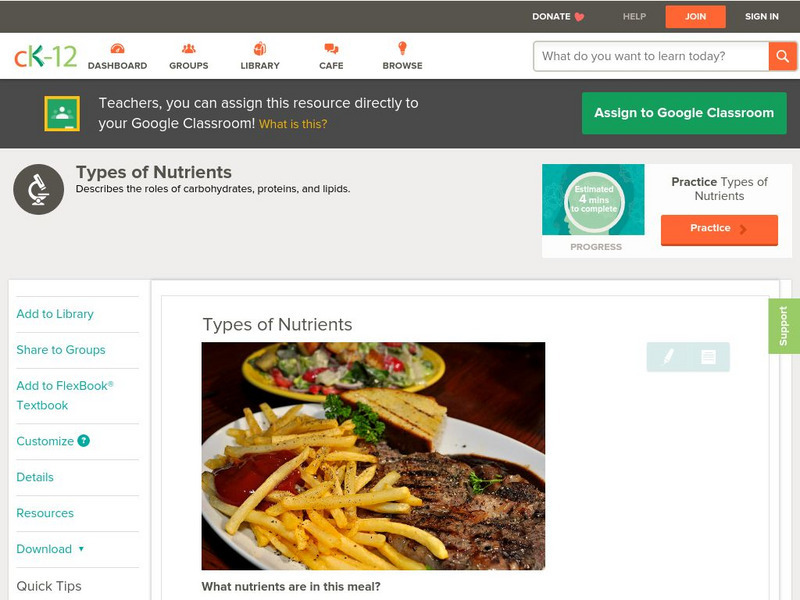
Ck 12: Life Science: Types of Nutrients
[Free Registration/Login may be required to access all resource tools.] Carbohydrates, proteins, and lipids contain energy. When your body digests food, it breaks down the molecules of these nutrients. This releases the energy so your...
BBC
Bbc: Gcse Bitesize: Animal Organization Digestion
The major nutrients required for a healthy diet are carbohydrates, proteins, and lipids. The digestive system breaks down large molecules of food, which are then absorbed into the bloodstream. After reading, try the quiz.
Other
Science Alive: The Many Faces of Steroids
This reading is an introduction to the great variety of steroids and their many different uses.
McGraw Hill
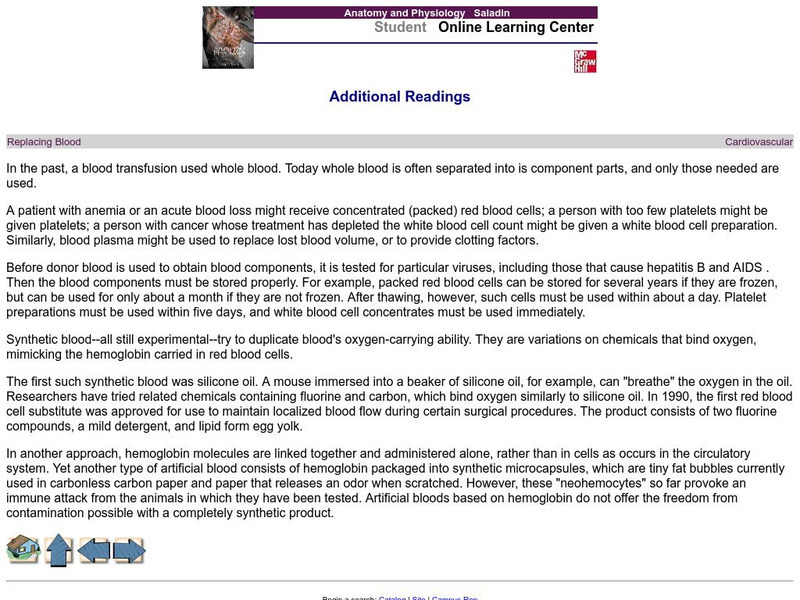
Mc Graw Hill Education: Replacing Blood
An exploration of the different types of transfusions with a brief look at synthetic blood.
Other popular searches
- Atoms and Molecules
- Gumdrop Atoms and Molecules
- Atoms & Molecules
- Compounds and Molecules
- Water Molecules
- Organic Molecules
- Atoms Molecules
- Building Molecules
- Molecules of Life
- Gas Molecules
- Matter and Molecules
- Biological Molecules