Hi, what do you want to do?






Curated OER
Martin Luther King, Jr., and the Power of Nonviolence
Middle schoolers examine the philosophy of nonviolence developed by Martin Luther King, Jr. and how this turned into practice during the Civil Rights Movement. They compare these teachings to those of Mohandas K. Ghandi.

Seattle Civil Rights and Labor History Project
Dr. Martin Luther King's Visit to Seattle
How was the work of Dr. Martin Luther King Jr. viewed by others during the 1960s? After watching an oral history video, your class members will learn more about Dr. King's ability to personally connect with others, as well as...

Teacher Web
Inferring Character Traits
Learning how to draw inferences from text is a key reading comprehension skill. Here's a activity that gives readers a chance to practice by offering 20 descriptive sentences and asking kids to identify the inferred character trait,...

Curated OER
Satyagrah: Social Change vs. Social Transformation
Learners examine the difference between social change and social transformation. they learn through discussion in order to be able to research and analyze a systematic social injustice. Students identify their part in a wider social...

Curated OER
Martin Luther King Jr.: From Civil Rights to Human Rights
Students read essays and participate in a discussion that examines Dr. Martin Luther King, Jr.'s stance on both civil rights and the broader issue of human rights. They conduct research about King's life and work, analyze quotes from his...

National Park Service
Rock Ranking
Junior geologists sort rocks and soil. They separate a sample of river gravel by size, shape, color, and other characteristics. To include Common Core standards, you could have little ones graph the number of particles in each sample.

Curated OER
Literature And Human Rights: Questions to Apply to Literature, Other Texts, and Media
Students answer a variety of discussion questions about human rights and how they may apply to and influence formal literature, the media, educational textbooks, advertising, and commercial publications.

Curated OER
South Africa After Ten Years of Freedom
Students see how events in South Africa have affected other areas of the world both through the use of economic sanctions and truth and reconciliation commissions. They analyze significance of this election in light of South Africa's...

Curated OER
Responses to Discrimination During the Civil Rights Period
Students examine the effects of discrimination. In this American Civil Rights Movement lesson, students participate in a classroom activity that requires them to personally feel the effects of discrimination. Students then explore...

Curated OER
Martin Luther King, Jr. vs. Malcolm X
Eleventh graders compare and contrast the visions of Martin Luther King, Jr. and Malcolm X. In this African-American history lesson, 11th graders read speeches by each of the men and summarize the arguments made by each of them about...

Curated OER
Mohandas Mahatma Gandhi
In this famous leaders worksheet, students read a passage about Mohandas Mahatma Gandhi and then complete a variety of in-class and homework activities to support comprehension, including partner interviews, spelling, cloze,...

Curated OER
Create An Ending
Students create a new ending for a familiar story that stand alone with a clear beginning, middle and end. As a class, students review a familiar text focusing on plot and character development. In small groups, students work...

Curated OER
America: 1763-1776
In this online interactive history worksheet, students respond to 10 short answer and essay questions about the United States between the years 1763 and 1776.

Curated OER
Words and Music - Lesson 2
High schoolers analyze the relationships among cultural values, freedom of artistic expression, ethics, and artistic choices in various cultures and historical periods.

Other
Mlkcc: The Seven Steps of Non Violent Action
This site from The Martin Luther King Celebration Committee Inc. gives an outline of the Seven Steps of Non-Violent Action as defined by Dr. Martin Luther King, Jr. Find out more about this tremendous historical Civil Rights leader.
Digital History
Digital History: Discrimination in Public Accommodations [Pdf]
Segregation and Jim Crow laws codified a color line in the United States. African-Americans began pushing back against segregation in the 1950s and 1960s. Read about the non-violent actions taken and how these actions resulted in the...
Other
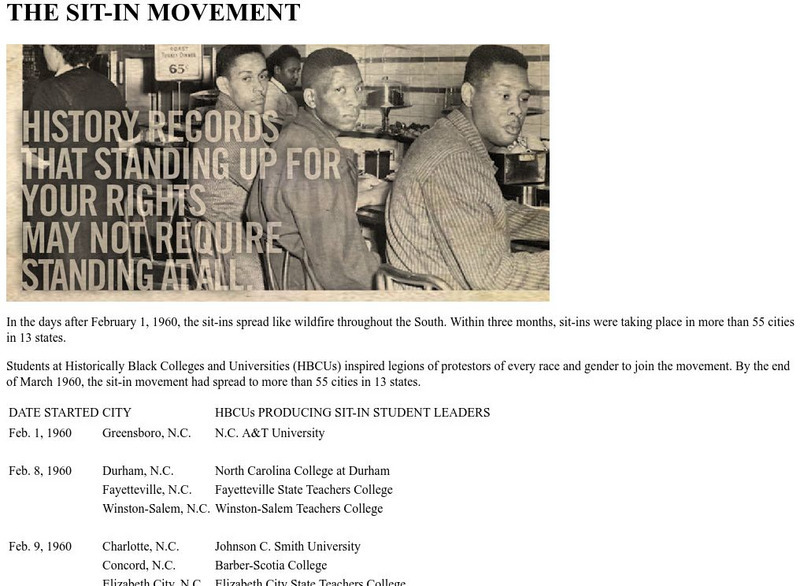
International Civil Rights Center & Museum: The Sit in Movement
This interesting list shows how the sit-in movement spread in just three months across the South. Students from Historically Black Colleges and Universities encouraged the non-violent actions to protest segregation.
Other
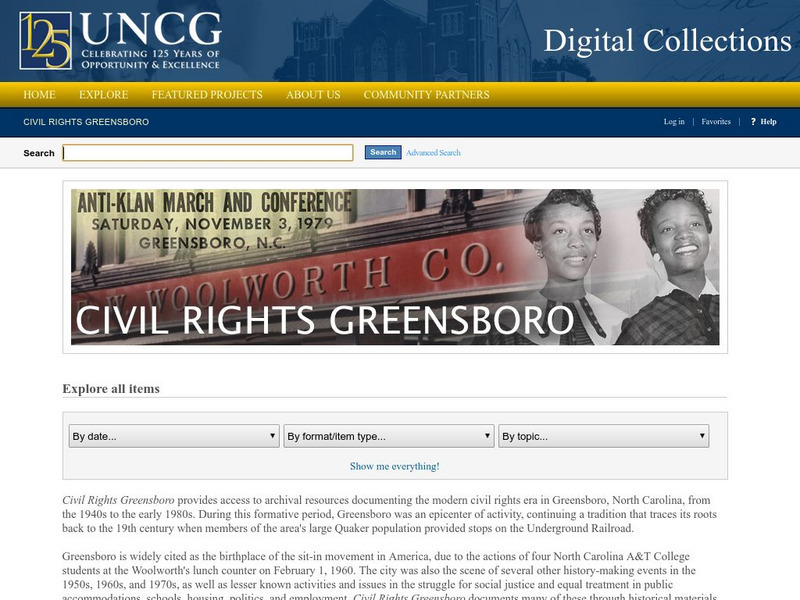
Civil Rights Greensboro: Greensboro Sit Ins at Woolworth's
A very detailed description of the sit-ins at the Greensboro, North Carolina, Woolworth's store and other businesses in that city during the first part of 1960. These sit-ins were to call attention to the segregation of public businesses...

PBS
Pbs: Independent Lens: February One: The Story of the Greensboro Four
Follow the course of the sit-ins at the lunch counter at Woolworth's in Greensboro, South Caroina during the first week of February, 1960.
Other
Core: Sit Ins
A brief description of the role of the sit-in as a non-violent way to protest segregation in the South.
Scholastic
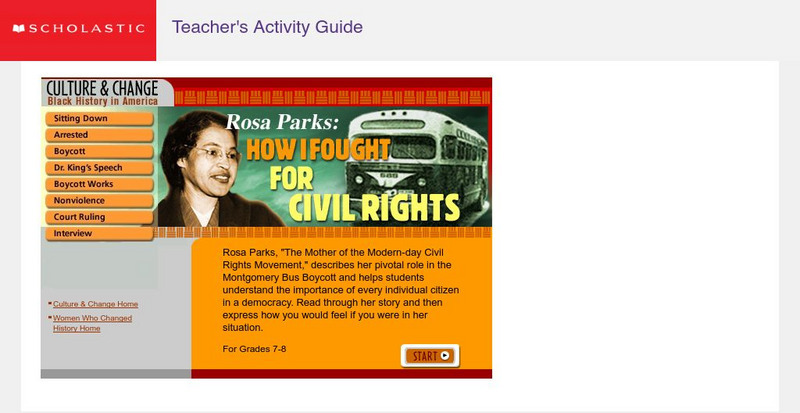
Scholastic: Teachers: Rosa Parks: How I Fought for Civil Rights
Learn about African American Rosa Parks and her non-violent protest against racial discrimination. This resource addresses Parks' actions in the context of American race relations at the time. Read an interview with Parks about how she...
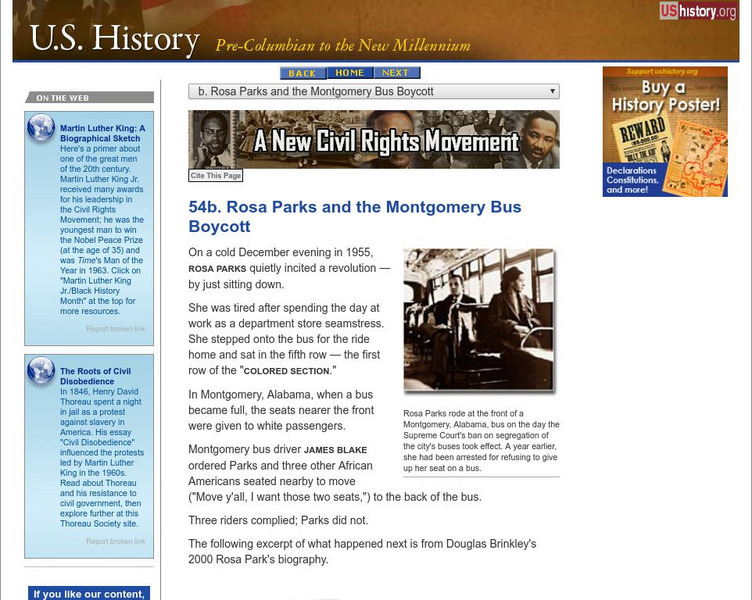
Independence Hall Association
U.s. History: Rosa Parks and the Montgomery Bus Boycott
Rosa Parks started a revolution by refusing to give up her seat on a bus. Read about the Montgomery bus boycott, and see how the nonviolent actions of supporters of the Civil Rights movement succeeded in using the boycott to inspire more...