Hi, what do you want to do?






Concord Consortium
Concord Consortium: Oil and Water
Mix polar and nonpolar molecules together and observe changes in potential energy.

TeachEngineering
Teach Engineering: Energy
Through nine lessons, students are introduced to a range of energy types--electrical, light, sound and thermal-as well as the renewable energy sources of wind, hydro (water) and solar power. Subjects range from understanding that the...
TeachEngineering
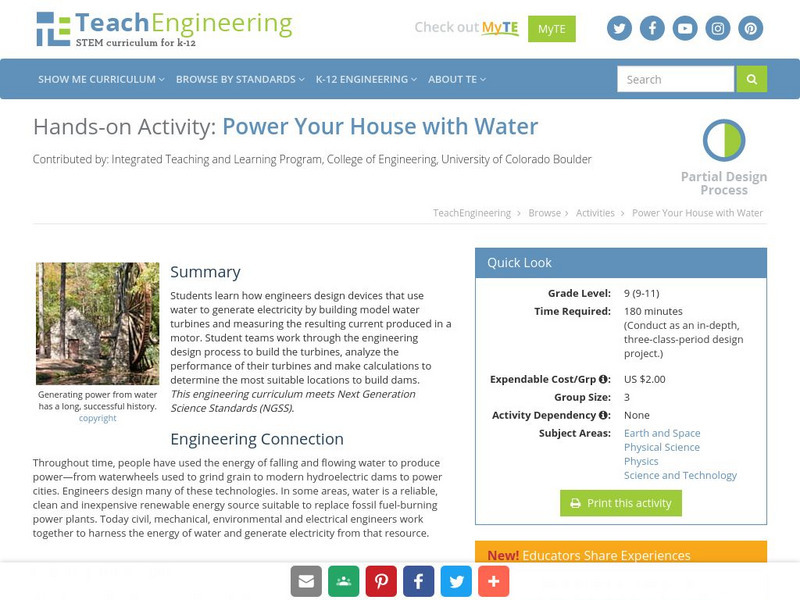
Teach Engineering: Power Your House With Water
Students learn how engineers design devices that use water to generate electricity by building model water turbines and measuring the resulting current produced in a motor. Students work through the engineering design process to build...
Other
Need: Exploring Nuclear Energy [Pdf]
This downloadable article addresses all aspects of nuclear energy. Visual charts make understanding of cycles and concepts easier. Most useful for older students and educators. PDF (requires Adobe Reader).
Concord Consortium
Concord Consortium: Polar and Nonpolar Interface
Observe how molecules with hydrophilic and hydrophobic regions move in a mixture of oil and water, and pay attention to changes in potential energy over time. Move and rotate the molecules to see how they interact with their surrounding...
TeachEngineering
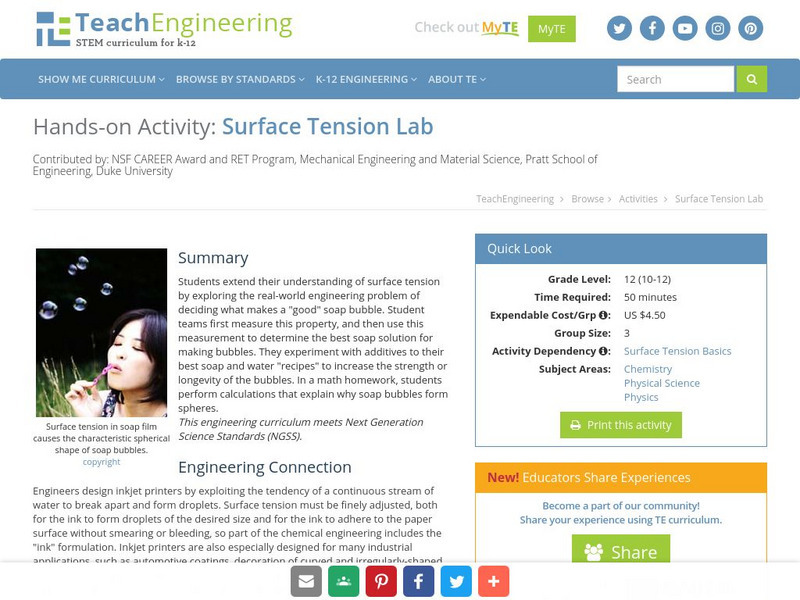
Teach Engineering: Surface Tension Lab
Students extend their understanding of surface tension by exploring the real-world engineering problem of deciding what makes a "good" soap bubble. Student teams first measure this property, and then use this measurement to determine the...
TeachEngineering
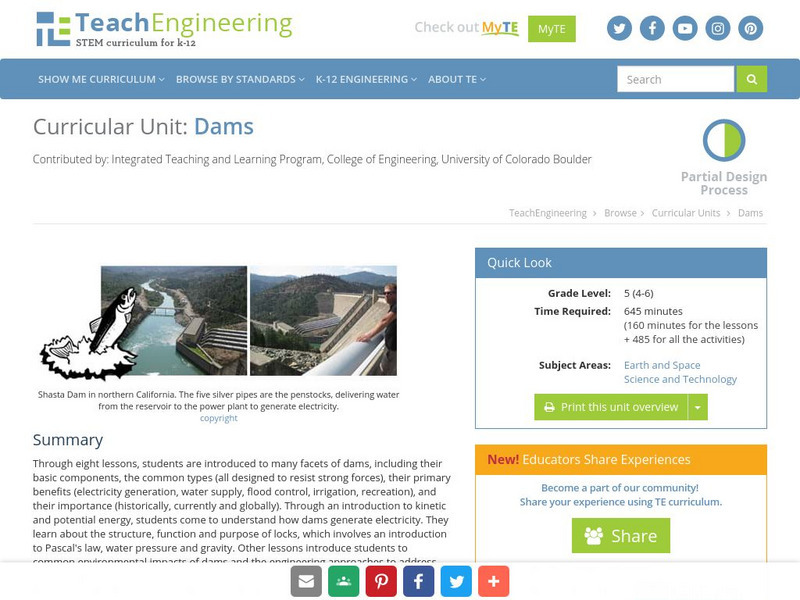
Teach Engineering: Dams
Through eight lessons, students are introduced to many facets of dams, including their basic components, the common types (all designed to resist strong forces), their primary benefits (electricity generation, water supply, flood...
TeachEngineering
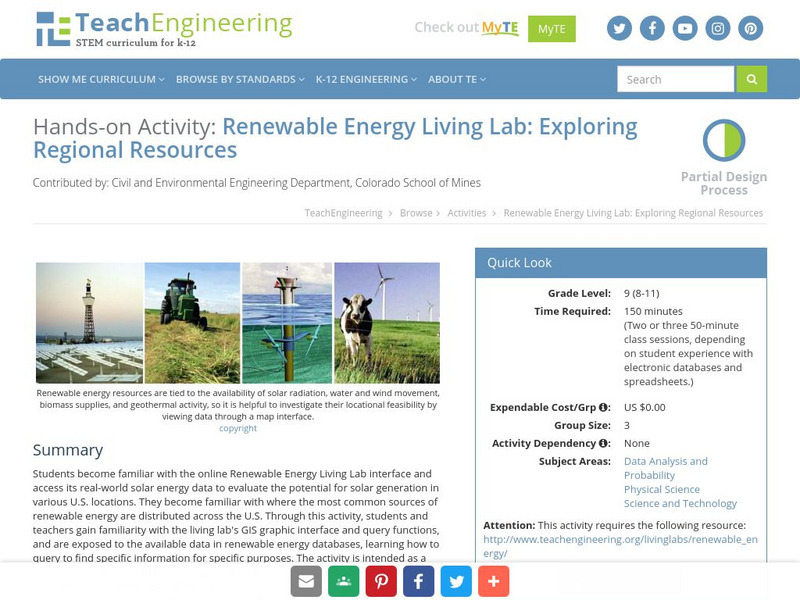
Teach Engineering: Renewable Energy Living Lab
Students become familiar with the online Renewable Energy Living Lab interface and access its real-world solar energy data to evaluate the potential for solar generation in various U.S. locations. They become familiar with where the most...
Concord Consortium
Concord Consortium: Dissolving
Impact on potential energy when a substance dissolves in water. Add water to a substance and observe the impact on potential energy as the substance dissolves. Observe the interactions between molecules as the substance dissolves over...
TeachEngineering
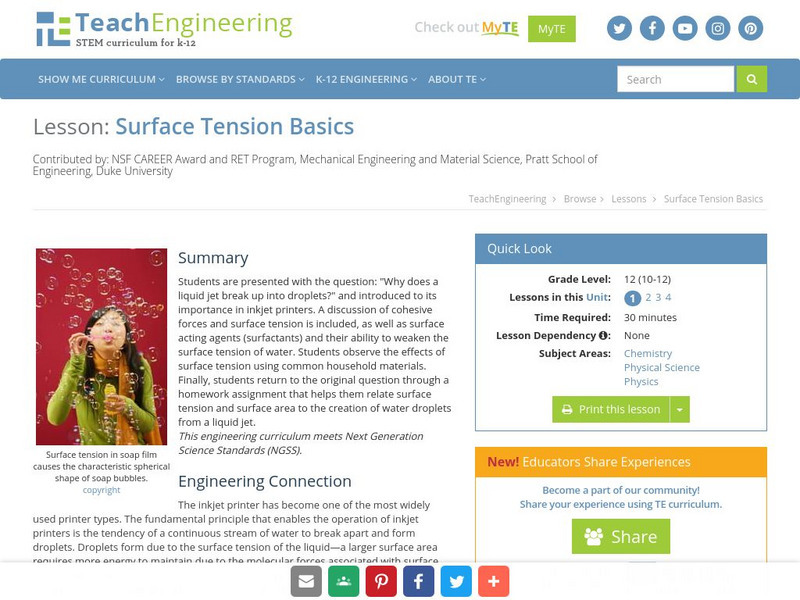
Teach Engineering: Surface Tension Basics
Young scholars are presented with the question: "Why does a liquid jet break up into droplets?" and introduced to its importance in inkjet printers. A discussion of cohesive forces and surface tension is included, as well as surface...
![Pbs Kids: Design Squad Challenge: Paddle Power [Pdf] Activity](https://content.lessonplanet.com/knovation/original/240133-269c480d57012b98a42b2a6067ff8946.jpg?1661182394 "Pbs Kids: Design Squad Challenge: Paddle Power [Pdf] Activity")
PBS
Pbs Kids: Design Squad Challenge: Paddle Power [Pdf]
Hands-on challenge to design and build a paddle boat that moves across water using a rubber band as its power source. Provides full list of materials with ideas on how to design, build, test, and redesign it if necessary. Activity...
TeachEngineering
Teach Engineering: Engineering for the Earth
Young students are introduced to the complex systems of the Earth through numerous lessons on its natural resources, processes, weather, climate and landforms. Key earth science topics include rocks, soils and minerals, water and natural...
TeachEngineering
Teach Engineering: Why Do We Build Dams?
Students are introduced to the concept of a dam and its potential benefits, which include water supply, electricity generation, flood control, recreation and irrigation. This activity begins an ongoing classroom scenario in which student...