Hi, what do you want to do?






Center of Science and Industry
Cosi Columbus: Hover Cup
Science experiment in which you make a hovercraft, a machine that uses compressed air to do work, from a paper cup. Includes full list of materials, procedures, and scientific explanation of how air flow can minimize friction and cause...

American Association of Physics Teachers
Com Padre Digital Library: Open Source Physics: Sliding Down an Incline Plane
Here is a simulation demonstrating an object placed on an inclined plane. The user will vary the slope of the plane to see the relationship the slope has on the gravity of the object and the static friction.
Other
Center for Education Partnerships: The Marble Roll
In this Science-athon, students try to make their marble roll the farthest across a flat surface, using their knowledge of forces, motion, and energy to guide them through their apparatus design. Teachers must enroll online.
Science Education Resource Center at Carleton College
Serc: Investigating Motion: What Causes Objects to Move?
Students will have an opportunity to determine what makes everyday objects move. Students will be given objects and asked to make predictions on how far each object will move after they blow on it. Then they will measure the distance and...
TeachEngineering
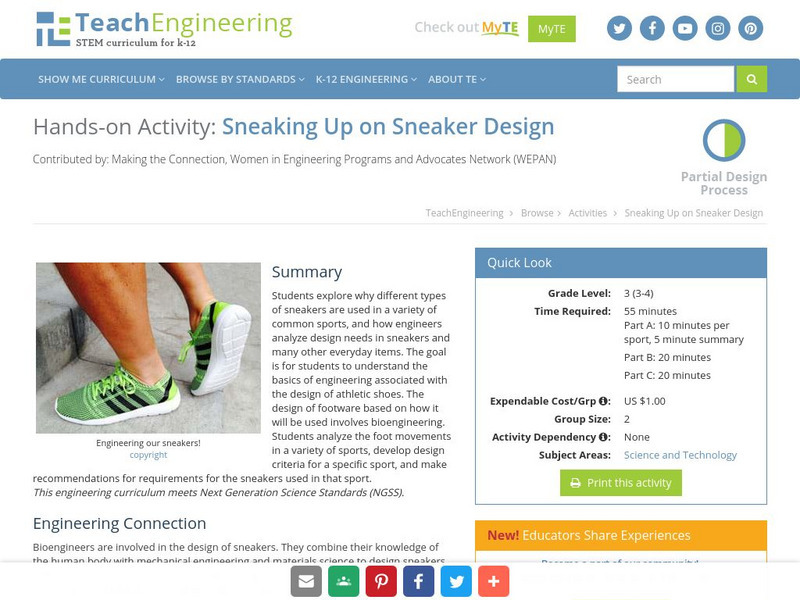
Teach Engineering: Sneaking Up on Sneakers
This activity explores why different types of sneakers are used in a variety of common sports. It connects how engineers analyze design needs in sneakers and everyday items. The goal is for students to understand the basics of...
Georgia Department of Education
Ga Virtual Learning: Forces
Students learn about various forces and how they relate to everyday life in this interactive learning module.
University of Colorado
University of Colorado: Ph Et Interactive Simulations: Pendulum Lab
Manipulate the mass of a weight and the length of string in this interactive pendulum simulation. Change the speed, friction, and gravity to make the pendulum swing change as measurements are displayed on the screen. Younger students can...
TeachEngineering
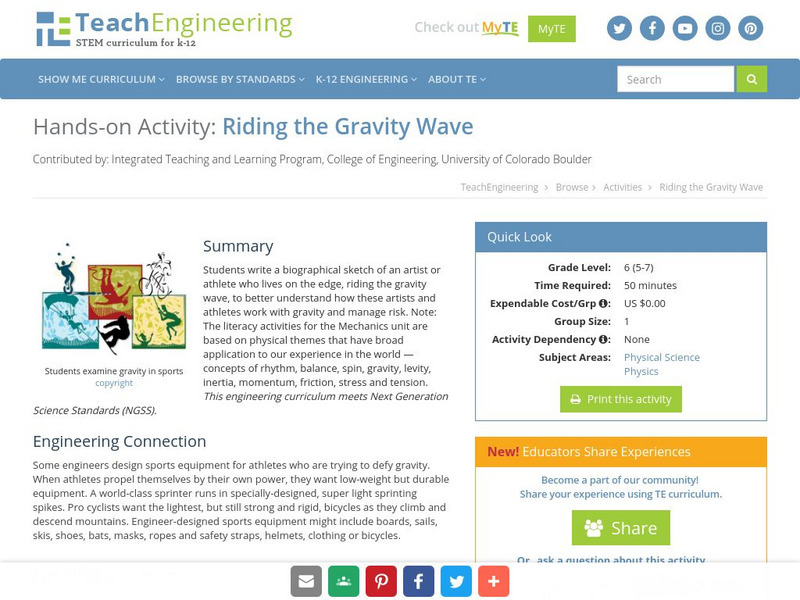
Teach Engineering: Riding the Gravity Wave
Students write a biographical sketch of an artist or athlete who lives on the edge, riding the gravity wave, to better understand how these artists and athletes work with gravity and manage risk. Note: The literacy activities for the...

Khan Academy
Khan Academy: What Are Inclines?
A webpage with equations and examples of how to solve inclined planes problems. Learn how to deal with slopes when surfaces usually aren't perfectly horizontal.
Soft Schools
Soft Schools: Physics Quizzes: Newton's Three Laws
Assess your understanding of Newton's three laws of motion and the ability to distinguish between the three with this interactive multiple choice quiz. Receive immediate feedback to your answers.

Khan Academy
Khan Academy: What Is Newton's First Law?
Newton's First Law also called the law of inertia is the most important thing to realize about motion. This article offers more information on motion and explains solved problems involving Newton's First Law. Also included is a video...
Other
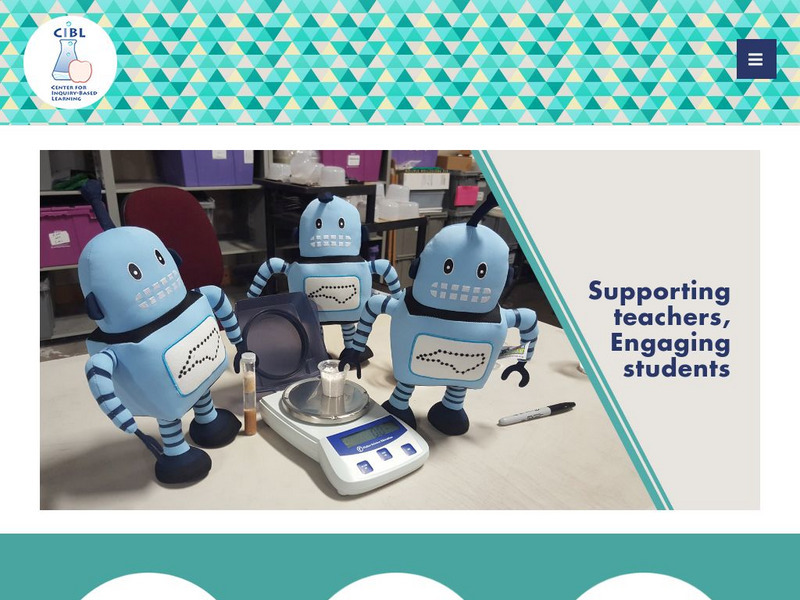
Duke: Center for Inquiry Based Learning
Duke University has established the Center for Inquiry-Based Learning. It serves to enhance math and science lessons. Click on Resources for good examples of Inquiry-based lesson plans.
American Association of Physics Teachers
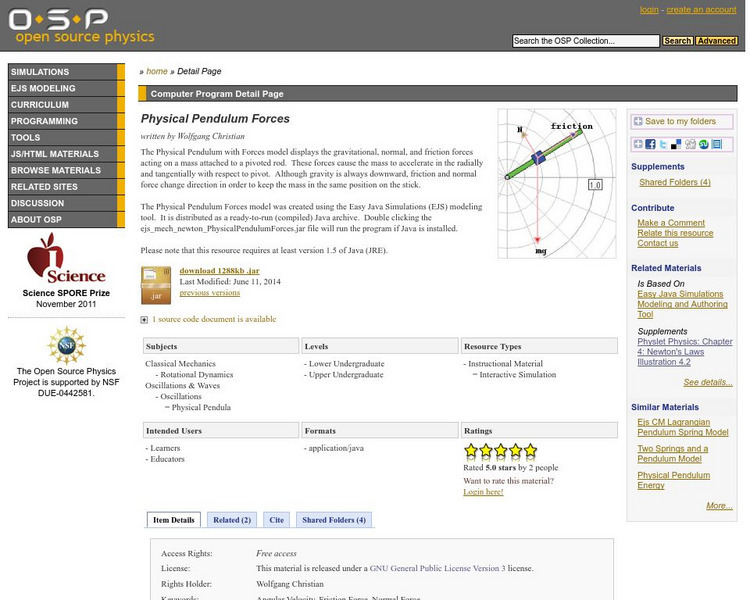
Com Padre Digital Library: Open Source Physics: Physical Pendulum Forces
This simulation of a pendulum will demonstrate how friction and force have to change to keep the mass in the same position on the pivoted rod.
Science Education Resource Center at Carleton College
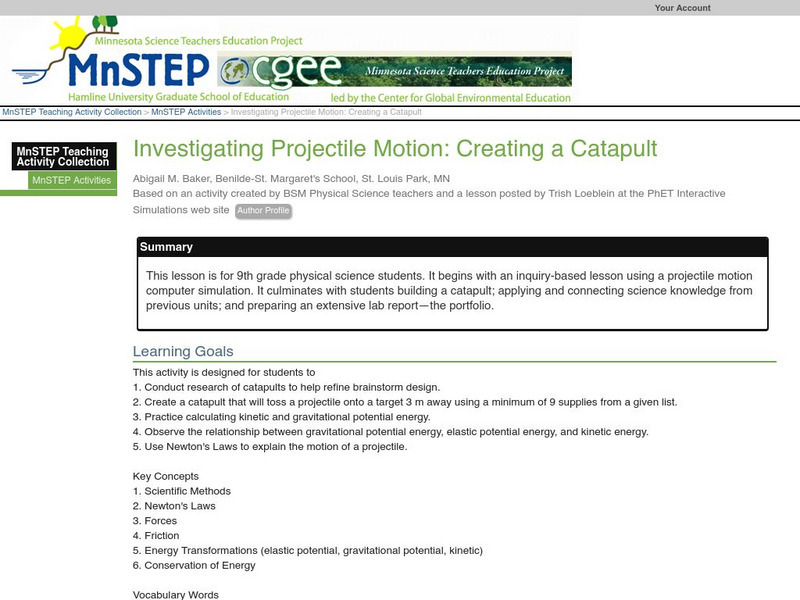
Serc: Investigating Projectile Motion: Creating a Catapult
This lesson is for 9th grade physical science students. It begins with an inquiry-based lesson using a projectile motion computer simulation. It culminates with students building a catapult; applying and connecting science knowledge from...
McREL International
Mc Rel: Whelmer #9 Learning Activity: Nickel Karate
An easy to do activity that investigates the basic theories of inertia. The activity is in lesson plan format that meets NSES standards.