Hi, what do you want to do?






US National Archives
Nara: The Emancipation Proclamation
The U.S. National Archives and Records Administration (NARA) provides an elaborate overview of Abraham Lincoln's Emancipation Proclamation. Content includes detailed background information behind the document, photos of the original...

The Newberry Library
Newberry Library: Lincoln, the North, and the Question of Emancipation
This learning module explores Lincoln's arguments against slavery as well as public feelings and concerns about emancipation as expressed through art and literature of the day.
US Government Publishing Office
Ben's Guide to u.s. Government: Emancipation Proclamation 1863
Ben's Guide is a fun way to present U.S. Government to students grades K-12. This site presents a brief overview of the Emancipation Proclamation. Includes the transcript of the document. Links to related sites are available.

Stanford University
Sheg: Document Based History: Reading Like Historians: Emancipation Proclamation
[Free Registration/Login Required] Students read primary source documents to solve a problem surrounding a historical question. This document-based inquiry lesson allows students consider whether Abraham Lincoln freed the slaves, or the...
Gilder Lehrman Institute of American History
Gilder Lehrman Institute: History Now: Wilberforce, Lincoln, and the Abolition of Slavery
[Free Registration/Login Required] Tour the online original documents that tell a story about the abolition of slavery in both the United States and England. Click on the tiny "next" above the text to go through the interactive.

Khan Academy
Khan Academy: Ap Us History: 1844 1877: The Civil War: Emancipation Proclamation
Discusses the background to the Emancipation Proclamation and how Abraham Lincoln came to support the abolition of slavery and the difficulties that were encountered around this issue. Explains that it did not apply to all slaves as...
Read Works
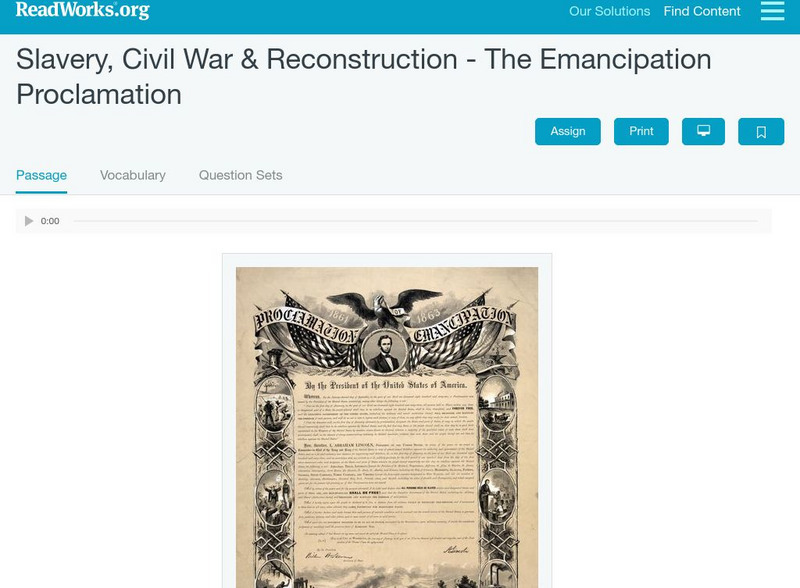
Read Works: Slavery, Civil War & Reconstruction the Emancipation Proclamation
[Free Registration/Login Required] An informational text about the Emancipation Proclamation. A question sheet is available to help students build skills in reading comprehension.

US National Archives
Our Documents: 13th Amendment to the u.s. Constitution: Abolition of Slavery
Take a look at an image of the constitutional amendment that put an end to slavery in the United States. Interactive image is accompanied by an overview of the amendment's inception and adoption, as well as document transcript.

Scholastic
Scholastic News: The End of Slavery
January 2, 2013 marked the 150th anniversary of the signing of the Emancipation Proclamation, which ended slavery in the United States. Read about the order and how it was being celebrated on this historical anniversary.
University of Maryland
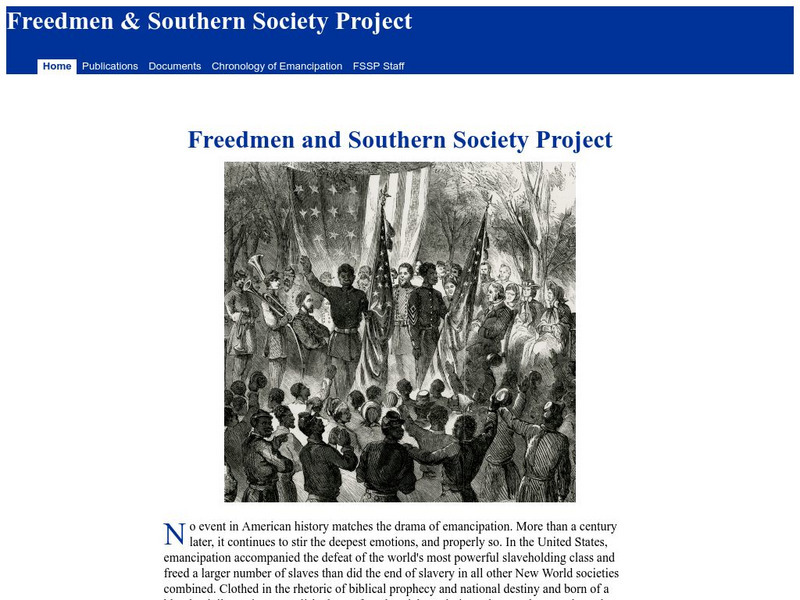
Freedmen and Southern Society Project: Emancipation
A website that "captures the essence" of the drama of the emancipation by using the experiences of the liberated slaves, defeated slaveholders, soldiers, civilians, Northerners, and Southerners.
Other
Slavery in the North: Exclusion of Blacks
After emancipation, African Americans were granted rights, such as voting or sitting on a jury, in some Northern states. But often they were prevented from exercising these rights due to the deeply ingrained prejudices of whites.
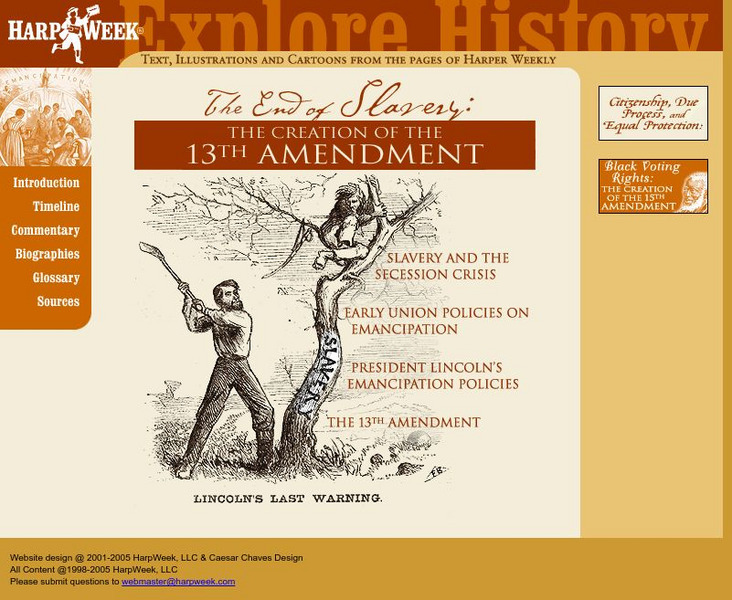
Harp Week
The End of Slavery: The Creation of the 13th Amendment
What a wonderful resource for researching the attempts to solve the issue of slavery prior to the Civil War, and the eventual ratification of the 13th Amendment. Find a timeline of legislation limiting the spread of slavery from 1787...
Other
Abraham Lincoln and the Civil War: Emancipation Proclamation
Authors track the sentiments of Lincoln toward slavery from his pre-Civil War years through the Civil War. Site menu bar provides hyperlinks to information on the many facets of the Emancipation Proclamation.
University of Oklahoma
Chronology of u.s. Historical Documents: The Emancipation Proclamation 1864
Here you can find the full text of the Emancipation Proclamation, issued by Abraham Lincoln in September 1862, and passed into law on January 1, 1863.
Other
Digital Schomburg Images: Slavery
A collection of 41 images depicting African American slaves in the Civil War era from the New York Public Library.
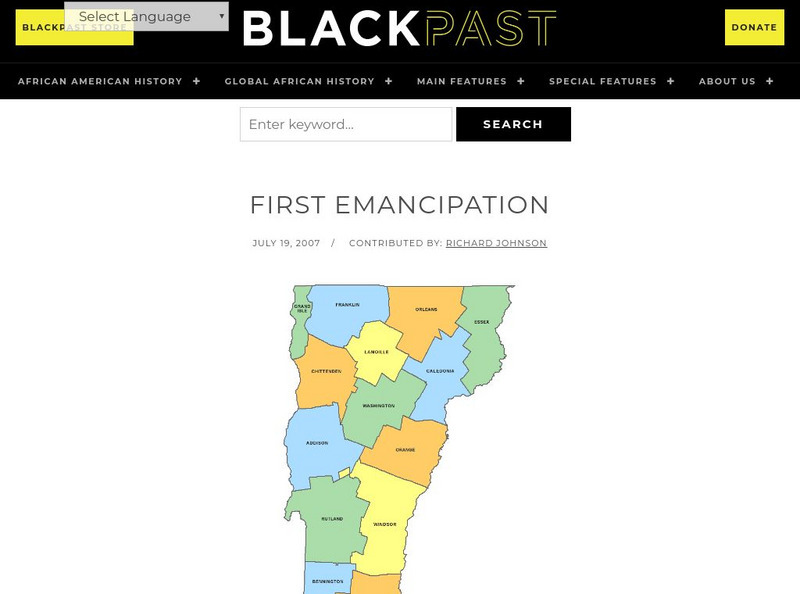
Black Past
Black Past: The First Emancipation
This encyclopedia entry gives interesting information about how the Quakers encouraged legislation that led to the banning of slavery in states in the Northeast by 1820.
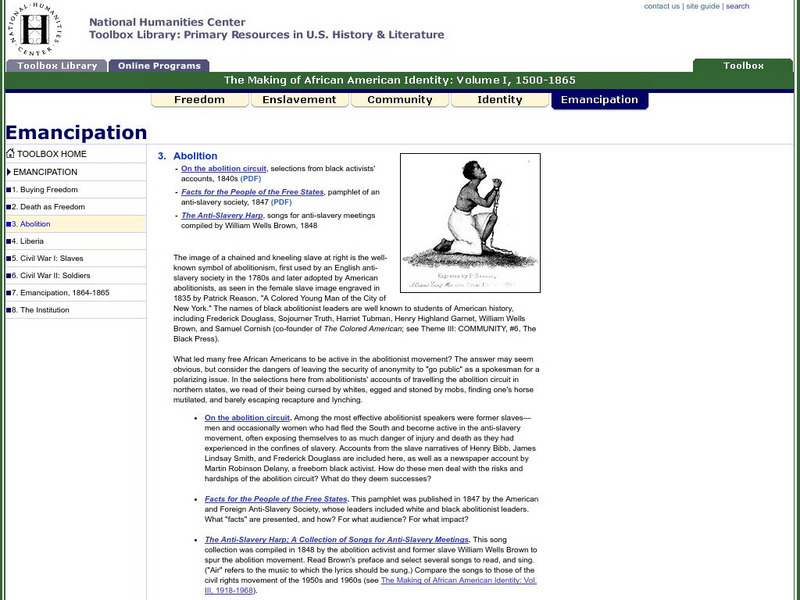
National Humanities Center
National Humanities Center: Toolbox Library: Emancipation: Abolition
Speeches, songs, letters, and pamphlets from the early- and mid-nineteenth century promoting the abolition of slavery and emancipation of enslaved peoples are provided within this resource.
US National Archives
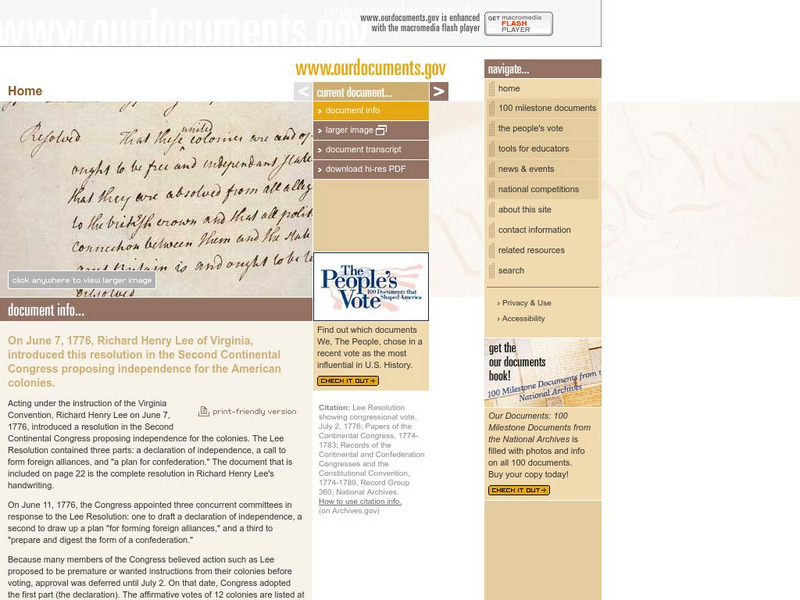
Our Documents: Emancipation Proclamation (1863)
Image of handwritten copy of Lincoln's Emancipation Proclamation, accompanied by an explanation of the speech's purpose, impact, and role in American history.
Tom Richey
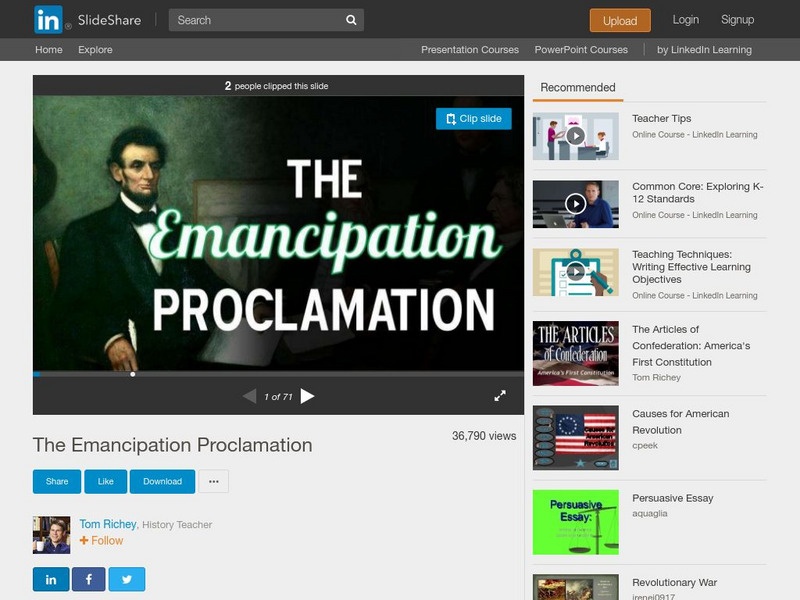
Tom Richey: The Emancipation Proclamation
An engaging PowerPoint presentation provides insight into the events which led to ending slavery in the United States. The slideshow illustrates President Lincoln's approach to the Emancipation Proclamation.

Khan Academy
Khan Academy: Us History: 1844 1877: The Emancipation Proclamation
Read about the significance of the Emancipation Proclamation.
Annenberg Foundation
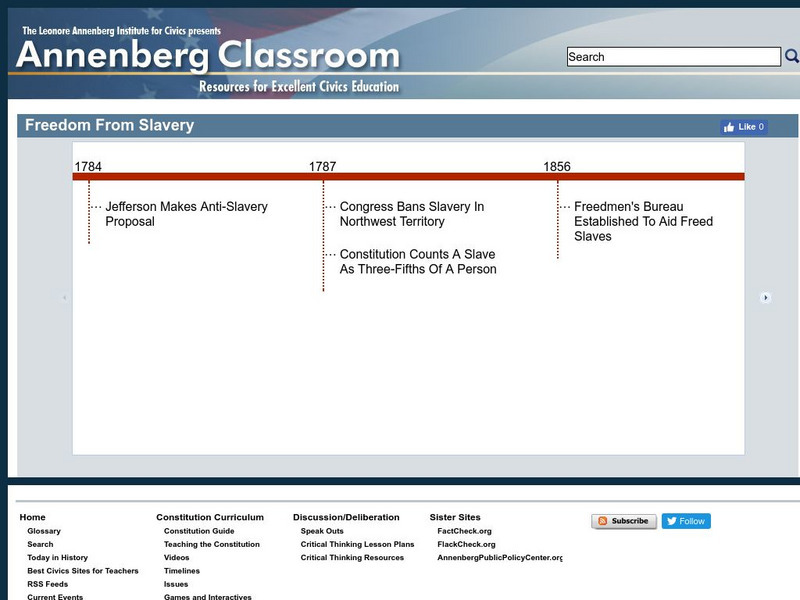
Annenberg Classroom: Freedom From Slavery
Check out this interactive timeline of the history of freedom from slavery in the United States.

Khan Academy
Khan Academy: Ap Us History: 1844 1877: Reconstruction: Life After Slavery
Discusses what life was like for African Americans who were freed from slavery after the Civil War. Includes questions for students.
Other
Al Islam: Slavery in Ancient Times
This resource gives a history of slavery from pre-Islamic Times and its continuation under Islam.
EL Education
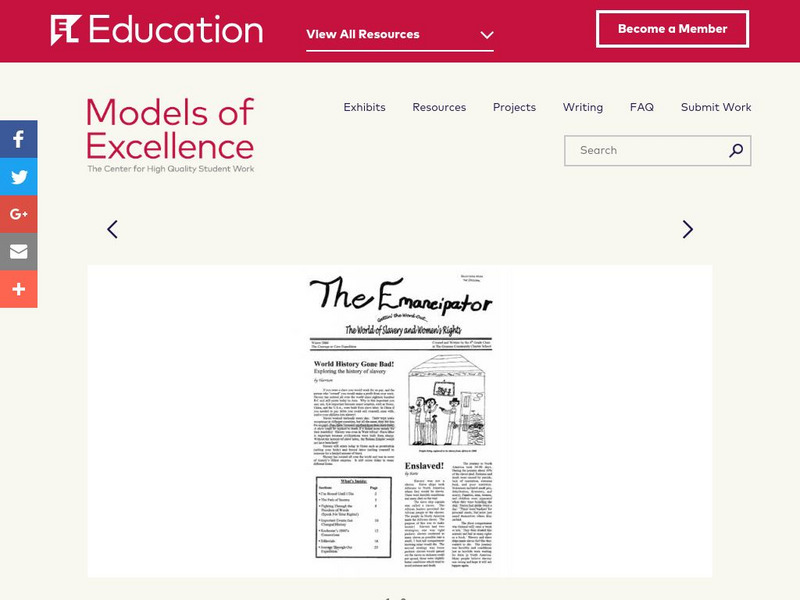
El Education: The Emancipator Selections From the Original
In this lesson, students combine research and fieldwork to learn about slavery through locally related events. Then they work to create a newspaper to demonstrate their understanding.